



Vietnam
Vietnam stretches in a long S-shape down Southeast Asia's coast, packing mountains, rice terraces, ancient trading towns, and over 3,000 km of coastline into one country. The north centers on Hanoi's centuries-old Old Quarter and the limestone karsts of Ha Long Bay in Quang Ninh and Ninh Binh; the center holds the former imperial capital of Hue and the lantern-lit streets of Hoi An; the south is defined by Ho Chi Minh City's energy and the waterways of the Mekong Delta. Each region has its own climate, food, and pace, so a single trip can feel like visiting several different countries.
Vietnam suits travelers who want a mix of history, food, and landscape rather than a single-resort holiday. Decades of war and colonization, from French rule to the conflict Vietnamese call the American War, shaped much of what visitors see today, but the country's identity is defined as much by its food stalls, coffee culture, and rapid modernization as by its past. It rewards travelers willing to move between cities rather than stay in one place.

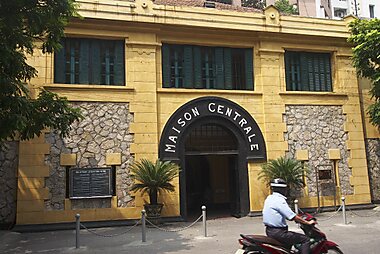
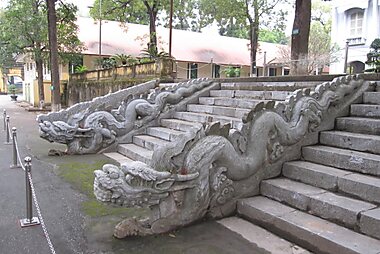
Vietnam – Planning a Trip?
Build your day-by-day itinerary in the Tripomatic app.


Money & payments
The currency is the Vietnamese dong, and amounts often run into the hundreds of thousands, so it takes a day or two to get comfortable with the exchange rate. Cities and tourist areas increasingly accept cards, but cash is still the practical choice for street food, markets, taxis, and smaller towns.
ATMs are widespread in cities but often charge a withdrawal fee and cap amounts per transaction; withdraw larger sums less often to reduce fees. US dollars are informally accepted in some tourist businesses but paying in dong usually gets a better rate.
Featured Lists


Vietnam's Historical Treasures
This collection spans centuries of Vietnamese history, from the 15th-century stone Citadel of the Ho Dynasty to significant 20th-century conflict sites like Hamburger Hill. It features UNESCO-listed Old Town Hoi An, known for its well-preserved merchant architecture and the 200-year-old Tan Ky house. Religious heritage is represented by the Chuc Thanh Pagoda, the oldest in Hoi An, and the Cham ruins of Tháp Nam. These sites offer a direct look into the architectural and cultural evolution of the region.
8 places

Markets and Crafts of Vietnam
This collection spans Vietnam's artisanal heritage and bustling commerce, from the 15th-century carpentry traditions of Kim Bong to the riverside pottery kilns of Thanh Ha. Northern highlands feature vibrant ethnic markets like Bac Ha and Can Cau, where Hmong and Dao communities trade livestock and intricate textiles. In the Mekong Delta, the Phong Dien floating market preserves water-based trade, while Hoi An’s workshops demonstrate skills in lantern making and embroidery. These sites provide direct access to regional specialties and traditional Vietnamese craftsmanship.
11 placesTours & Activities
Vietnam — Map

 Open the interactive map
 Tipping
Tipping is not a traditional Vietnamese custom but has become common in tourist-facing businesses. It is appreciated, not demanded.
- Restaurants: not expected in local eateries; leaving 5-10% is appreciated at restaurants aimed at tourists.
- Bars: rounding up is common; not required.
- Taxis and ride-hailing: rounding up to the nearest note is standard.
- Hotels: porters and housekeeping appreciate a small tip.
- Tour guides and drivers: a tip is customary and often the main way guides supplement low base pay; small notes are fine.
not expected in local eateries; 5-10% appreciated at tourist-oriented restaurants
round up
round up to the nearest note
small tip for porters/housekeeping
Electricity
Vietnam uses Type A, C, and F sockets at 220 V / 50 Hz, so an adapter is often needed for plugs designed for other socket types, though many outlets accept two-pin plugs regardless of type.
Language
Vietnamese is the official language, written in a Latin-based alphabet with added tone marks, so street signs and menus are usually readable even without speaking the language. English is spoken at hotels, restaurants, and tour operators in major cities and tourist towns, but far less so in rural areas, where a translation app helps.
Staying connected
Prepaid SIM and eSIM plans are cheap and sold at the airport and phone shops in every city; bring your passport, as registration is required. Coverage is strong in cities and along the main tourist routes, with some gaps in remote mountain areas. Ordinary browsing, maps, email, and booking sites work normally, but the government actively monitors online activity and occasionally slows or restricts access to social media platforms, especially around politically sensitive dates.
Safety & emergencies
Vietnam is generally safe for tourists, with low rates of violent crime. The most common issues are petty theft (bag-snatching from motorbikes in Hanoi and Ho Chi Minh City), overcharging by unmetered taxis, and street vendors or motorbike-taxi drivers who quote inflated prices to tourists. Agree on a price before getting in a cyclo or unmetered taxi, and use a reputable ride-hailing app where possible. Traffic is the biggest everyday risk: roads are crowded with motorbikes and crossing streets takes a different technique than in most Western cities — walk at a steady, predictable pace and let traffic flow around you.
Health
Tap water is not safe to drink; stick to bottled or boiled water, including for brushing teeth in smaller towns. Ice in cities and established restaurants is generally made from treated water and is fine. Pharmacies are widely available in cities, easy to spot by a green cross sign, and many common medications are available without a prescription.
No vaccinations are mandatory for entry, but hepatitis A, typhoid, and up-to-date routine vaccines are commonly recommended; consult a travel clinic before your trip. Street food is generally safe at busy stalls with high turnover, but travel insurance covering stomach upsets is a sensible precaution anywhere in Southeast Asia.
Visas & entry
Vietnam grants visa-free entry for stays of up to 45 days to citizens of the UK, France, Germany, Italy, and Spain, and shorter visa-free windows to several other nationalities. Citizens of the US, Canada, and Australia, among others, generally need to arrange an e-visa in advance, valid for stays of up to 90 days and applied for online through the official government portal.
All visitors need a passport valid for at least six months beyond their arrival date.
Visa and entry requirements change frequently. Verify current requirements with the official immigration authority or your country's embassy before travel.
Etiquette
Vietnamese culture blends Buddhist, Confucian, and modern influences, and etiquette is generally relaxed but a few points matter:
- Religious sites: remove your shoes before entering temples and pagodas where indicated, and dress modestly, covering shoulders and knees.
- Greetings: a nod or slight bow with a smile is common; a handshake is standard in business settings.
- Bargaining: expected at markets and with street vendors for souvenirs, but not in shops with posted prices; bargain politely and with a smile rather than aggressively.
- Photography: ask before photographing people directly, especially in rural areas and at religious ceremonies.
- Public displays of affection: kept minimal, especially by older generations, though attitudes are more relaxed in big cities.
Holidays & opening hours
Public holidays affect banks and government offices more than restaurants and shops, but the week around the Lunar New Year (Tet) is the major exception, when many family-run businesses close for several days and transport gets fully booked.
Most shops and markets open early, around 7 or 8 am, and stay open into the evening seven days a week; some smaller businesses pause for a midday break in the early afternoon.
Getting around
- By train: the Reunification Express line runs the length of the country between Hanoi and Ho Chi Minh City, calling at Hue, Da Nang, and Nha Trang; slower than flying but scenic, especially the Hai Van Pass section. Book via Vietnam Railways.
- By air: domestic flights are cheap and fast, and the practical choice for the long north-south hop between Hanoi and Ho Chi Minh City — around 2 hours versus over 30 by train.
- By bus: extensive overnight sleeper coaches connect all major cities and cost less than flying, though travel times are long on the main north-south routes.
- Within cities: ride-hailing apps (Grab is dominant) are the easiest way to get around and avoid taxi overcharging; metered taxis from reputable companies are also reliable.
Driving
- Key rules: helmets are mandatory on motorbikes, including for passengers. Foreign visitors legally need an international driving permit alongside their home license, and not every IDP type is accepted here, so check this with your permit issuer before travel. Traffic can look chaotic to newcomers, and self-driving a motorbike without experience in Vietnamese traffic carries real risk.
- Tolls: expressways charge distance-based tolls, increasingly collected through a linked electronic toll account rather than cash — ask your rental company or driver to confirm this is set up.
- Parking: informal and inexpensive in most cities, usually a small fee to an attendant on the sidewalk; hotels typically offer parking for guests' rented motorbikes.
- Fuel: stations are staffed and pump for you; pay by cash. Petrol is sold as RON 95 and RON 92, diesel as DO.
- Renting a car with a driver, rather than self-driving, is the common choice for visitors covering long distances.
Food & drink
Food is central to daily life in Vietnam, and much of it happens on the street: plastic stools, a single specialty done well, and meals eaten at almost any hour. Breakfast is often a bowl of pho (beef or chicken noodle soup) or a banh mi sandwich on the way to work; lunch and dinner bring rice or noodle dishes built around fresh herbs, fish sauce, and lime.
Regional specialties are distinct enough that food is a reason to visit multiple cities: bun cha (grilled pork with noodles) and egg coffee in Hanoi, bun bo Hue (spicy beef noodle soup) in Hue, cao lau (a noodle dish unique to Hoi An), and countless variations of pho and banh xeo (savory turmeric crepes) nationwide. Goi cuon (fresh spring rolls) and che (sweet dessert soups) are common snacks.
Ca phe sua da (iced coffee with condensed milk) is the signature drink, alongside fresh sugarcane juice and bia hoi, cheap draft beer sold fresh daily at plastic-stool street bars. Most locals eat at street stalls, market food courts, or small family-run restaurants rather than formal dining rooms, and it is completely normal to eat very well for very little.
Where to explore
Vietnam's three regions each have a very different character, and most visitors combine at least two on a single trip.
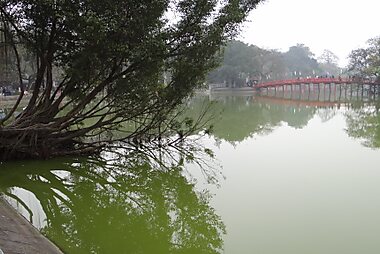
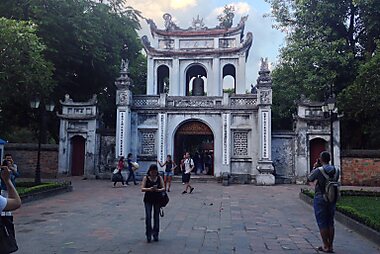
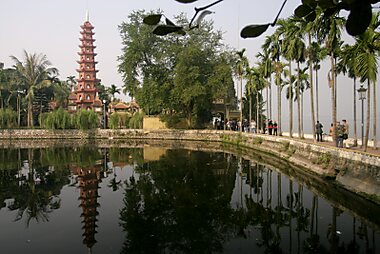
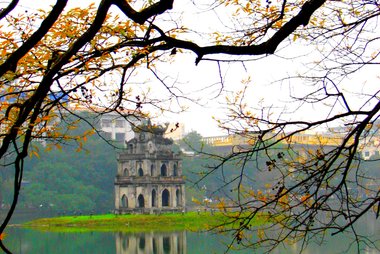
The north: Hanoi is the capital, with a thousand-year-old Old Quarter, French colonial architecture, and some of the country's best street food. Quang Ninh is home to Ha Long Bay's limestone karst islands, usually visited on an overnight boat. Ninh Binh offers similar karst scenery inland, explored by boat through rice paddies and caves.
The center: Hue was Vietnam's imperial capital, with a walled citadel and royal tombs. Hoi An is a beautifully preserved 15th-century trading port, now a UNESCO-listed old town of lantern-lit streets. Da Nang combines beaches with easy access to both Hoi An and the Marble Mountains.
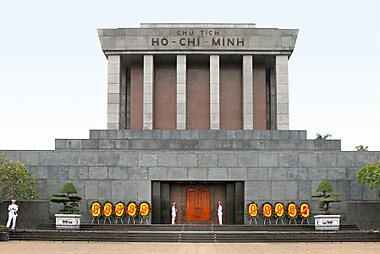
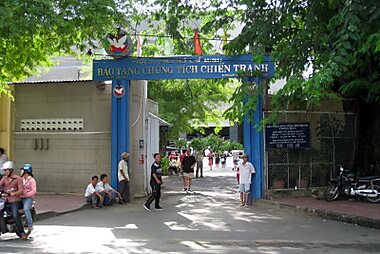
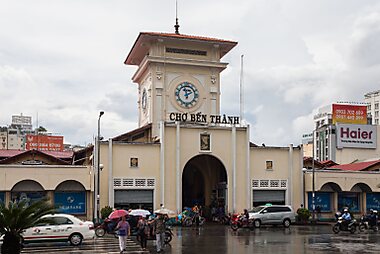
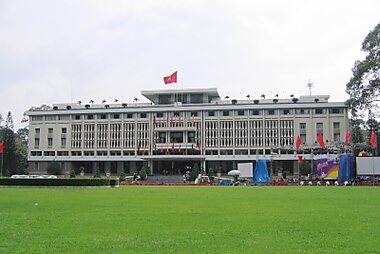
The south: Ho Chi Minh City is the country's largest city, fast-paced and modern, with reminders of the war era still visible. Nha Trang is a beach resort city on the south-central coast, and Phu Quoc is an island in the Gulf of Thailand known for white-sand beaches and diving.
Vietnam – Plan Your Trip
Pick the places you want to see and Tripomatic turns them into a day-by-day route, with smart routing, time estimates, and everything you need for a perfect trip.


Related destinations


Data: © OpenStreetMap contributors, Wikidata, Wikipedia, Tripomatic, Official websites, geoBoundaries (CC BY 4.0). Tours by GetYourGuide. We earn commission from bookings. Travel guide generated with AI.