



Honduras
Honduras is a Central American country with Caribbean beaches, cloud forest mountains, and one of the best-preserved Maya cities in the region. Its Bay Islands are a popular place to get scuba certified, at a lower cost than many other Caribbean destinations, while inland colonial towns keep a slower pace.
Most visitors focus on two or three regions rather than the whole country: the Maya ruins at Copán Ruinas, the reef diving around Roatán and Utila, and the beaches and rainforest near La Ceiba on the north coast. Roads and buses outside the main routes move slowly, so build extra time into any trip that covers more than one region.





Honduras – Planning a Trip?
Build your day-by-day itinerary in the Tripomatic app.
Money & payments
US dollars are often accepted in the Bay Islands and other tourist areas, but carry local cash for buses, markets, and small towns. Card machines are common in cities and resorts; ATMs are reliable in Tegucigalpa, San Pedro Sula, and larger towns but scarce on the islands and in rural areas, so withdraw enough before heading out.


Featured Lists


Tours & Activities
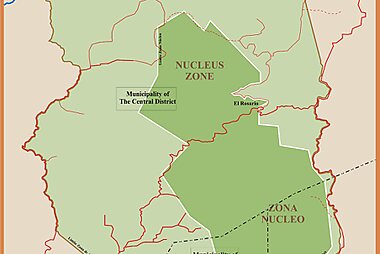
Honduras — Map

Tipping
10% often added automatically
round up
small tip for porters or housekeeping
a few dollars per day
Restaurants in tourist areas often add a 10% service charge to the bill automatically — check before adding more. Where it isn't included, rounding up or leaving about 10% is appreciated but not required. Tour guides and drivers on multi-day trips are typically tipped a few dollars per day; taxi drivers do not expect a tip.
Electricity
Honduras uses Type A/B plugs at 110 V / 60 Hz, the same standard as the United States — most US chargers work without an adapter.
Language
Spanish is the official language. English is common in the Bay Islands, where many residents grew up speaking it, and in hotels and tour operations elsewhere; it is less common in rural towns and inland cities. Along the north coast, some Garífuna communities speak their own language alongside Spanish.
Staying connected
Prepaid SIM and eSIM plans from Tigo or Claro are easy to find at the airport and in shops in any town, and cost little. Coverage is solid in cities and along the main highways, but thins out in mountain areas and on parts of the Bay Islands away from town centers.
Safety & emergencies
Petty theft and opportunistic robbery are the main risks for visitors, especially in Tegucigalpa and San Pedro Sula. Avoid walking after dark in unfamiliar neighborhoods, keep valuables out of sight, and use hotel-arranged or app-based transport rather than hailing taxis on the street. Tourist areas like Copán Ruinas, Roatán, and Utila see far less crime and feel noticeably more relaxed than the mainland cities.
Health
Tap water isn't safe to drink in most of Honduras — stick to bottled or filtered water, including for brushing teeth in smaller towns. Pharmacies (farmacias) are common in cities and larger towns and can handle most minor ailments without a prescription. Mosquito-borne illnesses like dengue and Zika are present, especially on the coast and islands, so use repellent and cover up at dawn and dusk. Talk to a travel clinic about routine and hepatitis A vaccinations before you go.
Visas & entry
Travelers from the US, Canada, the EU, the UK, and most of Latin America can enter Honduras without a visa for up to 90 days as tourists. Honduras shares a joint tourist visa zone (the CA-4) with El Salvador, Guatemala, and Nicaragua, so a Central America tourist entry is often valid for travel across all four countries within the same 90-day period. Travelers who need a visa should apply at a Honduran embassy or consulate before departure.
Visa and entry requirements change frequently. Verify current requirements with the official immigration authority or your country's embassy before travel.
Etiquette
Greet people with a handshake, or a light cheek kiss between women and people who know each other well. Modest dress (shoulders and knees covered) is expected in churches and appreciated in smaller towns. Bargaining is normal in markets and with independent tour guides, but not in shops or restaurants with posted prices. Meals, especially lunch, are often a slower, social affair — don't expect to be rushed out of a restaurant.
Holidays & opening hours
Many businesses close on public holidays, and Semana Santa (the week before Easter) is the busiest travel period of the year — expect crowded beaches, booked-out buses, and some shops shut for several days. Most shops and offices close on Sundays outside shopping malls, and it's common for smaller businesses to take a longer lunch break in the early afternoon.
Getting around
- By bus: Long-distance buses connect all major towns and are the main way to get around. A few companies run comfortable direct coaches on the busiest routes (Tegucigalpa–San Pedro Sula–Copán Ruinas); smaller local buses cover everywhere else but are slower and more crowded.
- By air: Domestic flights link Tegucigalpa, San Pedro Sula, Roatán, and La Ceiba, and are worth it for reaching the Bay Islands quickly — the alternative is a long drive plus a ferry. Flights serving the capital use Palmerola International Airport, about an hour outside Tegucigalpa near Comayagua, rather than the old in-town airport.
- By ferry: Ferries run daily from La Ceiba to Roatán and Utila, and are the standard way to reach the islands without flying.
Driving
- Road conditions: Main highways are generally in good condition, but roads can be rough and poorly signed away from them; driving after dark outside cities is best avoided.
- Tolls: Some highways, including the Tegucigalpa–San Pedro Sula corridor, charge small cash tolls at booths along the route.
- Parking: Hotels and guesthouses usually offer secure parking; street parking in cities is best avoided overnight.
- Fuel: Stations are staff-attended, not self-service. Pumps are labeled "Regular", "Súper", or "Diesel"; card and cash are both accepted at most stations in cities.
Food & drink
Breakfast is often eggs, beans, tortillas, and fried plantain; lunch is the main meal of the day and typically includes rice, beans, and grilled meat or fish. The baleada — a thick flour tortilla folded around refried beans, cheese, and cream — is the closest thing Honduras has to a national snack, sold everywhere from street carts to sit-down restaurants.
On the Caribbean coast, Garífuna communities cook with coconut milk, plantain, and cassava, including sopa de caracol (conch soup) and pan de coco. Street stalls and small comedores are the everyday way to eat; sit-down restaurants are common in cities and tourist towns. Salva Vida and Port Royal are the two most widely available local beers, and licuados (fruit blended with milk or water) are a popular non-alcoholic drink.
Where to explore
Honduras' main draw for most travelers is the pairing of Maya history and Caribbean reefs. In the west, Copán Ruinas sits beside one of the most detailed Maya archaeological sites in Central America, with the nearby colonial towns of Santa Rosa de Copán and Gracias good bases for the western highlands.
Off the north coast, the Bay Islands are the country's diving hub: Roatán has the most developed resorts and reef access, while Utila is smaller, cheaper, and known for whale shark sightings. La Ceiba on the mainland is the main gateway to the islands and to Pico Bonito's rainforest, and Tela has some of the country's best beaches near protected coastline.
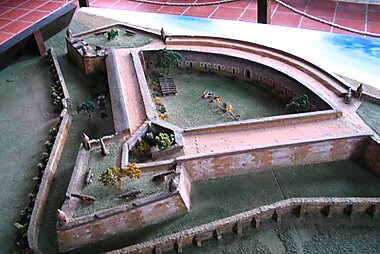
Along the rest of the coast, Omoa has a well-preserved colonial-era Spanish fort, Puerto Cortés is the country's main port, and Trujillo is where Christopher Columbus first landed on the Central American mainland in 1502.
Near the capital, Comayagua was Honduras's first colonial capital and keeps one of the best-preserved colonial centers in the country. Tegucigalpa, the modern capital, and San Pedro Sula, the main industrial hub, see fewer visitors but are useful for onward travel — San Pedro Sula's airport handles most international arrivals, and flights to the capital now land at Palmerola International Airport instead.
Honduras – Plan Your Trip
Pick the places you want to see and Tripomatic turns them into a day-by-day route, with smart routing, time estimates, and everything you need for a perfect trip.




