



Indonesia
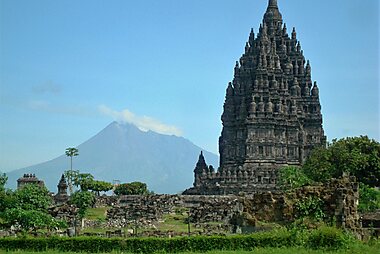
Indonesia is the world's largest archipelago, spanning more than 17,000 islands between the Indian and Pacific Oceans. Bali's rice terraces and temples, Java's volcanoes and royal courts, Sumatra's rainforests, and the Komodo dragons of Flores all belong to the same country, so trip planning usually means picking one or two regions rather than trying to see it all. Ancient Hindu-Buddhist monuments like Borobudur and Prambanan Temple Compounds sit alongside the world's largest Muslim population, giving the country a layered religious and cultural history.
Indonesia suits travelers who enjoy a mix of culture, nature, and beach time, from first-time visitors settling into Bali's resorts to more independent travelers island-hopping by ferry and budget flight. Distances between islands are large, so a two-week trip realistically covers two or three regions rather than the whole country.


Indonesia – Planning a Trip?
Build your day-by-day itinerary in the Tripomatic app.


Money & payments
Indonesia's currency comes in large denominations that take some getting used to — a 100,000 note is worth only a few US dollars, and prices are usually written with thousand separators.
Cards are accepted at hotels, malls, and city restaurants, but carry cash for warungs (small local eateries), traditional markets, entrance fees, and travel to smaller islands, where ATMs can be scarce. Bank ATMs (BCA, Mandiri, BNI) are the most reliable and usually offer better rates than airport currency counters.
Featured Lists


Editor's Choice Destinations
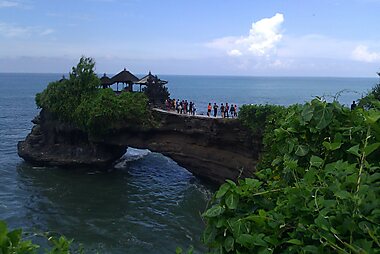
This selection of Indonesian landmarks features the Tanah Lot Hindu pilgrimage temple on a coastal rock formation and the Bimas Hot Springs situated in Bali's largest lake. Cultural exploration continues at Jakarta's Taman Mini Indonesia Indah, a recreational park representing the nation's diverse provinces. In Pontianak, the Equator Monument marks the hemispheric divide, while West Java’s Curug Cimahi offers an 87-meter waterfall illuminated by colorful lights. The list is rounded out by Monty's Restaurant, offering contemporary European cuisine in Jakarta.
6 places


Tours & Activities
Indonesia — Map

 Open the interactive map
 Tipping
Tipping isn't deeply rooted in Indonesian culture, but it's increasingly common in tourist areas.
round up, or 5-10% if no service charge is already added
10,000-20,000 IDR for porters
round up the fare
50,000-100,000 IDR per day
Many restaurants already add a service charge and tax to the bill, so an extra tip on top isn't expected there. For a driver or guide arranged for a full day, a tip of 50,000–100,000 IDR is a generous and appreciated gesture.
Electricity
Indonesia uses Type C and F plugs at 230 V / 50 Hz, the same standard as most of Europe and Asia — most phone and laptop chargers work without an adapter.
Language
Indonesian (Bahasa Indonesia) is the official language, written in the Latin alphabet, so signs and menus are easy to read even without speaking it. English is common in tourist hubs like Bali, Yogyakarta, and Jakarta's hotels, but far less so in rural areas and on smaller islands, where a few local phrases go a long way.
Staying connected
Local SIM cards (Telkomsel, XL, Indosat) are sold cheaply at airports, minimarkets, and phone shops, and registering one requires showing a passport — this is a legal requirement, not a scam. An eSIM is a simpler option for a short trip and skips the registration step entirely. Coverage is strong on Java and Bali but can drop out on remote islands and hiking trails, so download offline maps and confirm accommodation details before heading somewhere isolated.
Safety & emergencies
Indonesia is generally safe for travelers, and violent crime against tourists is rare. The most common issues are petty theft (bag snatching and pickpocketing in crowded areas), traffic accidents involving scooters, and scams around unofficial tour operators or currency exchange booths offering unusually good rates. Rent a scooter only if you're a confident, licensed rider — traffic in Bali and Java is chaotic and helmets are essential.
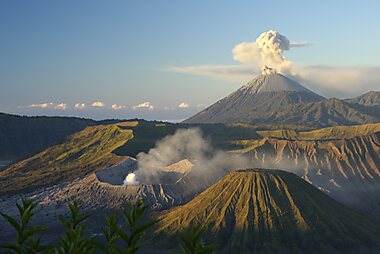
Indonesia also sits on the Pacific Ring of Fire, so volcanic activity and occasional earthquakes are part of life here. Check local advisories before hiking near active volcanoes like Mount Bromo or Mount Rinjani National Park. Drug laws are extremely strict, with severe penalties including the death penalty for trafficking — never carry or use illegal drugs.
Health
Tap water isn't safe to drink — stick to bottled or filtered water, and be cautious with ice outside of established restaurants and hotels. Pharmacies (apotek) are common in cities and sell most over-the-counter medication without a prescription. Make sure routine vaccinations are up to date, and ask a travel clinic about hepatitis A and typhoid a few weeks before departure. Dengue fever is present year-round in tropical areas, so use mosquito repellent, especially at dawn and dusk.
Visas & entry
Indonesia's visa-free entry is limited to a short list of nationalities, mainly the ten ASEAN countries plus a handful of others. Most travelers, including from the US, UK, Australia, and most of Europe, need a Visa on Arrival (VOA) instead, which can be paid electronically before arrival or in person at the airport. The VOA costs around 500,000 IDR, is valid for 30 days, and can be extended once for another 30 days at an immigration office.
Visa and entry requirements change frequently. Verify current requirements with the official immigration authority or your country's embassy before travel.
Etiquette
Dress modestly when visiting temples and mosques — shoulders and knees covered — and expect to wear a sarong at Hindu temples in Bali; one is usually provided or rented at the entrance. Remove shoes before entering mosques, temples, and most homes. Use your right hand for eating, giving, and receiving items, since the left hand is considered unclean. Avoid touching anyone's head, even a child's, since it's considered the body's most sacred part, and don't point at things with your foot.
Bargaining is expected at markets and with unmetered transport, but not in malls, restaurants, or convenience stores. Public displays of affection are frowned upon outside of tourist resort areas.
Holidays & opening hours
Public holidays affect transport and shop hours, especially around Eid al-Fitr (Lebaran), when much of the country travels home and buses, flights, and trains sell out weeks in advance. In Bali, Nyepi (the Day of Silence, usually in March) closes the entire island for 24 hours — streets are empty, the airport shuts down, and visitors are expected to stay quietly at their hotel.
Shops and malls in cities keep long hours, typically 10:00–21:00 daily including Sundays, while smaller warungs and markets often close for a few hours around midday prayer time on Fridays in more religious areas.
Getting around
- By air: Indonesia is an archipelago, so domestic flights (Garuda Indonesia, Lion Air, Citilink, AirAsia) are often the only practical way to cover long distances between islands, and are usually inexpensive if booked ahead.
- By train: trains run mainly on Java, connecting cities like Jakarta, Bandung, Yogyakarta, and Surabaya comfortably and on time. Book through KAI (Kereta Api Indonesia).
- By bus: long-distance coaches cover routes trains don't reach, though journeys can be long and roads congested.
- By boat: ferries and speedboats connect nearby islands, for example Bali to Gili Trawangan, and are often the fastest option for short hops.
Indonesia drives on the left, so keep this in mind if you rent a car or scooter, and expect Jakarta's traffic to add significant time to any city journey.
Driving
- Speed limits: 50 km/h in urban areas, 80 km/h on rural roads, and up to 100 km/h on toll expressways.
- Left-hand traffic: Indonesia drives on the left, with the steering wheel on the right side of the car — worth practicing if you're used to right-hand traffic.
- Tolls: most intercity highways are toll roads (jalan tol) paid with a prepaid e-toll card rather than cash — buy and top up cards at toll gates, minimarkets, or gas stations before you need them.
- Traffic and scooters: motorbikes vastly outnumber cars and weave between lanes; drive defensively and expect heavy congestion in and around Jakarta.
- Parking: attendants, often informal, direct parking outside malls and hotels for a small tip or fee; street parking is common and inexpensive.
- Fuel: stations are attended, not self-service. Petrol is sold as Pertalite, Pertamax, or Premium; diesel as Bio Solar, Dexlite, or Pertamina Dex.
- Electric vehicles: charging is still limited outside Jakarta and Bali, so a rental EV isn't practical for road trips further afield yet.
Food & drink
Breakfast is often light — fried rice or noodles from a street stall, or a sweet pastry — while lunch and dinner center on rice with a mix of small side dishes: vegetables, tempeh, tofu, and grilled or fried meat or fish. Meals are typically eaten with a spoon and fork, and it's common to share several dishes rather than order individual plates.
Nasi goreng (fried rice) and satay are found everywhere, but regional specialties are worth seeking out: rendang, a slow-cooked spiced beef dish from West Sumatra; gado-gado, mixed vegetables in peanut sauce; and Padang-style rice, where a dozen small dishes arrive at the table and you pay only for what you eat. Street food and night markets are a big part of the food culture and are generally safe to try if a stall has a steady stream of local customers.
Coffee culture runs deep — Indonesia is one of the world's largest coffee producers — and kopi tubruk, coarsely ground coffee steeped directly in the cup, is the everyday way to drink it. Fresh young coconut water and sweet iced tea are the common non-alcoholic choices; as a majority-Muslim country, alcohol is less central here and can be harder to find outside tourist areas and Bali.
Where to explore
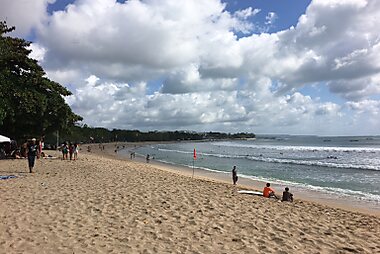
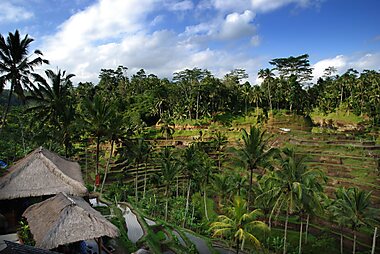
Bali remains Indonesia's most visited destination, from the temples and surf beaches around Bali to the rice terraces and yoga studios of Ubud.
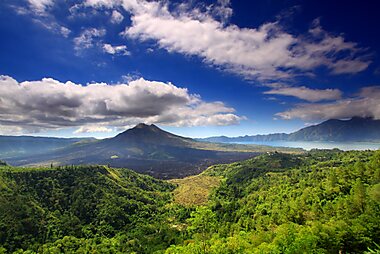
On Java, Jakarta is the sprawling capital and main international gateway, while Yogyakarta is the island's cultural heart, within reach of Borobudur and Prambanan. Bandung draws visitors for its cooler highland climate, and Surabaya is East Java's main city and a gateway to Mount Bromo.
Beyond Java and Bali, Labuan Bajo is the jumping-off point for boat trips to see Komodo dragons, Mount Rinjani National Park and nearby Gili Trawangan draw hikers and divers to Lombok, and Raja Ampat in Papua draws divers for its exceptional marine biodiversity. In North Sumatra, Medan is the gateway to Lake Toba, a vast crater lake, and Tana Toraja in Sulawesi is known for its distinctive funeral traditions and traditional houses.
Indonesia – Plan Your Trip
Pick the places you want to see and Tripomatic turns them into a day-by-day route, with smart routing, time estimates, and everything you need for a perfect trip.




