



Jyväskylä
Jyväskylä is the largest city in Finland's lake district, built around the shores of Lake Jyväsjärvi in the heart of Central Finland. It calls itself the "City of Alvar Aalto" — the architect grew up here, trained as a student at its teacher-training college, and later filled the city with early buildings that still shape its streets today. A large student population from the University of Jyväskylä keeps the compact centre lively year-round.
The city suits travelers who want modern Finnish architecture, lakeside nature, and an easy, walkable base for exploring Central Finland, without the crowds of Helsinki. It works well for a two- or three-night stay, combining a short list of world-class buildings with forest trails and lake beaches a few minutes from downtown.

Jyväskylä – Planning a Trip?
Build your day-by-day itinerary in the Tripomatic app.


When to visit
Summers are mild and bright, with long daylight hours for lake swimming and hiking. Winters are cold and dark but reliably snowy, good for cross-country skiing right from the city. Spring and autumn are quieter and cooler, with shorter days.
Time a summer visit around Rally Finland, the World Rally Championship round held in and around Jyväskylä, famous for its high-speed jumps through the surrounding forests. Check the exact dates before booking, since the calendar shifts from year to year.
July is the most reliable month for warm, dry days, with long evenings that stay light well past 10 pm.
Top sights
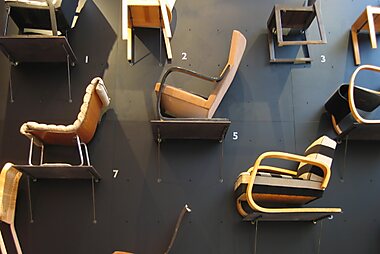
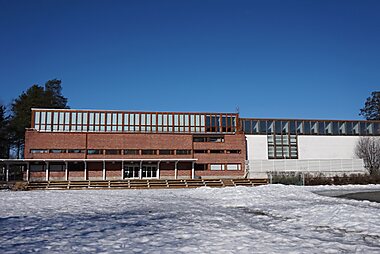
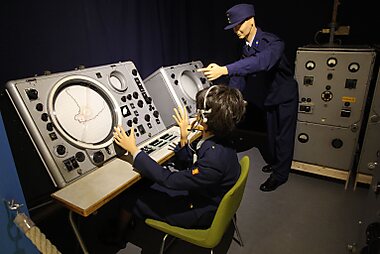

Alvar Aalto Museum is the best place to start: the museum sits inside a building Alvar Aalto designed himself and traces his career from early sketches to full-scale models of his furniture and buildings.
Next door, Museum of Central Finland covers the region's wider history and shares the same Aalto-designed campus, together forming what locals call the Aalto2 museum centre.
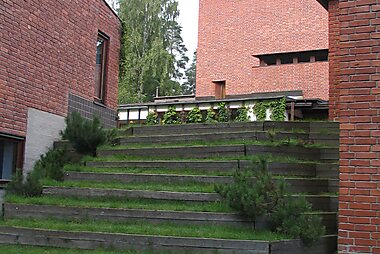
The university's own Jyväskylä University Library (B), part of the Seminaarinmäki campus, shows Aalto's early functionalist style in red brick — the buildings are still in daily use by students, so you can walk through the campus freely.
Climb Harju, the wooded ridge running through the centre, up to Vesilinna, a working water tower with an observation deck and a panoramic restaurant looking out over the lakes.
A short walk away, Taulumäen kirkko is a striking 1920s brick church known for its two-story galleries and a rescued altarpiece.
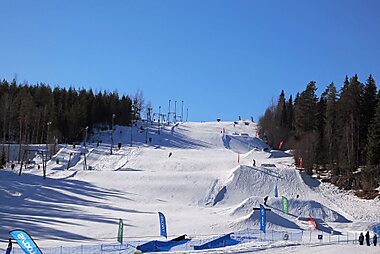
On the edge of the city, Laajavuori turns into a downhill and cross-country ski centre every winter and a mountain-biking hill in summer.
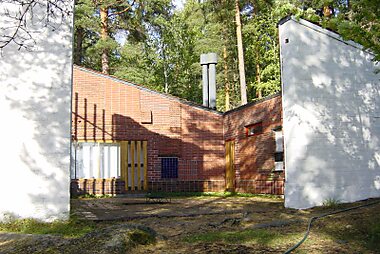
Across the water, Säynätsalo Town Hall and Muuratsalo Experimental House are two more Aalto landmarks worth the short trip out: a red-brick town hall built around a raised courtyard, and the architect's own lakeside summer house, an experimental patchwork of brick and tile.
Featured Lists

What to experience
- Listen for Harjun iltasoitto, the evening trumpet call played from the Vesilinna tower on summer evenings — a genuine local tradition, not a show staged for tourists.
- Swim at one of the free public beaches on Lake Jyväsjärvi in summer, then warm up in a lakeside sauna, the way locals end a hot day.
- Rent a canoe or kayak and paddle out onto Lake Jyväsjärvi for the evening light.
- In winter, join locals cross-country skiing on the lit trails that start right in Laajavuori, without needing to leave the city.
Tours & Activities
Jyväskylä — Map

 Open the interactive map
 Day trips
Central Finland's lake district rewards a day away from the city, from a small lakeside town to a UNESCO World Heritage church.
- Muurame — about 20 minutes by car or bus, a quiet lakeside town on Lake Jyväsjärvi's southern shore, good for a slower half-day of beaches and forest walks.
- Laukaa — about 25 minutes by car, a rural lakeside village with a historic wooden church and orchard country worth a slow drive-through.
- Petäjävesi — about 40 minutes by car, home to the UNESCO-listed Petäjävesi Old Church, a wooden church built in the 1760s and one of the finest examples of Nordic log-church architecture.
Getting there
- By air: Jyväskylä Airport (JYV) has domestic flights to Helsinki, about a 40-minute hop; a bus meets arriving flights for the short ride into the centre. Most international travelers fly into Helsinki and continue by train.
- By train: Direct and connecting trains link Helsinki to Jyväskylä in around 3 to 3.5 hours, usually changing in Tampere; the station is a short walk from the centre.
- By bus: Long-distance coaches connect Jyväskylä with Helsinki, Tampere, and other Central Finland towns, often cheaper than the train.
Getting around
- Public transit: Linkki city buses cover Jyväskylä; pay by tapping a contactless bank card or phone directly on the bus, or use the Linkki app for a cheaper fare. Linkki public transport
- Taxi: Regular taxis and ride-hailing apps operate in the city.
- On foot / cycling: The centre is compact and flat, easy to cover on foot. A network of lakeside cycling paths makes biking a genuinely practical way to get around in summer.
Driving
- Is a car worth it?: Not for the compact centre, which is easy on foot. A car helps for reaching the lake district and day trips at your own pace.
- Parking: Paid parking zones and multi-storey car parks serve the centre; pay by app or at machines.
- Restrictions: No congestion charge or low-emission zone in Jyväskylä.
Food & drink
For a quick, affordable meal, follow the student crowd to a lounas (weekday lunch buffet) near the university campus — a Finnish institution that is cheap, filling, and available almost everywhere at midday.
For eating out in the evening, head to the harbour district around Lutakko, where former industrial buildings on the lakeshore now hold restaurants and bars, or to the pedestrian street Kauppakatu and the market square Kauppatori for cafés and casual dining in the centre.
Safety & health
Jyväskylä is a low-crime, easygoing city; the main precaution is the usual one for any busy nightlife area — keep an eye on your belongings around the harbour bars late on weekend nights. Winter brings icy pavements, so wear footwear with good grip from November to April.
History
Jyväskylä received its town charter in 1837, making it a relatively young Finnish town, but it grew fast as an education centre: Finland's first Finnish-speaking teacher-training college opened here in 1863, planting the seeds of today's University of Jyväskylä.
That academic identity drew Alvar Aalto back to his hometown for much of his career. He designed Jyväskylä University Library (B) and other campus buildings, then later Museum of Central Finland and Alvar Aalto Museum, cementing Jyväskylä's identity as a living showcase of his work rather than a single-monument city.
Country facts
Quick practical facts for Finland at a glance:
- Currency
- Euro EUR · Card payments · Widely accepted
- Emergency numbers
- 112
- Electricity
- 230 V · 50 HzType C / Type F
- Languages
- Finnish, Swedish
- Tap water
- Safe to drink
- Driving side
- Right
- Calling code
- +358


Jyväskylä – Plan Your Days
Turn the places from this guide into a real itinerary, with smart routing, time estimates, and everything you need for a perfect trip.

