



Helsinki
Helsinki is a compact seaside capital built around granite harbors and pine-covered islands. Wide neoclassical squares sit next to Nordic modernist landmarks, the legacy of two centuries of Swedish and Russian influence followed by a strong Finnish design tradition. It suits travelers who want a walkable capital with striking architecture, museums, and easy access to nature, without the crowds of larger European cities.
The composer Jean Sibelius, whose music still shapes Finnish national identity, studied and began his career in the city. Summer brings nearly endless daylight and outdoor life on the waterfront; winter turns the city into a quieter, snow-covered place lit by candles and Christmas markets.

Helsinki – Planning a Trip?
Build your day-by-day itinerary in the Tripomatic app.


When to visit
Summers are mild with long daylight, ideal for exploring on foot or by bike. Winters are cold and dark, with snow from December through March and only a few hours of daylight in December. Plan around the Helsinki Festival in late August, Finland's largest annual arts festival, when concerts, theatre, and outdoor events fill the city for nearly three weeks.
Best time to visit: July, August
July and August bring the warmest, driest weather, while January and February bring the coldest temperatures, well below freezing.
Top sights
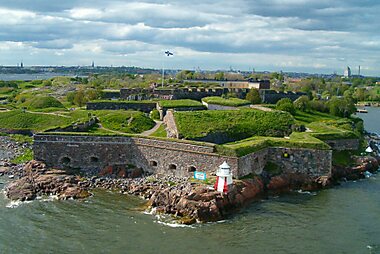

Fortress of Suomenlinna is a sea fortress spread across several islands, built by Sweden in 1748 to defend the approach to Helsinki; a short public ferry ride takes you to its ramparts, tunnels, and museums.
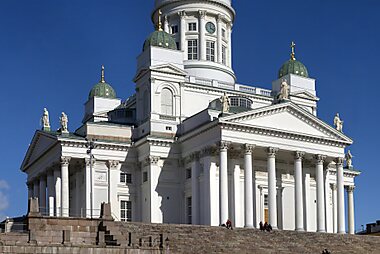
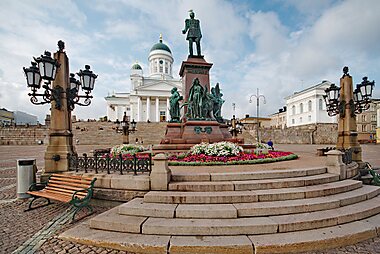
Helsinki Cathedral is the white-domed Lutheran cathedral that anchors the city's skyline, its steep steps a popular meeting point overlooking Senate Square, the grand neoclassical square below it.
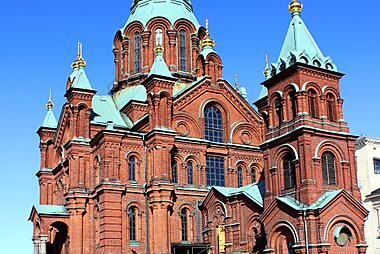
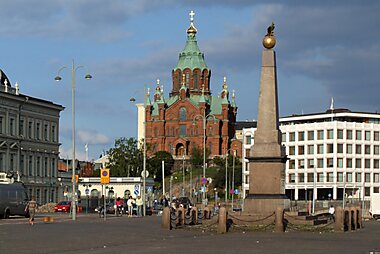
The onion-domed Uspenski Cathedral is the largest Orthodox cathedral in Western Europe, a striking reminder of the century Finland spent under Russian rule.
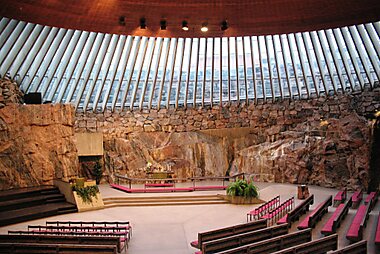
Carved directly into solid rock, Temppeliaukio Church is one of the world's most unusual church buildings, with natural light pouring through a domed skylight overhead.
Market Square is the harborside market where fishing boats sell their catch each morning alongside stalls of berries, crafts, and souvenirs.
Oodi is Helsinki's striking wave-shaped central library, worth a visit for its architecture as much as its free public spaces and rooftop terrace.
Sibelius Monument is a bold abstract sculpture of steel pipes honoring the composer Jean Sibelius, set in a quiet park near the sea.
Featured Lists


Helsinki Culture and Arts
Helsinki's cultural landscape spans from Alvar Aalto’s functionalist architecture in Munkkiniemi to the industrial-chic transformation of Suvilahti, a former power plant now serving as an alternative arts hub. The city features a dense network of independent theaters like KOM and Viirus, alongside specialized venues for contemporary circus and performance art. Visitors can explore street art galleries in the Suvilahti district or visit historic home museums that preserve the living environments of Finland's influential legal and industrial figures.
22 places
Helsinki Parks and Nature
Helsinki's green landscape spans from the vast 10-square-kilometer Central Park to specialized nature reserves like the Ruutinkoski rapids and the noble hardwood forests of Tammisto. This collection includes coastal meadows in Vuosaari, the bird-rich islets of Norppa and Kuutti, and scenic viewpoints like Isoisänsilta and the Horisontti observation tower. Discover diverse ecosystems including hazelnut groves in Maunula and the protected flora of Kallahdenniemi, alongside recreational islands like Pihlajasaari featuring sandy beaches and coastal trails.
22 placesWhat to experience
Helsinki's most memorable experiences come from taking part, not just looking.
- Sauna and a cold dip: join locals at a public waterfront sauna like Löyly, then cool off with a jump into the sea — a ritual Finns do year-round, including through the ice in winter.
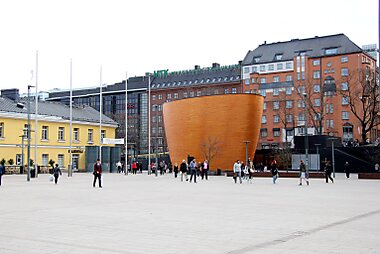
- Sit in silence: step into Kampin kappeli, a wooden chapel built for a few quiet minutes away from the city noise, no service required.
- Midsummer bonfire: if visiting in late June, join the traditional Juhannus bonfire at Seurasaaren ulkoilupuisto, a customary way to mark the year's longest day.
- Christmas market: in December, browse the wooden stalls selling mulled wine and handicrafts that fill Senate Square for the holiday season.
Tours & Activities
Helsinki — Map

 Open the interactive map
 Day trips
Helsinki's compact size makes it easy to combine the city with day trips into forests, historic towns, or even a neighboring country.
- Nuuksio National Park — pine forest, lakes, and marked hiking trails, popular for a half-day escape from the city. About 40 minutes by car or bus plus a short walk.
- Porvoo — Finland's second-oldest town, with a cobbled old quarter of red-ochre riverside warehouses. About 45–50 minutes by bus or car.
- Fiskars Village — a 17th-century ironworks village turned artist and design community, with workshops and galleries in old factory buildings. About 1.5 hours by car.
- Tallinn, Estonia — a fast ferry across the Gulf of Finland reaches this walled medieval old town in about two hours, making it Helsinki's most popular international day trip.
Where to explore
Helsinki forms one urban region with its neighboring cities, easily reached by metro, train, or bus.
- Espoo — Finland's second-largest city, home to a major technology and university campus and the seaside neighborhood of Haukilahti.
- Vantaa — home to Helsinki-Vantaa Airport and the Heureka science centre, a short train ride north of the centre.
- Nuuksio National Park — a national park of lakes and forest on the region's western edge, popular for hiking and canoeing.
Getting there
- By air: Helsinki-Vantaa Airport (HEL) is Finland's main international gateway, about 19 km north of the centre. The airport rail link reaches the centre in about 30 minutes; a taxi takes about 25–30 minutes.
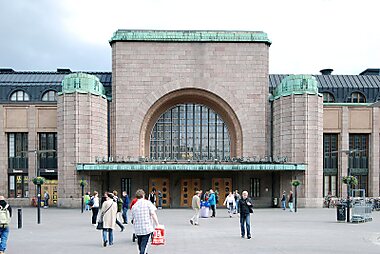
- By train: Helsinki Central Railway Station is the hub for Finland's rail network, with frequent trains to Tampere, Turku, and Lahti, and overnight sleeper trains to Rovaniemi in Lapland.
- By bus: Kamppi bus station handles long-distance coaches to towns and cities across Finland.
- By ferry: large car ferries connect Helsinki's harbor terminals with Tallinn (about 2 hours) and Stockholm (overnight, about 16 hours) — a common and scenic way to arrive.
Getting around
- Public transit: HSL operates trams, the metro, buses, and the ferry to Suomenlinna on a single ticket system. Buy tickets through the HSL app, or tap a contactless bank card directly on trams and buses. HSL journey planner
- Taxi / ride-hailing: metered taxis and ride-hailing apps both operate; taxi ranks are easy to find near major squares and the station.
- On foot / cycling: the city centre is flat and compact, easy to cover on foot. Helsinki City Bikes, a citywide bike-share system, runs from April to October.
Driving
- Is a car worth it?: no — Helsinki's public transit and walkable centre cover the city easily. A car becomes useful only for day trips to Nuuksio, Porvoo, or Fiskars.
- Parking: metered street parking operates in zones across the centre, paid via a parking app or a ticket machine; several multi-storey car parks sit near the harbor and Kamppi.
Food & drink
Fresh Baltic herring, smoked salmon, and reindeer are Helsinki menu staples, alongside the strong coffee culture found nationwide — Finns drink more coffee per person than almost anywhere else.
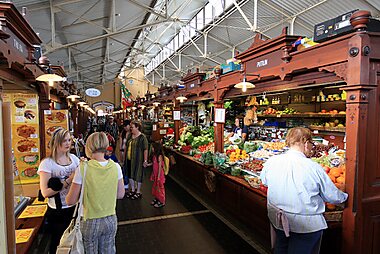
For a taste of local produce, browse the stalls and small eateries inside Old Market Hall, a 19th-century market hall by the harbor selling everything from fish to pastries. The waterfront kiosks at Market Square are the classic spot for a cheap lunch of fried herring straight off the boats that dock there each morning.
Safety & health
Helsinki is one of Europe's safest capitals, and violent crime against tourists is rare. Keep an eye on bags on crowded trams and around the central railway station, where opportunistic pickpocketing occasionally occurs. Winter brings icy pavements — good grip shoes matter more than any other safety precaution here.
History
Helsinki was founded in 1550 by the Swedish king to compete with the Estonian port of Tallinn, but it stayed a small town for over 250 years. Everything changed in 1812, when Russia — which had taken control of Finland in 1809 — made Helsinki the capital of the new Grand Duchy of Finland, replacing Turku. The German-born architect Carl Ludvig Engel redesigned the centre in a sweeping neoclassical style, giving the city Senate Square and the white-domed Helsinki Cathedral that still define its skyline.
The onion-domed Uspenski Cathedral, the largest Orthodox cathedral in Western Europe, is a reminder of the century of Russian rule that followed. Finland declared independence in 1917, and the sea fortress of Fortress of Suomenlinna — built even earlier, in 1748, to defend against Russian expansion — later became a UNESCO World Heritage Site marking that long, complicated relationship with its eastern neighbor.
Country facts
Quick practical facts for Finland at a glance:
- Currency
- Euro EUR · Card payments · Widely accepted
- Emergency numbers
- 112
- Electricity
- 230 V · 50 HzType C / Type F
- Languages
- Finnish, Swedish
- Tap water
- Safe to drink
- Driving side
- Right
- Calling code
- +358


Helsinki – Plan Your Days
Turn the places from this guide into a real itinerary, with smart routing, time estimates, and everything you need for a perfect trip.




