



Lake Maggiore
Lake Maggiore is Italy's second-largest lake, framed by the Alps and lined with palm trees, pastel villas, and grand hotel terraces. Regular passenger ferries link the shore towns and the Borromean Islands, so a car is optional for the classic sights.
Stresa inspired part of Ernest Hemingway's novel A Farewell to Arms, and the lake still draws travelers who want gardens, boat rides, and calm mountain views rather than one big city sight. It suits a relaxed few-night stay, or works well as a stop between Milan and Switzerland.

Lake Maggiore – Planning a Trip?
Build your day-by-day itinerary in the Tripomatic app.


When to visit
Spring and early summer bring mild days and blooming gardens. July and August are warm and busy with Italian holidaymakers, autumn is quieter with soft light on the water, and winter is cold and grey, with some island attractions closed.
Plan around the Stresa Festival (Settimane Musicali), a classical and chamber music festival held across historic villas and lakeside venues from mid-July into September — the lake's headline annual event.
Best time to visit: September, October
Expect crowded ferries and full hotels in July and August; May, June, and September bring warm days with thinner crowds.
Top sights
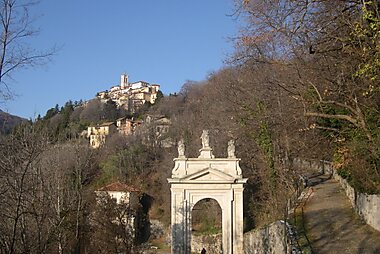


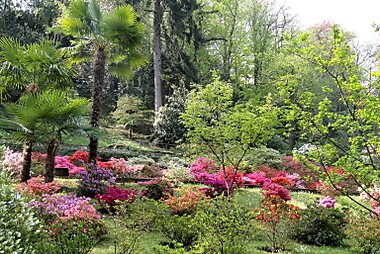

The three Borromean Islands are the main sight on Lake Maggiore. Palazzo Borromeo (Isola Bella) sits inside tiered baroque gardens built by the Borromeo family in the 1600s, with statues, grottoes, and white peacocks roaming the grounds. Palazzo Borromeo (Isola Madre) is quieter, wrapped in a lush English-style botanical garden. Isola dei Pescatori is the smallest of the three, a real fishing village with narrow lanes, lakeside trattorias, and no cars.
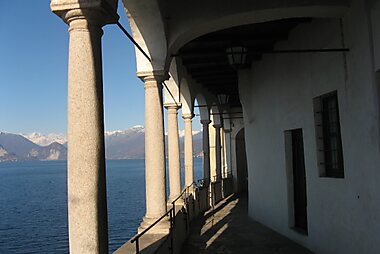
On the western shore, Villa Taranto is one of Italy's finest botanical gardens, known for its terraced flowerbeds and spring camellia displays. Perched on a cliff above the eastern shore, Santa Caterina del Sasso is a centuries-old hermitage reached by a stepped path or a lift cut into the rock. Rocca di Angera rises on a hilltop over Angera and holds one of the region's best-preserved medieval fresco cycles.
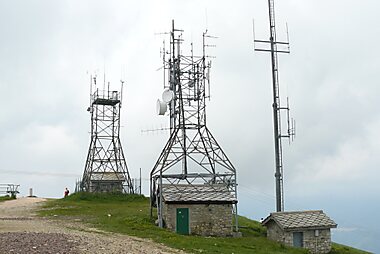
Above Stresa, Mottarone is a 1,491-metre peak with a panorama stretching from the Alps toward Milan on a clear day; the summit road is the way up, since the cable car has been closed since a 2021 accident. In Arona, the copper Colossus of San Carlo lets visitors climb inside its hollow body for a lake view through its eyes and ears.
Featured Lists

Lake Maggiore Essentials
Lake Maggiore spans the border of Italy and Switzerland, characterized by the Borromean Islands' Baroque architecture and elaborate terraced gardens. Significant landmarks include the 12th-century Santa Caterina del Sasso monastery built into a rock face, the 35-meter Sancarlone statue, and the medieval Rocca di Angera. The Swiss northern shore features the 220-meter Verzasca Dam and the pilgrimage site of Madonna del Sasso overlooking Locarno.
14 places

Historic Sites & Castles
Explore the historical evolution of Lake Maggiore through its defensive architecture and archaeological heritage. This collection spans from the Iron Age necropolis of the Golasecca culture to the medieval fortresses of the Visconti and Borromeo families, such as the well-preserved Rocca di Angera and the ruins of Rocca di Arona. Highlights include the 17th-century Colossus of San Carlo Borromeo, one of the world's tallest statues, and the ornate Baroque gardens of Villa Della Porta Bozzolo.
8 places
Parks and Nature
Explore the diverse landscapes of the Lake Maggiore and Varese regions, from the manicured Baroque terraces of Isola Bella to the glacial waters of Lake Varese and Lake Monate. This collection highlights the area's geological variety, featuring the 30-meter drop of Cascata Fermona and high-altitude alpine shelters like Bivacco Alpe Agario. Visitors can find rare botanical species at Villa Taranto or hike to secluded waterfalls in Cittiglio and Castelveccana, showcasing the natural heritage of the Italian-Swiss border.
15 places
What to experience
- Follow one of the marked trails down from the Mottarone summit through beech woods to Alpino or Gignese — a half-day hike with lake views the whole way.
- Watch the camellias and rhododendrons bloom at Villa Taranto between March and May, when the gardens are at their most colourful.
- Take an evening ferry between the islands and watch the lakefront lights come on from the water.
- Join the lakeside aperitivo hour at sunset along the Stresa or Verbania promenade, a daily ritual rather than a special event.
- Try windsurfing or sailing near Cannobio, where steady afternoon winds draw local sailing schools.
Tours & Activities
Lake Maggiore — Map

 Open the interactive map
 Day trips
The lake makes a good base for exploring the wider Piedmont-Lombardy lake district. These are listed closest first.
- Orta San Giulio — ≈30 min by car from the western shore. A tiny, car-free lakeside town on the smaller Lake Orta, facing a monastery-topped island in the middle of the water.
- Sacro Monte di Varese — ≈45 min by car from the southern shore. A UNESCO-listed pilgrimage route of chapels climbing a wooded hill above Varese, each frescoed with scenes from the life of the Virgin Mary.
- Locarno and Ascona — ≈20 min by car from Cannobio on the northern shore, closer to an hour from Stresa or the southern towns. Switzerland's palm-lined lakeside towns, with a lakeside castle and a walkable old town facing each other across a small bay. No passport check applies under the Schengen agreement, but bring ID and Swiss francs.
Getting there
- By air: Milan Malpensa Airport (MXP) is only about 20-25 km from the lake's southern tip, the most convenient gateway. A taxi or transfer takes about 30 minutes to Arona, or 45-50 minutes to Stresa; regional trains connect nearby Gallarate to both towns in under an hour. Milan Linate is about an hour away by car, and Bergamo Orio al Serio roughly 1.5 hours.
- By train: Regional and InterCity trains on the Milan–Domodossola line stop at Arona, Stresa, Baveno, and Verbania on the western shore; some continue over the Alps into Switzerland via the Simplon tunnel. On the eastern shore, Laveno is reached from Milan via Gallarate; Angera has no station and is reached by ferry from Arona or by bus.
- By bus: Regional coaches run from Novara and Milan, but the train is faster and more reliable for most routes.
Getting around
- Ferries: Navigazione Laghi runs scheduled boats and hydrofoils linking every lakeside town and the Borromean Islands — the easiest way to island-hop without a car. Buy tickets at the dock or online; a one- or two-day pass pays off if visiting more than one island. Navigazione Laghi timetables
- Train: Regional trains along both shores connect the main towns quickly and cheaply; buy tickets from station machines or the Trenitalia app before boarding.
- Car: Useful for reaching hillside sights away from the water, but summer weekend traffic and scarce parking make the shore road slow in July and August.
- On foot / cycling: Each town centre is walkable in under 20 minutes. Cycling paths run along parts of the western shore, including a car-free stretch near Verbania.
Driving
- Is a car worth it?: Not for the classic sights — ferries and trains cover the main towns and islands well. A car helps for hillside spots like Mottarone or Santa Caterina del Sasso, and for day trips into Switzerland or the hills.
- Parking: Paid blue-zone parking is available in Stresa, Verbania, and Arona centres; pay by app or ticket machine. Arrive early on summer weekends, when spaces fill up fast.
- Restrictions: The shore road narrows through several town centres and gets congested in July and August; no major low-emission or pedestrian-only zones apply outside the historic cores.
Food & drink
Lake fish defines the table here: look for persico (perch), often fried or served in butter and sage, and coregone (whitefish), usually grilled or smoked. Risotto appears everywhere, reflecting the lake's position between Piedmont and Lombardy, alongside classic dishes from both regions.
For something sweet, seek out the margherita di Stresa, a thin butter biscuit invented in Stresa in 1857. For dinner, the lakefront promenade in Stresa and the old town of Pallanza in Verbania are where the best restaurants cluster.
Safety & health
Lake Maggiore is calm and low-crime; the main risk is pickpockets on crowded summer ferries and around the busiest docks, so keep bags zipped and close. Swim only from marked beaches or lidos — the lake stays cold even in summer, and boat traffic is heavy near ferry routes. Book Borromean Island tickets online in July and August to skip the longest queues.
History
The Borromeo family has shaped the lake's Italian shore since the 1600s, when it turned the bare rock of Palazzo Borromeo (Isola Bella) into tiered baroque gardens and transformed the older orchards of Palazzo Borromeo (Isola Madre) into a botanical retreat. Their hilltop stronghold, Rocca di Angera, is far older, built to guard the lake's medieval trade routes.
By the 1800s, the lake was a fixture of the Grand Tour. Writers and aristocrats including Stendhal and Lord Byron passed through, drawn by the mild climate and the gardens. That romantic reputation is why grand hotels still line the waterfront in Stresa and Verbania today.
Country facts
Here are the essentials for traveling in Italy:
- Currency
- Euro EUR € · Card payments · Widely accepted
- Emergency numbers
- 112
- Electricity
- 230 V · 50 HzType C / Type F / Type L
- Languages
- Italian
- Tap water
- Safe to drink
- Driving side
- Right
- Calling code
- +39


Lake Maggiore – Plan Your Days
Turn the places from this guide into a real itinerary, with smart routing, time estimates, and everything you need for a perfect trip.




