



Latvia
Latvia is a small Baltic country known for the Art Nouveau architecture of its capital, Riga, dense forests, and a long, sandy Baltic Sea coastline. It borders Estonia, Lithuania, Belarus, and Russia, and much of the country outside the capital is quiet, rural, and forested.
Latvia suits travelers interested in architecture, nature, and beach towns, and works well as a short city break or combined with a wider Baltic trip. Summers are warm with long daylight hours; winters are cold, dark, and often snowy.


Latvia – Planning a Trip?
Build your day-by-day itinerary in the Tripomatic app.


Money & payments
Latvia uses the euro, as a member of the eurozone.
Card and phone payment work almost everywhere in cities and towns, including small cafés and public transport. A little cash is still useful in rural areas and at some markets.
Featured Lists


Tours & Activities
Latvia — Map

 Open the interactive map
 Tipping
Tipping is not mandatory in Latvia and is far less expected than in North America. Leaving around 10% in a restaurant is a common and appreciated gesture for good service, though for a small bill many locals simply round up instead. Check the bill first, since a few restaurants add a service charge already.
~10%, round up for a small bill
round up the fare
Electricity
Latvia uses Type C and Type F plugs (the standard two-round-pin sockets used across most of continental Europe) at 230 V / 50 Hz.
Language
Latvian is the official language and belongs to the small Baltic language family, related closely only to Lithuanian. English is widely spoken in Riga and among younger people; Russian is also common, especially in the east and among older generations.
Staying connected
Prepaid SIM and eSIM plans from Tele2, LMT, or Bite are easy to buy at the airport or phone shops. Mobile coverage and Wi-Fi are reliable in cities and along main roads, with some drop-off in more remote rural areas.
Safety & emergencies
Latvia is a safe country for tourists, with low rates of violent crime. The main risks are pickpocketing in busy tourist areas of Riga's Old Town, and icy pavements and roads in winter. Latvia has a single emergency number that reaches police, fire, and ambulance services.
Health
Tap water is safe to drink throughout the country. Pharmacies (aptieka) are common in towns and cities, with at least one open late in most larger towns. No special vaccinations are required for entry.
Visas & entry
Latvia is part of the Schengen Area. Citizens of the EU/EEA, the United States, Canada, Australia, and many other countries can enter for tourism without a visa for stays of up to 90 days within a 180-day period. Travelers from countries without a visa-waiver agreement need a Schengen visa, applied for through a Latvian embassy or consulate before travel.
Visa and entry requirements change frequently. Verify current requirements with the official immigration authority or your country's embassy before travel.
Etiquette
Latvians tend to be reserved with strangers at first, and small talk is less common than in some other cultures; this reflects a cultural preference for personal space, not unfriendliness. Shoes are almost always removed when entering someone's home. Song and dance traditions are taken seriously and are a genuine source of national pride, especially around the nationwide Song and Dance Celebration held every few years.
Holidays & opening hours
Public holidays can affect opening hours in smaller towns more than in Riga. Līgo and Jāņi, on June 23 and 24, mark the midsummer solstice and are among the most widely celebrated holidays, with many businesses closing as people head to the countryside.
Getting around
- By train: Regional trains connect Riga with nearby towns like Sigulda and Jūrmala; long-distance rail options to other cities are more limited.
- By bus: Long-distance coaches reach almost every town and are often the most practical way to travel between cities.
- In Riga: The Old Town is compact and walkable; trams, buses, and trolleybuses cover the rest of the city well.
- By air: Riga International Airport is the main hub for the Baltic region, with more international connections than Vilnius or Tallinn.
Driving
- Winter tires: Mandatory from December 1 to March 1; studded tires are allowed from October 1 to April 30.
- Speed limits: 50 km/h in towns, 90 km/h on rural roads, up to 110-120 km/h on some divided highways.
- Headlights: Must be on at all times, day and night, year-round.
- Rural roads: Some minor roads are unpaved gravel, especially outside the main highways; reduce speed accordingly.
- Fuel: Stations are self-service, with card payment standard at the pump.
Food & drink
Rye bread (rupjmaize) is a staple at almost every meal, alongside potatoes, pork, and freshwater fish. Grey peas with bacon is a classic hearty dish, especially in winter, and smoked fish is common along the coast.
Latvia has a strong foraging tradition, with wild mushrooms and berries appearing in home cooking and on restaurant menus in season. Dark rye bread also appears in desserts, alongside honey cakes and cottage-cheese pastries. Riga Black Balsam, a strong herbal liqueur, is a distinctive local specialty, often taken as a shot or mixed into coffee.
Where to explore
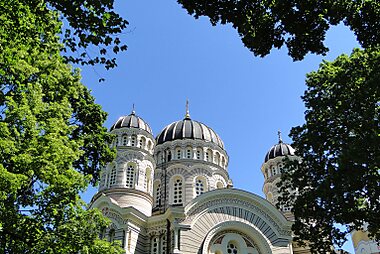
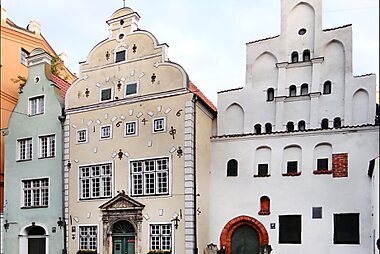
Riga is the capital, with a UNESCO-listed Old Town and one of the largest collections of Art Nouveau buildings in Europe. Jūrmala, just west of Riga, is Latvia's main beach resort town, known for its long sandy beach and wooden villas.
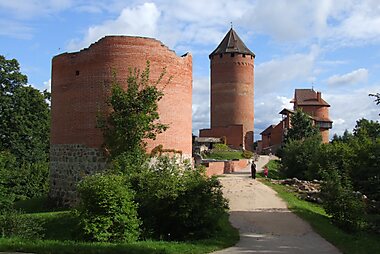
Sigulda, in the Gauja valley, is the gateway to Gauja National Park and its castles, and a popular day trip from Riga. Ventspils, on the west coast, is a tidy port city known for its beaches and cow sculptures, and Daugavpils, in the southeast, is Latvia's second-largest city, with a large 19th-century fortress.
Latvia – Plan Your Trip
Pick the places you want to see and Tripomatic turns them into a day-by-day route, with smart routing, time estimates, and everything you need for a perfect trip.




