



Los Angeles
Los Angeles is the entertainment capital of the world, home to the film and television industry that has shaped global pop culture for over a century. The city spreads across a wide basin between the Pacific coast and the San Gabriel Mountains, so it feels more like a collection of connected towns than one dense center.
A visit here suits travelers who want beaches, film history, and major museums in one trip, and who don't mind spending time in a car or on transit between them. Expect sunny weather most of the year, the Hollywood Sign visible from across the city, and a food scene shaped by immigrant communities from around the world.

Los Angeles – Planning a Trip?
Build your day-by-day itinerary in the Tripomatic app.


When to visit
Spring and fall are mild and dry with the fewest crowds. Summer is hot with almost no rain, and winter stays mild with occasional rain showers.
The Rose Parade fills the streets of Pasadena around New Year's Day, followed by the Rose Bowl football game. It's one of the most famous annual events in the Los Angeles area and worth planning a trip around if you enjoy large public celebrations.
Best time to visit: January, February, March, April, May, June, July, October, November, December
Late summer brings the hottest, driest stretch of the year.
Top sights
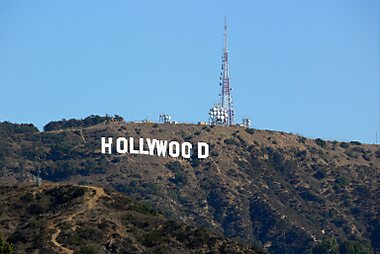
Hollywood Sign is the city's most recognized symbol, visible from viewpoints across Hollywood and Griffith Park.
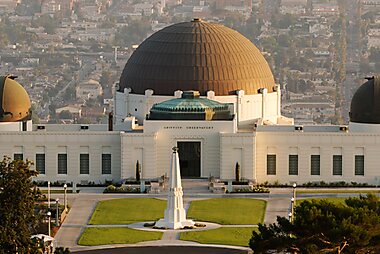
Griffith Observatory sits in Griffith Park, with free telescopes, a planetarium, and sweeping views over the city and the Hollywood Sign in the distance.
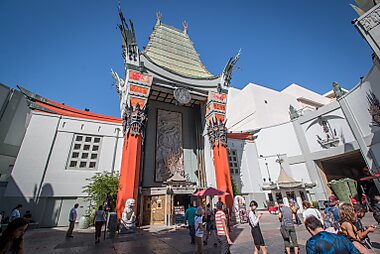
Along Hollywood Boulevard, TCL Chinese Theatre keeps the handprints and footprints of decades of film stars in its forecourt.
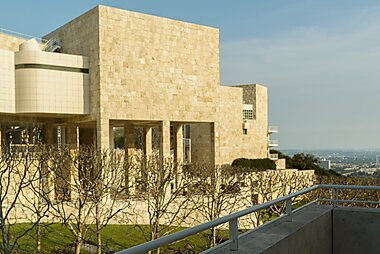
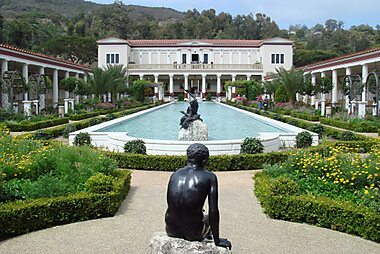
The Getty Center houses a major art collection in a hilltop complex reached by a free tram, with gardens and city views included.
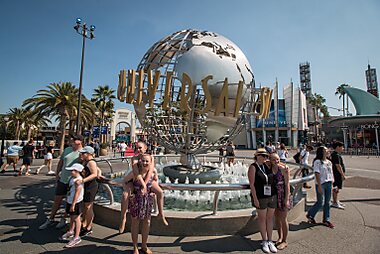
Universal Studios Hollywood combines movie-based rides with a tour of a working studio backlot.
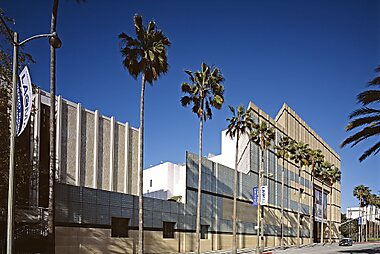
Los Angeles County Museum of Art is one of the largest art museums in the western United States, with a collection spanning ancient to contemporary work.
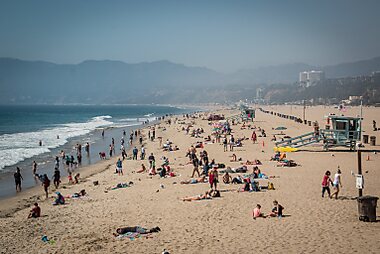
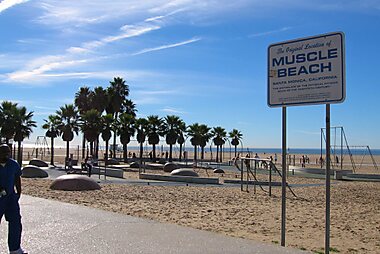
Venice Beach draws skaters, street performers, and bodybuilders along its boardwalk, right next to the sand.
Featured Lists


Los Angeles Museums & Galleries
This collection highlights the diverse artistic landscape of Downtown Los Angeles. It features world-renowned contemporary institutions like The Broad and MOCA, alongside cultural centers such as the Chinese American Museum and LA Plaza de Cultura y Artes. The list also includes experimental spaces like the Gallery at REDCAT, located within the Walt Disney Concert Hall complex, and community-driven hubs like Art Share L.A. in the historic Arts District.
9 places


What to experience
A few Los Angeles rituals go beyond sightseeing.
- Catch a Dodgers game at Dodger Stadium, a summer-evening tradition since 1962.
- Take a working studio tour at Warner Brothers Studio to see real sets and backlots in use.
- Hike up to Best Hollywood sign view point at sunset for a skyline view over the letters.
- Watch bodybuilders train at the outdoor gym in Muscle Beach Venice, a Venice fitness landmark since the 1930s.
Tours & Activities
Los Angeles — Map

 Open the interactive map
 Day trips
Several worthwhile destinations sit within a short drive or transit ride of the city.
- Santa Monica — about 20-30 minutes by car, or about 45 minutes by the E Line light rail. Wide beaches, an amusement pier, and a boardwalk connecting to Venice.
- Pasadena — about 30 minutes by car or by the L Line. Grand old houses, the Rose Bowl stadium, and a walkable historic downtown.
- Long Beach — about 35-45 minutes by car, or close to an hour by the A Line. An aquarium, the retired ocean liner Queen Mary, and a walkable waterfront.
- Malibu — about 45-60 minutes by car along the coast. Quiet beaches, canyon hikes, and The Getty Villa, a free museum built around a Roman-villa replica.
- Catalina Island — about 1 hour by ferry from Long Beach. A small island town with snorkeling, hiking, and almost no cars.
Getting there
- By air: Los Angeles International Airport (LAX) is the main gateway, about 30-45 minutes from Downtown depending on traffic; a free shuttle connects the terminals to the LAX/Metro Transit Center for rail and bus links, and to a consolidated rideshare pickup point. Hollywood Burbank Airport (BUR) is a smaller, often more convenient option for trips centered on Hollywood or the San Fernando Valley, about 20 minutes from Hollywood.
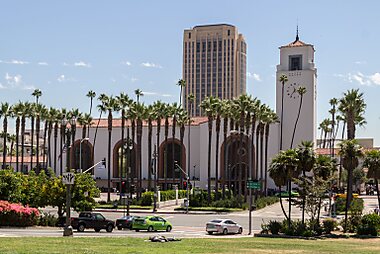
- By train: Amtrak's Pacific Surfliner, Coast Starlight, and Southwest Chief all arrive at Union Station, a 1939 station downtown that also anchors the regional Metrolink commuter network.
- By bus: Long-distance coaches, including Greyhound and FlixBus, stop at or near Union Station.
Getting around
- Public transit: The Metro rail and bus network covers much of the city. Buy a reloadable TAP card at any station, or tap a contactless bank card or phone directly at the fare gate or on the bus reader. LA Metro
- Taxi / ride-hailing: Uber and Lyft cover the whole metro area and are often faster than transit for cross-town trips.
- On foot / cycling: Downtown, Hollywood, and Santa Monica have walkable stretches, but distances between neighborhoods are long. A paved bike path runs along the coast from Santa Monica to Torrance.
Driving
- Is a car worth it?: A car is close to essential for exploring beyond Downtown, Hollywood, and Santa Monica. Los Angeles is built around freeways, and neighborhoods are far apart.
- Parking: Metered street parking and paid garages are common in busy areas. Pay by app or at a curbside kiosk; expect $10-30 for several hours in Downtown or Hollywood.
- Restrictions: No congestion charge or low-emission zone applies to visitors.
Food & drink
Los Angeles' food scene reflects its immigrant communities as much as its film industry. Tacos, Korean barbecue, and Thai food sit alongside upscale dining rooms across the city.
For a single stop with variety, head to Farmers Market, a historic food hall with dozens of stalls next to a well-known shopping center. For late-night Korean barbecue and karaoke, spend an evening in Koreatown.
Safety & health
Los Angeles is generally safe for tourists who stick to well-visited areas. The most common problem for visitors is theft from parked cars — never leave bags, electronics, or shopping visible inside a vehicle, even briefly.
Downtown's Skid Row area and some transit stops late at night are best avoided.
History
Los Angeles began in 1781 as a small Spanish farming settlement, founded near what is now El Pueblo Los Angeles Historic Park. It grew slowly under Mexican and then American rule until the railroads arrived in the 1870s and 1880s, followed by a citrus and oil boom.
The film industry moved here from the East Coast in the 1910s, drawn by cheap land, varied scenery, and near-constant sunshine. Within a few decades, studios like Warner Brothers Studio had turned Los Angeles into the center of the world's entertainment industry, a role it still holds today.
Country facts
Quick practical facts for the United States at a glance:
- Currency
- US Dollar USD $ · Card payments · Widely accepted
- Emergency numbers
- 911 Police · Ambulance · Fire brigade
- Electricity
- 120 V · 60 HzType A / Type B
- Languages
- English
- Tap water
- Safe to drink
- Driving side
- Right
- Calling code
- +1


Los Angeles – Plan Your Days
Turn the places from this guide into a real itinerary, with smart routing, time estimates, and everything you need for a perfect trip.




