



United States
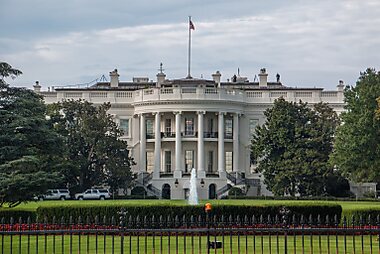
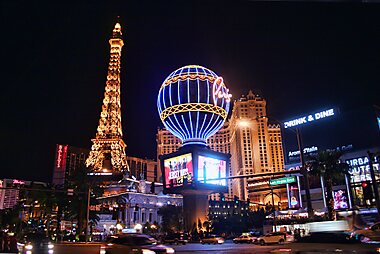
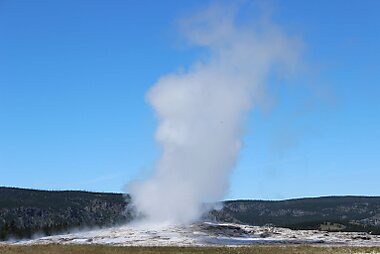
The United States spans a continent, and its appeal comes from how differently each region delivers on the idea of America: dense, vertical New York City; the monuments and museums of Washington, D.C.; the fog-wrapped hills of San Francisco; the neon sprawl of Las Vegas; and the wide-open geology of the Grand Canyon and Yellowstone. Los Angeles, Chicago, and New Orleans each add their own version of the country's culture, from film and deep-dish pizza to jazz and Creole cooking.
Distances are the first planning reality — flying between coasts takes five to six hours, and even neighboring-looking cities on a map can be a day's drive apart. Most first-time visitors pick one region (the Northeast, California, the Southwest) rather than trying to cover the whole country in a single trip.




United States – Planning a Trip?
Build your day-by-day itinerary in the Tripomatic app.


Money & payments
Cards, contactless, and mobile wallets are accepted almost everywhere, including small shops and food trucks; carrying some cash still helps for tips, parking meters, and smaller towns. Sales tax is added at the register and is not included in listed prices, so the total at checkout is higher than the shelf price — the rate varies by state and city, from zero in a few states to over 10% in some.
Featured Lists


Hidden Gems
This collection features unconventional landmarks across the United States. In the Nevada desert, Seven Magic Mountains showcases towering neon boulders, while Seattle offers the textured Gum Wall and the secluded Waterfall Garden Park. Visit the historic Ye Olde Curiosity Shop for oddities or Washington D.C.’s Maine Avenue Fish Market, the oldest of its kind. Quirky additions include Chicago’s bronze Shit Fountain, North Carolina’s 60-foot natural waterslide at Sliding Rock, and the thin granite ledge of Potato Chip Rock in California.
8 places
Iconic Heritage Sites
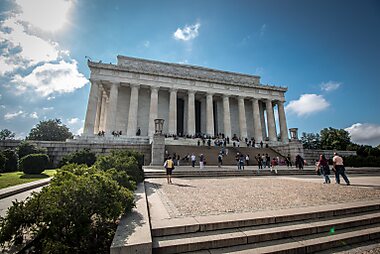
This collection highlights significant American landmarks, featuring neoclassical government buildings like the U.S. Capitol and Greek Revival monuments like the Lincoln Memorial. It includes vital transportation and financial hubs, such as the Beaux-Arts Grand Central Terminal and the New York Stock Exchange. Historical sites range from the colonial-era Saint Paul’s Chapel and Thomas Jefferson’s Monticello to the 17th-century Boston Common. The list also encompasses engineering projects like the Hoover Dam and cultural centers including the Chicago Theatre and the Mexican heritage district of Olvera Street.
15 places


Top Viewpoints & Towers
From the Art Deco spires of New York’s Empire State and Rockefeller Center to the granite cliffs of Yosemite’s Tunnel View, these sites offer premier vantage points across the United States. Urban highlights include the 1,776-foot One World Trade Center and Chicago’s 360-degree observatory overlooking Lake Michigan. Natural landmarks feature the Colorado River’s dramatic meander at Horseshoe Bend and the eroded badlands of Death Valley’s Zabriskie Point. Engineering marvels such as the High Roller ferris wheel and the Roosevelt Island Tramway provide moving perspectives of city skylines.
15 places
Tours & Activities
United States — Map

 Open the interactive map
 Tipping
15-20% of the pre-tax bill
$1-2 per drink, or 15-20% of the tab
15-20% of the fare
$1-5 per bag for bellhops, $2-5/night for housekeeping
15-20% of the tour cost
Tipping is a real part of how service workers are paid in the US, not a bonus — servers' base wages can be far below minimum wage on the assumption that tips make up the difference. Many card readers now prompt for a tip even at counter-service spots (coffee shops, food trucks); tipping there is optional and appreciated but not expected the way it is at a sit-down restaurant or bar.
Electricity
The US uses Type A and B plugs (two flat pins, sometimes with a third round grounding pin) at 120 V / 60 Hz — a lower voltage than most of the world. European and Asian appliances built for 220–240V (hair dryers, straighteners) usually need a voltage converter, not just a plug adapter, or they can be damaged; laptop and phone chargers are almost always dual-voltage and only need the adapter.
Language
English is the dominant language nationwide and was designated the official federal language by executive order in 2025. Spanish is widely spoken, especially in the Southwest, Florida, and major cities, and is a practical second language for travelers in border regions. Regional accents vary considerably from the Deep South to New England to the Upper Midwest, though all are mutually intelligible.
Staying connected
Prepaid SIM cards and eSIMs are widely available from carriers like T-Mobile, AT&T, and Verizon at airports and city stores, with no ID requirement as strict as in some countries. Coverage is excellent in cities and along interstates, but can drop out in national parks, mountain areas, and stretches of the rural West and Great Plains — worth planning for on a road trip.
Safety & emergencies
Most tourist areas are safe, with the usual big-city precautions around late-night transit, bag-watching in crowded tourist zones, and being alert in unfamiliar neighborhoods after dark. Weather-related risks are regional and seasonal: hurricanes affect the Gulf and Atlantic coasts roughly June through November, wildfires are a late-summer risk in parts of the West, and the Midwest sees tornado activity in spring.
Health
Tap water is safe to drink throughout the country. Healthcare is high-quality but can be extremely expensive without insurance — a single ER visit can run into thousands of dollars — so travel insurance covering medical care is strongly recommended for visitors, since there's no reciprocal coverage system like the EU's EHIC. Pharmacies (CVS, Walgreens, Rite Aid) are common and many stay open late or 24 hours in cities.
Visas & entry
Citizens of Visa Waiver Program countries (much of Europe, plus countries like Australia, Japan, and South Korea) can enter for stays of up to 90 days for tourism or business after registering online for an ESTA authorization in advance, rather than a visa. Travelers from other countries need a B1/B2 visitor visa arranged ahead of time.
Entry requirements and the list of eligible countries change from time to time. Verify current requirements with the US Department of State or your nearest US embassy before travel.
Etiquette
Small talk with strangers — cashiers, servers, people in line — is normal and friendly rather than intrusive; a brief "how's it going" doesn't require a real answer. Waiting your turn in line ("queuing") is taken seriously, and cutting is a real breach of etiquette.
Dress is generally casual almost everywhere, including at many restaurants; a few upscale places in big cities expect smart-casual. Remember sales tax isn't included in a listed price (see Money) and that tipping in restaurants and bars is expected, not optional (see Tipping).
Holidays & opening hours
Thanksgiving (fourth Thursday of November) is widely considered the country's biggest domestic travel holiday — flights and highways are at their busiest the day before and the Sunday after — with many businesses closed for the day itself. Independence Day (July 4) brings fireworks and closures nationwide, and the day after Thanksgiving ("Black Friday") kicks off the holiday shopping season with early store openings and major sales.
Most stores, unlike in much of Europe, stay open seven days a week, including Sundays.
Getting around
- By air: domestic flights are usually the fastest way to cover the country's distances — New York to Los Angeles is about 6 hours nonstop, and many regional routes run frequently.
- By car: road trips are a core part of the travel culture, and a rental car is often the easiest way to reach national parks and smaller towns; interstate highways are well maintained.
- By train: Amtrak connects major cities but is far more limited and slower than European rail, with its most frequent and reliable service concentrated in the Northeast Corridor between Boston, New York, and Washington, D.C.
- By bus: intercity coach lines (Greyhound, FlixBus, Megabus) are the cheapest way between cities not well served by rail or convenient flights.
Driving
- Key rules: driving is on the right; turning right on a red light after stopping is allowed in most states unless a sign says otherwise — a real difference from much of the world, though New York City is a notable exception where it's prohibited by default. Speed limits are posted in miles per hour, not km/h, typically 25–35 mph (40–56 km/h) in cities and 65–70 mph (105–113 km/h) on most rural interstates, rising to 80 mph (129 km/h) or more on some highways in a handful of western states (Texas, Utah, Montana, Wyoming).
- Tolls and vignettes: no national vignette; some highways, bridges, and tunnels charge tolls, often collected automatically by license-plate camera or a transponder like E-ZPass in the East.
- Fuel: stations are almost universally self-service, paid by card at the pump; gasoline is sold in gallons, not liters, and labeled Regular, Midgrade, or Premium by octane rating.
- Parking: metered street parking is common in cities, increasingly paid via an app rather than a physical meter; read posted signs carefully; both are strictly enforced with fines or towing.
- Rental cars: most visitors from abroad can drive on their home license for a short visit, though an International Driving Permit is recommended and sometimes required by rental companies.
Food & drink
Regional specialties vary sharply enough that "American food" isn't really one cuisine: Tex-Mex and barbecue in the South and Southwest (with barbecue style itself varying by state), deep-dish pizza in Chicago, bagels and pizza by the slice in New York, clam chowder in New England, and Cajun and Creole cooking in New Orleans. Portion sizes at restaurants tend to run large by international standards, and free refills on soft drinks are common.
Diners serving breakfast all day are a fixture almost everywhere, and weekend brunch — often with a wait for a table — is a real social ritual in most cities. Food trucks are a normal, often excellent, way to eat casually in bigger cities.
Where to explore
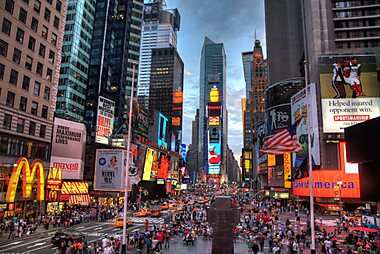
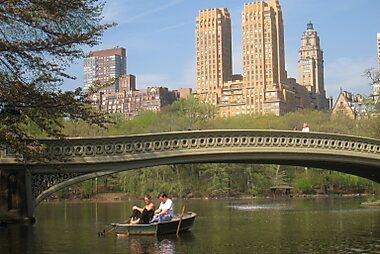
New York City is the classic first stop for many visitors, with its skyline, Central Park, and Broadway packed into a walkable, transit-connected city. Washington, D.C. concentrates the country's political history and free world-class museums along the National Mall, an easy add-on from the Northeast.
San Francisco pairs steep hills and cable cars with easy access to Napa Valley and the California coast, while Los Angeles spreads Hollywood glamour and beach culture across a famously car-dependent sprawl. Chicago offers a compact, walkable downtown with major architecture and museums on Lake Michigan, Las Vegas is the gateway to the Grand Canyon as much as it is a destination in its own right, and New Orleans brings a completely different pace built around music, food, and its French Quarter.
United States – Plan Your Trip
Pick the places you want to see and Tripomatic turns them into a day-by-day route, with smart routing, time estimates, and everything you need for a perfect trip.




