



Macau
Macau is a tiny peninsula and two islands on China's south coast, sitting across the water from Hong Kong. For over 400 years it was a Portuguese trading post, and it became a Chinese Special Administrative Region only in 1999. That mix still defines it: cobbled squares and baroque church façades sit a few streets from neon-lit casino towers, and the food blends Portuguese, African, and Cantonese influences into something found nowhere else.
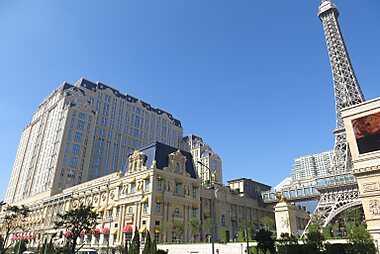
Macau now earns more gambling revenue than any other city in the world, and its casino resorts on the Cotai Strip rival Las Vegas in scale. But the old town, the Historic Centre of Macau, is a UNESCO World Heritage Site of preserved churches, forts, and colonial buildings that rewards a slow walk. The mix of the two makes Macau a rewarding two- or three-night stop, often combined with a longer trip to Hong Kong or southern China.

Macau – Planning a Trip?
Build your day-by-day itinerary in the Tripomatic app.


When to visit
October to February bring the driest, most comfortable weather. By March, spring humidity and coastal fog set in, and summer (May to September) turns hot, humid, and prone to typhoons and heavy rain. The Macau Grand Prix takes over the city's streets every November, when a public street circuit hosts touring cars and motorcycles right through the historic centre — book well ahead if visiting then, since hotel prices spike and some streets close.
Best time to visit: January, February, November, December
Top sights
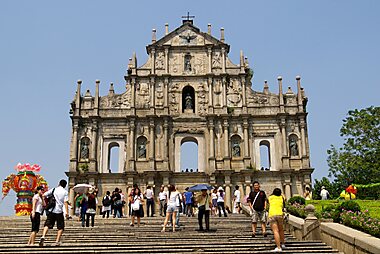
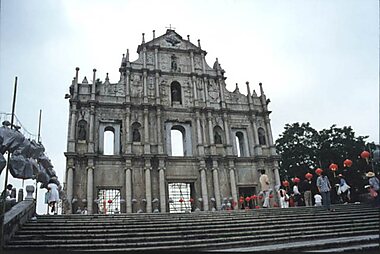
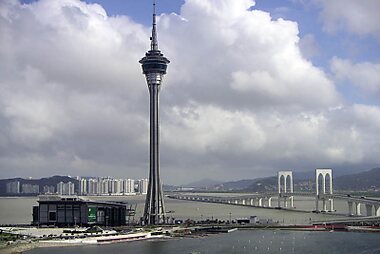
Ruins of St. Paul's is Macau's best-known landmark: only the stone façade of a 17th-century church survives after a fire, and its carvings mix Christian and Chinese and Japanese symbols.
A-Ma Temple is a Chinese temple older than the Portuguese settlement itself; Macau's own name is thought to come from A-Ma, the sea goddess honored here.
Leal Senado Building anchors Senado Square, the historic centre's main plaza, paved in a wave pattern of black and white stone and lined with pastel colonial buildings.
Fortaleza do Monte is a 17th-century fort built to defend the settlement; its cannons once fired on invaders, and the terrace has good views over the old town.
Guia Fortress sits on Macau's highest hill, with a 19th-century lighthouse that is the oldest on the Chinese coast still in its original form, plus a small fort and chapel.
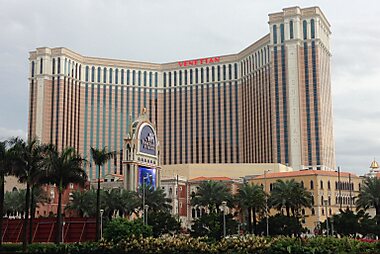
Across the water on reclaimed land, The Venetian Macao recreates Venice indoors, complete with canals, gondoliers, and one of the world's largest casino floors — a striking contrast to the old town's scale.
Featured Lists


Macau Museums and Galleries
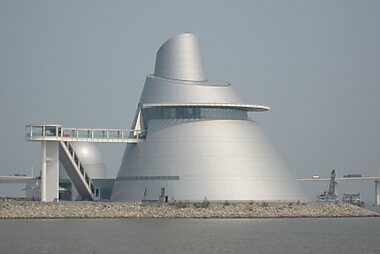
Macau's cultural landscape blends Portuguese colonial heritage with modern international entertainment. This collection spans historical sites like the 19th-century Lou Kau Mansion and the Dom Pedro V Theatre, Asia's first Western-style theater. Modern additions include the I.M. Pei-designed Macau Science Centre and large-scale venues like the Cotai Arena. Visitors can explore specialized collections at the Grand Prix Museum or the Maritime Museum, while contemporary art is showcased in repurposed spaces like the Ox Warehouse and dedicated galleries within Cotai Strip resorts.
20 places

What to experience
- Take Guia Cable Car up Guia Hill — a short, cheap ride that saves the climb and drops you right at the fortress and lighthouse.
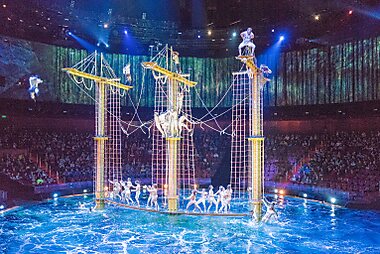
- Watch The House of Dancing Water at The House of Dancing Water, a large-scale water, acrobatics, and motorcycle stunt show staged in a custom theatre.
- Try your luck at the tables — Macau's casinos, including Grand Lisboa, are open to visitors even if you only want to watch or play a low-stakes round.
- Walk Rua da Felicidade after dark, when its red shopfronts and neon signs light up — once the city's red-light district, now a photogenic dining street.
Tours & Activities
Macau — Map

 Open the interactive map
 Day trips
Macau's location makes it an easy base for exploring the wider Pearl River Delta, and several worthwhile destinations sit just across a nearby border.
- Zhuhai, mainland China — 15–30 minutes on foot through the Border Gate crossing, including immigration on both sides (longer during Chinese holidays). A modern Chinese city with waterfront parks; a Chinese visa is required for most nationalities.
- Hengqin Island, home to Chimelong Ocean Kingdom, one of the world's largest ocean theme parks — around 30–40 minutes by bus or taxi via the Hengqin border checkpoint.
- Hong Kong — about 1 hour by high-speed ferry from the Macau ferry terminals. A different pace entirely: skyscrapers, harbor views, and a much larger city to explore for a full day.
- Guangzhou — roughly 2 hours by intercity bus or high-speed rail via Zhuhai. A major mainland city with a very different, distinctly Cantonese character and a Chinese visa requirement for most nationalities.
Getting around
- Buses: an extensive, cheap public bus network covers the peninsula, Taipa, and Coloane. Pay with a Macau Pass contactless card (sold at convenience stores) or exact cash — most routes do not yet take a foreign contactless bank card directly.
- Casino shuttle buses: nearly every casino resort runs a free shuttle bus connecting the ferry terminal, the airport, the border crossings, and its own property. These are open to anyone, not just guests, and are one of the easiest ways to move between the peninsula and Cotai.
- Taxis: metered, but drivers can be reluctant to take short or awkward fares — have your destination written in Chinese if possible.
- On foot: the historic centre is compact and walkable, with most sights within a 20-minute walk of each other. Cotai's resorts are huge and spread out, so plan on covering that area by shuttle bus rather than on foot.
Driving
- Is a car worth it?: no. Macau is small, walkable in its historic core, and well covered by buses and free casino shuttles — a rental car adds cost and parking hassle for no real benefit.
- Parking: multi-story car parks exist near the casinos and border crossings, but nearly all visitors get around without one.
Food & drink
Macanese cooking mixes Portuguese, African, and Cantonese techniques into its own distinct dishes. Look for African chicken (grilled chicken in a spicy coconut-and-peanut sauce), minchi (minced meat with rice and a fried egg), and Portuguese-style egg tarts with a caramelized top.
For egg tarts and Macanese bakeries, head to Coloane Village, a quiet former fishing village with some of the city's most famous bakeries. For a wider spread of local food stalls, Rua do Cunha in Taipa is a pedestrian street lined with shops selling almond cookies, jerky, and egg tarts to try before you buy.
Safety & health
Macau is very safe for visitors, with low rates of violent crime. The main risks are pickpocketing in crowded casino floors and around the Ruins of St. Paul's, and unofficial currency changers near the border crossings who offer poor rates or short-change tourists — use a bank or licensed exchange counter instead.
Tap water is treated to safe standards, but it is heavily chlorinated and most residents and visitors still prefer bottled or boiled water.
History
Portuguese traders settled Macau in 1557, making it the first European colonial outpost in East Asia and, for centuries, a key stop on trade routes between China, Japan, and Europe. A-Ma Temple already stood here before the Portuguese arrived, and the settlement's own name is believed to come from the goddess honored there.
The Portuguese built forts and churches across the peninsula to defend and serve the growing trading community; Fortaleza do Monte and the church at Ruins of St. Paul's both date from this period, though the church itself burned down in 1835, leaving only its carved stone façade standing.
Macau returned to Chinese sovereignty in 1999, becoming a Special Administrative Region under the same "one country, two systems" arrangement as Hong Kong. In 2002 the government ended a decades-long gambling monopoly and opened the industry to foreign operators, triggering the casino-resort boom that transformed the Cotai Strip. In 2005 UNESCO inscribed the historic centre as a World Heritage Site, recognizing the well-preserved mix of Chinese and Portuguese architecture that still stands today.
Country facts
Quick practical facts for China at a glance:


Macau – Plan Your Days
Turn the places from this guide into a real itinerary, with smart routing, time estimates, and everything you need for a perfect trip.


Related destinations


Data: © OpenStreetMap contributors, Wikidata, Wikipedia, Tripomatic, Official websites, geoBoundaries (CC BY 4.0). Tours by GetYourGuide. We earn commission from bookings. Travel guide generated with AI.