



Hong Kong
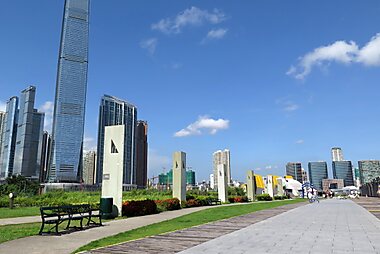
Hong Kong packs glass towers, green mountains, and a working fishing harbor into a small strip of land on China's southern coast. It has one of the most striking skylines in the world, framed by steep peaks on one side and Victoria Harbour on the other. Streets are dense and vertical: markets, temples, and noodle shops sit beneath skyscrapers, and a short walk can take you from a busy shopping strip to a quiet hillside trail.
The city works well for a short stay. Its metro is fast and easy to use, English is widely spoken, and the mix of Cantonese street food, colonial-era architecture, and modern skyscrapers gives visitors a lot to see without much travel time between sights. Hong Kong suits travelers who want a compact, walkable city with strong food, harbor views, and easy access to hiking trails and outlying islands. It was also the childhood home of martial artist and actor Bruce Lee, still celebrated across the city.

Hong Kong – Planning a Trip?
Build your day-by-day itinerary in the Tripomatic app.


When to visit
Late autumn through early spring (November to March) is the most comfortable stretch, cool and dry with clear skies. Summer, from June to September, turns hot and humid, with heavy afternoon downpours and occasional typhoons that can pause flights and ferries for a day.
Time a visit around Chinese New Year, in late January or February, when Tsim Sha Tsui hosts a night parade with floats and lion dances, followed the next evening by a fireworks display over Victoria Harbour — one of Hong Kong's biggest annual celebrations, right in the best-weather window.
Best time to visit: January, February, March, October, November, December
Top sights


Victoria Peak is Hong Kong's best-known viewpoint, looking straight down over the skyline and Victoria Harbour to Kowloon beyond. Go near sunset to see the city switch from daylight to its lit-up night skyline.
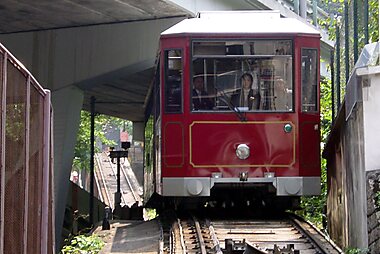
The easiest way up is the Peak Tram, a funicular railway that climbs a steep slope through the trees. The ride itself, tilted back against the seat as the city drops away below, is part of the attraction.
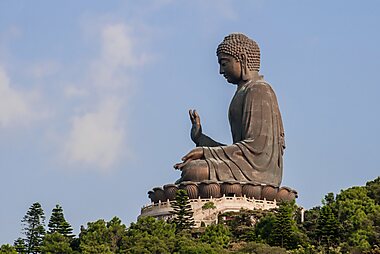
On Lantau Island, the Tian Tan Buddha Statue sits on a hilltop reached by cable car or a long staircase. At 34 meters tall, it is one of the largest seated bronze Buddha statues in the world and a major pilgrimage site.
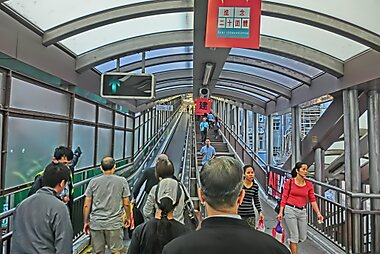
The Central-Mid-Levels Escalator System is the longest outdoor covered escalator system anywhere, linking the harbor front to the mid-levels neighborhood above. Ride it uphill through several distinct neighborhoods in one continuous trip.
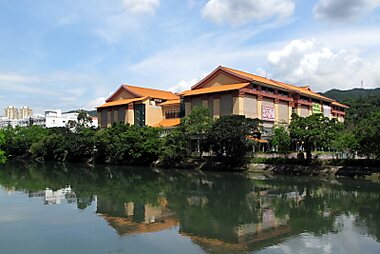
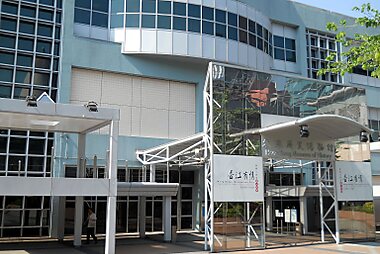
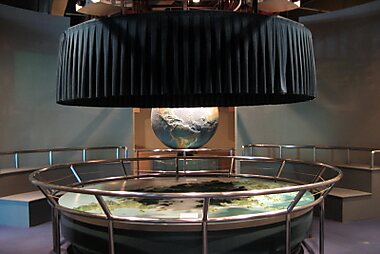
For a sense of the city's story, the Hong Kong Museum of History covers Hong Kong's history from prehistory through the colonial period to the 1997 handover, with detailed street and shop reconstructions.
Ladies Market in Mong Kok fills the length of Tung Choi Street with stalls selling clothes, accessories, and souvenirs, and gets especially lively after dark.
On Hong Kong Island's south side, Stanley Market is a more relaxed shopping stop, known for silk goods, artwork, and its seafront promenade.
For a break from the crowds, the Hong Kong Zoological & Botanical Garden is a free garden near Central with tropical plants, aviaries, and a small zoo section, popular with early-morning tai chi practitioners.
Featured Lists


Outdoor Adventures in Hong Kong
Hong Kong’s diverse terrain offers a range of outdoor activities, from scaling Victoria Peak and Lantau Peak to exploring the volcanic rock formations of the UNESCO Global Geopark. This selection features backcountry campsites in Sai Kung West Country Park, including the well-equipped Wan Tsai Peninsula, and coastal sea caves like Mok Min Cave. Climbers can find established routes at Shek O’s granite walls and the technical cliffs of the High Island area.
15 places
What to experience
A few Hong Kong rituals are worth building time for beyond the sightseeing list.
- Cross Victoria Harbour on the Star Ferry at dusk, one of the cheapest and most scenic rides in the city.
- Watch the nightly Symphony of Lights, a synchronized light and music show across the skyline, best seen from the Tsim Sha Tsui waterfront.
- Ride one of the city's vintage double-decker trams, nicknamed "Ding Ding," along the north shore of Hong Kong Island.
- Hike a section of the Dragon's Back trail on Hong Kong Island's south side for coastal and skyline views without a long trip out of town.
- If visiting in spring, join the crowds at the Cheung Chau Bun Festival, with its parade and bun-scrambling competition.
Tours & Activities
Hong Kong — Map

 Open the interactive map
 Day trips
Hong Kong's outlying islands and cross-border neighbors make for easy day trips, from a short ferry ride to a quick train across the border.
- Lamma Island — ≈35 min by ferry from Central. Car-free, with seafood restaurants and an easy coastal trail between two fishing villages.
- Cheung Chau — ≈1 hour by ferry from Central. A small former fishing island with narrow lanes, beaches, and a well-known bun festival in spring.
- Shenzhen — ≈15-30 min by high-speed rail from West Kowloon, or ≈40 min by cross-border MTR via the Lo Wu border. A fast-growing mainland Chinese tech and shopping hub, very different in pace and price from Hong Kong.
- Macau — ≈1 hour by high-speed ferry from the Hong Kong-Macau Ferry Terminal. A former Portuguese colony known for its old-town architecture, casinos, and Macanese food.
Where to explore
Hong Kong divides into four distinct areas, each worth some exploring beyond the city center.
Across the harbor from Kowloon, Hong Kong Island holds the financial district and nightlife strip, including Admiralty and Wan Chai, both packed with offices, bars, and restaurants.
Kowloon, on the mainland side of the harbor, is denser and more local in feel, with busy markets and some of the best street food.
Further out, the New Territories offer more space and greenery. Sha Tin and Tai Po are spacious towns with temples, parks, and river paths, a change of pace from the city center.
To the west, Lantau Island is the largest of Hong Kong's islands, home to the airport, the Big Buddha, and long hiking trails.
Getting there
- By air: Hong Kong International Airport, on Chek Lap Kok, is the main gateway with scheduled flights from most world regions. The Airport Express train reaches Central in about 24 minutes; taxis take 45-60 minutes depending on traffic and cost roughly HK$300-400.
- By train: The West Kowloon high-speed rail station connects to mainland Chinese cities including Shenzhen, Guangzhou, and, with a longer ride, Beijing and Shanghai. The MTR East Rail Line also runs directly to the mainland border crossing at Lo Wu/Lok Ma Chau.
- By bus: Long-distance coaches link Hong Kong to Shenzhen and Guangzhou, useful for travelers arriving overland from mainland China.
- By ferry: High-speed ferries connect the Hong Kong-Macau Ferry Terminal in Sheung Wan to Macau in about an hour, and to several mainland ports near Shenzhen and Guangzhou.
Getting around
- Public transit: The MTR metro is fast, frequent, and covers most of the city, supplemented by buses, trams, and ferries. Tap a contactless bank card or phone directly at the gates instead of buying paper tickets; an Octopus card also works and can be used at many shops. See the MTR journey planner.
- Taxi / ride-hailing: Red taxis are common and metered; ride-hailing apps operate but taxis are often cheaper for short trips within the city.
- On foot / cycling: The urban core is walkable but hilly, especially on Hong Kong Island, where covered escalators and elevated walkways help. Cycling is impractical in the dense center but popular on New Territories bike paths.
Driving
- Is a car worth it?: No. Public transit covers the city well, traffic is heavy, and parking is scarce and expensive. A car adds cost and stress without saving time.
- Driving side: Hong Kong drives on the left.
- Parking: Multi-story car parks in malls and office towers are the norm; on-street parking is limited and metered. Pay by Octopus card or the operator's app.
- Restrictions: Central and parts of Kowloon have narrow, congested streets where a car is more hassle than help; stick to public transit in the urban core.
Food & drink
Cantonese food anchors the local diet: dim sum brunches, roast meats hanging in shop windows, and clay-pot rice in cooler months. Street snacks like egg waffles and curry fish balls are eaten on the move, and a cup of strong Hong Kong-style milk tea is a fixture of daily life.
For a concentrated taste of street food, head to the stalls around Temple Street Night Market in Yau Ma Tei, open into the late evening. For an old-school sit-down meal, look for a cha chaan teng (local diner) in neighborhoods like Sham Shui Po, where set breakfasts and lunches are cheap and fast. Some restaurants add a 10% service charge automatically; check the bill before adding more.
Safety & health
Hong Kong is one of the safer major cities for travelers, with low rates of violent crime. The main risks are petty ones: pickpocketing in crowded markets and on the MTR during rush hour, and occasional overcharging at unlicensed money changers or tailor shops that pressure tourists into quick purchases. Use licensed exchange counters and agree on prices before any tailoring or repair work.
Tap water meets safety standards, but old pipework in some older buildings means many residents still boil or filter it. Bottled water is cheap and sold everywhere. In summer and early autumn, typhoons can disrupt travel; follow the official signal system and expect public transit and flights to pause during a severe warning.
History
Hong Kong began as a scattering of fishing and farming villages before Britain took control of Hong Kong Island in 1842, at the end of the First Opium War, later adding the Kowloon Peninsula in 1860, after the Second Opium War, and a 99-year lease on the New Territories in 1898. That colonial history is still visible around Statue Square in Central, once the ceremonial heart of British Hong Kong.
The city was occupied by Japan during the Second World War, then rebuilt rapidly after 1945 as a manufacturing and trading hub, drawing waves of migration from mainland China. That growth turned a mid-century port town into the dense, high-rise city seen today.
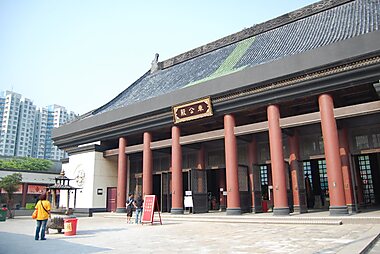
Older, pre-colonial life survives too: the Che Kung Temple in Sha Tin, a Taoist temple honoring a Song-dynasty general, has drawn worshippers for centuries and remains active today.
In 1997, sovereignty passed back to China under a "one country, two systems" arrangement, and Hong Kong kept its own laws, currency, and border controls, a status that still shapes daily life and travel here.


Hong Kong – Plan Your Days
Turn the places from this guide into a real itinerary, with smart routing, time estimates, and everything you need for a perfect trip.




