



Melbourne
Melbourne is widely seen as Australia's cultural capital. It sits on a grid of wide boulevards lined with narrow laneways. Those laneways hide some of the country's best coffee, street art, and small bars. Gold-rush wealth from the 1850s left the city with grand Victorian architecture. Decades of immigration since then gave it one of Australia's most varied food scenes.
The city is passionate about sport. Melburnians fill stadiums for Australian Rules football, cricket, and tennis with equal enthusiasm. The yearly calendar revolves around major sporting and cultural events. Melbourne suits travelers who like to explore on foot and follow their curiosity down side streets. It rewards lingering over long meals rather than racing between sights.

Melbourne – Planning a Trip?
Build your day-by-day itinerary in the Tripomatic app.


When to visit
Spring (September to November) and autumn (March to May) bring mild, pleasant weather and are the most comfortable times to visit. Summer (December to February) is warm and sometimes very hot, with temperatures that can swing sharply within a single day, so pack layers no matter the season. Winter (June to August) is cool and grey rather than cold.
The city's biggest annual draw is the Australian Open, held at Melbourne Park every January. The world's best tennis players compete there for two weeks, drawing huge crowds.
Best time to visit: January, February, March, April, November, December
Top sights


Melbourne Cricket Ground is Australia's largest sports stadium, hosting cricket Test matches and Australian Rules football finals in front of crowds of over 100,000. Even outside match days, a tour of the stadium and its sports museum is worth the trip.
Federation Square is Melbourne's main public square, a plaza of angular buildings built over the old rail yards that hosts free exhibitions, screenings, and public events year-round.
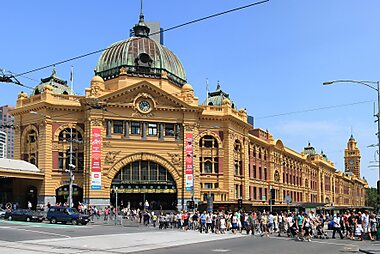
Flinders Street Railway Station, with its distinctive facade and clocks, is the city's best-known meeting point and one of the busiest train stations in the country.
Hosier Lane is the most famous of Melbourne's laneways covered in ever-changing street art, and a good introduction to the city's laneway culture.
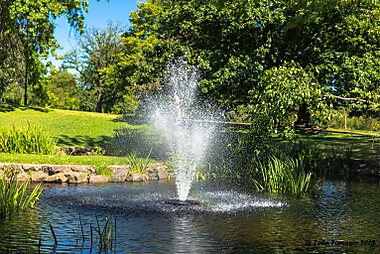
Royal Botanic Gardens spreads out beside the Yarra River, with a tropical glasshouse and paths that make for an easy escape from the city grid.
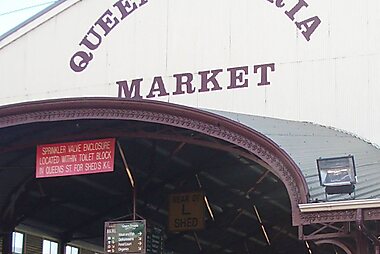
Queen Victoria Market is the largest open-air market in the Southern Hemisphere, worth a visit for its produce halls and covered lanes of stalls.
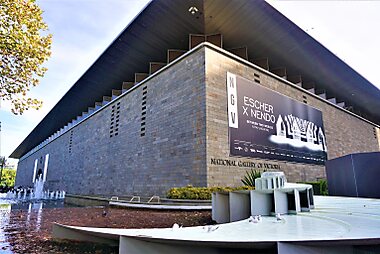
National Gallery of Victoria (NGV International) holds Australia's oldest and most visited art collection, split between its original building on St Kilda Road and the Australian collection at Federation Square.
Brighton Bathing Boxes is a row of brightly painted Victorian-era bathing huts on Brighton's beach, one of the most photographed sights on Port Phillip Bay.
Featured Lists


What to experience
- Ride the free City Circle tram loop around the CBD — a slow, easy way to get oriented on your first day.
- Catch a match at Melbourne Cricket Ground, or in January, watch a session of the Australian Open at Rod Laver Arena.
- Take in sunset from The Edge, the glass cube that slides out of the tower at Melbourne Skydeck.
- Wander the smaller laneways around the centre for coffee and rotating street art beyond Hosier Lane.
- Stroll St Kilda's foreshore at sunset, past Luna Park and the little penguin colony that nests under the pier breakwater.
Tours & Activities
Melbourne — Map

 Open the interactive map
 Day trips
Melbourne sits within reach of mountain ranges, wine country, and one of the world's best-known coastal drives. All of these are easiest by car, though train and organized bus options exist for most.
- Dandenong Ranges National Park — around 1 hour by car or train: cool eucalypt forests and gardens; ride the historic Puffing Billy steam train through the hills.
- Yarra Valley — around 1 to 1.5 hours by car: Victoria's best-known wine region, with cellar doors and the Healesville Sanctuary for native wildlife.
- Mornington Peninsula — around 1.5 hours by car: beaches, vineyards, and natural hot springs at the tip of the peninsula.
- Phillip Island — around 2 hours by car or bus: home to the nightly Penguin Parade, where little penguins come ashore at dusk.
- Great Ocean Road and Twelve Apostles Marine National Park — around 2.5 to 3 hours by car to reach the limestone stacks, or a full-day guided tour: one of Australia's most scenic coastal drives.
Getting there
- By air: Melbourne Airport (Tullamarine) is the main international and domestic gateway, about 23 km northwest of the centre. The SkyBus express runs to Southern Cross Station in the CBD in around 20 to 30 minutes; taxis and ride-hailing take a similar time in light traffic. Avalon Airport, further southwest, handles a smaller number of budget domestic flights.
- By train: Southern Cross Station is Melbourne's main rail hub, with regional V/Line services across Victoria and the interstate XPT service to Sydney.
- By bus: Long-distance coaches to other Australian cities and regional Victoria also depart from Southern Cross Station.
Getting around
- Public transit: Trams, trains, and buses run on the myki smart card system — tap on and off at readers, and buy or top up a myki at station machines or 7-Eleven stores. The central city sits within a Free Tram Zone, so short hops around downtown cost nothing.
- Taxi / ride-hailing: Uber and other ride-hailing apps operate alongside regular taxis.
- On foot / cycling: The city centre is flat and compact, easy to cover on foot, and the grid of laneways rewards wandering. Dedicated bike lanes cover much of the inner city, though trams share many of the same streets.
Driving
- Car needed?: Not for the city itself — trams and trains cover the centre well and parking is expensive. A car becomes useful for day trips into Yarra Valley, Dandenong Ranges National Park, or along the Great Ocean Road, where public transport options are limited or slow.
- Parking: Metered street parking and multi-level car parks are common in the CBD; rates are highest on weekdays and drop sharply on weekends.
- Driving side: Australia drives on the left.
Food & drink
Melbourne is widely regarded as Australia's food and coffee capital. Generations of immigration shaped its kitchens — Italian, Greek, Vietnamese, and Chinese communities have all left a lasting mark. A flat white or long black from a laneway café is close to a local ritual.
For produce and street food stalls, head to Queen Victoria Market. For Melbourne's long-standing Italian dining strip, try Lygon Street in Carlton. Chinatown, on Little Bourke Street, is one of the oldest Chinatowns in the Western world and still packed with restaurants.
Safety & health
Melbourne is a safe city for travelers by international standards. The most common issues are petty theft and bag-snatching around nightlife strips late at night, and drink spiking has been reported at some bars — watch your drink at all times.
Australia's UV levels are much higher than most travelers expect, even on cool or overcast days. Wear sunscreen and a hat, especially in summer, to avoid sunburn.
History
Melbourne sits on the traditional land of the Wurundjeri and Boon Wurrung peoples of the Kulin Nation. They lived along the Yarra River for tens of thousands of years before European settlement in 1835.
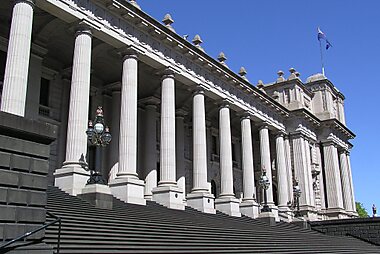
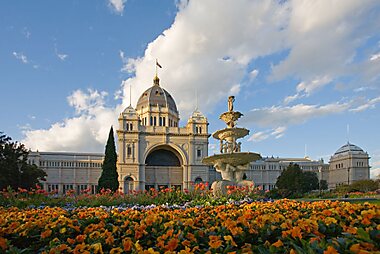
The Victorian gold rush of the 1850s transformed the town almost overnight. Melbourne became one of the wealthiest cities in the world, a period locals still call "Marvellous Melbourne." Much of the grand architecture visible today dates from this boom, including the domed Royal Exhibition Building and Carlton Gardens, built for the 1880 International Exhibition and now a UNESCO World Heritage Site. Parliament House was completed in 1856. It has served as the seat of Victoria's parliament for most of the time since. The exception was 1901 to 1927, when it briefly became the temporary home of Australia's federal parliament.
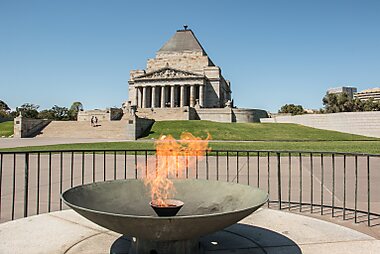
Shrine of Remembrance was built between the World Wars to honor Australians who died in service, and remains the focus of the city's Anzac Day commemorations each April.
Country facts
Quick practical facts for Australia at a glance:
- Currency
- Australian Dollar AUD A$ · Card payments · Widely accepted
- Emergency numbers
- 000 Police · Ambulance · Fire brigade
- Electricity
- 230 V · 50 HzType I
- Tap water
- Safe to drink
- Driving side
- Left
- Calling code
- +61


Melbourne – Plan Your Days
Turn the places from this guide into a real itinerary, with smart routing, time estimates, and everything you need for a perfect trip.




