



Monaco
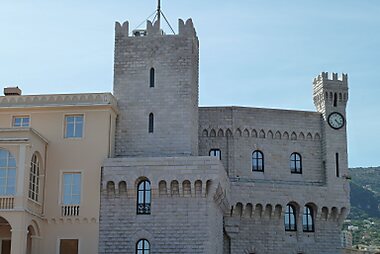
Monaco is a tiny, independent country on the French Riviera, squeezed between steep hills and the Mediterranean Sea. It is the world's second-smallest country, yet it fits Prince's Palace of Monaco, Monte-Carlo Casino and Opera House, and a Formula 1 street circuit into just over two square kilometers. The Grimaldi family has ruled here since 1297. François Grimaldi is said to have disguised himself as a monk to seize the fortress on the rock above the harbor.
Monaco suits travelers drawn to glamour, motorsport, and high-end shopping rather than budget travel or quiet nature. Its whole territory is walkable in a day. That makes it an easy add-on to a longer stay on the French Riviera, or a day trip from Nice. Expect immaculate streets, tight security, and some of the highest prices in Europe.

Monaco – Planning a Trip?
Build your day-by-day itinerary in the Tripomatic app.


Money & payments
Monaco uses the euro, the same currency as France, so there's no need to exchange money if you're arriving with euros.
Cards work almost everywhere, including parking meters and small cafés — keep only a little cash for occasional card-free stalls. Monaco is one of the most expensive places in Europe, more so than nearby Nice or Menton. Budget accordingly for food, hotels, and transport.
Featured Lists


Monaco's Parks and Gardens
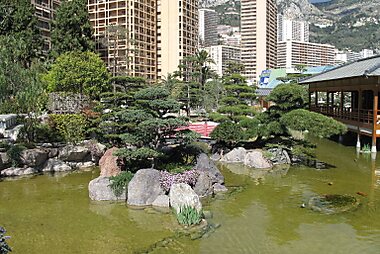
Monaco’s green spaces range from the cliffside Jardin Exotique, showcasing thousands of succulent species, to the formal French-style Jardins des Boulingrins near the Casino. The Princess Grace Rose Garden features over 300 rose varieties across 5,000 square meters. In the old town, Jardins de Saint-Martin offers shaded paths overlooking the Mediterranean, while Princess Antoinette Park provides a family-oriented environment with centenarian olive trees. These gardens combine rare botanical collections with historical monuments and panoramic coastal views.
11 placesTours & Activities
Monaco — Map

 Open the interactive map
 Tipping
A 15% service charge is built into most restaurant and bar bills in Monaco, so tipping isn't required. Rounding up the bill or leaving a few extra euros for great service is common and appreciated, especially in nicer restaurants.
Taxi drivers, hotel porters, and private guides aren't tipped as a rule, but rounding up a fare or leaving a couple of euros is a nice gesture rather than an obligation.
round up, or a few extra euros — 15% service is already included by law
round up if you like
round up to the nearest euro
€1–2 per bag for porters
a few euros for a private guide
Electricity
Monaco uses Type C, E, and F plugs at 230 V / 50 Hz, the same as France — most travelers from outside Europe will need a plug adapter but not a voltage converter for modern electronics.
Language
French is Monaco's official language, and it's what you'll see on signs and hear from most residents. Monégasque, a local Ligurian dialect, survives mainly in ceremonial use and street names in the old town.
English and Italian are both widely understood in hotels, restaurants, and the casino district, thanks to Monaco's international clientele — you're unlikely to need more than a few French basics.
Staying connected
Monaco is not part of the European Union, so EU "roam like at home" rules don't automatically apply here. Check with your carrier before assuming your usual EU data allowance covers Monaco — many French and Italian plans do work seamlessly given the short distances involved, but it's worth confirming.
Monaco Telecom runs the local network, but prepaid tourist SIMs are hard to find in Monaco itself. Most visitors bring a French or EU SIM or eSIM, or rely on roaming. Coverage is excellent everywhere given Monaco's small size and dense urban build.
Safety & emergencies
Monaco is one of the safest places to visit in Europe, with a very high police presence and extensive CCTV coverage. Petty theft and pickpocketing can still happen in crowded tourist spots like the casino square or the harbor during events such as the Monaco Grand Prix.
Health
Tap water in Monaco is safe to drink, drawn from the same network as neighboring France. Pharmacies, marked with a green cross, are common in the city center, and a rotation system keeps at least one open on Sundays and public holidays.
No special vaccinations are required for Monaco beyond what's generally recommended for travel to Western Europe.
Visas & entry
Monaco isn't an EU or Schengen member, but it has no border controls with France. In practice, it follows the same entry rules as the Schengen Area. Most EU, UK, US, Canadian, and Australian passport holders who can enter France visa-free for short stays can visit Monaco the same way.
Anyone who needs a Schengen visa for France should use it for Monaco too; there's no separate Monégasque visa for short tourist visits.
Visa and entry requirements change frequently. Verify current requirements with the official immigration authority or your country's embassy before travel.
Etiquette
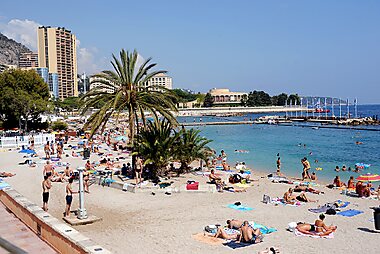
Monaco is formal and image-conscious. Smart, neat clothing is expected in restaurants, the casino, and upscale shops — beachwear should stay at the beach or pool.
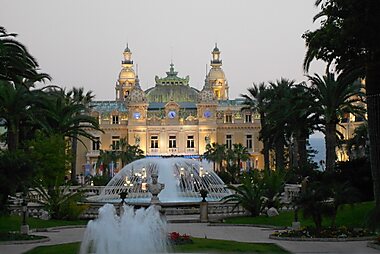
The gaming rooms at Monte-Carlo Casino and Opera House enforce a real dress code after 2pm: no shorts, sportswear, or flip-flops. Jackets are recommended for men in the evening. The atrium and slot-machine hall stay open to everyone, with no dress code or entry fee.
Photography is generally fine in public areas, but avoid photographing security checkpoints, palace guards up close, or private yachts without permission.
Holidays & opening hours
Public holidays can close banks, government offices, and some smaller shops, though most restaurants and tourist-facing businesses stay open. Book ahead if visiting around Monaco's National Day in November, when the Prince's Palace hosts official ceremonies.
Shops generally open Monday to Saturday, with many closing for a couple of hours around lunchtime; Sunday hours are limited outside the main tourist areas.
Getting around
- On foot: Monaco is tiny and hilly — most sights are within a 20-minute walk of each other, and public elevators and escalators built into the hillside help with the steep climbs.
- By bus: The local CAM network covers the whole country with frequent buses; tickets can be bought on board by card or contactless phone.
- By boat: A small shuttle ferry crosses the harbor between Port Hercule and the casino district, saving a walk around the port.
- By train: Monaco's own train station connects to Nice, Menton, and the rest of the French Riviera rail network in minutes; buy tickets via the French national rail site, SNCF Connect.
Driving
- Speed limits: 50 km/h in built-up areas; Monaco has no motorways or rural roads of its own.
- Key rules: Traffic is dense and parking is tightly regulated — expect fines for even minor violations. Many streets close to non-resident traffic during events like the Grand Prix.
- Tolls: Monaco itself charges no road tolls, but the French A8 motorway used to reach it does — pay by card or cash at the barriers.
- Parking: Street parking is scarce and metered; multi-story car parks are the more reliable option and accept cards.
- Fuel: Stations are self-service, paying by card at the pump, and sell Sans Plomb 95 / Sans Plomb 98 petrol and Gazole diesel, the same labels used in France.
- Electric vehicles: Charging points are increasingly common in public car parks, part of Monaco's push toward electric mobility; apps from Monaco Telecom and major French networks cover most chargers.
Food & drink
Meals in Monaco follow French and Italian rhythms: a light breakfast, a proper sit-down lunch, and a dinner that often starts late by international standards. Seafood, olive oil, and fresh vegetables dominate menus, reflecting the wider Mediterranean coast.
Local specialties worth trying include barbagiuan, a fried pastry stuffed with Swiss chard and ricotta, and socca, a thin chickpea-flour flatbread shared with neighboring Nice. Cafés and bakeries also sell fougasse monégasque, a sweet, orange-flower-scented bread studded with nuts and candied fruit. Restaurants range from casual bistros to several Michelin-starred dining rooms, so both modest budgets and special-occasion splurges are catered for.
Where to explore
Monaco sits in the middle of the French Riviera, so most visitors pair it with day trips just across the border. Nice is the region's biggest city, with its own old town, beaches, and airport, about 30 minutes away by train.
Closer still is Èze, a medieval hilltop village with sweeping coastal views, and Menton, a quieter town near the Italian border known for its lemon festival and gardens. Both make an easy half-day trip by bus or train.


Monaco – Plan Your Days
Turn the places from this guide into a real itinerary, with smart routing, time estimates, and everything you need for a perfect trip.




