


Nice
Nice is the unofficial capital of the French Riviera, where pastel Belle Époque buildings meet a wide pebble beach and the deep blue of the Mediterranean. Its Old Town keeps a distinctly Italian feel, a legacy of centuries under the House of Savoy before Nice joined France in 1860, and that mixed heritage still shows in the food, the street names, and the light that once drew painters like Henri Matisse and Marc Chagall to settle here.
It suits a traveler who wants an easy, walkable base with real city life, not just a resort strip. Spend a few nights here and you can wander centuries-old lanes in the morning, swim in the afternoon, and use Nice as a launchpad for day trips along the coast to Monaco, Cannes, and the hill villages above the sea.

Nice – Planning a Trip?
Build your day-by-day itinerary in the Tripomatic app.
When to visit
Spring and early autumn are mild and sunny, the best balance of good weather and manageable crowds. Summer is hot and busy, especially in August, while winter stays mild by European standards but sees more rain. Plan a trip around the Nice Carnival in February, one of the world's largest carnivals, when flower-covered floats and the Bataille des Fleurs (Battle of Flowers) parade fill the Promenade des Anglais.
Best time to visit: May, June, July, August, September, October
Top sights
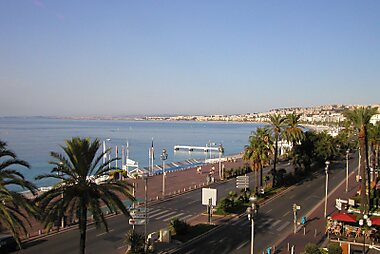


Nice's biggest sight is really the city itself: Promenade des Anglais is the sweeping seafront walkway that gave the city its postcard image, lined with grand hotels and busy with cyclists, joggers, and strollers at every hour.
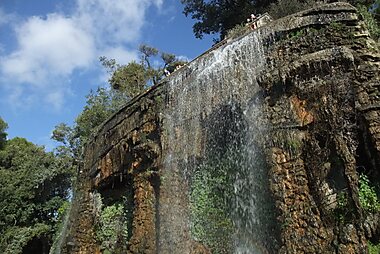
Climb Colline du Château (Castle Hill), the hilltop park built over the ruins of Nice's medieval fortress, for the best panorama over the old town, the port, and the bay.
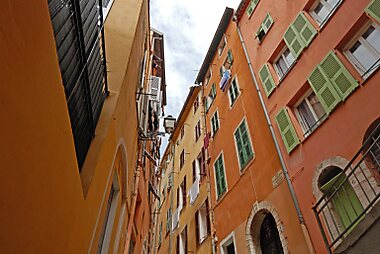
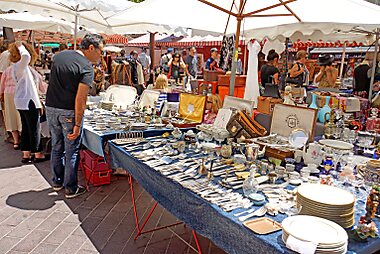
Below it, Vieux Nice (Old Town) is a maze of narrow lanes, baroque churches, and tall ochre buildings that still feels more Italian than French. At its heart, the daily market at Cours Saleya sells flowers, fruit, and local specialties under faded parasols.
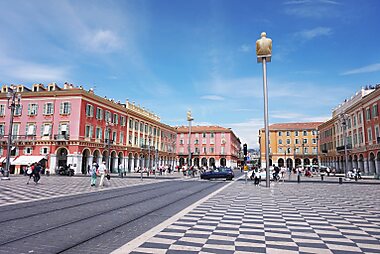
Place Masséna is the city's grand neoclassical square, paved in black and white stone and ringed by red buildings; it connects the old town to the modern center and hosts most of the Carnival's parades.
On the seafront, the pink-domed Hôtel Negresco is Nice's most photographed building, a Belle Époque palace hotel that opened in 1913 and still operates as a hotel today.
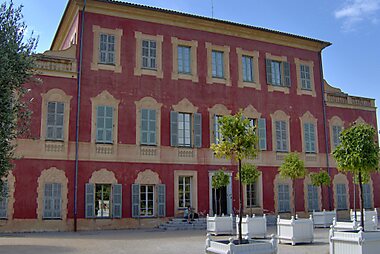
Art lovers should not miss Musée Matisse, tracing Henri Matisse's career from his early paintings to the cut-outs of his final years, and Musée National Marc Chagall, built to house Marc Chagall's biblical-themed masterworks in rooms designed around the paintings themselves.
Featured Lists


Audio Guides – Nice
Explore on foot with a self-guided audio tour that narrates each stop as you reach it.


Hear Nice's audio tours
1 walk in Audio Guides by Tripomatic


What to experience
- Join the flower-covered floats and the Bataille des Fleurs (Battle of Flowers) parade during the Nice Carnival in February, the city's biggest annual celebration.
- Swim or sunbathe on the pebble beaches lining the Baie des Anges — most stretches are free and public, with a few paid beach clubs offering loungers and service.
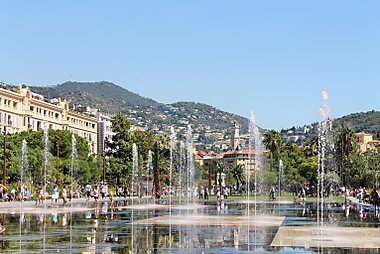
- On a summer evening, cool off in the Water Mirror fountains on Promenade du Paillon, a favorite spot for kids to run through the jets.
- Catch sunset over the bay from the viewpoint at the top of Colline du Château (Castle Hill), when the light turns the rooftops of the old town gold.
Tours & Activities
Nice — Map

 Open the interactive map
 Day trips
Nice makes an easy base for exploring the rest of the Riviera; several of the coast's best-known towns are a few minutes to just over an hour away by train or bus.
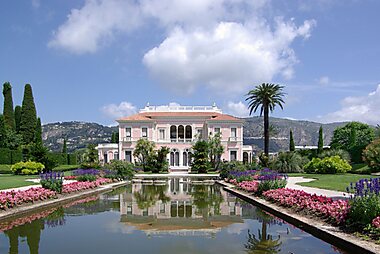
- Villefranche-sur-Mer and Cap Ferrat — ≈5 min by train, the very next stop. A pastel-colored fishing harbor with a scenic coastal walking path; nearby are two remarkable villas, Villa Ephrussi de Rothschild and Villa Kérylos, both built by wealthy collectors in the early 1900s and open to visitors.
- Monaco — ≈20 min by train. The Prince's Palace, the Oceanographic Museum, and the Monte-Carlo Casino make for a full day in the tiny principality next door.
- Èze — ≈30 min by bus. A medieval village perched on a rocky peak, with a botanical garden at the summit giving a sweeping view of the coast.
- Saint-Paul-de-Vence — ≈1h15 by bus. A walled hilltop art village with galleries, cobbled lanes, and the modern-art Fondation Maeght just outside the walls.
Where to explore
Nice sits at the center of the French Riviera, and several of its best-known neighbors are worth a full day out or even an overnight stay of their own.
- Cannes — famous for its film festival and the Boulevard de la Croisette, with boat trips out to the pine-covered Lérins Islands.
- Antibes — a fortified old town with a lively market and the Picasso Museum, set in the castle where the artist once worked.
- Menton — known as the lemon capital of France, with a mild microclimate, a colorful old town, and gardens right at the Italian border.
- Saint-Tropez — the glamorous fishing-village-turned-resort at the end of a longer drive or a scenic ferry ride, best suited to travelers with a full day to spare.
Getting there
- By air: Nice Côte d'Azur Airport (NCE) sits on the coast about 6 km west of the center and is France's third-busiest airport, with direct flights from across Europe. Tram line 2 runs from both terminals into the city center in about 30 minutes; taxis take roughly 20 minutes depending on traffic.
- By train: Nice-Ville station has direct TGV service from Paris (around 5.5–6 hours) and frequent regional trains along the coast to Cannes, Antibes, Monaco, Menton, and across the border into Italy. Book tickets via SNCF Connect.
- By bus: Regional Lignes d'Azur and Zou! buses connect Nice cheaply with coastal towns and hill villages; long-distance coach operators also serve the city's bus terminals.
Getting around
- Public transit: Three tram lines and an extensive bus network, run by Lignes d'Azur, cover the city and reach the airport. Buy single tickets or a day pass from platform machines or the Lignes d'Azur app before boarding. Lignes d'Azur
- Taxi / ride-hailing: Uber operates alongside local taxis.
- On foot / cycling: The Old Town, the seafront, and the main squares are all within easy walking distance of each other. The city-run Vélo Bleu bike-share system has stations across town, and the Promenade des Anglais has a dedicated cycling lane running its full length.
Driving
- Is a car worth it?: Not for the city itself — Nice's center is compact and well served by trams and buses. A car becomes useful if you plan to explore several Riviera hill villages in one day, since bus schedules to smaller towns can be infrequent.
- Parking: Metered on-street parking and paid garages are available near the Promenade des Anglais and around the edges of the Old Town; park-and-ride lots at the outer tram stops are a cheaper option for a day visit.
- Restrictions: Nice enforces a low-emission zone requiring a Crit'Air windshield sticker for vehicles entering the city center; check the requirements before driving in, as rental cars may need one arranged in advance.
Food & drink
Niçoise cooking is closer to Italian and Provençal cuisine than to classic French fare. Look for socca, a thin chickpea-flour pancake cooked on a griddle and eaten hot with black pepper; pissaladière, a savory tart of caramelized onions, olives, and anchovies; salade niçoise, made here with raw vegetables and tuna rather than the cooked, mayonnaise-heavy versions found abroad; and pan bagnat, a pressed sandwich version of the same salad.
The best place to try these is not a sit-down restaurant but the stalls and small counters around Cours Saleya and the surrounding lanes of Vieux Nice (Old Town), where socca is often sold by the slice straight off the griddle.
Safety & health
Nice is a safe city for tourists by international standards. The main risk is petty theft: pickpocketing and bag-snatching happen around the Promenade des Anglais, on trams, and on the beach, especially in peak summer season. Keep valuables out of sight, watch your belongings on the beach, and be alert to distraction scams around busy tourist spots.
History
Nice began as Nikaia, a Greek trading colony founded around the 4th century BC, and later grew into the Roman town of Cemenelum on the hill now known as Cimiez. A medieval fortress once crowned Colline du Château (Castle Hill), controlling the coast for centuries until French troops destroyed it in 1706 — only the hilltop park and scattered ruins remain today.
For over 500 years Nice belonged to the House of Savoy rather than France, joining the country only in 1860 after a public referendum. That long Italian-linked history still shows in the architecture of Vieux Nice (Old Town) and in local cuisine. In the 19th century, wealthy British and Russian visitors began wintering on the coast, building grand hotels like Hôtel Negresco and giving the seafront promenade its English name. In the 20th century, painters Henri Matisse and Marc Chagall settled in Nice, drawn by its light; their work now fills the Musée Matisse and Musée National Marc Chagall.
Country facts
Quick practical facts for France at a glance:
- Currency
- Euro EUR € · Card payments · Widely accepted
- Emergency numbers
- 112
- Electricity
- 230 V · 50 HzType C / Type E
- Languages
- French
- Tap water
- Safe to drink
- Driving side
- Right
- Calling code
- +33


Nice – Plan Your Days
Turn the places from this guide into a real itinerary, with smart routing, time estimates, and everything you need for a perfect trip.




