


Naples
Naples is Italy's third-largest city and one of its oldest, founded by Greek settlers more than 2,500 years ago. It sits on a wide bay under Mount Vesuvius, with narrow lanes, baroque churches, and a street life unlike anywhere else in Italy. The historic center is a UNESCO World Heritage Site, and the city rewards slow walking more than a checklist of sights.
Naples invented pizza, and eating one here, cooked in a wood-fired oven the traditional way, is part of the visit. The city can feel intense and chaotic at first, but that energy is exactly what draws people back. It suits travelers who want an authentic, layered city rather than a polished one. It also makes a good base for day trips to Pompeii, Herculaneum, and the Amalfi Coast. The tenor Enrico Caruso and the actor Totò were both born here.

Naples – Planning a Trip?
Build your day-by-day itinerary in the Tripomatic app.
When to visit
Spring (April to June) and autumn (September to October) are mild and the most comfortable times to visit. Summer is hot and humid, especially in August, and coastal day trips get crowded. Winter is mild by northern European standards but rainy.
Plan around Easter week if you can. Naples holds elaborate religious processions through the historic center, one of the most atmospheric events in the city's calendar.
Best time to visit: May, June, July, September, October
July and August highs regularly pass 30°C with high humidity, so mornings are the best time for walking tours.
Top sights

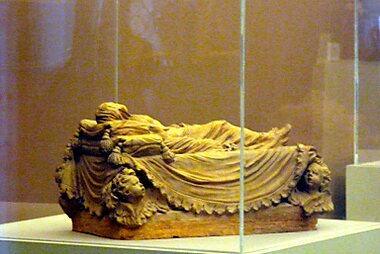


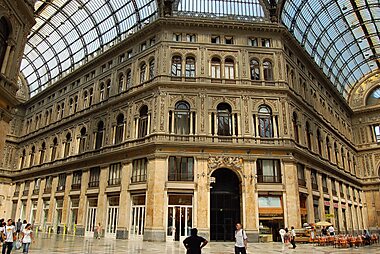
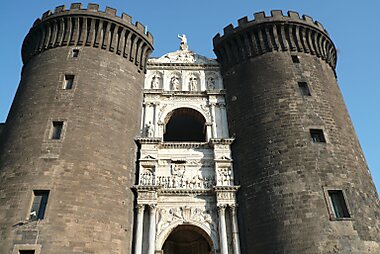

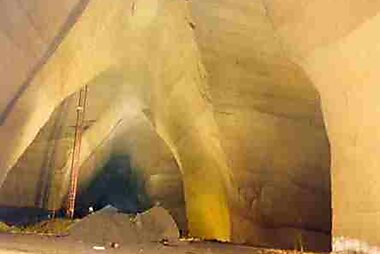

Naples National Archaeological Museum houses a major collection of Greek and Roman antiquities, including treasures excavated from Pompeii and Herculaneum.
Inside a quiet chapel, Sansevero Chapel Museum holds the Veiled Christ, a marble sculpture so delicate that the folds of the shroud look like real fabric.
Naples Cathedral is Naples' Gothic cathedral. It holds the relics of Saint Januarius, the city's patron saint. His blood is said to liquefy three times a year, in a ceremony still watched closely by locals.
Castel Nuovo is a 13th-century castle guarding the harbor, with a triumphal arch at its entrance and a small museum inside.
Next door, the Royal Palace of Naples was home to the Bourbon kings and opens onto grand state rooms and a historic library.
Perched on Vomero hill, Certosa di San Martino is a former monastery turned museum, with terraces that give sweeping views over the bay.
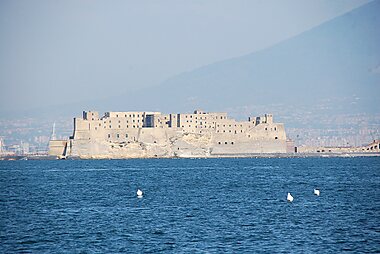
Castel dell'Ovo is the oldest castle in the city, built on a tiny island connected to the seafront by a short causeway, and a good spot to watch the sunset.
Walk through Galleria Umberto I, a 19th-century glass-domed shopping arcade, then lose yourself in the narrow lanes of the old town, the UNESCO-listed historic center.
Featured Lists


Naples Museums & Art
Discover Naples’ diverse cultural landscape through 15 distinguished museums and art sites. This collection includes grand historic palaces like the Museo Nazionale di Capodimonte, medieval fortresses such as Castel Nuovo, baroque chapels with intricate sculptures, and specialized museums like the National Archaeological Museum and Pietrarsa Railway Museum, showcasing artifacts from ancient Roman times to modern scientific exhibits.
15 places


Parks & Gardens
Naples' green spaces range from the 18th-century Villa Comunale on the Chiaia coastline to the expansive Botanical Garden of the University Federico II. The selection includes clifftop parks like Parco Virgiliano in Posillipo, offering panoramic Mediterranean views, and archaeological sites such as Parco Vergiliano, home to the tomb of Virgil. From the scientific heritage of the Capodimonte Astronomical Observatory to the hidden majolica-tiled Chiostro di San Marcellino, these gardens showcase the city's historical and natural diversity.
11 places
Audio Guides – Naples
Explore on foot with a self-guided audio tour that narrates each stop as you reach it.


Hear Naples's audio tours
1 walk in Audio Guides by Tripomatic


What to experience
Naples has a handful of rituals that go beyond sightseeing.
- Eat a pizza folded in half and eaten by hand, "a portafoglio" (like a wallet), the way locals eat it standing at the counter rather than sitting down with a knife and fork.
- Watch the artisans on the street next to San Gregorio Armeno carve and paint miniature nativity figures year-round, a Neapolitan craft tradition centuries old. The street is busiest and most festive in December.
- Ride one of the four historic funiculars up to Vomero hill for the views alone; the climb from the city center takes only a few minutes.
- Walk the seafront promenade at sunset, when locals gather to jog, cycle, and watch the sky over the bay turn orange behind Vesuvius.
Tours & Activities
Naples — Map

 Open the interactive map
 Day trips
Naples sits at the center of one of Italy's richest day-trip regions: ancient ruins, an active volcano, and a dramatic coastline, all within reach.
- Ercolano: about 20 minutes by Circumvesuviana train from Napoli Garibaldi. Smaller than Pompeii but better preserved, with two-story houses still standing.
- Pozzuoli and the Phlegraean Fields: about 30 minutes by Cumana train. A volcanic area with steaming craters, hot springs, and Roman ruins, with far fewer crowds than Pompeii.
- Pompeii: about 35 to 40 minutes by Circumvesuviana train. The best-preserved Roman city in the world, buried by Vesuvius in AD 79.
- Mount Vesuvius: about 25 minutes by shuttle bus from Ercolano (longer from Pompei), plus a roughly 45-minute uphill walk to the crater rim. The volcano that destroyed both towns, still active, with sweeping views over the bay.
- Capri: about 50 minutes by ferry from Molo Beverello. A glamorous island known for the Blue Grotto sea cave and dramatic cliffs.
- Sorrento: about 65 minutes by Circumvesuviana train. A cliffside town surrounded by lemon groves, and the easiest gateway to the Amalfi Coast.
- Amalfi Coast: about 2 hours by bus or ferry via Sorrento. A dramatic coastal road linking cliffside towns like Positano and Amalfi.
Getting there
- By air: Naples International Airport (Capodichino, NAP) is about 7 km from the center. The Alibus shuttle reaches Piazza Garibaldi in about 20 to 30 minutes for a few euros; it continues on to Piazza Municipio, which takes longer. Metered taxis take a similar time to Piazza Garibaldi.
- By train: Napoli Centrale station has high-speed connections to Rome (about 1 hour), Florence (about 3 hours), and Milan (about 4.5 hours).
- By bus: Long-distance coaches serve a terminal near Napoli Centrale, with connections across southern Italy.
Getting around
- Public transit: Metro lines 1 and 2, trams, buses, and four funiculars cover the city on a unified ticket system. Buy a paper ticket at a metro station, tobacco shop, or newsstand, or tap a contactless bank card or phone at the turnstiles on the metro, funiculars, and regional trains. A validated ticket covers all modes for 90 minutes. ANM public transport
- Taxi: white metered taxis are the practical option; ride-hailing apps have limited coverage in the city.
- On foot and cycling: the historic center is dense and best explored on foot. Steep hills toward Vomero make cycling impractical, but the funiculars connect the lower city to the hilltop neighborhoods in a few minutes.
Driving
- Is a car worth it? Skip a car for the city itself. Parking is scarce, traffic is intense, and much of the historic center is closed to non-resident vehicles. Rent one only if you plan to explore the Amalfi Coast or countryside independently.
- Parking: paid guarded car parks near the port and station are the safest option; street parking marked with blue lines requires a ticket from a nearby machine.
- Restrictions: much of the historic center is a limited traffic zone (ZTL) enforced by camera and closed to non-resident vehicles.
Food & drink
Naples invented pizza. A Margherita here means thin crust, San Marzano tomatoes, mozzarella, and basil. Pizzeria Brandi, open since 1780, is where the Margherita was reportedly created for Queen Margherita in 1889. Beyond pizza, look for fried street food like arancini and cuoppo, a paper cone of fried seafood and vegetables, and finish with a sfogliatella pastry or a coffee from one of the city's historic bars.
For a concentrated food crawl, head to the Spaccanapoli area in the historic center, where pizzerias, pastry shops, and street-food stalls sit side by side.
Safety & health
Naples is generally safe for tourists, but petty theft is more common here than in other Italian cities. Watch for pickpockets on crowded buses and trams and around Napoli Centrale station, and keep bags zipped and phones out of back pockets. Scooter-based bag snatching happens occasionally, so carry your bag on the side away from the road, especially near Piazza Garibaldi and the Spanish Quarter at night.
History
Naples was founded by Greek settlers around 470 BC as Neapolis, meaning "new city," next to an earlier Greek settlement called Parthenope. It became a major city under the Roman Empire, and Roman ruins still sit beneath the streets of the historic center, reachable on tours of Naples Underground Geothermal Zone.
For centuries afterward, Naples passed between Byzantine, Norman, Spanish, and finally Bourbon rule. The Bourbons made it the capital of the Kingdom of the Two Sicilies, once one of Europe's largest cities. They built Royal Palace of Naples and filled Museo di Capodimonte with their art collection.
The devastating eruption of Mount Vesuvius in AD 79, which buried Pompeii and Herculaneum, is the region's defining historical event, and its aftermath is still visible on day trips from the city today.
Country facts
Quick practical facts for Italy at a glance:
- Currency
- Euro EUR € · Card payments · Widely accepted
- Emergency numbers
- 112
- Electricity
- 230 V · 50 HzType C / Type F / Type L
- Languages
- Italian
- Tap water
- Safe to drink
- Driving side
- Right
- Calling code
- +39


Naples – Plan Your Days
Turn the places from this guide into a real itinerary, with smart routing, time estimates, and everything you need for a perfect trip.




