



Oman
Oman sits on the southeastern edge of the Arabian Peninsula, between the Arabian Sea and the Hajar Mountains. Unlike its glossier Gulf neighbors, it has kept a low-key, traditional character: whitewashed hill forts, mountain villages, and quiet fishing towns rather than skyscrapers. The capital, Muscat, mixes government buildings, souqs, and beaches along a dramatic coastline, while the interior holds centuries-old forts, deep canyons, and the Wahiba Sands desert. In the far south, the city of Salalah turns green every summer during a monsoon season known locally as khareef, unlike anywhere else on the Arabian Peninsula.
Oman suits travelers who enjoy the outdoors and a slower pace: hiking canyons and wadis, camping in the desert, snorkeling along untouched coastline, and exploring old forts and souqs. It works best as a self-drive trip, since public transport between towns is limited. Expect strong Islamic and tribal traditions, warm hospitality, and plenty worth seeing beyond the capital.







Oman – Planning a Trip?
Build your day-by-day itinerary in the Tripomatic app.


Money & payments
The rial is divided into 1,000 baisa, and prices are often listed with two or three decimal places. ATMs are common in cities and larger towns but scarce in remote desert and mountain areas, so carry cash before heading off the main routes. Small guesthouses, local restaurants, and taxis outside the main cities often expect cash.
Featured Lists

Oman's Absolute Must-Sees
Oman’s diverse geography and history are showcased through the rugged Hajar Mountains, including Jebel Jais, and the coastal limestone cliffs of Mughsayl. The nation's defensive heritage is preserved in structures like the white-washed Sohar Fort and the desert outpost of Mitirib Fort at the edge of the Sharqiya Sands. Coastal traditions remain central to daily life, from the active fish markets in Dibba to the natural blowholes at Marneef Cave and regional culinary centers serving fresh Arabian seafood.
9 places
Landmarks of Oman
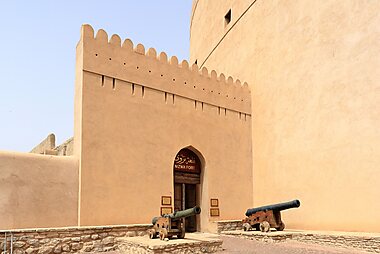
Oman’s architectural and natural heritage spans from the Bronze Age to the 19th century. This collection highlights UNESCO-listed mud-brick fortifications like Bahla Fort and the ancient maritime hub of Qalhat. It also features unique geological formations, including the white sands of the Sugar Dunes and the record-breaking height of Ramlat Jadilah. From the historical telegraph stations in Musandam to the seasonal blowholes of Salalah, these landmarks represent the Sultanate’s diverse geography and strategic historical importance.
10 places


Nature & Outdoors in Oman
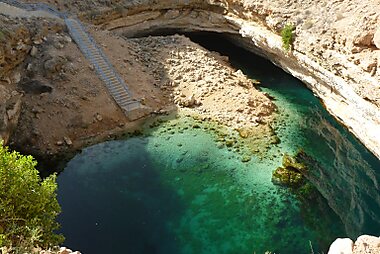
Oman's natural landscape spans from the rugged Hajar Mountains in the north to the monsoon-fed greenery of the Dhofar region in the south. This collection highlights the country's geological diversity, featuring the turquoise waters of Bimmah Sinkhole and the ancient limestone formations of the Duqm Rock Garden. Coastal sites include the protected green turtle nesting grounds at Ras Al Jinz and the mangrove-lined shores of Muscat, while inland destinations showcase Majlis al Jinn, one of the world's largest cave chambers.
10 places
Tours & Activities
Oman — Map

 Open the interactive map
 Tipping
Tipping is not part of local custom, but it is increasingly common in tourist-facing restaurants and with private drivers or tour guides. Round up small bills; for a driver or guide on a multi-day desert or mountain tour, a modest tip at the end of the trip is appreciated.
round up or ~10%
round up
small tip for porters and housekeeping
OMR 5-10 per day on multi-day tours
round up
Electricity
Oman uses Type G plugs (three-pin, the same as the United Kingdom) at 240 V / 50 Hz; some buildings also have two-pin Type C sockets. Travelers from North America and continental Europe will need an adapter.
Language
Arabic is the official language, and street signs, menus, and government offices commonly show English alongside it, especially in Muscat and other tourist areas. English is widely spoken in hotels, tour operations, and shops, so you can travel comfortably without Arabic. Arabic script differs from Latin, so a translation app is useful for reading addresses and hand-written signs.
Staying connected
Local prepaid SIM and eSIM plans from Omantel or Ooredoo are sold at Muscat International Airport and in shops across the country. Buying one requires showing your passport, since registration is mandatory. Coverage is strong along the coast and in the main towns but drops in the remote desert and mountain interior, worth planning for if self-driving.
Safety & emergencies
Oman is one of the safer countries in the region for travelers, with low rates of violent crime. The most common issues are petty theft from unlocked cars and heat-related illness — dehydration and heatstroke are real risks outside the cooler months, especially when hiking or driving in the desert. Flash floods can close roads and wadis with little warning after rain, so check local conditions before heading into the mountains or desert.
Health
Tap water is treated but not generally considered drinkable by visitors; bottled water is cheap and sold everywhere. Pharmacies are common in cities and larger towns, many open late, and can handle minor ailments without a prescription. No vaccinations are mandatory for entry, though routine vaccinations and, depending on your itinerary, hepatitis A and typhoid protection are commonly recommended — check with a travel clinic before you go.
Visas & entry
Most nationalities, including the EU, UK, US, Canada, Australia, and New Zealand, can apply for an Oman e-visa online before arrival, typically issued within a few days and valid for a single or multiple entries. Citizens of GCC countries can enter with just a national ID. Travelers arriving from or connecting through certain other countries should check current requirements carefully, as they can differ by nationality and travel route.
Visa and entry requirements change frequently. Verify current requirements with the official immigration authority or your country's embassy before travel.
Etiquette
Oman is a conservative, Muslim country, and dressing modestly is expected, especially away from resorts: shoulders and knees covered for both men and women. Grand mosques that welcome non-Muslim visitors, such as Sultan Qaboos Grand Mosque, require an ankle-length dress and a headscarf for women, and are closed to visitors during Friday prayers.
Always ask before photographing local people, particularly women. Handshakes are common between men; wait for a woman to offer her hand first. Fridays are the main day of rest and prayer, so many businesses close or shorten their hours around midday.
Holidays & opening hours
Oman follows the Islamic calendar for religious holidays, so dates like Eid al-Fitr and Eid al-Adha shift each year and can close shops, offices, and some restaurants for several days. During Ramadan, many restaurants stay closed during daylight hours, and eating or drinking in public is discouraged for everyone until sunset. The weekend is Friday-Saturday, with Friday the main day of rest.
Most shops and malls open late morning and stay open into the evening, often with a midafternoon lull; some smaller family-run shops close for a couple of hours around midday prayer.
Getting around
- By car: the easiest way to see the country. Roads between major towns are well paved; a 4x4 is worth renting for desert tracks like the Wahiba Sands and mountain roads such as Jebel Akhdar and Jebel Shams, which are unpaved or require low range in places.
- By bus: Mwasalat runs intercity coaches connecting Muscat with Nizwa, Sur, Sohar, and Salalah — a budget-friendly option, though departures are limited. Mwasalat
- By taxi and ride-hailing: metered taxis are uncommon; agree on a fare before you set off. Ride-hailing apps work well in Muscat but have thinner coverage elsewhere.
- By air: domestic flights connect Muscat with Salalah in about 90 minutes, useful given the roughly 1,000 km drive between them.
Driving
- Speed limits: generally 120 km/h on motorways, 90 km/h on rural roads, and 40-60 km/h in urban areas, enforced with radar cameras.
- Key rules: zero tolerance for alcohol behind the wheel — even a small amount can lead to arrest. Seatbelts are mandatory for everyone in the car.
- Tolls: Oman's roads have no tolls or vignette system.
- Parking: free curb parking is common outside city centers; central Muscat uses paid meters and apps during business hours.
- Fuel: stations are staffed, and attendants pump the fuel for you; pay by card or cash. Petrol is sold as Mogas 91 (regular), Mogas 95, and Ultimax 98 (premium), and diesel simply as Diesel.
- Electric vehicles: charging is limited outside Muscat, where a small number of public chargers exist. A conventional rental remains the practical choice for touring the interior and desert.
Food & drink
Omani meals center on rice, meat, and fragrant spices, usually eaten with family or guests — hospitality is a strong tradition, and visitors are often served more food than they can finish. Shuwa, meat marinated in spices and slow-cooked overnight in an underground pit, is the country's best-known dish, traditionally served on Eid and other special occasions. Everyday meals lean on grilled or stewed chicken, lamb, and fish with spiced rice, shaped in part by Oman's long trading links to India and East Africa.
Dates and Omani halwa, a dense sweet flavored with rosewater, cardamom, or saffron, are the classic way to welcome a guest, usually served alongside kahwa, cardamom-spiced Arabic coffee poured into small handleless cups. Street food is modest compared to some neighboring countries, but shawarma stands and simple grilled-fish spots are easy to find in coastal towns. Restaurants range from inexpensive local canteens serving rice-and-curry plates to hotel restaurants with more formal Omani or international menus; alcohol is served only in licensed hotel bars and restaurants.
Where to explore
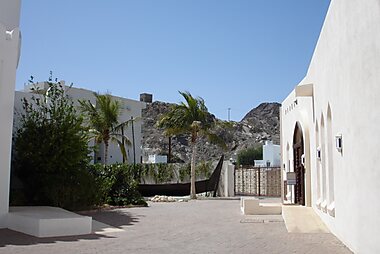
Muscat mixes government buildings, souqs, and beaches along a scenic corniche. Highlights include Sultan Qaboos Grand Mosque, one of the few grand mosques in the Gulf open to non-Muslim visitors, the winding alleys of Muttrah Souq, and the modern Royal Opera House Muscat.
Inland, Nizwa was once Oman's capital and is built around its circular Nizwa Fort and a lively Friday livestock market. Nearby, the walled town of Bahla holds Bahla Fort, a UNESCO World Heritage Site with mud-brick fortifications.
On the coast, Sur is known for traditional dhow-building and the watchtower at Al-Sunaysilah Castle, while Sohar, an old trading port, makes a quieter base in the north. In the far south, Salalah turns green each summer during the khareef monsoon, with waterfalls, banana plantations, and frankincense trees found nowhere else in the Gulf.
For dramatic landscapes, head to the Hajar Mountains, where View to Jebel Shams looks out over Jebel Shams, Oman's highest peak, and a deep canyon nicknamed the Grand Canyon of Arabia; the golden dunes of the Wahiba Sands, reachable through Wahiba Sands Entrance; and the fjord-like coastline of the Musandam Peninsula around Khasab, best seen by traditional dhow cruise.
Oman – Plan Your Trip
Pick the places you want to see and Tripomatic turns them into a day-by-day route, with smart routing, time estimates, and everything you need for a perfect trip.




