



Reykjavík
Reykjavík is the world's northernmost capital, a small city ringed by mountains, sea, and lava fields. Most first-time visitors are surprised by how compact it is: the historic centre can be walked in an afternoon, yet it packs in geothermal pools, a lively music and art scene, and easy access to Iceland's glaciers, volcanoes, and northern lights. It suits travelers who want a city break with wilderness minutes away, not a long list of museums.
According to saga tradition, the Viking settler Ingólfur Arnarson founded the city around 874, making it Iceland's oldest settlement. Today its low, colourful rooftops and geothermal steam still give it a small, northern feel, even as it works as Iceland's main hub for flights, ferries, and road trips into the rest of the country.

Reykjavík – Planning a Trip?
Build your day-by-day itinerary in the Tripomatic app.


When to visit
Summer (June to August) has nearly 24-hour daylight and the mildest weather, the easiest season for sightseeing and day trips. Winter (November to March) is cold and dark, but is the best time to see the northern lights and to warm up in the city's geothermal pools. Spring and autumn are quieter and cheaper, with fewer visitors.
Time a visit around Reykjavík Culture Night (Menningarnótt) in August, when the city closes streets for free concerts and art openings, ending with a fireworks display over the harbour.
Top sights

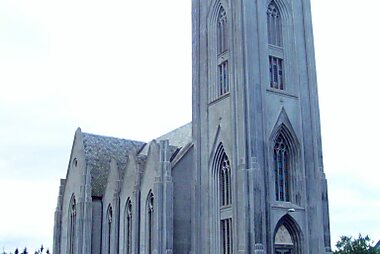

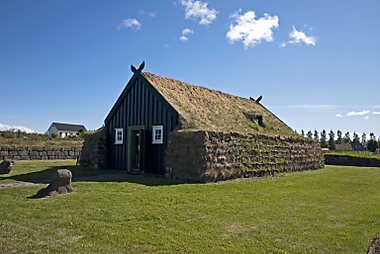
- Hallgrímskirkja towers over the city centre at 74 metres and is Reykjavík's best-known landmark. A lift ride up the tower gives a panoramic view over the coloured rooftops to the sea and mountains beyond.
- Down by the water, Harpa is a glass concert hall inspired by Iceland's basalt columns. Its lobby and café are free to enter, even without a ticket to a show.
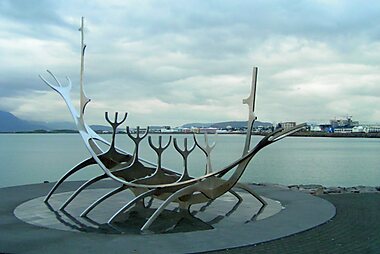
- A short walk along the shore leads to Sun Voyager, a steel sculpture shaped like a Viking ship that has become one of the most photographed spots in the city.
- Reykjavík871±² preserves the excavated remains of a Viking-age hall right under the city centre, dated to around 871 AD, close to Reykjavík's founding.
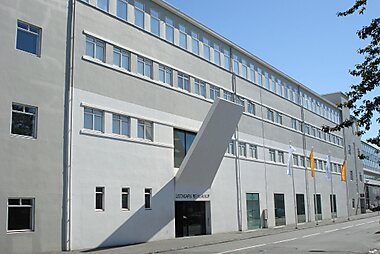
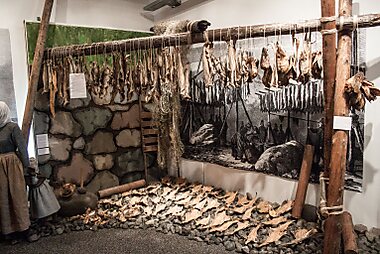
- National Museum of Iceland covers Iceland's history from the first settlers to the present, and is a good stop for context before exploring the rest of the country.
- Reykjavík Old Harbour is the departure point for whale-watching and puffin tours, and is lined with seafood restaurants and colourful fishing boats.
- On top of Öskjuhlíð hill, The Pearl combines a glass dome, a planetarium, and a 360° observation deck with views over the whole city.
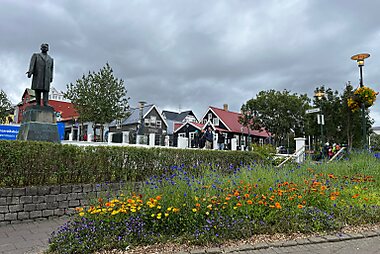
- The square Austurvöllur Square sits beside The Parliament House, Iceland's parliament building, and is the traditional gathering place for the city's public life and protests.
Featured Lists


Reykjavík Highlights
A hand-picked mix of Reykjavík experiences: a geothermal spa, the city's famous hot dog stand, an open-air market, gardens and a peace monument.
8 places


What to experience
Reykjavík's daily rituals are built around hot water, not sightseeing.
- Soak in a hot pot at Laugardalslaug Geothermal Pool, the city's largest public pool, exactly the way locals unwind after work.
- Take an evening whale-watching trip from Reykjavík Old Harbour in summer, when minke whales and dolphins are regularly seen in the bay.
- On a clear winter night, watch for the northern lights from the shoreline path near Sun Voyager, away from the brightest streetlights.
- Take the short ferry to Videy Island to see Yoko Ono's Imagine Peace Tower, a light installation lit each year between October and December.
- During Reykjavík Culture Night in August, follow the free open-air concerts through the city centre and watch the fireworks over the harbour at midnight.
Tours & Activities
Reykjavík — Map

 Open the interactive map
 Day trips
Reykjavík is a natural base for exploring the rest of southwest Iceland, and several of the country's best-known sights are within a few hours' drive.
- Blue Lagoon, a geothermal spa in a black lava field, is about 45 minutes away by car or shuttle bus. Book a time slot in advance, since it regularly sells out.
- The Golden Circle combines Thingvellir National Park, the geothermal area around the geyser Geysir, and the waterfall Gullfoss. The three stops are roughly 45 minutes to 1.5 hours from the city and are usually seen together in a single day.
- The South Coast, with the waterfalls Seljalandsfoss and Skógafoss and the black sand beach at Reynisfjara, is about 2 hours away by car and is worth a full day.
- Snaefellsnes Peninsula, often called "Iceland in miniature" for its volcano, glacier, and coastline in one drive, is about 2 to 2.5 hours away and best done as a long day trip or overnight.
Where to explore
Reykjavík blends into its neighboring towns without a clear break, and a couple are worth a short trip of their own.
- Kópavogur, just south of the centre, is Iceland's second-largest town, home to a striking modern church and the country's biggest shopping centre.
- Seltjarnarnes, on the peninsula west of downtown, is a quiet residential town with a scenic coastal walk out to the Grótta lighthouse, a good spot to watch the northern lights away from city lights.
Getting there
- By air: Keflavík International Airport (KEF) is Iceland's main international gateway, about 50 km southwest of the city. The Flybus and other shuttle services take about 45 minutes to the centre; taxis cover the same distance but cost significantly more. Reykjavík Domestic Airport, in the middle of the city, handles mostly domestic flights within Iceland, plus a few routes to Greenland.
- By bus: Long-distance buses to other parts of Iceland leave from the BSÍ bus terminal, with routes to the south coast, the north, and the Westfjords.
- By ferry: The car ferry Norröna connects Iceland to the Faroe Islands and Denmark, arriving at Seyðisfjörður on the east coast, a long drive from Reykjavík.
Getting around
- Public transit: Strætó runs the city's yellow buses. Pay with the Klapp app or a Klapp card; drivers do not sell single tickets for cash. Strætó
- Taxi: Taxis are metered and usually called by app or picked up at a rank, rather than hailed on the street.
- On foot and by bike: The city centre is small and flat enough to see entirely on foot. Shared e-scooters and city bikes cover longer trips, and most main streets have adjoining cycle paths.
Driving
- Is a car worth it?: Not for the city itself — the centre is walkable and parking is limited. A car is worth it if planning to explore beyond the Golden Circle or South Coast independently.
- Parking: Most central parking is metered and paid via the EasyPark app or a meter; a few free zones exist farther from the centre.
- Restrictions: None of note — there is no congestion charge or low-emission zone in the city.
Food & drink
Reykjavík's food scene runs from simple street food to some of the world's most northerly fine dining. Icelandic staples worth trying include fresh fish, lamb, and skyr, alongside a wave of newer Nordic-influenced restaurants.
For something quick, join the queue at the harbourside hot dog stand on Tryggvagata that has fed locals and visiting celebrities alike for decades — order it "with everything" (raw and fried onion, ketchup, sweet mustard, and remoulade). For a wider spread, the food halls around the harbour and Hlemmur bring together several small kitchens under one roof, a good way to sample different styles in one visit.
Safety & health
Reykjavík is one of the safest capital cities in the world, with very low rates of violent crime. The most common issues are minor: pickpocketing in crowded tourist spots and unlocked bike theft.
Tap water is safe to drink everywhere in the city. The bigger safety risk in Iceland is nature, not the city: check road and weather conditions before any day trip, and take posted warnings at cliffs, waterfalls, and beaches seriously, since the Atlantic here is unusually powerful.
History
Reykjavík takes its name from the steam ("reykur") that Viking settler Ingólfur Arnarson reportedly saw rising from hot springs when he landed here around 874, making it Iceland's oldest permanent settlement. The remains of that early settlement are preserved at Reykjavík871±², where a Viking-age hall was excavated beneath the modern city centre.
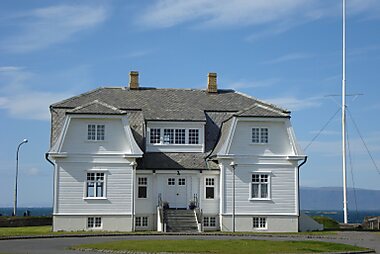
For centuries afterward Reykjavík stayed a small farming settlement; it only grew into a real town in the 18th century, and became capital of a fully independent Iceland in 1944, after centuries under Danish rule. One of its more unusual modern chapters played out at Höfði house, where US President Ronald Reagan and Soviet leader Mikhail Gorbachev met in 1986 for a summit widely seen as a turning point toward the end of the Cold War.
Country facts
Quick practical facts for Iceland at a glance:
- Currency
- Icelandic Króna ISK kr · Card payments · Widely accepted
- Emergency numbers
- 112 Police · Ambulance · Fire brigade
- Electricity
- 230 V · 50 HzType C / Type F
- Languages
- Icelandic
- Tap water
- Safe to drink
- Driving side
- Right
- Calling code
- +354


Reykjavík – Plan Your Days
Turn the places from this guide into a real itinerary, with smart routing, time estimates, and everything you need for a perfect trip.




