



Rio de Janeiro
Rio de Janeiro sits on Guanabara Bay, framed by granite peaks and Atlantic beaches. Beaches, forested mountains, and the historic center are all close together, so a short visit can mix hiking, beach time, and old colonial streets in one day. Cariocas, as locals are known, build daily life around the outdoors: football on the sand, live music in small bars, and a swim before work.
Rio has two sides worth knowing before you arrive. One is the famous Rio of Christ the Redeemer and Copacabana. The other is a city of six million people that includes large hillside neighborhoods called favelas. Both are part of daily life here. Musicians Tom Jobim and Vinícius de Moraes wrote the song "The Girl from Ipanema" in this city in the 1960s, and bossa nova still shapes its relaxed, melodic sound.

Rio de Janeiro – Planning a Trip?
Build your day-by-day itinerary in the Tripomatic app.


When to visit
Rio is warm year-round. December through March is hot and humid with brief downpours; June through August is drier and milder, and the best months for sightseeing.
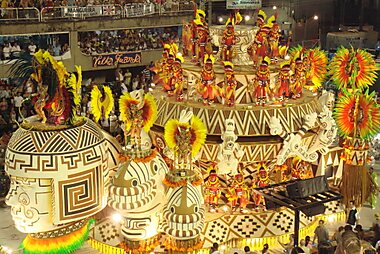
Plan around Carnival if you can: five days of parades, live samba, and free street parties called blocos that take over entire neighborhoods. It falls in February or March each year and books up hotels and flights months ahead.
Best time to visit: June, July, August
Top sights



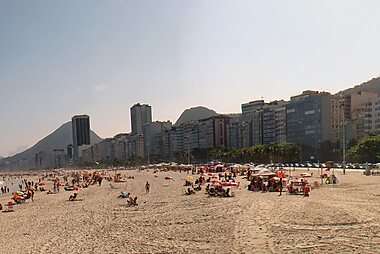
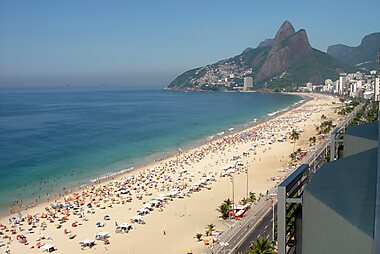

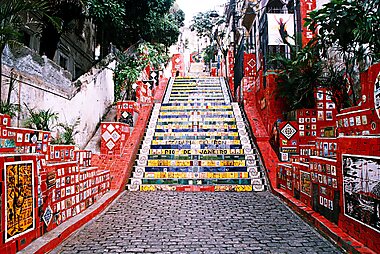
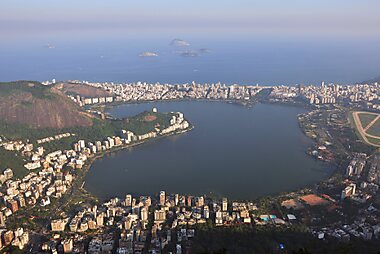
Christ the Redeemer stands on top of Corcovado mountain and is the city's defining symbol. The view from its base takes in the whole bay. Sugarloaf rises straight out of the harbor, and the Teleférico do Pão de Açúcar carries visitors up in two stages for a lower, closer perspective on the bay. Copacabana Beach is the city's most famous stretch of sand, backed by the beachfront promenade's wave-patterned mosaic. Praia de Ipanema is quieter and considered the more fashionable of Rio's two main beaches. Escadaria Selarón is a public staircase covered in more than 2,000 tiles from over 60 countries, the life's work of one Chilean artist. Estádio Jornalista Mário Filho is widely known as the Maracanã. It hosted the 1950 and 2014 World Cup finals and still holds Brazil's biggest football matches. Parque Nacional da Tijuca protects a large stretch of rainforest inside the city limits, with marked trails, waterfalls, and views back down over Rio.
Featured Lists


Historic Churches & Sites
Rio de Janeiro’s religious sites showcase an evolution from 18th-century colonial baroque to 20th-century modernism. This collection includes the iconic Art Deco Christ the Redeemer and the cone-shaped Metropolitan Cathedral. It highlights the ornate, gold-leafed interiors of the St. Benedict Monastery and the Church of St. Francis of Penance. The list also features the hilltop Sanctuary of Our Lady of Penha, known for its 382-step stone staircase, alongside historic neighborhood churches in Urca and Santa Cruz.
9 places


What to experience
- Join the crowd that gathers at Pedra do Arpoador to applaud the sunset, a nightly ritual among surfers and locals.
- Take a tandem hang-gliding flight from the Pedra Bonita launch point, landing on São Conrado beach below.
- Jog, cycle, or paddle at sunrise around Lagoa Rodrigo de Freitas, the lagoon cariocas use as their outdoor gym.
- During Carnival season, join a bloco, a free open-air samba street party that fills entire neighborhoods for hours.
- Play or watch footvolley, a Rio invention that mixes football and volleyball, on the sand at Copacabana or Ipanema.
Tours & Activities
Rio de Janeiro — Map

 Open the interactive map
 Day trips
Rio sits between mountains and coast, so several rewarding destinations lie within a day's reach.
- Niterói — a 20-minute ferry across Guanabara Bay, with beaches, a striking Niemeyer-designed art museum, and skyline views back toward Rio.
- Petrópolis — about 1.5 hours by bus or car, a cool mountain town built as the Brazilian emperor's summer retreat, with his former palace open to visitors.
- Cabo Frio and Armação dos Búzios — roughly 2.5 hours by car or bus, dune-backed beaches and a laid-back peninsula resort favored by cariocas on weekends.
- Angra dos Reis — about 2.5 hours by car, gateway to hundreds of forested islands and beaches reachable by boat, including Ilha Grande.
- Paraty — around 4 hours by car or bus, a preserved colonial port town with cobbled streets. It works better as an overnight than a single day trip.
Where to explore
Rio de Janeiro state stretches along a mountainous coastline, and several of its towns are easy to combine with a stay in the city.
Across Guanabara Bay, Niterói makes for an easy half-day trip. Inland, the mountains around Petrópolis offer a cooler climate and 19th-century architecture. East along the coast, Cabo Frio and Armação dos Búzios are known for clear water and white dunes. To the west, Angra dos Reis and Paraty anchor the Costa Verde, a stretch of coastline dotted with islands and preserved colonial towns.
Getting there
- By air: most international flights land at Galeão International Airport (GIG), about 20 km north of the city center. A taxi or ride-hailing car to the beach neighborhoods takes 40–60 minutes depending on traffic; an airport bus also runs to Copacabana and Barra da Tijuca. Domestic shuttle flights, mainly to and from São Paulo, use Santos Dumont Airport, a few minutes from downtown by taxi.
- By bus: long-distance coaches from other Brazilian cities arrive at the Novo Rio bus terminal, north of the city center, with metro and taxi connections into town.
- By train: Brazil has no significant intercity passenger rail network, so buses and flights cover nearly all overland arrivals.
Getting around
- Metro: two lines connect the city center to Copacabana, Ipanema, and Barra da Tijuca, and run reliably outside rush hour. Pay with a rechargeable RioCard or tap a contactless bank card or phone directly at the gate.
- BRT and bus: express bus lanes (BRT) and city buses fill in where the metro doesn't reach; the same RioCard or contactless payment works on board.
- Taxi and ride-hailing: Uber and 99 both operate citywide and are the easiest way to move between beach neighborhoods after dark.
- On foot: the beachfront promenades in Copacabana, Ipanema, and Leblon are flat and easy to walk, but the city overall is spread out and hilly inland, so plan to combine walking with the metro or a car.
Driving
- Is a car worth it?: no. Rio's core neighborhoods are connected by metro, BRT, and ride-hailing, and traffic and parking in the city are heavy. A car is only useful for reaching day trips outside the metro area.
- Parking: paid street parking (Zona Azul) covers most commercial streets, paid by app; hotels and malls have staffed garages.
- Restrictions: several streets close to traffic during Carnival for parades and blocos. There is no citywide low-emission or congestion-charge zone to worry about otherwise.
Food & drink
Feijoada, a black bean and pork stew, is traditionally eaten on Saturdays and is worth timing a visit around. Along the beaches, kiosks sell coconut water, grilled cheese on a stick (queijo coalho), and cold beer to go with the view.
For a night out, head to the botecos, small bars serving snacks and cold drinks, that fill the streets of Santa Teresa and Lapa. These neighborhoods are also the center of Rio's live samba and choro music scene.
Safety & health
Rio is generally safe for tourists who take normal precautions, but petty theft is common, especially on beaches and in crowded areas. Keep phones and jewelry out of sight, avoid carrying more cash than you need, and use a taxi or ride-hailing app rather than walking through unfamiliar streets after dark.
Favelas are residential neighborhoods, not tourist sites to wander into independently. Visit one only as part of a tour led by a resident guide.
History
Portuguese sailors reached Guanabara Bay on 1 January 1502. They mistook it for the mouth of a great river and named the future city "Rio de Janeiro," January River. The name stuck even after the mistake was discovered.
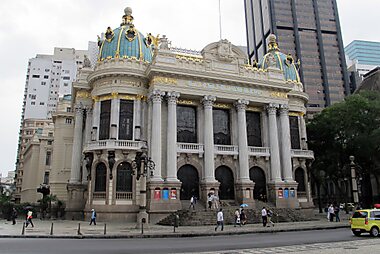
Rio became the colonial capital in 1763. In 1808 the Portuguese royal family fled Napoleon's invasion and moved the entire court here, the only time a European monarchy ruled from the Americas. Rio stayed Brazil's capital until 1960, when the government moved to the newly built Brasília. Church of Our Lady of the Candelária dates to the colonial era, and the Arcos da Lapa carried fresh water into the city from the 18th century until it was converted to carry a tram line. Theatro Municipal opened in 1909 during a Belle Époque rebuilding of the center, modeled on the Paris Opera.
Country facts
Quick practical facts for Brazil at a glance:
- Currency
- Brazilian Real BRL · Card payments · Widely accepted
- Emergency numbers
- 188
- Electricity
- 127 V · 60 HzType C / Type N
- Languages
- Portuguese
- Tap water
- Drink with caution
- Driving side
- Right
- Calling code
- +55


Rio de Janeiro – Plan Your Days
Turn the places from this guide into a real itinerary, with smart routing, time estimates, and everything you need for a perfect trip.


Related destinations


Data: © OpenStreetMap contributors, Wikidata, Wikipedia, Tripomatic, Official websites, geoBoundaries (CC BY 4.0). Tours by GetYourGuide. We earn commission from bookings. Travel guide generated with AI.