



Brazil
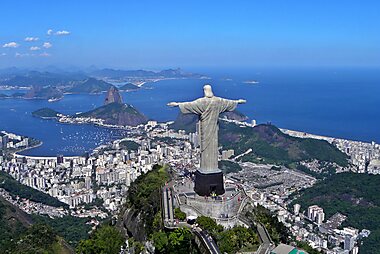
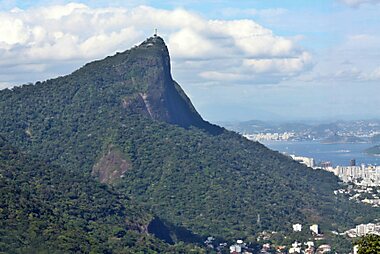
Brazil is the largest country in South America, a nation of tropical beaches, colonial towns, and the world's biggest rainforest. Its size means the character of a trip changes completely by region. Christ the Redeemer overlooks Rio de Janeiro's beaches. Cataratas del Iguazú sits on the border with Argentina, near the tripoint with Paraguay.
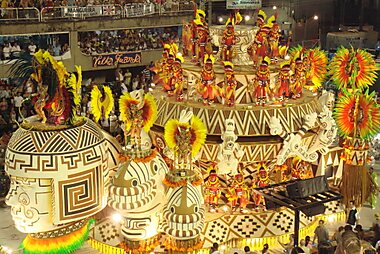
Brazil suits a wide range of travelers. First-timers usually anchor a trip around Rio and a nearby beach town. Culture-focused visitors head to the colonial architecture of Bahia and Minas Gerais. Nature travelers explore the Amazon or the wetlands of the Pantanal. Carnival, held every year before Lent, transforms cities nationwide into weeks of street parties and parades.

Brazil – Planning a Trip?
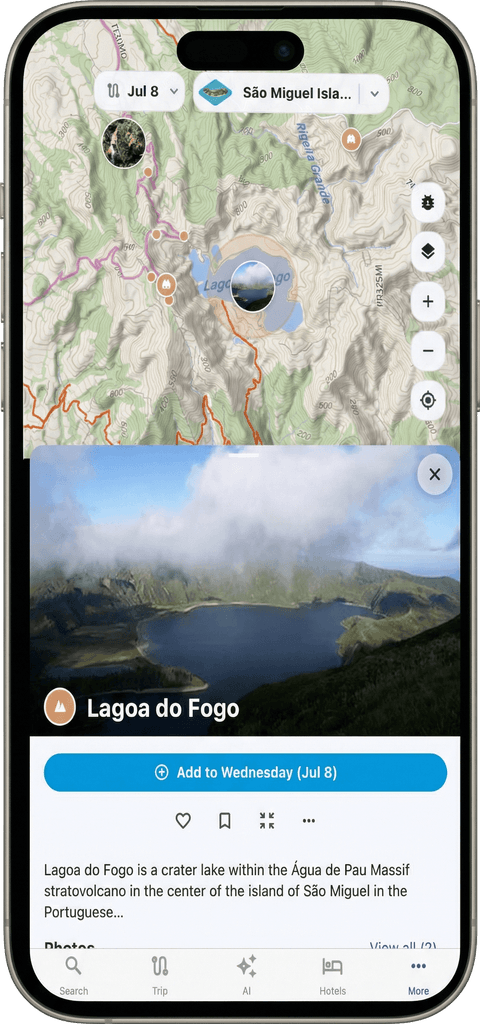
Build your day-by-day itinerary in the Tripomatic app.


Money & payments
Cash is still useful outside cities — small towns, beach kiosks, and local markets don't always have card machines. ATMs are common at banks and airports; withdraw from bank-branded machines to avoid high fees.
Budget travelers can get by on hostels, street food, and local buses; mid-range travelers pay more for boutique hotels, restaurant meals, and domestic flights between regions.
Featured Lists


Stunning Waterfalls
Brazil’s diverse landscape contains some of the world’s most powerful cascades. This collection spans the massive Iguazu Falls system on the Argentine border to the 353-meter drop of Cachoeira do El Dorado in the Amazon. It features geological landmarks like the basalt-framed Cascata do Avencal in Santa Catarina, the diamond-mining history of Chapada Diamantina’s Cachoeira do Mosquito, and the 186-meter Casca D’Anta, the first major fall of the São Francisco River.
8 places


Tours & Activities
Brazil — Map

 Open the interactive map
 Tipping
Tipping in Brazil is modest compared to some countries. Many restaurants already add a 10% service charge to the bill — check before adding more. Round up for taxis and casual service.
often a 10% service charge is already included
round up
small tip for porters
10-15% for a full-day tour
Electricity
Brazil uses Type C and N plugs. Voltage varies by state — some circuits run 127V, others 220V — so check the socket before plugging in high-power devices without a converter.
Language
Portuguese is Brazil's official language, distinct from Spanish despite some overlap in vocabulary. English is spoken at hotels and tourist sites in major cities. It's spoken far less in rural areas and smaller towns — a translation app helps outside the main circuit.
Staying connected
Prepaid SIM cards are cheap and widely sold at airports and phone shops. Some carriers ask for a CPF (Brazilian tax ID) to activate a line, though many airport kiosks and eSIM providers handle this for tourists automatically.
Safety & emergencies
Petty theft is the main risk for visitors — pickpocketing on beaches, buses, and busy streets, and phone snatching in tourist areas. Keep valuables out of sight, avoid displaying phones and jewelry on the street, and use registered taxis or ride-hailing apps at night. Some neighborhoods in large cities carry higher risk after dark — ask locally which areas to avoid.
Health
Tap water is treated in most cities but not always pleasant to drink — bottled or filtered water is the safer, more common choice for visitors. Pharmacies (farmácias) are widespread and well-stocked, and some stay open 24 hours in larger cities.
Yellow fever vaccination is recommended before visiting the Amazon, the Pantanal, and some rural interior states. It's generally not required for travelers staying only in Rio, São Paulo, or the coastal Northeast. Guidance varies by state and can change after outbreaks — check current recommendations with a travel clinic before your trip, especially for multi-region itineraries.
Visas & entry
Citizens of most South American countries and the EU can enter Brazil visa-free for tourism, typically for up to 90 days. Visitors from the United States, Canada, and Australia now need an electronic visa (eVisa) before arrival — a change introduced in 2025. Japanese citizens currently remain visa-free under a separate bilateral agreement, though this arrangement is time-limited and worth reconfirming close to travel.
Visa and entry requirements change frequently. Verify current requirements with the official immigration authority or your country's embassy before travel.
Etiquette
Brazilians greet with a handshake in business settings and a kiss on the cheek among friends — the number of kisses varies by region. Beachwear belongs on the beach; cover up before entering shops, churches, or restaurants elsewhere. Modest dress is expected at churches and religious sites — shoulders and knees covered. Brazilians are generally warm and informal, with small talk common before business.
Holidays & opening hours
Carnival, held in February or March, shuts down much of the country for several days — book transport and accommodation well ahead if traveling then. Other public holidays that fall near a weekend often create long weekends nationwide. Shops in city centers often close on Sunday afternoons; shopping malls keep longer daily hours.
Getting around
- By air: domestic flights are the practical way to cover Brazil's huge distances — a flight between Rio de Janeiro and Manaus takes about 4 hours, versus days by road or river.
- By bus: an extensive intercity coach network connects most cities, including overnight leito (sleeper-style) buses with reclining seats between distant destinations.
- By car: practical for exploring one region — the colonial towns of Minas Gerais or the coast near Rio — but not for crossing the country.
Driving
- Key rules: headlights are required on some highways even in daylight; the blood-alcohol limit is effectively zero (Lei Seca) and enforced at checkpoints.
- Tolls: many state and interstate highways charge tolls (pedágio), payable in cash or with an electronic tag (Sem Parar/ConectCar) at dedicated lanes.
- Congestion restriction: São Paulo restricts cars from its center on weekdays based on the last digit of the license plate (rodízio) — check the schedule before renting a car there.
- Parking: paid street parking (Zona Azul) uses prepaid scratch cards or an app in most city centers; garages are common and safer for overnight parking.
- Fuel: stations are staffed — an attendant pumps the fuel. Pumps are labelled Gasolina Comum, Gasolina Aditivada (petrol), Etanol (ethanol, cheaper and common in flex-fuel cars), and Diesel.
- Electric vehicles: charging networks are limited outside São Paulo and Rio de Janeiro — plan ahead if renting an EV.
Food & drink
Breakfast is usually simple — bread, cheese, fruit, and coffee. Lunch is the main meal for many Brazilians. It's often a self-serve prato feito or por kilo buffet — rice, beans, salad, and grilled meat. Dinner tends to be lighter and later than in much of Europe.
Feijoada, a black bean and pork stew, is Brazil's best-known national dish, traditionally served on Saturdays. Regional cooking varies widely. Bahia's cuisine leans on dendê palm oil and coconut milk, seen in dishes like moqueca fish stew. The south is known for churrasco barbecue. Street snacks include coxinha (fried chicken dough), pastel (fried pastry), and açaí bowls, especially popular in Rio.
Caipirinha, made with cachaça spirit, lime, and sugar, is the national cocktail. Guaraná soda and strong, sweet coffee (cafezinho) are everyday staples.
Where to explore
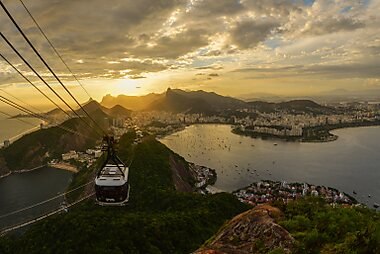
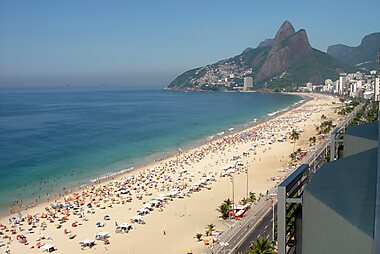
Rio de Janeiro and the coast: Rio de Janeiro pairs beaches with mountain views, and makes a base for day trips to the colonial port town of Paraty and the beach resort of Armação dos Búzios.
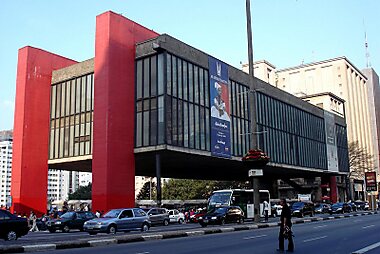
São Paulo: São Paulo is Brazil's largest city and economic engine, known for its restaurant scene, art museums, and nightlife rather than sightseeing landmarks.
Colonial Minas Gerais: Ouro Preto's baroque churches and cobbled streets sit near Belo Horizonte, the region's modern gateway city.
Bahia and the Northeast: Salvador's historic center reflects Brazil's Afro-Brazilian heritage, while Recife and Fortaleza anchor the Northeast's beach coast.
South: Florianopolis draws surfers and beachgoers to its island coastline, and Foz do Iguaçu is the gateway to the Iguaçu Falls.
The Amazon: Manaus is the main gateway for jungle lodges and river tours into the rainforest.
Brasília: the country's purpose-built capital, known for the modernist architecture around Brasilia's government plazas.
Brazil – Plan Your Trip
Pick the places you want to see and Tripomatic turns them into a day-by-day route, with smart routing, time estimates, and everything you need for a perfect trip.

Related destinations


Data: © OpenStreetMap contributors, Wikidata, Wikipedia, Tripomatic, Official websites, geoBoundaries (CC BY 4.0). Tours by GetYourGuide. We earn commission from bookings. Travel guide generated with AI.