



São Paulo
São Paulo is Brazil's largest city and its business and cultural capital. It has fewer postcard landmarks than Rio de Janeiro. Instead it offers major museums, live music, and a food scene shaped by generations of Italian, Japanese, Lebanese, and Portuguese immigrants — one of the most diverse in South America.
The city suits travelers who want art, food, and street life more than beaches or colonial architecture. Most visitors spend two to four days here, often combining it with a beach trip to the coast or a longer tour of Brazil.

São Paulo – Planning a Trip?
Build your day-by-day itinerary in the Tripomatic app.


When to visit
São Paulo has a mild subtropical climate with no extreme seasons. Summer, from December to March, is hot and humid with frequent afternoon storms. Winter, from June to August, is cooler and drier, and generally the most comfortable time to visit.
Plan around the Formula 1 São Paulo Grand Prix at Interlagos Racecourse, held every November. Race weekend fills hotels across the city and brings a festival atmosphere even for visitors without a ticket.
Best time to visit: April, May, June, July, August
Top sights
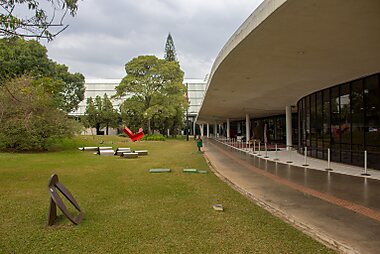
Ibirapuera Park is the city's most visited park, with museums, a lake, and wide lawns that fill with joggers and families on weekends.
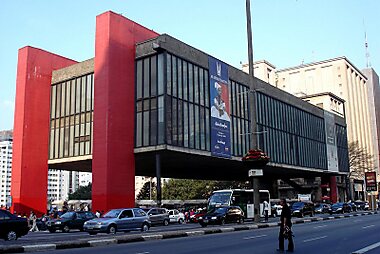
São Paulo Museum of Art holds one of the best art collections in Latin America, from European masters to Brazilian modernists, inside a concrete-and-glass building raised on four giant red pillars.
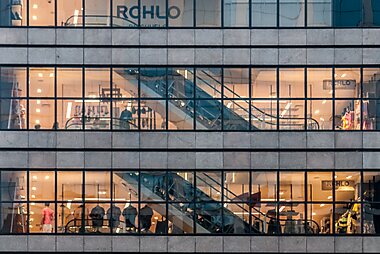
Paulista Avenue is São Paulo's main business avenue, home to bank towers, cultural centers, and street performers, stretching nearly three kilometers through downtown.
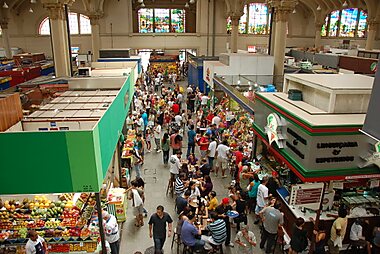
Municipal Market is a grand food hall built in the early 1930s in the historic center, good for a mortadella sandwich or a plate of fresh fruit.
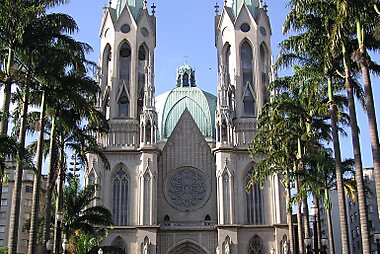
São Paulo Cathedral anchors the historic center with its neo-Gothic towers, built over four decades and finished in the 1950s.
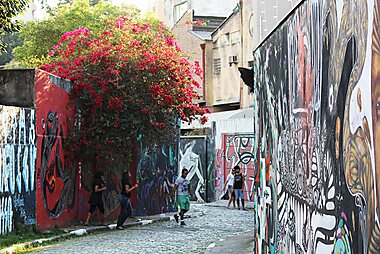
Batman's alley is a graffiti-covered alley in the Vila Madalena neighborhood, one of the best places to see São Paulo's street art scene up close.
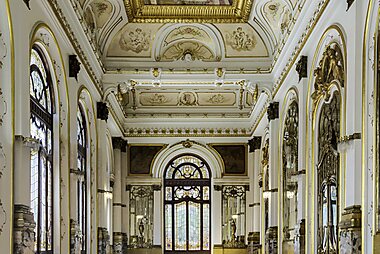
Municipal Theatre of São Paulo is a beaux-arts theatre that hosted Brazil's landmark 1922 Week of Modern Art, and is still home to the city's symphony and ballet.
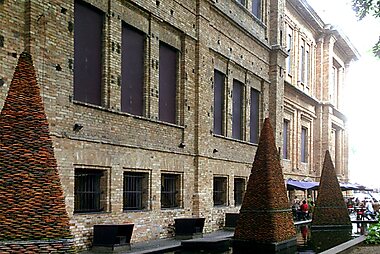
School Yard marks the spot where Jesuit priests founded the city in 1554, with a small museum on the site today.
Featured Lists


What to experience
- Join the crowds on Paulista Avenue on a Sunday morning, when it closes to cars for Paulista Aberta and fills with cyclists, skaters, and street vendors.
- Catch a football match at Arena Corinthians, home of Corinthians, one of the city's most popular clubs. The chanting and drumming from the stands is as much the show as the game.
- Spend a Sunday afternoon in the Liberdade neighborhood, São Paulo's Japantown, when a street fair fills the main square with Japanese, Chinese, and Korean street food and crafts.
Tours & Activities
São Paulo — Map

 Open the interactive map
 Day trips
São Paulo has a mix of nearby historic towns, mountain retreats, and beaches within reach of a single day.
- Embu das Artes — about 40 minutes by car or bus, this colonial-era town is known for its weekend crafts fair, artisan workshops, and cobbled main square. A relaxed half-day trip.
- Santos and Guarujá — about 1 to 1.5 hours by car via the Anchieta or Imigrantes highways, or by bus from the Tietê terminal. The first has Brazil's busiest port and a long beachfront promenade; the second has better beaches for swimming.
- Paranapiacaba — about 1.5 hours by car or train, a preserved 19th-century railway village in the hills above the city, built by a British rail company. Worth it for the fog, the old steam engines, and the mountain views.
- Campos do Jordão — about 2.5 hours by car or bus. A mountain town styled after the Swiss Alps, popular for its cool climate, chocolate shops, and winter festival. Best as a longer day trip or an overnight stay.
Getting there
- By air: Most international flights land at Guarulhos International Airport (GRU), about 25 km from the center. An airport bus runs to major hotel districts in around 45–60 minutes depending on traffic; a taxi or ride-hailing app takes about the same. Domestic flights often use Congonhas Airport (CGH), just 8 km from downtown and reachable by taxi in 20–30 minutes.
- By bus: Long-distance coaches from across Brazil and neighboring countries arrive at the Tietê Bus Terminal, one of the largest coach stations in South America.
Getting around
- Public transit: The metro and commuter rail network (CPTM) is the fastest way to cross the city, especially during rush-hour traffic. Buy a Bilhete Único card at any station, or tap a contactless bank card or phone directly at the gates on most lines. São Paulo Metro
- Taxi and ride-hailing: Uber and the Brazilian app 99 both operate citywide and are widely used.
- On foot and cycling: São Paulo is too spread out to walk between neighborhoods, but areas like Jardins, Vila Madalena, and the historic center are pleasant on foot. Bike lanes are expanding and a bike-share system covers several central districts, though heavy traffic makes cycling on busy streets stressful.
Driving
- Is a car worth it?: No, for the city itself — traffic is heavy most of the day and public transit is faster. A car is useful mainly for day trips beyond the city.
- Rodízio: On weekdays, cars are banned from an expanded downtown zone during morning and evening rush hour, based on the last digit of the license plate. Rental agencies can explain which day applies.
- Parking: Use a paid garage in the center, or a metered "Zona Azul" street spot, paid via an app or prepaid card.
Food & drink
São Paulo has one of the largest and most varied food scenes in South America. More than a century of immigration shaped it, from Italian and Japanese communities to Lebanese and Portuguese ones. Each left a mark on the local kitchen, alongside dishes from across Brazil.
For a tasting menu built entirely on native Brazilian ingredients, book ahead at D.O.M.. It's run by chef Alex Atala and has ranked among the world's best restaurants for over a decade. For something more everyday, head to the trattorias of the Bela Vista neighborhood, known locally as Bixiga, for the city's strongest Italian food tradition, or to Liberdade for Japanese and other Asian cuisine.
Safety & health
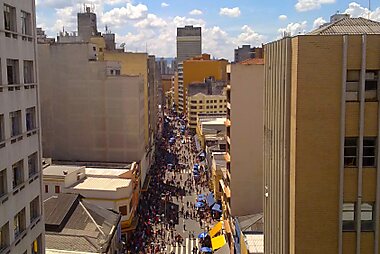
São Paulo is generally safe for tourists who take common-sense precautions. Pickpocketing and phone snatching happen in crowded spots like 25 March Street, on public transit, and around Sé Square — keep valuables out of sight. Neighborhoods popular with visitors, such as Jardins, Vila Madalena, and Pinheiros, are safe to walk in the evening. The historic center is fine by day but quieter and best avoided alone late at night.
History
The city began in 1554, when Jesuit priests founded a mission and school at what is now School Yard. For centuries it stayed a small inland town, overshadowed by the coastal sugar and gold economies.
Coffee wealth transformed the city from the late 1800s. It funded the mansions of Avenida Paulista and drew millions of immigrants who reshaped São Paulo. Italians and Japanese arrived to work the coffee plantations and later the factories that made the city an industrial powerhouse. Lebanese and Portuguese immigrants mostly built businesses in trade and commerce. Brazil's independence from Portugal was declared nearby in 1822, on the banks of the Ipiranga stream, an event now commemorated at Paulista Museum.
In 1922, a group of writers and artists including Mário de Andrade staged the Week of Modern Art at Municipal Theatre of São Paulo. The event broke with European tradition and helped define a distinctly Brazilian modernism.
Country facts
Quick practical facts for Brazil at a glance:
- Currency
- Brazilian Real BRL · Card payments · Widely accepted
- Emergency numbers
- 188
- Electricity
- 127 V · 60 HzType C / Type N
- Languages
- Portuguese
- Tap water
- Drink with caution
- Driving side
- Right
- Calling code
- +55


São Paulo – Plan Your Days
Turn the places from this guide into a real itinerary, with smart routing, time estimates, and everything you need for a perfect trip.


Related destinations


Data: © OpenStreetMap contributors, Wikidata, Wikipedia, Tripomatic, Official websites, geoBoundaries (CC BY 4.0). Tours by GetYourGuide. We earn commission from bookings. Travel guide generated with AI.