



Serbia
Serbia is a landlocked Balkan country centered on the Danube and Sava rivers, known for the fortress-and-nightlife capital Belgrade, medieval Orthodox monasteries, and a lively café culture. It borders Hungary, Romania, Bulgaria, North Macedonia, Montenegro, Bosnia and Herzegovina, and Croatia, and adjoins Kosovo, whose status is disputed.
Serbia suits travelers interested in history, nightlife, and food, and works well as a city break in Belgrade or Novi Sad, or a longer trip taking in monasteries and smaller towns. Summers are hot; winters are cold, with some snow, especially inland and in the south.




Serbia – Planning a Trip?
Build your day-by-day itinerary in the Tripomatic app.


Money & payments
Serbia uses the Serbian dinar (RSD), not the euro.
Card payment is widely accepted in Belgrade and Novi Sad, including most restaurants and shops, but smaller towns, markets, and some cafés are cash-only or cash-preferred. ATMs are common in cities.
Featured Lists


Historic Orthodox & Catholic Churches
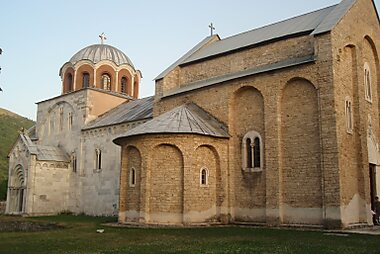
Explore Serbia's most iconic Serbian Orthodox monasteries and cathedrals, featuring monumental structures like the Saint Sava Cathedral in Belgrade and UNESCO World Heritage sites such as Studenica, Sopoćani, and Đurđevi Stupovi. This collection highlights the religious, cultural, and architectural heritage of Serbia, spanning medieval frescoes, historic ecclesiastical architecture, and significant centers of Orthodox spirituality across regions including Vojvodina and southern Serbia.
14 places

Natural Wonders
This collection highlights Serbia's diverse natural features, from multiple waterfalls like Skakavac and Vrelo to protected areas such as Zlatibor Nature Reserve. It includes scenic viewpoints like Banjska stena and several observation towers, as well as notable caves and lakes, offering detailed insights into the country's varied landscapes and geological formations.
13 places

Balkan Markets & Cuisine
This collection highlights traditional Serbian markets and regional restaurants featuring authentic Balkan cuisine. It includes accessible farmers' markets with local produce and crafts, alongside eateries offering outdoor seating, terraces, and cafes, some with Wi-Fi and takeaway options. The list spans diverse locations showcasing both vibrant market life and culinary heritage.
11 placesTours & Activities
Serbia — Map

 Open the interactive map
 Tipping
Tipping is not obligatory in Serbia and service is rarely included in the bill, but 10-15% in a restaurant is customary for good service, while bars and cheaper eateries usually just get a round-up. Card machines generally do not support adding a tip, so bring cash if you plan to tip.
10-15%
round up
round up the fare
a couple hundred RSD
10-15%
Electricity
Serbia uses Type C and Type F plugs (the standard two-round-pin sockets used across most of continental Europe) at 230 V / 50 Hz.
Language
Serbian is the official language, written in both Cyrillic and Latin scripts, which are used interchangeably on signage and menus. English is common among younger people and in tourist-facing businesses in Belgrade and Novi Sad; it's less reliable in smaller towns.
Staying connected
Prepaid SIM and eSIM plans from mts, Telenor, or A1 are easy to buy at the airport or phone shops. Mobile coverage and Wi-Fi are reliable in cities and along main roads, with some drop-off in mountainous or rural areas.
Safety & emergencies
Serbia is a safe country for tourists, with low rates of violent crime. The main risks are pickpocketing in busy areas of Belgrade, and aggressive driving on rural roads. Serbia has a single emergency number that reaches police, fire, and ambulance services.
Health
Tap water is safe to drink in Belgrade and most of the country. Pharmacies (apoteka) are common in towns and cities, with at least one open late in most larger towns. No special vaccinations are required for entry.
Visas & entry
Serbia is not part of the EU or the Schengen Area, so it has its own separate entry rules. Citizens of the EU/EEA, the United States, Canada, Australia, and many other countries can enter for tourism without a visa for stays of up to 90 days. Travelers from countries without a visa-waiver agreement need a Serbian visa, applied for through a Serbian embassy or consulate before travel.
Visa and entry requirements change frequently. Verify current requirements with the official immigration authority or your country's embassy before travel.
Etiquette
Guests are often offered rakija (fruit brandy) or coffee as a welcome, and it's polite to accept at least a small amount. Toasts are common at shared meals, and standing rounds of drinks is a normal social gesture. Shoes are usually removed when entering someone's home.
Holidays & opening hours
Public holidays can affect opening hours in smaller towns more than in Belgrade. Serbia follows the Orthodox calendar for religious holidays, so Christmas (January 7) and Easter fall later than in Western Europe.
Getting around
- By bus: An extensive intercity coach network connects almost every town and city, and is generally more reliable than trains.
- By train: A modernized high-speed line connects Belgrade and Novi Sad; other rail routes are slower and less frequent.
- In Belgrade: The city center is walkable; trams, buses, and trolleybuses cover the rest of the city well.
- By air: Belgrade Nikola Tesla Airport is the main international gateway; Niš has a smaller airport with some European connections.
Driving
- Tolls: All motorways (auto-put) are tolled at ticket-and-barrier plazas, priced by distance and vehicle category. Pay by cash, card, or an ENC on-board unit, which also gives a discount.
- Winter tires: Winter equipment (tires or chains) is required from November 1 to April 1 whenever snow, ice, or frost is actually present on the road.
- Speed limits: 50 km/h in towns, 80 km/h outside settlements, 100 km/h on expressways, 130 km/h on motorways.
- Headlights: Must be on at all times, day and night, year-round.
- Fuel: Stations are self-service, with card payment standard at the pump.
Food & drink
Grilled meat is central to Serbian cooking: ćevapi (grilled minced-meat rolls), pljeskavica (a large grilled meat patty, often stuffed with cheese), and mixed grill platters are everyday staples. Kajmak, a rich clotted-cream dairy product, is a common side or spread.
Sarma, cabbage rolls stuffed with meat and rice, is a classic winter and holiday dish, and burek, a flaky meat or cheese pastry, is common street food. Ajvar, a roasted red-pepper relish, is a pantry staple made fresh in autumn across much of the country. Rakija, a strong fruit brandy, is a near-universal welcome drink, and Serbian coffee culture, closely related to Turkish coffee, is meant to be lingered over.
Where to explore
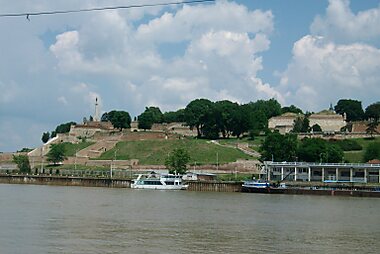
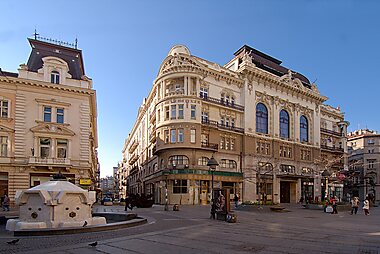
Belgrade is the capital, with a hilltop fortress overlooking the confluence of the Sava and Danube rivers, and a nightlife scene centered on floating river clubs. Novi Sad, in the Vojvodina region, has a laid-back old town and hosts the EXIT music festival at its own fortress.
Niš, in the south, is one of Serbia's oldest cities, with a well-preserved Ottoman-era fortress and the somber Skull Tower monument. Subotica, near the Hungarian border, is known for its Art Nouveau architecture and a large Hungarian-speaking population.
Serbia – Plan Your Trip
Pick the places you want to see and Tripomatic turns them into a day-by-day route, with smart routing, time estimates, and everything you need for a perfect trip.




