



Sri Lanka
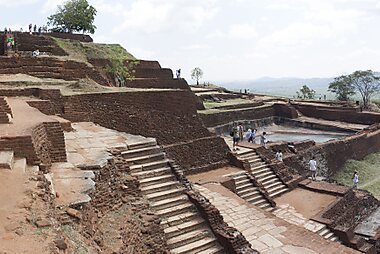
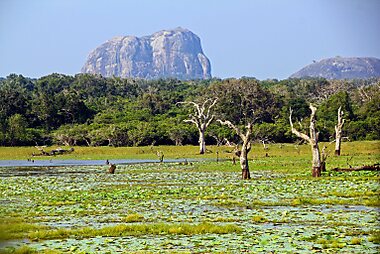
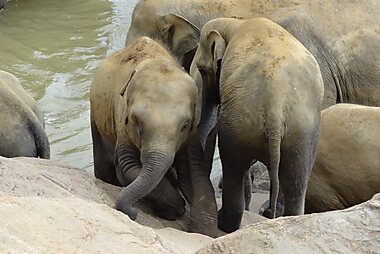
Sri Lanka is a compact island off the southern tip of India. It packs an unusual range of scenery into short driving distances. In a single week a visitor can walk around a 1,500-year-old rock fortress at Sigiriya. The next day might bring cool tea hills, a wildlife park with elephants, and a palm-lined beach.
The island's culture has several layers. A Sinhalese Buddhist majority lives alongside a Tamil Hindu community in the north and east, plus a long-established Muslim population. Portuguese, Dutch, and British colonial rule left visible traces, most visible in the old fort town of Old Town of Galle and its Fortifications. Ancient cities, hill country, wildlife, and coast all sit within a few hours of each other, so trips rarely mean long travel days.




Sri Lanka – Planning a Trip?
Build your day-by-day itinerary in the Tripomatic app.


Money & payments
The Sri Lankan rupee (LKR) is the only currency accepted for everyday purchases. ATMs are common in Colombo, Kandy, Galle, and other tourist towns, but they thin out in national parks and small hill-country villages, so carry extra cash before heading to places like Yala National Park or Horton Plains National Park. Card payment works at hotels, larger restaurants, and shops in tourist areas, but tuk-tuks, small eateries, and local markets expect cash.
Featured Lists


Cultural Highlights
Sri Lanka’s cultural landscape is anchored by the National Museum of Colombo, the island's largest repository of historical artifacts, and the National Museum of Natural History. In Colombo, the lotus-shaped Nelum Pokuna Theatre and the Bandaranaike Memorial International Conference Hall serve as major venues for arts and diplomacy. Scientific heritage is represented by the National Planetarium and the Air Force Museum. Beyond the capital, the Royal Palace Complex of Kandy reflects monarchical history, while the Vavuniya Archaeological Museum and the Mahatma Gandhi memorial highlight regional significance and shared political legacies.
9 places


Tours & Activities
Sri Lanka — Map

 Open the interactive map
 Tipping
Many restaurants add a 10% service charge to the bill; check before adding an extra tip on top. Hired drivers and multi-day guides rely heavily on tips and generally expect one, since it makes up a real part of their income. Tuk-tuk and taxi drivers appreciate rounding up the fare rather than a fixed percentage.
many add a 10% service charge; extra is optional
small note for housekeeping or bellhop
round up the fare
roughly 500-1000 LKR per day
Electricity
Sri Lanka uses a mix of round three-pin (Type D) and Type G outlets, so a single adapter type will not always fit. Bring a universal travel adapter rather than one built for a single plug type.
Language
Sinhala and Tamil are the official languages, and English is widely used in tourism, business, and on road signs, especially in Colombo and other visitor hubs. Sinhala and Tamil use their own scripts, but signage in tourist areas is usually bilingual with English, so navigation is manageable without reading either script.
Staying connected
Prepaid SIM cards and eSIMs from Dialog, Mobitel, or Hutch are easy to buy at the airport or in any town, and coverage is strong across the island, including most hill country and coastal areas. Registering a SIM requires showing a passport, so keep it on hand when buying one.
Safety & emergencies
Sri Lanka is a generally safe destination for tourists, with violent crime against visitors rare. The most common issues are overcharging by tuk-tuk drivers and pushy touts near major sights, both avoidable by agreeing on a price upfront or using a ride-hailing app. Road traffic is the biggest practical risk: driving is chaotic by Western standards, and visitors renting scooters or motorbikes should always wear a helmet. Some beaches have strong seasonal currents, so check for lifeguards and local advice before swimming.
Health
Tap water is not recommended for drinking; stick to bottled or filtered water, including for brushing teeth if you want to be cautious. Pharmacies are widespread in cities and larger towns and can handle most routine needs. Dengue fever is present year-round, so use mosquito repellent, especially at dawn and dusk. Routine vaccinations should be up to date, and typhoid and hepatitis A vaccines are commonly recommended before travel; check with a travel clinic. Private hospitals in Colombo and other major cities offer a good standard of care for tourists.
Visas & entry
Most visitors need an Electronic Travel Authorization (ETA) before arrival, applied for online in advance. A small number of nationalities can enter visa-free for short stays, and some others can obtain a visa on arrival, but the ETA is the standard route for most travelers. Apply only through the official government ETA website to avoid third-party markup sites.
Visa and entry requirements change frequently. Verify current requirements with the official immigration authority or your country's embassy before travel.
Etiquette
Cover shoulders and knees when visiting temples, and remove shoes and hats before entering. Do not pose for photos touching a Buddha statue or turning your back to one. Sri Lanka treats this as a serious offense, and it has led to fines and deportations. Use your right hand for eating, giving, and receiving items; the left hand is considered unclean for these purposes. Avoid pointing your feet at people, religious statues, or images of the Buddha. A common greeting is placing your palms together and saying "Ayubowan."
Holidays & opening hours
Sri Lanka observes a Poya (full moon) holiday every month, a distinctly Sri Lankan practice tied to the Buddhist calendar. On Poya days, alcohol sales stop nationwide and many shops, restaurants, and attractions close early or reduce hours, so it is worth checking the date before planning a trip around alcohol-serving restaurants or nightlife. Vesak, the Poya marking the Buddha's birth, enlightenment, and death, is the most significant and is marked island-wide with lanterns and decorations. Outside of Poya days, shops in cities generally keep long hours, while smaller towns wind down earlier in the evening.
Getting around
- By train: The hill country line between Kandy and Ella is one of the most scenic rail journeys in Asia, passing tea plantations and mountain viewpoints. Reserve seats in advance through the official rail booking site, since popular routes sell out early. Sri Lanka Railways seat reservation
- By tuk-tuk and ride-hailing: Tuk-tuks are the default way to get around towns for short trips; the PickMe app is the dominant local ride-hailing option and avoids price haggling.
- By intercity bus: A cheap and extensive network reaches almost every town, though buses can be crowded and journeys slower than driving.
- By domestic flight or seaplane: Limited to a handful of routes, mainly seaplane transfers to the hill country or east coast; rarely necessary for a standard itinerary.
- By hired driver: Many visitors hire a driver for multi-day trips between regions rather than self-driving, given the traffic and unfamiliar road conditions.
Driving
Sri Lanka drives on the left. Self-driving is uncommon among tourists. Most visitors hire a car with a driver instead, given heavy traffic and left-hand driving that is unfamiliar to many.
- Tolls: The Southern, Colombo–Katunayake, and Central expressways charge tolls through a ticket-and-barrier system, paid in cash or by card at the exit. There is no vignette system.
- Congestion: Colombo has heavy traffic at peak hours; there is no formal low-emission or congestion-charge zone.
- Parking: Attended car parks are common in cities and near major sights; street parking is informal elsewhere.
- Fuel: Stations are attended, not self-service, and accept both cash and card. Pumps are labeled Petrol 92 Octane, Petrol 95 Octane, Auto Diesel, and Super Diesel.
- Electric vehicles: Charging is still limited and concentrated around Colombo; not yet practical for a self-drive rental covering multiple regions.
Food & drink
Rice and curry is the everyday meal, typically a mound of rice with several small curries, sambols, and pickles served together, eaten with the right hand or a spoon. Breakfast often features hoppers, bowl-shaped pancakes made from fermented rice batter and coconut milk, sometimes with an egg cracked into the center, or string hoppers, steamed noodle nests eaten with curry and coconut sambol. Kottu roti, shredded flatbread stir-fried with vegetables, egg, and meat or seafood on a hot griddle, is a popular street food and casual dinner.
Ceylon tea, grown in the central highlands, is the national drink and served strong and sweet. Arrack, a spirit distilled from coconut flower sap, is the local alcoholic drink of choice, often mixed with ginger beer or cola. For dessert, curd and treacle, buffalo-milk yogurt drizzled with palm treacle, and watalappan, a spiced coconut custard, are widely available.
Where to explore
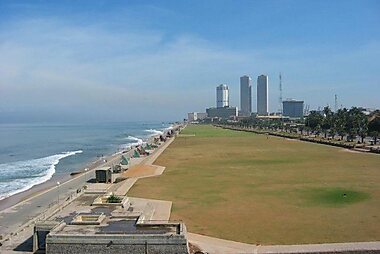
Colombo is the commercial capital and the usual arrival point, with colonial architecture, markets, and a growing food and bar scene.
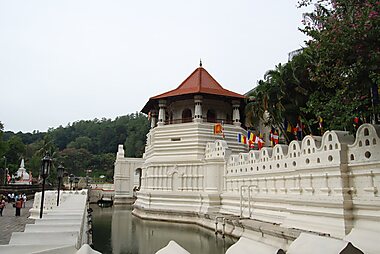
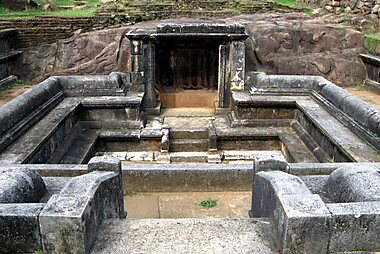
Cultural Triangle: The ancient heartland holds most of Sri Lanka's UNESCO World Heritage Sites. Anuradhapura was the island's first great capital, with sprawling ruins of monasteries and dagobas. Polonnaruwa succeeded it as a later medieval capital. Sigiriya is home to the rock fortress, and Dambulla to its cave temple complex. Kandy, the last royal capital, holds the Temple of the Tooth and a lake-ringed old town.
Hill country: Nuwara Eliya is a cool-climate former British hill station surrounded by tea estates. Ella is a small, laid-back town popular for hiking and the train ride through the surrounding hills.
Coast: Galle is a walled colonial-era fort town on the south coast, now full of boutique shops and cafes. Negombo is a beach and fishing town close to the international airport, popular for a first or last night.
North and east: Jaffna is the cultural center of Sri Lanka's Tamil community, with its own distinct cuisine and Hindu temples. Trincomalee on the east coast has some of the island's best natural harbors and beaches.
Sri Lanka – Plan Your Trip
Pick the places you want to see and Tripomatic turns them into a day-by-day route, with smart routing, time estimates, and everything you need for a perfect trip.


Related destinations


Data: © OpenStreetMap contributors, Wikidata, Wikipedia, Tripomatic, Official websites, geoBoundaries (CC BY 4.0). Tours by GetYourGuide. We earn commission from bookings. Travel guide generated with AI.