



Colombo
Colombo is Sri Lanka's commercial capital and largest city, though the official capital, Sri Jayawardenepura Kotte, sits a few kilometers inland. The city stretches along the Indian Ocean coast and blends Dutch and British colonial buildings with modern towers and a busy working port. Buddhist temples, Hindu kovils, mosques, and churches stand close together, a legacy of centuries of trade and immigration.
Most visitors treat Colombo as a one- or two-night stopover before heading to the hill country, the beaches, or the ancient cities inland. Give it a bit more time and its colonial-era streets, markets, and museums reward exploring on foot. The science-fiction writer Arthur C. Clarke lived in the city for over 50 years and is buried here.

Colombo – Planning a Trip?
Build your day-by-day itinerary in the Tripomatic app.


When to visit
December to March is the driest and most pleasant stretch, with less rain and lower humidity than the rest of the year. The southwest monsoon brings heavy afternoon downpours from May to September.
Time a visit around late January or February for the Navam Perahera, a night procession of drummers, dancers, and decorated elephants starting at Gangaramaya Temple — one of Colombo's biggest annual events.
Top sights
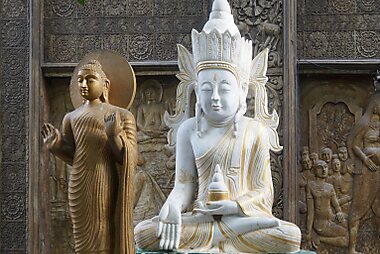



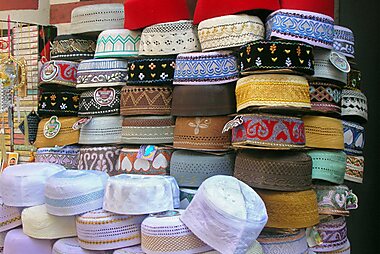

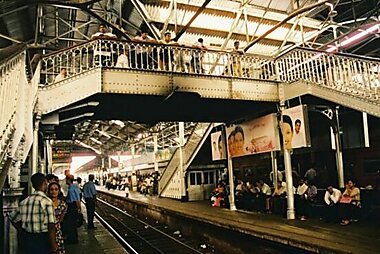
Gangaramaya Temple is Colombo's most famous temple, a working Buddhist monastery that doubles as an eclectic museum of Buddha statues, antique cars, and donated curios collected over more than a century.
Rising 350 meters above the city, Colombo Lotus Tower is the tallest structure in South Asia. Its observation deck and revolving restaurant give the best views over Colombo, especially at sunset.
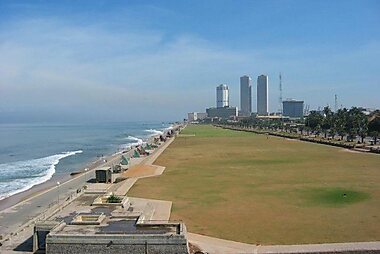
Galle Face Green is a long ocean-side lawn where locals fly kites, eat street snacks, and watch the sunset over the Indian Ocean. It has been the city's favorite open space since the 1850s.
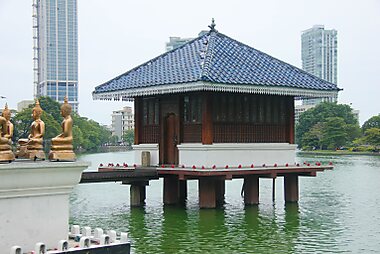
Floating on Beira Lake, Seema Malaka Temple is a small Buddhist temple and meditation center designed by the architect Geoffrey Bawa. Its calm setting is a contrast to the busy streets around it.
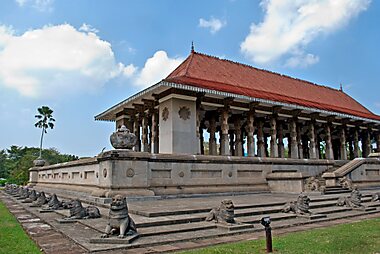
Independence Memorial Hall marks the spot where Sri Lanka's first parliament opened in 1948. The domed building also houses a museum on the country's path to independence.
Founded in 1877, National Museum of Colombo is Sri Lanka's largest museum. Its collection includes the royal regalia of the last Kandyan kings.
The candy-striped Red Mosque, built in 1909, is one of Colombo's oldest mosques and a landmark of the Pettah district. A few streets away, Pettah Market is the city's most chaotic market, selling everything from spices to electronics along narrow lanes.
Featured Lists


What to experience
- Fly a kite and snack on street food at Galle Face Green at sunset — a Colombo evening tradition, with vendors selling kottu, corn, and prawn fritters right on the lawn.
- Book an Ayurvedic massage or steam treatment at one of the city's spas, using herbal oils and techniques passed down for generations.
- Take a pedal boat out onto Beira Lake in the evening, when the lakeside temples and towers light up against the sky.
Tours & Activities
Colombo — Map

 Open the interactive map
 Day trips
Colombo makes a good base for exploring the west coast and the cultural interior, with options from a half day to a full day out.
- Mount Lavinia — about 30 minutes by train or tuk-tuk south of the centre. A palm-lined beach town with a historic hotel and seafood shacks on the sand.
- Kelaniya — about 30 minutes by bus or tuk-tuk. Home to one of Sri Lanka's most sacred Buddhist temples, said to mark a visit by the Buddha, with vivid murals inside.
- Negombo — 45 minutes to 1 hour by car, close to the airport. A fishing town with a lively fish market, a lagoon for boat trips, and a long beach.
- Kandy — about 3 hours by train or car. Sri Lanka's hill capital and home to the Temple of the Sacred Tooth Relic; the train ride itself, climbing through tea country, is part of the appeal.
- Sigiriya — about 4 hours by car. A UNESCO-listed rock fortress with frescoes and water gardens. It's a long day, so consider staying overnight nearby instead of a round trip.
Where to explore
Fort is Colombo's old colonial core, laid out inside the former Dutch and Portuguese fortifications. Wander its streets to find the Old Colombo Lighthouse, colonial-era banks and government buildings, and the Old Dutch Hospital, now a shopping and dining precinct.
Getting there
- By air: Bandaranaike International Airport (CMB) is in Katunayake, about 30 km north of the centre. A taxi or ride-hailing car takes 45 minutes to 1 hour on the expressway, depending on traffic; an air-conditioned expressway bus is a cheaper option and takes about the same time.
- By train: Colombo Fort Railway Station is the country's main rail hub, with intercity trains to Kandy, Galle, and Jaffna, and commuter trains along the coast.
- By bus: Long-distance buses to towns across the island leave from terminals near Pettah, a short walk from the Fort area.
Getting around
- Public transit: Buses (state-run and private) cover the whole city cheaply but get crowded; pay the conductor in cash, since there is no unified fare card yet. A limited suburban rail line is useful for a few routes, such as to Mount Lavinia. See Sri Lanka Railways for train times.
- Taxi / ride-hailing: PickMe, a Sri Lankan app, is used more widely than Uber here and covers both cars and tuk-tuks; agree a fare or use the meter before setting off in a tuk-tuk you flag down on the street.
- On foot: The Fort, Pettah, and Galle Face waterfront areas are walkable, but the city is spread out beyond them, and heat and humidity make midday walking tiring.
Driving
- Is a car worth it?: No, not for getting around Colombo itself — traffic is heavy and parking is scarce, so taxis, tuk-tuks, and ride-hailing apps are easier. A car with a driver is more useful for day trips outside the city.
- Parking: Shopping malls and hotels offer paid parking; street parking in Fort and Pettah is limited and congested.
Food & drink
Colombo's food scene mixes Sinhala, Tamil, Malay, and Dutch Burgher influences, plus the seafood you would expect from a port city. Rice and curry is the everyday meal, but look for Colombo specialties like lamprais — a Dutch Burgher dish of rice and curries baked in a banana leaf — and fresh crab.
For a special meal, Old Dutch Hospital houses some of the city's best-known restaurants, including a crab restaurant ranked among Asia's 50 Best. For an everyday taste of the city, try the evening food carts at Galle Face Green, or the spice and snack stalls around Pettah Market.
Safety & health
Colombo is generally safe for tourists, including at night in the well-lit central areas, and violent crime against visitors is rare. The main risks are petty and scam-related: tuk-tuk drivers who quote an inflated fare (agree the price first, or use a ride-hailing app instead), and touts near temples or gem shops offering "special deals" that are not. Keep bags zipped and stay alert in crowded markets like Pettah Market, where pickpocketing can occur. At temples such as Gangaramaya Temple, cover your shoulders and knees and remove your shoes and any hat before entering.
History
Colombo's name comes from the Sinhala Kolon thota, meaning "port on the Kelani River", and Arab and Chinese traders used its harbor for over a thousand years before European powers arrived. The Portuguese built a fort here in 1517, followed by the Dutch in 1656 and the British in 1796, each expanding the port and the fortified old town that is now Colombo's Fort district.
Colombo grew into the capital of British Ceylon, and independence arrived on 4 February 1948, formally marked at what is now Independence Memorial Hall. The old colonial legislature, the Old Parliament Building, served as parliament until 1982, when a new complex opened outside the city. Sri Lanka's decades-long civil war ended in 2009, and Colombo has since seen fast redevelopment, including new towers rising along the harbor.
Country facts
Quick practical facts for Sri Lanka at a glance:
- Currency
- Sri Lankan Rupee LKR Rs · Card payments · Commonly accepted
- Electricity
- 230 V · 50 HzType D / Type G
- Languages
- Sinhala, Tamil
- Tap water
- Drink with caution
- Driving side
- Left
- Calling code
- +94


Colombo – Plan Your Days
Turn the places from this guide into a real itinerary, with smart routing, time estimates, and everything you need for a perfect trip.


Related destinations


Data: © OpenStreetMap contributors, Wikidata, Wikipedia, Tripomatic, Official websites. Tours by GetYourGuide. We earn commission from bookings. Travel guide generated with AI.