



Taipei
Taipei is Taiwan's capital, a city where a night market alley sits two blocks from a glass skyscraper. Taipei 101 anchors a skyline home to about 2.4 million people, but the older grain of the city survives in temple courtyards, tea houses, and hillside trails. It suits travelers who want a mix of pace: brisk mornings on the MRT, slow afternoons in a teahouse, and evenings grazing street food.
Mountains ring the city on three sides, so hiking and hot springs are a short ride from downtown, not a separate trip. Da'an Forest Park gives the center a large green break from the streets, and the hills to the north rise into Yangmingshan National Park, still within the city limits.

Taipei – Planning a Trip?
Build your day-by-day itinerary in the Tripomatic app.


When to visit
Spring (February to April) is mild and the most comfortable season for walking the city. Summer (May to September) is hot, humid, and prone to typhoons, with sudden afternoon downpours. Autumn (October-November) is warm but drier, and winter (December-January) is mild with frequent rain rather than cold.
Plan around the Taipei Lantern Festival, held over two weeks after Lunar New Year, usually in February, when illuminated lantern displays and night markets take over public spaces and streets across the city.
Expect hot, sticky afternoons from May through September, when both humidity and rainfall peak.
Top sights

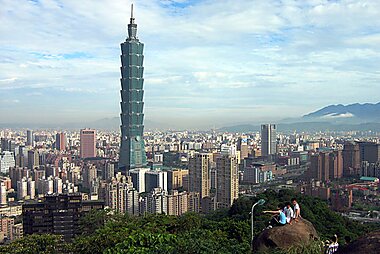
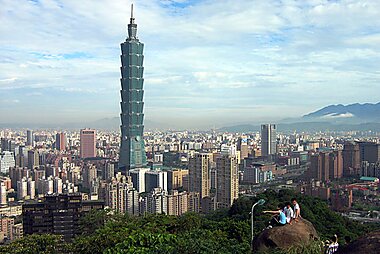
Taipei 101 was the world's tallest building when it opened in 2004, and its indoor and outdoor observation decks still give the best overview of the city and the mountains around it.
National Palace Museum holds one of the world's largest collections of Chinese imperial art, moved to Taiwan in 1949 and spanning thousands of years of dynastic history.
Chiang Kai-shek Memorial Hall is a monumental hall on Liberty Square, a good place to watch the changing-of-the-guard ceremony and learn about Taiwan's move from martial law to democracy.
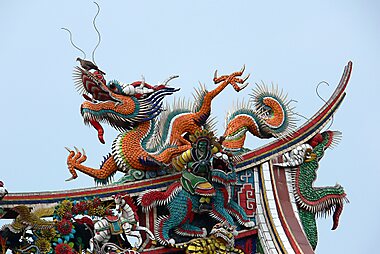
Longshan Temple is one of Taipei's oldest and busiest temples, founded by early Hoklo settlers and still active with daily worship.
Climb Elephant Mountain for a short, steep hike to a viewpoint looking straight across at Taipei 101, popular at sunset.
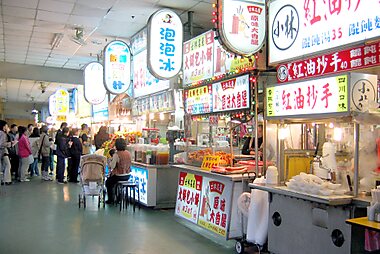
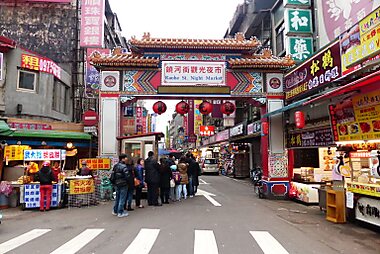
Shilin Tourist Night Market is the best known of Taipei's night markets, with food stalls, games, and clothing shops packed into a few covered lanes.
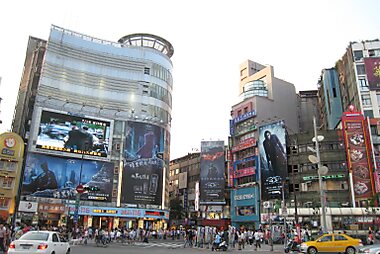
Ximending is Taipei's youth culture hub, known for street fashion, live music, and some of the city's best street food.
Old Storefront Buildings on Dihua St. preserves the look of an early-20th-century trading street, now home to shops selling dried goods, herbs, and fabric.
Featured Lists


Museums & Galleries in Taipei
Taipei's cultural landscape spans centuries of history and innovation. This collection features the National Museum of History and the Shung Ye Museum of Formosan Aborigines, focusing on indigenous heritage. Industrial sites like the Huashan 1914 and Songshan Creative Parks showcase modern art within repurposed factories. Specialized institutions include the Miniatures Museum of Taiwan and the Taipei Puppetry Museum, while the Beitou Hot Spring Museum and Grass Mountain Chateau offer insights into the city's colonial and political past.
20 places


What to experience
A few rituals are specific to Taipei and worth building time for.
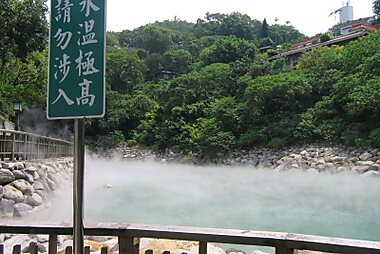
- Soak in the sulfur-scented public baths of Xinbeitou Hot Springs, a hot spring district reachable by MRT in about 30 minutes.
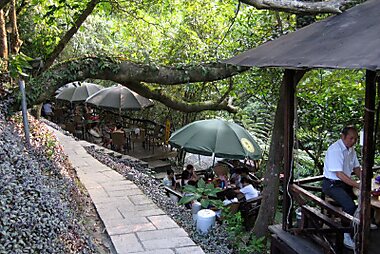
- Ride the Maokong Area gondola over tea plantations and stop at a hillside teahouse for a pot of high-mountain oolong.
- Rent a YouBike and follow the riverside paths along the Keelung or Tamsui rivers at sunset, a popular local routine.
Tours & Activities
Taipei — Map

 Open the interactive map
 Day trips
Several worthwhile destinations sit within a couple of hours of Taipei by train or bus.
- Tamsui District - about 40 minutes by MRT, a former trading port with a riverside promenade, an old fort, and sunset views over the river mouth.
- Wulai District - about an hour by bus, an Atayal indigenous mountain village with hot springs and a waterfall a short walk from the old street; a cable car also climbs to a mountaintop resort with views over the falls.
- Jiufen - about 1.5 hours by bus, a former gold-mining town on a steep hillside, known for its narrow lantern-lit lanes and teahouses.
- Shifen - about 1.5-2 hours by train, known for releasing sky lanterns and for a wide waterfall a short walk from the old rail line.
- Yehliu Geopark - about 1-1.5 hours by bus, a rocky headland with wind- and wave-eroded rock formations, including the well-known Queen's Head.
Getting there
- By air: Most international flights land at Taiwan Taoyuan International Airport, about 40 km from the city center. The Airport MRT reaches Taipei Main Station in about 35-40 minutes; airport buses take longer but cost less. Taipei Songshan Airport, inside the city, handles domestic flights and a handful of short regional international routes, about 20 minutes from downtown by MRT.
- By train: Taipei Main Station is the hub for Taiwan High Speed Rail, reaching Taichung in about an hour and Kaohsiung in under two, plus the slower conventional rail network to the rest of the island. Taiwan High Speed Rail
- By bus: Long-distance coaches from Taichung, Kaohsiung, and other cities arrive at terminals near Taipei Main Station.
Getting around
- Public transit: The Taipei Metro (MRT) covers most of the city and reaches the northern suburbs. Tap a contactless credit card or a phone wallet directly at the fare gate; an EasyCard, a rechargeable local transit card also usable on buses and YouBike, works the same way and can be topped up at any station or convenience store. Taipei Metro
- Taxi / ride-hailing: Metered taxis are common and easy to hail on the street; ride-hailing apps also operate alongside them.
- On foot / cycling: Central districts are walkable, and the YouBike bike-share system is dense enough to be a practical way to move between neighborhoods or ride the riverside paths.
Driving
- Is a car worth it?: No. Traffic, scooters, and limited parking make a car a burden in the city; the MRT and taxis cover everything downtown.
- Parking: Street parking is metered and scarce in the center; multi-story car parks near MRT stations are the easier option, usually paid by the hour.
Food & drink
Taipei's food culture centers on small, frequent meals rather than one big dinner. Breakfast is its own institution: queue with locals at Fuhang Soy Milk Breakfast for soy milk and savory flatbread, a Taipei classic.
For dinner, head to Raohe Night Market to graze stall to stall, or walk Yongkang Street for beef noodle soup, dumplings, and shaved ice shops packed into a few blocks.
Safety & health
Taipei is one of Asia's safer big cities for tourists, with low rates of violent crime. The main hazard is traffic: scooters weave between cars and can be hard to see when crossing at a corner, so use marked crossings and watch both directions even on a one-way street.
Petty scams are rare, but a few night-market stalls overcharge tourists who don't ask the price first. Taiwan sits on an active fault line, and small earthquakes are common; buildings follow modern seismic codes, so treat a mild tremor as routine rather than alarming.
History
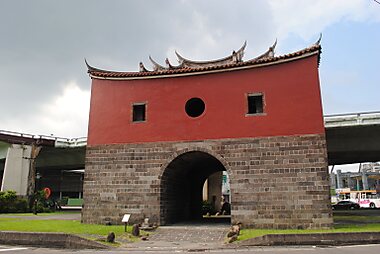
Taipei began as a walled Qing-dynasty provincial capital in the late 19th century; North Gate of Taipei City Wall is one of the few gates that survived the Japanese colonial government's demolition of the walls in the early 1900s. Long before that, the Ketagalan people lived around the hot springs of Beitou, a history documented at the Ketagalan Culture Center.
The temple district around Longshan Temple marks the city's start as a Hoklo Chinese trading settlement called Bangka. A more recent chapter is visible at Chiang Kai-shek Memorial Hall, built after Chiang Kai-shek's death during decades of martial law; the surrounding square was renamed Liberty Square after Taiwan's transition to democracy.
Country facts
Quick practical facts for Taiwan at a glance:
- Currency
- New Taiwan Dollar TWD NT$ · Card payments · Widely accepted
- Emergency numbers
- 112
- Electricity
- 110 V · 60 HzType A / Type B
- Tap water
- Drink with caution
- Driving side
- Right
- Calling code
- +886


Taipei – Plan Your Days
Turn the places from this guide into a real itinerary, with smart routing, time estimates, and everything you need for a perfect trip.

