


Taiwan
Taiwan is a compact island off the southeast coast of China. Dense, modern cities sit close to mountains, hot springs, and a rugged Pacific coastline. Chinese temple architecture, night markets, and a visible Japanese colonial-era layer give its cities their character. The island is small enough to combine city time with a mountain or coastal trip in one visit.
Taiwan suits travelers who want city energy and nature close together. Long transfers are rarely needed. First-time visitors usually base themselves in Taipei and add a trip to the mountains or the south. English signage is common in the cities. It thins out in rural areas, so a few basics help once you leave the main tourist routes.


Taiwan – Planning a Trip?
Build your day-by-day itinerary in the Tripomatic app.


Money & payments
The New Taiwan dollar comes in large bills, so break big notes early at a convenience store or bank. ATMs are common in cities and inside 7-Eleven and FamilyMart stores. Most accept foreign cards. Carry some cash for night markets, small eateries, and rural areas, where card machines are less common.
A budget traveler can get by using hostels, night-market meals, and public transport. Mid-range travelers who choose hotels and sit-down restaurants will spend noticeably more per day.
Featured Lists


Tours & Activities
Taiwan — Map

 Open the interactive map
 Tipping
Tipping is not part of daily life in Taiwan. Restaurants often add a 10% service charge to the bill. When they do, no extra tip is expected. Taxi drivers do not expect a tip. Rounding up the fare is a matter of convenience, not obligation. For hotel porters and private tour guides, a small tip is appreciated but optional.
10% service charge sometimes included; no extra tip needed
small amount for porters
at your discretion
Electricity
Taiwan uses Type A and Type B plugs, at 110 V and 60 Hz — close to the United States standard, so plugs and most electronics from there work directly. Travelers from Europe or the UK will need an adapter.
Language
Mandarin Chinese is the main language. It is written in traditional Chinese characters, not the simplified characters used in mainland China. Taiwanese Hokkien and Hakka are also widely spoken, especially among older generations. English is common in Taipei's tourist areas, on MRT signage, and at hotels. It drops off quickly outside the main cities. Learning to recognize a few characters, or keeping a translation app handy, makes ordering food and reading menus much easier.
Staying connected
Prepaid SIM and eSIM plans are sold at the airport, convenience stores, and telecom shops. Setup is quick, with no extra ID hurdle beyond showing a passport. Coverage is strong island-wide, including in the mountains. Signal can weaken in remote gorges and on some outer islands. Taiwan has no internet censorship. Social media, messaging apps, and international news sites all work normally.
Safety & emergencies
Taiwan is one of the safer destinations in Asia for travelers, with low rates of violent crime. The most common issue for tourists is traffic, since scooters weave through city streets and crossings can be chaotic. Typhoons are possible between June and October. They can disrupt flights and ferries with little warning, so check forecasts if traveling during that period. Earthquakes are also common. Follow local safety guidance if one occurs during your stay.
Health
Tap water meets treatment standards, but old pipes in some buildings mean many residents still boil or filter it before drinking. Bottled and filtered water are both easy to find. Pharmacies are widespread in cities and well-stocked, and many pharmacists speak some English. No special vaccinations are required for entry. Routine vaccinations should still be up to date. A doctor's advice is worth seeking before a trip that includes rural hiking or remote islands.
Visas & entry
Many nationalities can enter Taiwan visa-free for short stays. This includes the United States, Canada, most of the EU, the UK, Australia, and Japan. The visa-free stay is typically up to 90 days for tourism. Travelers from countries without visa-free access can apply for a visitor visa at a Taiwan representative office before departure. A passport valid for at least six months beyond the stay is generally required.
Visa and entry requirements change frequently. Verify current requirements with the official immigration authority or your country's embassy before travel.
Etiquette
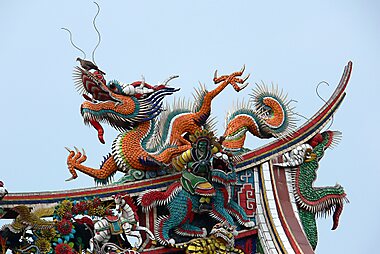
Remove your shoes before entering someone's home. Many guesthouses and temple inner halls expect the same; look for a shoe rack at the entrance as a cue. Modest dress is respectful at temples, covering shoulders and knees. A slight bow or nod is a polite greeting; handshakes are also common in business settings. Bargaining is unusual in shops and night markets, where prices are normally fixed. Ask before photographing people, especially at temples during active worship.
Holidays & opening hours
Lunar New Year is the biggest holiday. Many shops, restaurants, and attractions close for several days, and transport gets fully booked. It falls in late January or February, so plan around it if your trip overlaps. Most shops and restaurants open daily, including Sundays. Smaller family-run businesses sometimes close one day a week.
Getting around
- By train: The Taiwan Railway network and the high-speed rail (THSR) connect all major west-coast cities. The high-speed line cuts Taipei to Kaohsiung to about 90 minutes. Book seats online or at the station; reservations are recommended on weekends and holidays. Taiwan High Speed Rail
- By air: Domestic flights mainly serve the outer islands, Kinmen County and Penghu County. Flying saves hours over a ferry.
- By bus: Long-distance coaches reach towns the railway does not, including mountain areas like Alishan. They are often cheaper than the train.
- By metro: Taipei and Kaohsiung both have modern metro systems. A rechargeable EasyCard works on trains, buses, and metro across most of the island. Just tap it at the gate — no need to buy single tickets.
Driving
- Rules: Local roads carry heavy scooter traffic. Watch carefully at intersections, since scooters often filter through gaps in traffic. Random breathalyzer checks are common, and Taiwan enforces zero tolerance on drink driving.
- Tolls: Freeways use electronic toll collection (eTag), with no cash booths. A rental car usually comes with eTag pre-linked; confirm with the rental company.
- Parking: Paid parking is common in cities. Expect metered on-street spaces or multi-story car parks, with apps and prepaid cards widely used.
- Fuel: Most stations are full-service, with an attendant pumping the fuel. Ask for 92, 95, or 98 grade unleaded petrol, or 柴油 (chai you) for diesel.
- Electric vehicles: Charging is easy to find in cities and along the freeways, but thins out in the mountains and smaller islands.
Food & drink
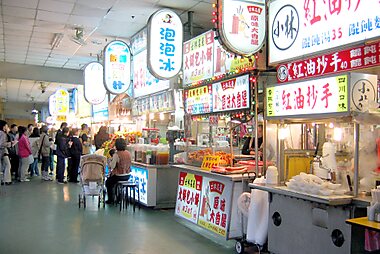
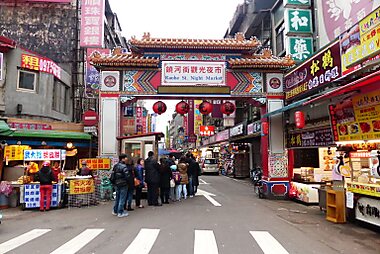
Breakfast in Taiwan is often a quick stop at a street stall. A soy milk drink and a savory pancake or rice roll are typical, eaten on the way to work. Lunch and dinner center on rice or noodles with several small shared dishes. Eating out is so affordable that many people cook at home only occasionally. Night markets are where the food culture is most visible. Rows of stalls sell everything from grilled skewers to shaved ice, often eaten standing up or at shared tables.
Signature dishes include braised beef noodle soup, oyster omelets, and soup dumplings, alongside night-market staples like stinky tofu and pan-fried dumplings. Bubble tea, invented in Taiwan, is sold on nearly every street corner. Fresh fruit and shaved-ice desserts are popular in the heat. Betel nut stands are common roadside sights, though the habit is aimed at locals rather than visitors.
Most everyday eating happens at small family-run restaurants, food courts, and night-market stalls. Sit-down restaurants are less common for daily meals, and portions are often meant for sharing.
Where to explore
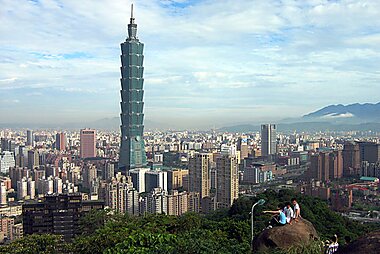
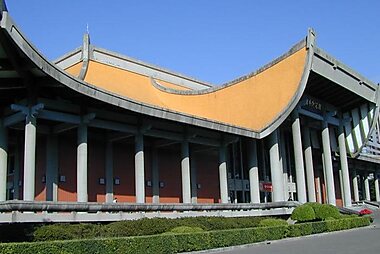
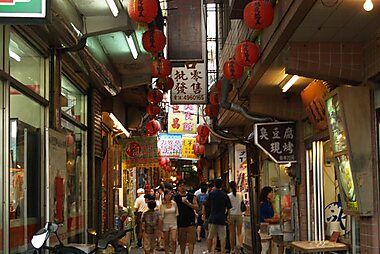
Northern Taiwan: Taipei is the capital and the usual starting point. Its landmarks include Lungshan Temple, National Palace Museum, and Taipei 101 Observatory, which anchors the skyline. New Taipei surrounds the capital and includes Jiufen Old Street in the hillside village of Ruifang District. Keelung is a busy port city and a common stop for cruise passengers.
Central Taiwan: Taichung is Taiwan's second city, known for its art spaces and food scene. Sun Moon Lake is the island's largest lake, ringed by mountains and popular for cycling and boat rides. Alishan is a mountain area famous for sunrise views, tea plantations, and old-growth forest.
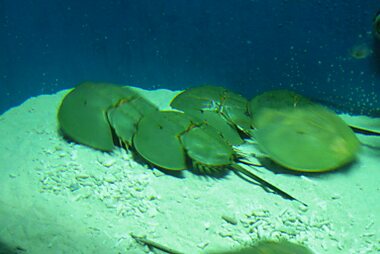
Southern Taiwan: Tainan is Taiwan's oldest city, with centuries of temples and colonial-era forts. Kaohsiung is a modern harbor city with a growing arts district. Hengchun is the gateway to Kenting National Park, Taiwan's beach and diving destination at the island's southern tip, home to National Museum of Marine Biology and Aquarium.
East coast and outer islands: Hualien City sits beside Taroko National Park, with its marble gorges and mountain trails. Taitung City is a quieter base for the east coast and nearby Green Island. Kinmen County and Penghu County are outlying island groups reachable by short flight, each with a distinct history and slower pace.
Taiwan – Plan Your Trip
Pick the places you want to see and Tripomatic turns them into a day-by-day route, with smart routing, time estimates, and everything you need for a perfect trip.