



Tampere
Tampere sits between two large lakes, Näsijärvi and Pyhäjärvi, joined by the Tammerkoski rapids that cut straight through the city centre. Finland's third-largest city built its wealth on the water power of those rapids, and the red-brick factories that once spun cotton and ground paper now hold museums, cafes, and concert halls. The result is a compact, walkable centre where 19th-century industrial architecture sits next to modern trams and a large student population.
Tampere suits travelers who want a real Finnish city without the price and crowds of Helsinki: strong museums, a famous sauna culture, and an easy base for lake scenery. It is also the hometown of author Väinö Linna, whose novels shaped how Finns remember the 1918 civil war and the Second World War.

Tampere – Planning a Trip?
Build your day-by-day itinerary in the Tripomatic app.


When to visit
Summers (June to August) are mild and the long daylight hours make evenings feel endless; winters are cold and dark but bring snow, sauna season, and Christmas markets. Spring and autumn are quieter and cheaper.
Plan around the Tampere Film Festival in March, one of Europe's oldest and largest short-film festivals, drawing filmmakers and audiences from around the world for five days of screenings.
Expect near-constant snow cover from November to April and close to 19 hours of daylight in June.
Top sights
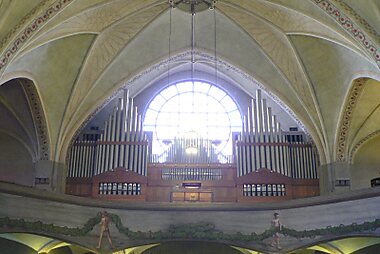


Tampere Cathedral is a National Romantic landmark completed in 1907, best known for the unsettling ceiling frescoes painted by Hugo Simberg, including a serpent coiling above the altar.
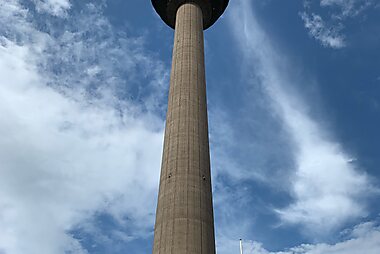
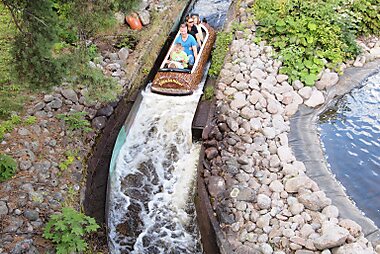
Climb Näsinneula, a 168-metre tower with a rotating restaurant, for views over both lakes and the whole city from 120 metres up. It rises out of Särkänniemi, Tampere's own amusement park, with rides, an aquarium, and a planetarium.
Moomin Museum holds original illustrations and artwork by Tove Jansson, creator of the Moomins, alongside detailed miniature scenes from the books.
Museum Centre Vapriikki occupies a former textile factory and packs several museums under one roof, from local history to natural science, with a good on-site restaurant.
Follow the Tammerkoski Rapids through the centre — the rapids that powered Tampere's mills are now lined with walking paths, bridges, and the red-brick factory buildings that made the city rich.
Climb the wooden Pyynikki Observation Tower, built on the world's highest gravel ridge, for a panoramic view over the forests and lakes south of the centre, then stop at its café for a doughnut.
Amuri Museum of Workers' Housing preserves a block of 19th-century wooden workers' housing exactly as factory families once lived in it, a rare surviving slice of Tampere's industrial past.
Featured Lists


Saunas and Swimming Spots
Tampere is known as the sauna capital of the world, offering a range of historic urban baths and lakeside swimming spots. This selection includes Rajaportti, Finland's oldest working public sauna from 1906, and Rauhaniemi, famous for its ice-swimming. The list also covers the Kaleva swimming complex and several sandy beaches across Lakes Pyhäjärvi, Suolijärvi, and Kirkkojärvi, highlighting the region's year-round commitment to traditional Finnish sauna and water culture.
9 places
Tampere's Nature Escapes
Tampere’s landscape is defined by its position between lakes Näsijärvi and Pyhäjärvi. This selection features the Hatanpää Arboretum’s extensive rose gardens and the 168-meter Näsinneula observation tower. Outdoor spaces range from central Tammerkoski riverside parks to remote shelters like Viitastenperän laavu. It includes sandy beaches at Pyynikki and Loukonlahti, alongside protected wetlands and glacial erratics like Siirtolohkare, highlighting the region's post-glacial topography and lakeside ecosystems.
20 placesWhat to experience
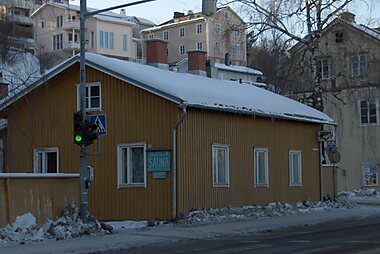
- Sweat it out at Rajaportin Sauna, Finland's oldest working public sauna, in use since 1906 in the Pispala district.
- Catch a Tappara-Ilves ice hockey derby — Tampere is Finland's ice hockey capital, and the local rivalry is one of the fiercest in the sport.
- In summer, cruise the historic "Poet's Way" steamboat route across Näsijärvi lake toward Ruovesi, past forests that inspired national artists.
- Rent a floating lakeside sauna on Näsijärvi for a private sauna-and-swim session, a popular modern twist on the local sauna tradition.
Tours & Activities
Tampere — Map

Day trips
All within easy reach of Tampere, by train, bus, or car:
- Pirkkala — about 15 min by bus. A quiet lakeside town on Pyhäjärvi with shoreline nature trails, good for a short walk or a picnic.
- Nokia — about 20 min by train. An old mill town on its own rapids, the Nokianvirta, with riverside paths and the ruins of a 19th-century ironworks.
- Kangasala — about 25 min by car or bus. Climb the Kangasalanharju ridge for one of Finland's most celebrated lake views, over a patchwork of forests and water.
- Hämeenlinna — about 50 min by train. Home to the medieval Häme Castle and the birthplace of composer Jean Sibelius.
- Helsinki — about 1h35 by train. Finland's capital makes an easy long day trip if time is short, with direct high-speed connections all day.
Getting there
- By air: Tampere–Pirkkala Airport (TMP) has scheduled flights within Finland and a handful of European routes; it is 17 km southwest of the centre, linked by bus (about 25 min, a few euros). Most international travelers instead fly into Helsinki-Vantaa Airport and continue by train.
- By train: Direct InterCity and Pendolino trains connect Tampere with Helsinki (about 1h35) and Turku (about 1h45), arriving at Tampere railway station in the city centre.
- By bus: Long-distance coaches link Tampere with most Finnish cities, usually cheaper than the train but slower.
Getting around
- Public transit: Nysse buses and Tampere's tram line cover the city; buy tickets with the Nysse app or tap a contactless bank card directly on board. The same ticket works on both buses and trams. See the Nysse journey planner.
- Taxi: Standard taxi apps operate alongside street-hailed cabs.
- On foot / cycling: The centre is compact and flat enough to walk between most sights in 20-30 minutes; Tampere also has an extensive bike-lane network and a summer bike-share scheme.
Driving
- Is a car worth it?: Not for the city itself — the centre is walkable and parking is limited. A car helps for reaching Kangasala's viewpoints or other lake areas at your own pace.
- Parking: Metered street parking and several multi-storey car parks ring the centre; pay by app or at machines, roughly EUR 2-4 per hour.
- Restrictions: None beyond normal city traffic; there is no congestion charge or low-emission zone.
Food & drink
Tampere's signature dish is mustamakkara, a dark blood sausage served warm with lingonberry jam and mustard — look for it at Laukontori Market Square by the harbor, especially during the autumn herring market.
Around Tammelantori and the Kehräämö riverside food halls you'll find a broader mix of casual restaurants and street food inside converted factory buildings, a good option for a relaxed meal without picking a single named venue.
Safety & health
Tampere is very safe for travelers, with petty theft the main concern — keep an eye on bags in busy bars and around the railway station late at night, especially on weekends. Pharmacies (apteekki) are well signed and widely available for minor ailments.
History
Tampere was founded in 1779 by King Gustav III of Sweden specifically to harness the Tammerkoski Rapids for industry. The plan worked: by the late 19th century, textile magnate James Finlayson's cotton mills along the rapids had grown into the largest industrial complex in the Nordic countries, earning Tampere the nickname "Manchester of the North." The old mill buildings now house Museum Centre Vapriikki and the shops and cinemas of the Finlayson district.
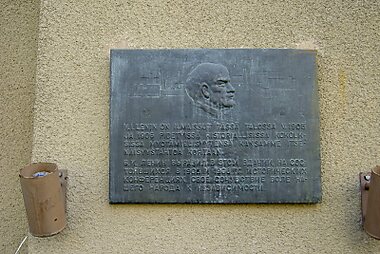
That industrial workforce also made Tampere a center of the Finnish labor movement. In December 1905, Vladimir Lenin and Joseph Stalin met for the first time at a Bolshevik conference held in the Tampere Workers' Hall, now home to the Lenin Museum. Twelve years later, Tampere saw some of the bloodiest fighting of the 1918 Finnish Civil War, when White troops recaptured the Red-held city after a week of urban battle.
Country facts
Quick practical facts for Finland at a glance:
- Currency
- Euro EUR · Card payments · Widely accepted
- Emergency numbers
- 112
- Electricity
- 230 V · 50 HzType C / Type F
- Languages
- Finnish, Swedish
- Tap water
- Safe to drink
- Driving side
- Right
- Calling code
- +358


Tampere – Plan Your Days
Turn the places from this guide into a real itinerary, with smart routing, time estimates, and everything you need for a perfect trip.




