



Toronto
Toronto is Canada's largest city and its center for finance, media, and culture. It sits on the shore of Lake Ontario, and the CN Tower marks the skyline from almost every angle. Almost half of the city's residents were born outside Canada. That shows in the food, the neighborhoods, and the languages you hear on the street.
Toronto suits a first-time visitor well. Downtown is compact and walkable, public transit reaches most sights, and the waterfront and ravine parks offer a break from the skyscrapers. Musician Drake grew up here and remains closely tied to the city.

Toronto – Planning a Trip?
Build your day-by-day itinerary in the Tripomatic app.


When to visit
Summers (June to September) are warm and often humid, with plenty of patio and festival weather. Winters (December to March) are cold, with regular snow and days well below freezing. Spring and fall are short and mild.
Plan around the Toronto International Film Festival (TIFF) in September if you can. It is one of the world's biggest film festivals, and the city fills with premieres and public screenings for about ten days.
Best time to visit: June, July, August, September
Expect August afternoons to feel close to 30°C with high humidity, and January nights that regularly drop well below -10°C.
Top sights
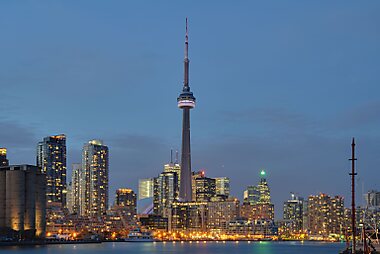

- CN Tower is Toronto's tallest structure and one of the tallest towers in the world. Ride the glass elevator up for views over Lake Ontario, or step onto the glass floor if you dare.
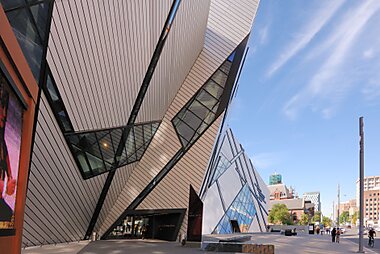
- Royal Ontario Museum covers everything from dinosaur skeletons to Canadian history, in one of North America's largest natural-history and world-culture museums.
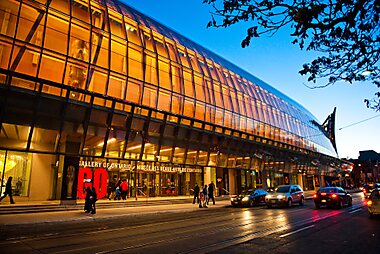
- Art Gallery of Ontario holds one of the country's best collections of Canadian and international art, in a building partly redesigned by Frank Gehry, who grew up nearby.
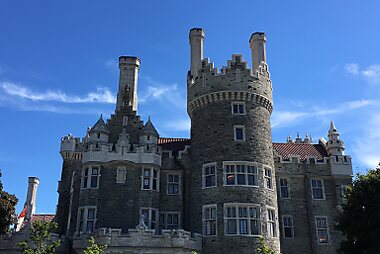
- Casa Loma is a full-size, early-1900s castle built by a Toronto financier, complete with secret passages and stables — an unusual find in a North American city.
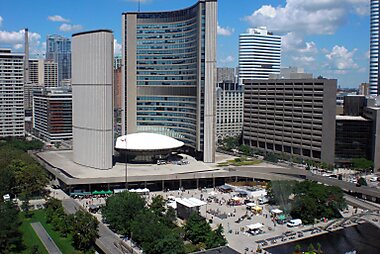
- Toronto City Hall fronts a reflecting pool that becomes a free ice rink each winter, and its plaza is a popular meeting point year-round.
- Distillery District is a cluster of restored Victorian-era industrial buildings, now filled with galleries, shops, and restaurants — good for an afternoon of wandering.
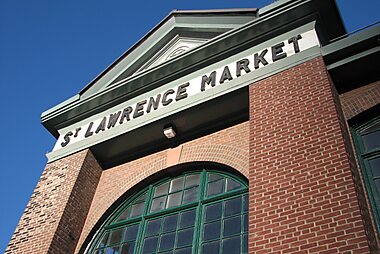
- St. Lawrence Market South is Toronto's main food market, trading here in some form since 1803; go hungry and try a peameal bacon sandwich.
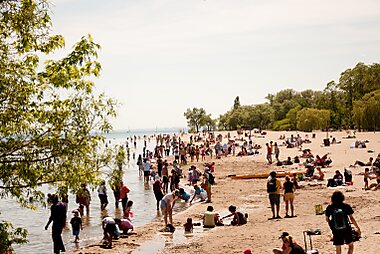
- Centre Island Park is the easiest way to see Toronto's skyline from the water — a short ferry ride takes you to a chain of car-free islands with beaches and picnic spots.
Featured Lists

Toronto's Absolute Essentials
Toronto’s essential sites span cultural history and expansive green spaces. The Royal Ontario Museum showcases world cultures and natural history, while St. Michael's Cathedral Basilica stands as one of the city's oldest architectural landmarks. For nature, High Park offers diverse recreational facilities and trails. The Toronto Island Park provides a car-free escape with skyline views, accessible through the Jack Layton Ferry Terminal. This selection highlights the city's balance of historic institutions and accessible waterfront landscapes.
5 places


What to experience
A few things define a Toronto visit beyond its sights:
- Skate outdoors at Nathan Phillips Square in winter — it's free and open into the evening.
- Catch a Blue Jays baseball game or a Raptors basketball game; Toronto is one of the few cities anywhere with a major team in nearly every North American sport.
- Walk part of the PATH, an underground network of tunnels linking downtown buildings — useful on a cold winter day.
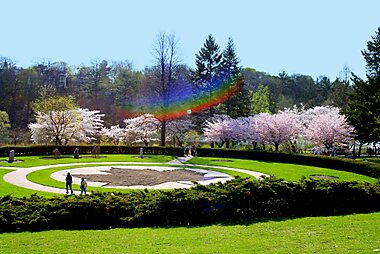
- See the cherry blossoms at High Park for a couple of weeks each spring.
- Catch a free outdoor concert at Toronto Music Garden on a summer evening.
Tours & Activities
Toronto — Map

 Open the interactive map
 Day trips
Toronto sits at the western end of Lake Ontario, with easy access to Ontario wine country and one of the world's most famous waterfalls.
- Hamilton — about 1 hour by car or GO train. A former steel town with a dramatic escarpment, waterfalls, and a botanical garden.
- Niagara-on-the-Lake — about 1.5 hours by car. A well-preserved 19th-century town at the mouth of the Niagara River, surrounded by wineries; a popular stop before or after the falls.
- Niagara Falls — about 1.5 to 2 hours by car, bus, or train. The waterfalls are the draw; boat tours and viewing platforms get you close to the spray.
- Stratford — about 2 hours by car. Best known for its Shakespeare-focused theatre festival, running from April to October.
- Ontario's Prince Edward County wine region is a longer trip, about 2.5 hours by car, but worth it for a full day of vineyard visits.
Getting there
- By air: Most international flights land at Toronto Pearson International Airport (YYZ), about 25 km northwest of downtown. The UP Express train runs to Union Station downtown in 25 minutes; a taxi or ride-hail takes 30 to 45 minutes depending on traffic. A smaller downtown airport, Billy Bishop Toronto City Airport (YTZ), handles short-haul flights from a handful of Canadian and US cities and sits a 2-minute ferry ride from the foot of downtown.
- By train: VIA Rail connects Toronto to Montreal, Ottawa, and other Canadian cities from Union Station. Amtrak's Maple Leaf service links Toronto to New York City once daily.
- By bus: Long-distance coaches arrive at the Union Station Bus Terminal, with connections across Ontario and to nearby US cities.
Getting around
- Public transit: The TTC runs the subway, streetcars, and buses across the city. Tap a contactless bank card or phone directly at the fare gate or on board — no need for a separate transit card or ticket. TTC covers the city; GO Transit runs regional trains and buses to the surrounding area, including Hamilton and Niagara.
- Taxi / ride-hailing: Uber and Lyft both operate widely alongside traditional taxis.
- On foot / cycling: Downtown, the waterfront, and most tourist areas are walkable. Bike Share Toronto stations are common downtown, though the city's outer neighborhoods are more spread out and car-oriented.
Driving
- Is a car worth it?: No, not for the city itself — transit and walking cover downtown and most sights well. A car becomes useful if you plan day trips to Niagara or wine country.
- Parking: Downtown parking is expensive; look for Green P municipal lots, cheaper than most private garages, and pay by app or at the meter.
- Restrictions: No congestion charge, but the Gardiner Expressway and downtown streets get heavily congested during rush hour, roughly 7 to 9am and 4 to 7pm.
Food & drink
Toronto's food scene reflects its diversity more than any single local dish. St. Lawrence Market South is the place to try Canadian and Ontario specialties like a peameal bacon sandwich, alongside vendors from dozens of other cuisines.
For a wider taste of the city, head to Kensington Market for an eclectic mix of Latin American, Caribbean, and Asian food stalls, or to the Chinatown strip on Spadina Avenue and the Greektown stretch of the Danforth for concentrated neighborhood dining.
Safety & health
Toronto is a safe city for tourists by big-city standards. Petty theft, like phone snatching or bag theft, happens occasionally on transit and in crowded tourist spots — keep valuables zipped up and out of sight. Use normal caution walking alone late at night, particularly around the entertainment district and the Yonge Street strip on weekend nights.
Tap water is safe to drink everywhere. The bigger practical risk is the cold: from December to March, dress in layers and cover exposed skin on windy days to avoid frostbite.
History
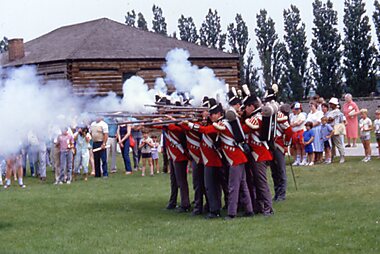
Toronto began as the town of York, founded in 1793 by John Graves Simcoe, the first Lieutenant Governor of Upper Canada. American forces burned much of the town during the War of 1812, an event still marked at Fort York, the fort built to defend it. York was renamed Toronto in 1834.
The city grew slowly until waves of immigration after World War II — first from Europe, then from across the world — transformed it into one of the most multicultural cities anywhere. In 1998, the old City of Toronto merged with five surrounding municipalities to form the current, much larger City of Toronto. Casa Loma, built between 1911 and 1914 by financier Sir Henry Pellatt at the height of his fortune, predates all of this by decades and is a reminder of the city's earlier boom years.
Country facts
Quick practical facts for Canada at a glance:
- Currency
- Canadian Dollar CAD $ · Card payments · Widely accepted
- Emergency numbers
- 911
- Electricity
- 120 V · 60 HzType A / Type B
- Languages
- English, French
- Tap water
- Safe to drink
- Driving side
- Right
- Calling code
- +1


Toronto – Plan Your Days
Turn the places from this guide into a real itinerary, with smart routing, time estimates, and everything you need for a perfect trip.




