


Canada
Canada is the world's second-largest country by area, stretching from the Atlantic Ocean to the Pacific and up to the Arctic. Its character shifts by region: historic, French-speaking cities in the east, wide prairies through the centre, and mountains and coastline in the west. Most trips mix a city or two with time outdoors, since forests, lakes, and national parks are never far from any major city.
Canada suits almost any traveler, from first-timers exploring Toronto or Vancouver to hikers heading into the Rockies. The country became a confederation of British colonies in 1867 and is officially bilingual: English and French share equal legal status nationwide, though French dominates in Quebec.



Canada – Planning a Trip?
Build your day-by-day itinerary in the Tripomatic app.


Money & payments
The Canadian dollar (CAD) is the only currency accepted nationwide.
ATMs are common in every city and most small towns. Prices are noticeably higher in Toronto, Vancouver, and Montreal than in smaller cities or rural regions.
Featured Lists


Canadian Airports
This collection spans Canada's vast aviation landscape, from major Atlantic hubs like Halifax Stanfield to remote Arctic outposts in Nunavut and the Northwest Territories. It includes essential community airfields such as Kimmirut and Attawapiskat, alongside specialized facilities like the private Diavik Airport serving diamond mines. These locations highlight the country's reliance on air travel for connectivity, featuring northern hubs like Iqaluit and Inuvik that serve as critical links for transport and supplies across the Canadian North.
20 places


Canadian Museums & Galleries
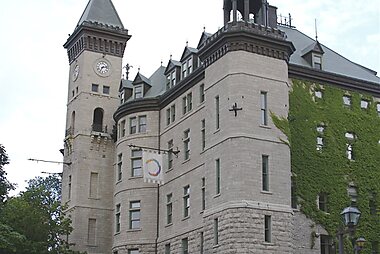
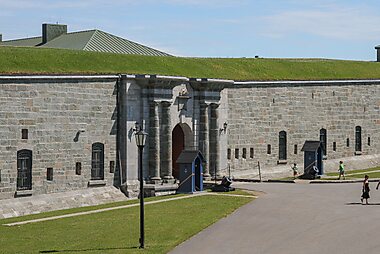
This collection spans Canada’s artistic and historical breadth, from the Royal Ontario Museum’s vast natural history collections to the Vancouver Art Gallery’s focus on contemporary Canadian works. Specialized sites include the Royal Tyrrell Museum’s world-renowned dinosaur fossils and the Bank of Canada Museum’s currency exhibits. Historical sites like Lower Fort Garry and Fort Battleford offer insight into the fur trade and police history, while Wanuskewin Heritage Park preserves 6,000 years of First Nations culture, and the Musée Naval de Québec explores maritime defense.
8 places

Tours & Activities
Canada — Map

Tipping
Tipping is expected in restaurants, bars, and for most services, and is not optional the way it can be elsewhere — many workers rely on tips as part of their income.
15-20%
15-20% or $1-2/drink
round up / 10-15%
$2-5/bag
15-20%
Round up for taxi and rideshare drivers, and leave a few dollars per bag for hotel porters. Tour guides on paid tours expect a tip at the end of the trip. Tipping is not customary for retail staff or fast-food counters.
Electricity
Canada uses Type A and B plugs at 120 V / 60 Hz, the same standard as the United States — travelers from most of the rest of the world will need a plug adapter and possibly a voltage converter for high-power devices.
Language
English and French are both official languages nationwide. English dominates in most provinces; French is the main language in Quebec and parts of New Brunswick and Ontario. English is widely spoken almost everywhere, including in Quebec's tourist areas, though a few French words go a long way there.
Staying connected
Mobile data plans in Canada are expensive compared to most other countries. Buying a prepaid SIM or eSIM from a Canadian carrier (Rogers, Bell, Telus, or a low-cost brand like Freedom Mobile or Public Mobile) at the airport or a mall kiosk is usually cheaper than roaming, and no ID registration is required. Coverage is excellent in cities but can disappear entirely in remote areas, including some national parks and northern highways — download offline maps before heading out of range.
Safety & emergencies
Canada is a safe country for tourists, and violent crime against visitors is rare. The main risks are petty theft from parked cars and hotel rooms in busy tourist areas, and wildlife encounters (bears, moose) when hiking — follow posted warnings and store food properly in the backcountry. Winter brings serious cold-weather risk across most of the country; dress in layers and know the signs of frostbite if traveling outside the milder coastal regions.
Health
Tap water is safe to drink everywhere in cities and towns. Pharmacies (drugstores) are common and well-stocked; most keep regular business hours, with some open late or 24 hours in larger cities. No special vaccinations are required to enter Canada. Canada does not provide free healthcare to visitors — travel insurance covering medical care is strongly recommended, since treatment costs for non-residents can be very high.
Visas & entry
Citizens of the United States can enter with just a passport and no visa. Visa-exempt travelers from many other countries, including the UK, EU countries, Australia, and Japan, also don't need a visa for short stays, but must apply online for an Electronic Travel Authorization (eTA) before flying to Canada. Travelers who need a visa can apply for a temporary resident visa through a Canadian visa office or online.
Visa and entry requirements change frequently. Verify current requirements with the official immigration authority or your country's embassy before travel.
Etiquette
Canadians value politeness: saying "please," "thank you," and apologizing even when not at fault is the social norm, and queuing in an orderly line is expected everywhere. Holding doors and letting people off transit before boarding are small habits that go a long way.
Canada has a large Indigenous population, and public events often open with a land acknowledgment recognizing the traditional territory. Ask before photographing people, especially in Indigenous communities, and dress and behave respectfully at cultural or religious sites.
Holidays & opening hours
Public holidays are a mix of federal and provincial dates, and observance varies by province. Most shops, restaurants, and attractions stay open on holidays, though banks, government offices, and some smaller businesses close.
Standard shopping hours run roughly 9:00-18:00 on weekdays, with many malls and larger stores open late and on Sundays too.
Getting around
- By air: domestic flights are often the fastest way to cover Canada's huge distances — flying between coasts or to the north can save days compared to driving or the train. Air Canada and WestJet operate the main domestic networks.
- By train: VIA Rail connects major cities in the south, including a scenic route between Toronto and Montreal, but coverage is limited compared to Europe and trains run less frequently.
- By bus: regional coach operators (such as Ontario Northland, Rider Express, and Maritime Bus) fill gaps between cities not well served by rail, especially in the west and Atlantic provinces.
Driving
- Speed limits: around 50 km/h in cities and towns, 80-100 km/h on rural highways, and up to 110-120 km/h on some stretches of motorway, depending on the province.
- Winter driving: winter tires are mandatory in Quebec (December-March) and strongly recommended everywhere else in winter; carry an emergency kit if driving rural or northern routes in cold weather.
- Tolls: most highways are free. Ontario's 407 ETR near Toronto is an all-electronic toll road billed by license plate — expect a bill by mail if you drive it in a rental car. The Confederation Bridge to Prince Edward Island charges a fixed toll, paid only when leaving the island.
- Parking: metered street parking is common in cities, usually paid by app (HonkMobile, PayByPhone) or a machine at the curb; parking garages are the norm downtown.
- Fuel: nearly all stations are self-service and pay-at-pump by card. Fuel is sold as "regular," "mid-grade," and "premium" gasoline, or diesel.
- Electric vehicles: charging stations are common along major highways between big cities, but coverage thins out fast in remote or northern areas — charge up before heading off the main corridors.
Food & drink
Breakfast is often simple — coffee and a pastry or eggs — while lunch and dinner follow North American patterns, with dinner as the main meal, typically eaten between 6 and 8 in the evening. Regional food varies enormously: Quebec is known for poutine (fries, cheese curds, and gravy) and tourtière, Atlantic Canada for lobster and other seafood, the Prairies for beef, and British Columbia for salmon and Pacific seafood, often with strong Asian influences from its large immigrant communities.
Maple syrup is a genuine national staple, not just a souvenir — look for it poured over pancakes or used in baking. Butter tarts and Nanaimo bars are popular sweet treats, and bannock, a simple fried or baked bread, reflects Indigenous culinary tradition found across the country. Coffee shop culture is strong nationwide, and craft beer and Canadian whisky are widely available alongside wines from Ontario's Niagara region and British Columbia's Okanagan Valley.
Where to explore
Canada's most-visited destinations cluster in a few regions.
Central Canada: Toronto is the country's largest city and a financial and cultural hub, close to Niagara Falls. Ottawa, the national capital, is known for its government buildings and museums.
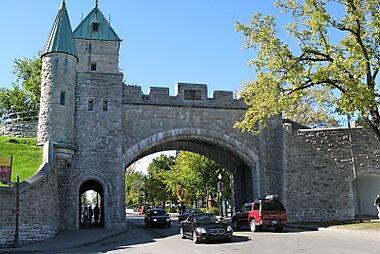
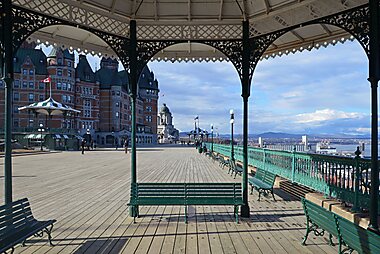
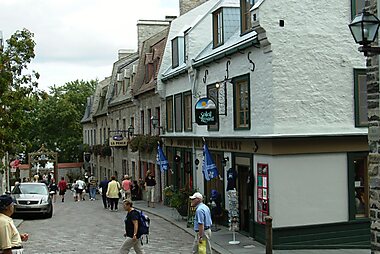
Quebec: Montreal blends French and North American culture with a lively food and arts scene, while the walled old town of Quebec City is the only fortified city north of Mexico, with stone ramparts and cobblestone streets.
The west: Vancouver pairs mountains and ocean with a compact, walkable downtown, and nearby Victoria has a slower, garden-city pace, while the ski resort town of Whistler is a short trip north. Calgary is the gateway to the mountains and lakes of Banff National Park.
Canada – Plan Your Trip
Pick the places you want to see and Tripomatic turns them into a day-by-day route, with smart routing, time estimates, and everything you need for a perfect trip.