



Trinidad and Tobago
Trinidad and Tobago is a twin-island nation off the northeast coast of Venezuela, the southernmost country in the Caribbean. Trinidad is the larger island, home to the capital Port of Spain, an oil-and-gas economy, and the country's Carnival culture. Tobago, a short flight or ferry away, is smaller and quieter, built around reef-lined beaches and rainforest.
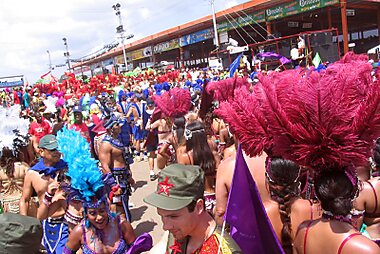
The country is one of the most ethnically mixed in the Caribbean, with roughly equal Afro-Trinidadian and Indo-Trinidadian populations alongside smaller Chinese, Syrian-Lebanese, and European communities. That mix shows up in the food, the music, and the country's biggest event, Carnival, held every February or March. Trinidad and Tobago is also the birthplace of the steelpan and calypso. It suits travelers who want city energy on one island and a slower beach pace on the other, rather than a single all-purpose resort.






Trinidad and Tobago – Planning a Trip?
Build your day-by-day itinerary in the Tripomatic app.
Money & payments
Cash is still useful outside Port of Spain and San Fernando — small vendors, route taxis, and rural shops do not always take cards. ATMs are common in cities and at the airport, but scarcer in smaller towns and on Tobago outside Scarborough and the main tourist strip. Carry small notes for maxi-taxis and street food.
A doubles or a bowl of corn soup from a roadside stall costs only a few dollars; a mid-range restaurant dinner runs considerably higher. Card acceptance is decent in hotels, malls, and city restaurants, but thin everywhere else, so budget some cash for daily spending.


Featured Lists

Trinidad and Tobago's Essential Wonders
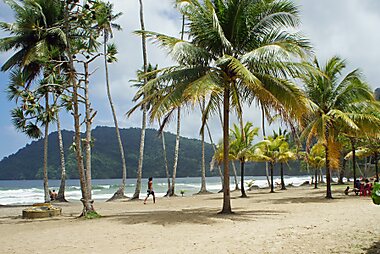
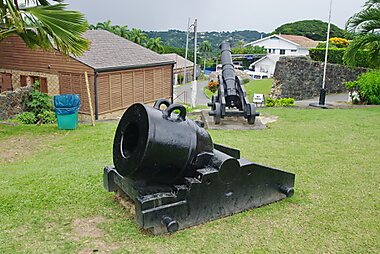
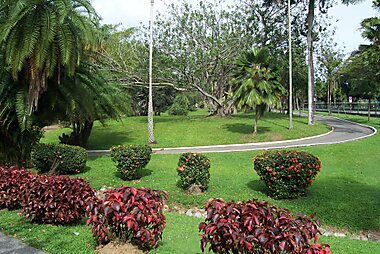
Trinidad and Tobago’s landscape features unique geological sites like the La Brea Pitch Lake, the world’s largest natural asphalt deposit, and the bubbling Piparo Mud Volcano. Cultural landmarks include the Beaux-Arts Red House parliament building and the Waterloo Temple in the Sea. The islands' biodiversity is showcased at the Caroni Bird Sanctuary and the Royal Botanic Gardens. From the secluded Paria Waterfall to the rainforest-fringed Maracas Beach and historical Fort King George, these sites represent the dual-island nation's natural environment and colonial history.
17 places


Tours & Activities
Trinidad and Tobago — Map

Tipping
Tipping is not part of everyday life in Trinidad and Tobago. Locals rarely tip at neighborhood roti shops, doubles stands, or bars, and doing so there can draw odd looks.
At restaurants and hotels aimed at visitors, and for a tour guide who went out of their way, a tip is welcome but still optional. Route taxis, maxi-taxis, and standard taxis run on fixed fares, so there is no need to tip a driver.
around 10% at tourist-facing restaurants; not expected at local roti and doubles stands
route taxis and maxi-taxis run fixed fares
a few TT$ for bellhop or housekeeping, mainly at upscale hotels
TT$20-40 for a guide who went out of their way
Electricity
Trinidad and Tobago uses the same flat two-pin plugs and voltage as the United States and Canada, so most North American travelers will not need an adapter.
Language
English is the official language and the language of business, signage, and menus everywhere. Everyday conversation also carries Trinidadian English Creole, a fast dialect with its own vocabulary. Visitors will follow standard English without trouble, but casual conversation between locals can be hard to catch at first.
Staying connected
Local providers bmobile and Digicel sell prepaid SIM cards at the airport and in shopping malls, with the strongest coverage in Port of Spain, San Fernando, and along Tobago's leeward coast. Signal can weaken in the Northern Range interior and on Tobago's windward side.
Safety & emergencies
Most visits to Trinidad and Tobago are trouble-free, especially on Tobago and in the main tourist areas of Trinidad. Petty theft and opportunistic crime happen in parts of Port of Spain, particularly after dark, so keep valuables out of sight and take a taxi rather than walking alone at night. During Carnival, stay close to your group in crowds. The event draws huge numbers of people into a small area.
Health
Tap water is treated and generally safe in Port of Spain, though many visitors stick to bottled water as a precaution, especially in rural areas and on Tobago. Pharmacies are widely available in towns and cities, with shorter hours on Sundays and in smaller towns. No vaccinations are required for most travelers, though a yellow fever certificate is needed if arriving from a country with risk of transmission. As elsewhere in the Caribbean, use mosquito repellent to reduce the risk of dengue and other mosquito-borne illness, especially during the rainy season.
Visas & entry
Citizens of the United States, Canada, the United Kingdom, and most European Union countries can enter Trinidad and Tobago without a visa for stays of up to 90 days. Many other Caribbean and Commonwealth nationals also enter visa-free. Travelers who do need a visa should apply through a Trinidad and Tobago embassy or consulate before departure.
Visa and entry requirements change frequently. Verify current requirements with the official immigration authority or your country's embassy before travel.
Etiquette
Greetings matter — a handshake and a "good morning," "good afternoon," or "good evening" before getting to business is expected, even with shopkeepers and taxi drivers. Dress is casual and often colorful; swimwear belongs at the beach, not in town or at religious sites, where shoulders and knees should be covered. Ask before photographing people, especially at Carnival, where costumed players have invested real time and money in their outfits — a quick "may I take a photo?" is appreciated.
Holidays & opening hours
Carnival Monday and Tuesday are not official public holidays but function as one in practice — most businesses in Port of Spain close, and the whole country is geared toward the celebration. On public holidays, banks, offices, and many shops close, though some malls and tourist-area restaurants stay open. Outside the cities, smaller shops often close or reduce hours on Sundays.
Getting around
- Between the islands: Trinidad and Tobago are two separate islands. The domestic flight between Port of Spain and Tobago takes 20 to 30 minutes; the inter-island ferry takes several hours and carries vehicles as well as passengers. Book both ahead during Carnival and other peak periods.
- By maxi-taxi and route taxi: Shared maxi-taxis (color-coded minibuses) and route taxis (shared cars) run fixed routes between towns for a low fare and are how most locals get around. They leave when full rather than on a schedule.
- By bus: The state-run PTSC bus network covers the main routes on both islands cheaply, but service can be infrequent outside peak hours.
- By taxi: Licensed taxis, marked with an "H" license plate, are available in cities and at the airport. Agree on the fare before you get in, since few use meters.
Trinidad and Tobago drives on the left.
Driving
- Rules: Seatbelts are mandatory for the driver and front-seat passengers, and using a handheld phone while driving is illegal.
- Road conditions: Main highways are in decent shape, but rural roads, mountain roads through the Northern Range, and much of Tobago's windward coast are narrow, winding, and pothole-prone. Drive cautiously after dark.
- Tolls: There are currently no toll roads or vignettes in Trinidad and Tobago.
- Parking: Parking is mostly informal — roadside or in private lots — with metered parking in parts of central Port of Spain.
- Fuel: Stations are staffed, not self-service, and take cash or card. Pumps are labeled Premium, Super, or Diesel.
Food & drink
Trinidad and Tobago's food reflects its mixed heritage, blending West African, Indian, Chinese, Spanish, and Creole influences into dishes found nowhere else. Breakfast might be a bake and shark or a bake with saltfish; lunch and dinner often center on curried meat or vegetables wrapped in roti, or a plate of rice, stewed meat, and callaloo. Street food — doubles, corn soup, roasted corn, and fruit carts — gets eaten standing up, at any time of day.
Rum, often mixed into a punch, is the dominant local drink, alongside two competing local beers. Sorrel, a spiced hibiscus drink, appears mostly around Christmas. Food is central to how Trinidadians and Tobagonians socialize. A Sunday lunch with extended family, or "liming" (unhurried hanging out) with food and drink, is as much the point as the meal itself.
Where to explore
Most visitors split their time between Trinidad and Tobago, which have distinct characters.
Port of Spain, the capital, is the country's cultural and business center and the base for Carnival. It holds Queen's Park Savannah, the Royal Botanic Gardens, Emperor Valley Zoo, and the century-old The Red House, seat of parliament. San Fernando, the second city, sits in the industrial south near the La Brea Pitch Lake. Chaguanas, the country's largest town, is a commercial hub with a strong Indo-Trinidadian character, and Point Fortin, on the southwest coast, is a smaller town near quieter beaches.
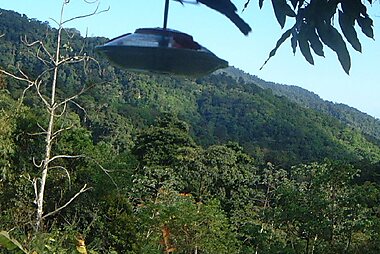
Inland, the Northern Range hills hold Asa Wright Nature Centre, one of the Caribbean's best-known birdwatching lodges, and the hike to Paria Waterfall. Caroni Swamp, a wetland reserve near Port of Spain, is where boat tours watch scarlet ibis fly in to roost at dusk. Maracas Beach, backed by rainforest, is Trinidad's best-known beach.
Tobago, a short flight or ferry from Trinidad, moves at a slower pace, built around reef-lined beaches, diving, and rainforest. Buccoo Reef and the calm sandbar beside it draw snorkelers, and Pigeon Point Heritage Park and Store Bay are the island's classic beach stops. Fort King George, overlooking Scarborough, Tobago's capital, and Argyle Waterfalls & Nature Park are worth the trip inland.
Trinidad and Tobago – Plan Your Trip
Pick the places you want to see and Tripomatic turns them into a day-by-day route, with smart routing, time estimates, and everything you need for a perfect trip.




