



Vientiane Prefecture
Vientiane is a quiet, low-rise capital, calmer and slower-paced than most in the region. Low-rise streets follow a bend in the Mekong River. Gold-roofed temples stand next to French colonial buildings and quiet riverside cafes. Traffic is light and there is no real skyline; most visitors see the whole old town on foot in a day or two.
The city rewards a slow visit rather than a packed itinerary. Its history runs from a 16th-century royal capital through a 19th-century sacking, French colonial rule, and the Cold War. Each period left buildings you can still walk into today. Vientiane works well as a first or last stop on a longer Laos trip, paired with Luang Prabang or Vang Vieng further north.

Vientiane Prefecture – Planning a Trip?
Build your day-by-day itinerary in the Tripomatic app.


When to visit
Vientiane has three seasons. A cool, dry stretch from November to February is the most comfortable time to visit. March to May is hot, and June to October brings frequent afternoon downpours.
Plan around Boun That Luang, Laos's biggest religious festival, held over three days around the November full moon at Pha That Luang. Monks and pilgrims gather from across the country for a candlelit procession and a symbolic wax castle parade.
Best time to visit: January, November, December
April is the hottest, stickiest month, right before the rains arrive.
Top sights
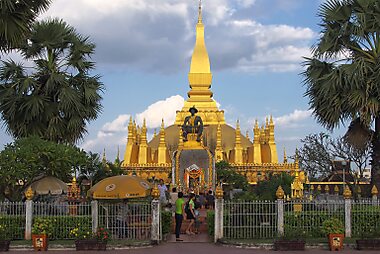


Pha That Luang is Laos's national symbol, a gold-covered Buddhist stupa first built in the 16th century on the orders of King Setthathirath. Its image appears on the national emblem and on Lao banknotes.
Nearby, Patuxai is a concrete war memorial arch. It was built partly with cement donated for a new airport runway, which locals nicknamed the "vertical runway." Climb inside for a view over the city's rooftops.
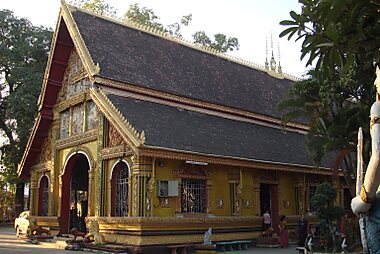
Facing each other across a street in the old French quarter are two of the city's oldest surviving temples. Wat Si Saket is the oldest, with cloister walls lined with thousands of small Buddha images. Haw Phra Kaew was the royal temple that once housed the Emerald Buddha and is now a museum of Lao religious art.
Wat Si Muang is a working temple built around the city's guardian pillar, where locals come for blessings before a big life event.
COPE Visitor Centre tells a harder story. It documents the impact of unexploded bombs left from the Vietnam War era, and the prosthetic and rehabilitation work now helping survivors. It is free to enter and one of the most affecting stops in the city.
For historical context on the whole country, Lao National Museum covers the path from ancient kingdom to independence and revolution.
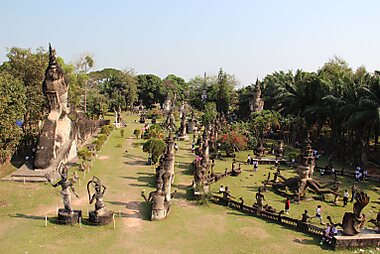
About an hour outside the centre, Buddha Park is a meadow filled with concrete Buddhist and Hindu sculptures. A religious teacher built over 200 of them here in the 1950s, and the result is strange, photogenic, and unlike anything else in the city.
Featured Lists

Vientiane Prefecture Essentials
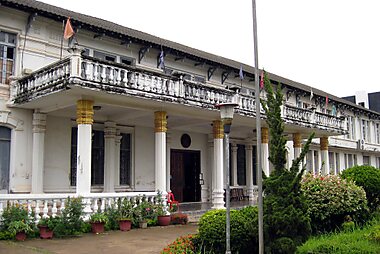
Vientiane Prefecture contains Laos’ most significant national symbols, including the 16th-century gold-covered Pha That Luang stupa and the Patuxai victory monument. The city’s history is preserved at Vat Sisaket, the only temple to survive the Siamese invasion of 1828, and the COPE Visitor Centre, which documents the legacy of unexploded ordnance. Architectural styles range from traditional Lao and Siamese Buddhist temples to French colonial influences found in the National Museum and city center.
9 places


What to experience
- Join the evening exercise crowd along the Mekong. At sunset, locals gather on the riverside promenade near Chao Anouvong Park for outdoor aerobics, jogging, and street food from the stalls that set up along the water.
- Watch the early-morning alms round. Before sunrise, saffron-robed monks walk the streets collecting rice and food from kneeling residents — a quiet daily ritual best watched respectfully from a distance.
- Shop for handwoven silk and silverware at Talat Sao, the city's main covered market and a good place to see Lao textile traditions up close.
Tours & Activities
Vientiane Prefecture — Map

 Open the interactive map
 Day trips
Beyond Buddha Park, most day trips from Vientiane take an hour or more each way. A new high-speed railway and expressway have put some good nature and adventure destinations within easier reach than before.
- Nam Ngum Reservoir — about 1.5 hours by car. A large reservoir dotted with forested islands. Boats and floating restaurants make it a relaxed half-day or full-day outing from the city.
- Vang Vieng — about 1 hour by the Laos–China high-speed train, or roughly 2 hours by car on the tolled expressway (buses on the older road take longer). Karst limestone mountains, caves, and the Nam Song river make this Laos's adventure-sports hub, with tubing, kayaking, and rock climbing on offer. The train makes it possible as a long day trip, though most visitors prefer to stay a night or two.
- Luang Prabang — about 2 hours by the same high-speed train. This UNESCO World Heritage town is known for its gilded temples and colonial shophouses. It deserves more than a single day, so treat a day trip here as an introduction and plan to return for longer.
Getting there
- By air: Wattay International Airport (VTE) is only a few kilometres from the centre. A taxi or tuk-tuk into town takes 20–30 minutes.
- By train: The Laos–China Railway connects Vientiane to Vang Vieng, Luang Prabang, and on to Kunming in China. It is the fastest overland route from the north. A separate line crosses the Thai border at the Friendship Bridge, linking Vientiane to Nong Khai and the Thai rail network toward Bangkok.
- By bus: Long-distance coaches from the northern and southern bus terminals reach towns across Laos and neighbouring Thailand and Vietnam.
Getting around
- Tuk-tuks: the main way to cover short distances. Known locally as "jumbos," they have no meter, so agree the fare before you get in.
- Ride-hailing: the Lao app Loca offers fixed, upfront prices and is generally more predictable than flagging down a tuk-tuk on the street.
- On foot: the old town and riverside are flat and walkable, but the heat between March and October makes an early start worthwhile.
- Cycling: bicycles are cheap to rent and a popular way to cover more ground, especially along the riverside path.
Driving
- In the city: skip renting a car. Vientiane is small and flat enough to cover on foot, by bicycle, or by tuk-tuk, and traffic in the centre is light.
- For day trips: a car or a hired driver is useful for reaching Nam Ngum Reservoir or other spots off the main road, where public transport is limited. If you do park in the centre, check for metered-zone signage on some central streets.
Food & drink
Lao food centres on sticky rice, fresh herbs, and fermented flavours. Try laap, minced meat or fish tossed with herbs and toasted rice powder. Try also tam mak hoong, a fiery green papaya salad. Vientiane's French colonial past shows up at breakfast: street stalls sell khao ji, a baguette sandwich with pâté and pickled vegetables, alongside strong Lao coffee sweetened with condensed milk.
For a concentrated taste of the city's food scene, head to the stalls and grills around Chao Anouvong Park on the riverside in the evening. The noodle shops around the Nam Phou Fountain in the old French quarter are another good option. Both areas offer cheap, casual eating without needing a single restaurant recommendation.
Safety & health
Vientiane is a safe capital for tourists, calmer than most in the region. Violent crime against tourists is rare. The main risks are petty theft, such as bag snatching from moving motorbikes or theft from unlocked vehicles, and minor traffic accidents. Sidewalks and street lighting can be poor after dark, so take extra care walking then.
Away from the city and marked paths, Laos still has unexploded ordnance left from bombing in the 1960s and 70s. This is a rural, off-road hazard, not a concern for the sights covered in this guide. It is why you should always stick to marked trails if you go hiking or trekking elsewhere in the country. COPE Visitor Centre explains the issue in detail.
History
Vientiane became the capital of the Lan Xang kingdom in 1560. King Setthathirath moved the royal seat here from Luang Prabang and built Pha That Luang to house a relic of the Buddha. For over two centuries the city grew as a centre of Lao Buddhist learning and royal power.
That era ended abruptly in 1827, when King Anouvong led a failed rebellion against Siam. In retaliation, Siamese forces destroyed almost the entire city, leaving only a handful of buildings standing. Among them was Wat Si Saket, the temple Anouvong himself had built just years earlier.
Vientiane was rebuilt slowly under French colonial rule from the 1890s. That is why the old quarter still mixes Buddhist temples with colonial-era villas and wide boulevards. Laos gained independence in 1953, and the communist Pathet Lao took power in 1975. Vientiane became the capital of the Lao People's Democratic Republic, the country's current government.
Country facts
Quick practical facts for Laos at a glance:
- Currency
- Laotian Kip LAK · Card payments · Cash preferred
- Electricity
- 230 V · 50 HzType A / Type B / Type C / Type E / Type F
- Languages
- Lao
- Tap water
- Not safe to drink
- Driving side
- Right
- Calling code
- +856
Vientiane Prefecture – Plan Your Trip
Pick the places you want to see and Tripomatic turns them into a day-by-day route, with smart routing, time estimates, and everything you need for a perfect trip.




