


Warsaw
Warsaw is Poland's capital and largest city, rebuilt almost entirely after near-total destruction in World War II. The reconstructed Old Town looks centuries older than it is. The rest of the city mixes socialist-era blocks with a growing skyline of glass towers. It suits travelers who want history, food, and nightlife without the crowds of Prague or Vienna.
The city has hosted kings, composers, and uprisings. Frédéric Chopin was born just outside Warsaw and grew up here; Marie Curie was born in the city. Warsaw rewards a few days of walking between the Old Town, the Royal Route, and the green banks of the Vistula River.

Warsaw – Planning a Trip?
Build your day-by-day itinerary in the Tripomatic app.
When to visit
Spring and autumn are mild and good for walking. Summer is warm with occasional storms and long daylight hours. Winter is cold, often below freezing, but Christmas markets fill the Old Town square from late November.
Plan around the free Chopin piano recitals in Łazienki Park, held every Sunday afternoon from May to September.
Best time to visit: June, August, September
Top sights
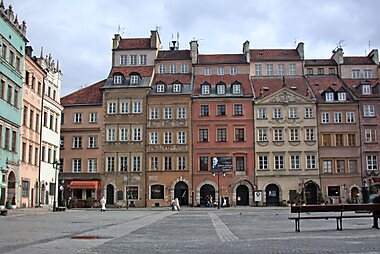

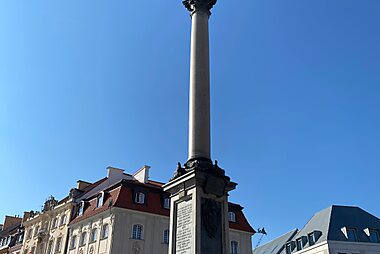
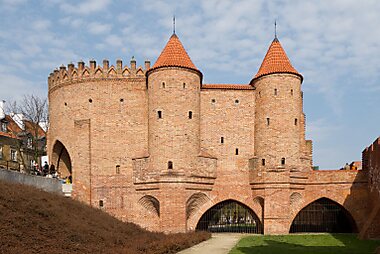
Warsaw's rebuilt Old Town centers on Old Town Market Place, a cobblestoned square that looks medieval. It was rebuilt brick by brick after 1945, and UNESCO recognized the reconstruction as a World Heritage Site. Nearby, Sigismund's Column stands at Castle Square, beside Royal Castle. Once the seat of Polish kings, the castle is now a museum of royal apartments and art.
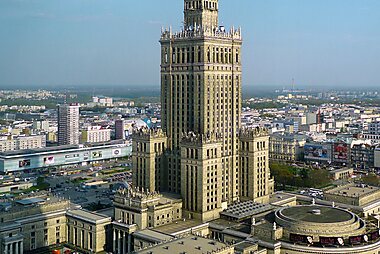
For a different era, Palace of Culture and Science is a Stalin-era skyscraper that still dominates the skyline. Ride the elevator to the 30th-floor terrace for the best view over the city.
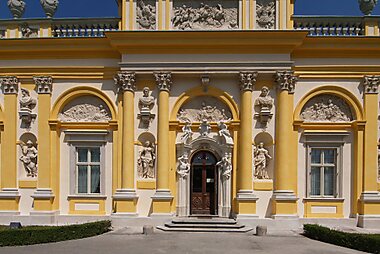
South of the centre, Wilanów Palace is a baroque royal palace with formal gardens. The building survived both World Wars structurally intact, though its collections were looted during the German occupation and only partly recovered.
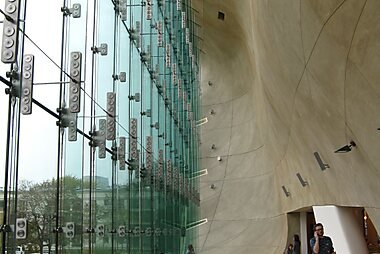
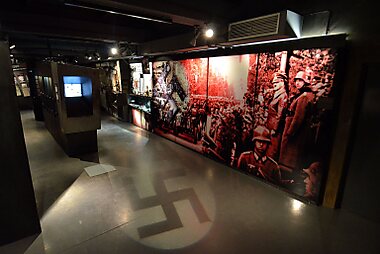
Two museums confront the city's darkest years. POLIN Museum of the History of Polish Jews tells the thousand-year story of Polish Jews, on the site of the former Warsaw Ghetto. Warsaw Rising Museum covers the 1944 uprising that leveled much of the city.
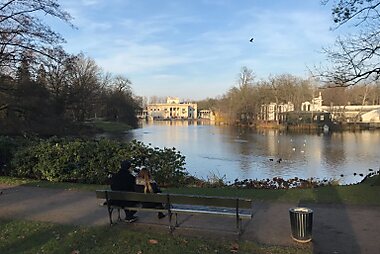
For green space, Łazienki Park is Warsaw's largest park, built around royal baths and a summer palace. It holds a striking monument to Frédéric Chopin Monument.
Featured Lists

Warsaw Essentials
Warsaw’s landscape reflects a dramatic history, from the reconstructed UNESCO-listed Old Town and the 17th-century Royal Castle to the Stalinist-era Palace of Culture and Science. The city features the baroque Wilanów Palace, the sprawling Royal Baths Park, and poignant memorials like the Warsaw Rising Museum and the Tomb of the Unknown Soldier. Cultural institutions like the National Museum, the POLIN Museum of the History of Polish Jews, and the Chopin Museum offer deep insights into Poland's artistic and social evolution.
12 places


Warsaw Forts & Memorials
Explore Warsaw's military evolution through the 19th-century Warsaw Citadel and its surrounding ring of defensive forts, including Fort Legionów and Fort Sokolnickiego. The list also honors the city's WWII resilience with poignant memorials such as the Warsaw Uprising Monument, the Statue of the Little Insurgent, and surviving fragments of the Ghetto Wall. These sites provide a chronological overview of Warsaw's defensive architecture and its history of resistance against foreign occupation.
10 places

Warsaw's Theatres and Cinemas
Warsaw’s performing arts scene centers on historic venues such as the National Philharmonic, a premier site for classical music, and the Polish Theatre, established in 1913. The city’s cinematic history is preserved at Atlantic, the capital's oldest operating cinema, and Kinoteka, housed within the iconic Palace of Culture and Science. Specialized stages include Teatr Muzyczny Roma for major musical productions and Teatr Sabat, Poland's only revue theatre, offering a blend of traditional drama, contemporary comedy, and art-house film.
8 placesAudio Guides – Warsaw
Explore on foot with a self-guided audio tour that narrates each stop as you reach it.


Hear Warsaw's audio tours
1 walk in Audio Guides by Tripomatic


What to experience
- Catch a free Chopin piano recital at Frédéric Chopin Monument in Łazienki Park — held every Sunday afternoon from May to September, when crowds bring a blanket and sit on the grass.
- Watch the multimedia fountain show at Multimedia Fountain Park, with music, lights, and water jets choreographed together on summer Friday and Saturday evenings.
- Join locals along the Vistula boulevards on a warm evening, where temporary bars, food stalls, and open-air events line the riverbank from spring through autumn.
- On 1 August at 5 p.m., sirens sound and traffic stops across the city for a minute to mark the start of the 1944 Warsaw Uprising — a solemn, citywide tradition known as "Godzina W" (W-Hour).
Tours & Activities
Warsaw — Map

 Open the interactive map
 Day trips
Several rewarding day trips lie within easy reach of Warsaw.
- Kampinos National Park — a UNESCO biosphere reserve of forest and dunes starting right at Warsaw's edge, reachable by local bus in under an hour. Popular for hiking and cycling trails.
- Żelazowa Wola — Frédéric Chopin's birthplace, about an hour by car or organized bus; a small manor museum set in gardens, with recitals held on summer weekends.
- Łódź — Poland's former textile-industry capital, about 1.5 hours by train; restored red-brick factories and Piotrkowska Street make for a different kind of city day trip.
- Kazimierz Dolny — a well-preserved Renaissance riverside town on the Vistula, about 2.5 hours by car or bus; known for its market square, hillside cellars, and artist-colony atmosphere.
Getting there
- By air: Warsaw Chopin Airport (WAW) is the main gateway, a few kilometers south of the centre; an express bus and regular city buses reach downtown in around 25–30 minutes, and a taxi costs roughly 45–65 PLN. Budget carriers often use Warsaw Modlin Airport (WMI), north of the city, connected by a shuttle bus timed to flights.
- By train: Warszawa Centralna is the main station, with frequent connections to Kraków, Gdańsk, Wrocław, and Poznań, plus international trains to Berlin and Vienna.
- By bus: Long-distance coaches, including international routes, arrive at the Warszawa Zachodnia bus terminal next to the western rail station.
Getting around
- Public transit: Warsaw has an extensive network of metro, tram, and bus lines run by ZTM. Buy tickets through the jakdojade or moBILET apps, at machines, or by tapping a contactless bank card directly at the validator on many vehicles. ZTM Warsaw journey planner
- Taxi / ride-hailing: Uber, Bolt, and FreeNow all operate and are generally cheaper than hailing a taxi on the street.
- On foot / cycling: The Old Town, Royal Route, and riverside are walkable, but the city is spread out, so expect to combine walking with transit for sights farther out like Wilanów. The Veturilo bike-share system and riverside bike paths make cycling practical in the warmer months.
Driving
- Is a car worth it?: Not for the city itself — traffic and parking are heavy, and public transit covers the centre well. A car is useful mainly for day trips like Kampinos or Kazimierz Dolny.
- Parking: Paid parking zones cover most of the centre on weekdays; pay by app (SkyCash, mPay) or at street meters. Park-and-ride lots near outer metro stations are a cheaper alternative.
- Restrictions: Warsaw has introduced a low-emission zone covering parts of the centre; check current vehicle restrictions before driving in, since older vehicles may be barred.
Food & drink
Warsaw's food scene ranges from old-school milk bars — canteen-style spots serving cheap, filling Polish staples like pierogi and żurek — to a fast-growing fine-dining scene. Vodka bars and craft breweries have multiplied over the last decade.
For a concentrated taste of the city, head to Hala Koszyki, a restored early-20th-century market hall turned food court, or the restaurants and bars clustered along Nowy Świat street. In Praga, the converted vodka-factory complex around Koneser has become a hub for restaurants, bars, and galleries on the city's more industrial east bank.
Safety & health
Warsaw is a safe city for travelers by international standards. The most common issues are pickpocketing on crowded trams and buses and around major tourist sites, plus overpriced taxis waiting outside nightlife areas — book a ride through an app instead of hailing one on the street. Tap water is safe to drink throughout the city.
History
Warsaw only became Poland's capital in 1596, when King Sigismund III Vasa moved the royal seat here from Kraków, a shift still marked by Sigismund's Column at Castle Square. For the next two centuries the city grew around Royal Castle, expanding along what became known as the Royal Route.
World War II devastated Warsaw. The Nazi occupation confined the city's Jewish population to the Warsaw Ghetto, a chapter now documented at POLIN Museum of the History of Polish Jews. In 1944 the underground Home Army launched the Warsaw Uprising against German occupation; the 63-day battle and its brutal suppression are the subject of Warsaw Rising Museum. Much of the city, including the Old Town, was deliberately destroyed afterward. What travelers see today at Old Town Market Place is a meticulous postwar reconstruction, based on paintings, photographs, and architectural records — rebuilt as an act of national defiance as much as preservation.
Country facts
Quick practical facts for Poland at a glance:
- Currency
- Polish Zloty PLN zł · Card payments · Widely accepted
- Emergency numbers
- 112
- Electricity
- 230 V · 50 HzType C / Type E
- Languages
- Polish
- Tap water
- Safe to drink
- Driving side
- Right
- Calling code
- +48


Warsaw – Plan Your Days
Turn the places from this guide into a real itinerary, with smart routing, time estimates, and everything you need for a perfect trip.




