


Ercolano
Ercolano is a busy town of about 50,000 people on the lower slopes of Vesuvius, about 10 km southeast of Naples. Under its streets lies Herculaneum, the Roman town buried by the eruption of AD 79. Its excavations are smaller than those at Pompeii but often better preserved, with wooden beams, upper floors and bright wall paintings still in place. The town is also the main starting point for the walk up to the crater of Vesuvius.
The modern town is crowded and not very pretty, so most people visit on a day trip from Naples or Sorrento. One full day is enough for the ruins in the morning and the volcano in the afternoon. Along the old main road, a few 18th-century villas and a Bourbon royal palace show another side of the area's past.

Ercolano – ¿Estás planeando un viaje?
Crea tu itinerario día a día en la app de Tripomatic.


Cuándo viajar
April to June and September to October are the best months. The weather is warm and dry enough for both the ruins and the volcano. July and August are hot and humid, and there is little shade in the excavations or on the crater path, so go early in the day. Winter is mild but rainy, and both the excavations and the crater path close earlier in the afternoon.
In summer, the series I Venerdì di Ercolano opens the ancient city on Friday evenings, with theatre, dance and music among the ruins. Book ahead, as places are limited.
Mejor época para viajar: mayo, junio, julio, septiembre, octubre
Lugares destacados
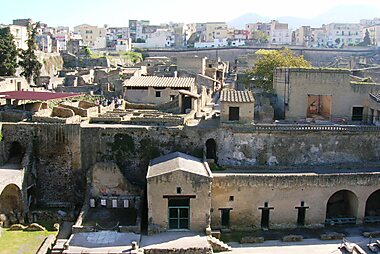
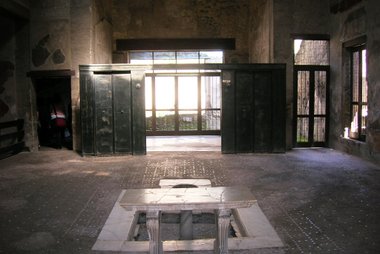
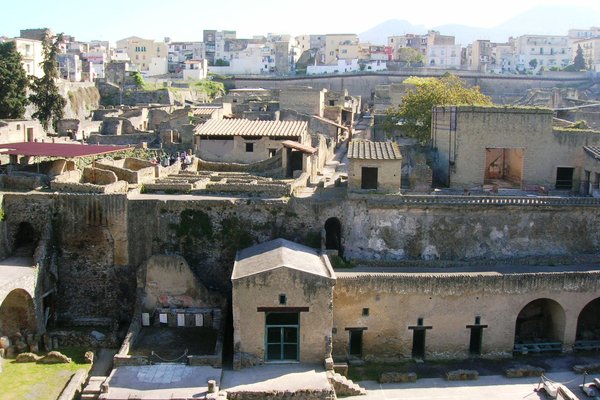
Scavi di Ercolano is the Roman town buried by Vesuvius in AD 79 under about 20 m of hot volcanic material. You can walk through whole streets of houses, shops, baths and bars, and see it in two to three hours. Along the old shoreline, the remains of about 300 people who tried to escape the eruption were found in boat sheds. The buried Roman theatre is closed for maintenance until further notice.
Casa del Tramezzo di Legno still has the carbonised wooden partition that once closed off its main room. Organic material like this rarely survives at other Roman sites.
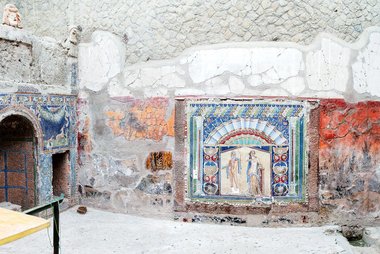
Mosaico di Nettuno e Anfitrite decorates the summer dining room of a merchant's house. The glass tiles of the sea god and his wife still shine in deep blue and green.
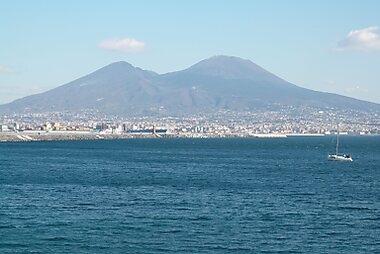
Vesuvio rises 1,281 m above the town. From the trailhead at about 1,000 m, a wide gravel path climbs to a viewpoint over the crater at about 1,170 m, with views across the Bay of Naples. Allow 2 to 2.5 hours there and back. The route to the summit rim and the rest of the rim loop are closed for safety works. Tickets are sold only online, for a fixed entry time. Park guides accompany walkers above 1,000 m, and the path closes on days with an orange or higher weather alert.
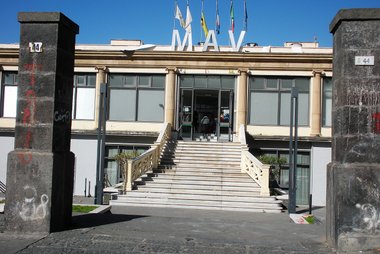
MAV Museo Archeologico Virtuale di Ercolano has no original finds. Instead, 3D films, holograms and sound show Herculaneum and Pompeii as they looked before the eruption. It is on the street between the station and the excavations.
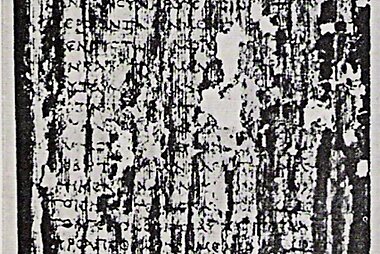
Villa dei Papiri is a huge seaside villa just outside the ancient town. In the 18th century, diggers found a library of burnt papyrus scrolls here. Most of the villa is still buried, and the excavated part opens only for occasional special visits.
Reggia di Portici is a Bourbon palace built from 1738, a 15-minute walk from the excavations. Its large park climbs towards Vesuvius, and the first finds from Herculaneum were once shown here.
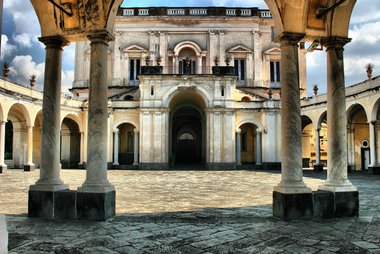
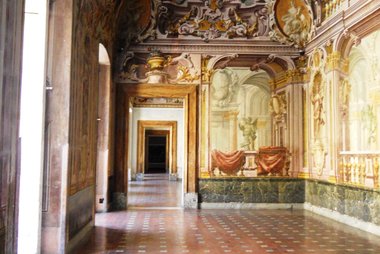
Villa Campolieto is one of the 18th-century summer villas of the Neapolitan nobility along the old road known as the Golden Mile. Luigi Vanvitelli worked on its design, and its round portico looks out to the sea.
Listas destacadas

Qué experimentar
Ercolano is about the ruins and the volcano, but a few local habits are worth your time.
- Walk up to the crater viewpoint in the first slot: Book the earliest entry time on Vesuvius. The air is clearer, the path is cooler and there are fewer people. On clear days you can see Capri and the Sorrento peninsula from the viewpoint.
- Browse the Resina market: On most mornings except Sunday, the stalls along Via Pugliano sell second-hand and vintage clothes. The market has been part of town life since the years after the Second World War.
- Hike in Vesuvius National Park: Beyond the crater path, marked trails lead through pine woods and over old lava flows on the lower slopes.
Tours y actividades
Ercolano — Mapa

Excursiones de un día
Ercolano sits on the Circumvesuviana railway, so the main sights of the Bay of Naples are easy to reach without a car.
- Naples – about 15–20 minutes by Circumvesuviana. The historic centre, the National Archaeological Museum with the best finds from Herculaneum and Pompeii, and the waterfront.
- Oplontis, in Torre Annunziata – about 15 minutes by Circumvesuviana. A huge Roman villa with fine wall paintings, part of the same UNESCO site as Herculaneum and Pompeii.
- Pompeii – about 20 minutes by Circumvesuviana to Pompei Scavi. The largest of the buried Roman cities; plan most of a day.
- Caserta – about 40–50 minutes by car, or about 1 to 1.5 hours by train: Circumvesuviana to Napoli Garibaldi, then a regional train from Napoli Centrale. The vast Bourbon Royal Palace and its long park of fountains.
- Pozzuoli – about 35 minutes by car, or about an hour by train via Naples. A Roman amphitheatre, the Serapeum market and the volcanic Campi Flegrei area.
- Sorrento – about 1 hour by Circumvesuviana to the end of the line. A cliff-top town and the gateway to the Amalfi Coast.
- Capri – fast ferries from Naples take about 50 minutes. Plan a full day for the island.
Qué explorar
Cómo llegar
Ercolano is on the Circumvesuviana railway between Naples and Sorrento. Get off at Ercolano Scavi station for the excavations and Vesuvius.
- By air: Naples International Airport is about 18 km away, about 20 minutes by car or taxi. By public transport, take the Alibus to Napoli Centrale, then the Circumvesuviana from Napoli Garibaldi. Naples Airport
- By train: Circumvesuviana trains leave Napoli Garibaldi, under the main station Napoli Centrale, about every 30 minutes. The ride to Ercolano Scavi takes about 15 minutes. High-speed trains from Rome and northern Italy stop at Napoli Centrale. Some Circumvesuviana express trains skip smaller stations, so check that yours stops at Ercolano Scavi. EAV Circumvesuviana Trenitalia
- From the south: the same line runs from Sorrento in about 1 hour and from Pompeii in about 20 minutes.
Cómo desplazarse
- On foot: The excavations are about a 10-minute walk downhill from Ercolano Scavi station along Via IV Novembre. The virtual museum is on the same street, and the royal palace and the Golden Mile villas are within 15 minutes' walk.
- Circumvesuviana: Use it for Naples, Pompeii and Sorrento. Tap a contactless bank card or phone at the gates when you enter and again when you leave. If you do not tap out, you may pay the highest fare. Paper tickets are also sold at station machines and offices; validate them before boarding. EAV Circumvesuviana
- To Vesuvius: There is no public train or local bus up the volcano from the station. Private shuttle buses and taxis wait in the square outside Ercolano Scavi station. The drive takes about 25–30 minutes. Buy your crater ticket before you book the ride. Vesuvius National Park
- Taxi: Use licensed white taxis and agree on the price for longer trips before you start.
- Cycling: Not practical. Traffic is heavy and the roads are steep.
Conducción
- Is a car worth it?: Not for the town or the excavations. Traffic is heavy and trains are easier. A car helps only if you want to combine Vesuvius with wineries or Caserta.
- Parking: There are paid car parks near the entrance to the excavations, on and around Corso Resina. Use official car parks and avoid unofficial attendants who ask for money on the street.
- Vesuvius: You cannot park at the trailhead at about 1,000 m. Park in the roadside spaces lower down, run by the town, and walk about 30 minutes up the road or take the small shuttle. Buy your crater ticket first, then pay for parking.
Gastronomía
Ercolano eats like Naples: pizza, fried street snacks, pasta with seafood and sweet pastries such as sfogliatella. The volcanic soil of Vesuvius adds its own products. Look for small piennolo cherry tomatoes, sold hanging in bunches, and Vesuvius apricots in early summer. The local wine is Lacryma Christi del Vesuvio, a red or white wine from vines on the slopes.
Casual pizzerias, cafés and snack bars line Via IV Novembre between the station and the excavations; this is the easiest place for lunch on a sightseeing day. Wineries on the slopes of Vesuvius offer tastings with views over the bay; book ahead and plan transport, as they are hard to reach without a car.
Seguridad y salud
Ercolano is safe for visitors in the areas around the station and the excavations. The main issues are petty crime and the volcano.
- Pickpockets: Circumvesuviana trains are often crowded. Keep bags closed and phones out of back pockets, especially around Napoli Garibaldi.
- Street parking: Avoid unofficial parking attendants and leave nothing visible in the car.
- Vesuvius: The crater path is steep and loose underfoot, with no shade. Wear closed shoes, bring water and a jacket, as the summit is windy and cooler. Stay on the path with the park guides. The volcano is closely watched by scientists, and the path closes on days with an orange or higher weather alert.
- Heat: The excavations have little shade. In summer, start early and carry water.
Historia
Herculaneum was a small, wealthy Roman town by the sea, with houses for rich families from Rome and Naples. In AD 79, Vesuvius erupted. Waves of hot gas and ash killed the people who were waiting on the beach and buried the town under about 20 m of volcanic material. This heat turned wood, food and even papyrus into charcoal, which is why so much survives at Scavi di Ercolano.
The town was found again by chance around 1710, when well diggers reached the stage of the buried theatre. From 1738, the Bourbon kings of Naples dug tunnels to take out statues and paintings, and showed them in Reggia di Portici. Nobles built summer villas such as Villa Campolieto along the road below the volcano. Open-air excavation began in 1927 under the archaeologist Amedeo Maiuri. Most of the houses you see today were uncovered then.
The modern town was called Resina until 1969, when it took the Italian name of the ancient city, Ercolano. Vesuvius last erupted in 1944. In 1997, Herculaneum, Pompeii and Oplontis became a UNESCO World Heritage Site.
Datos del país
Quick practical facts for Italy at a glance:
- Moneda
- euro EUR € · Pago con tarjeta · Ampliamente aceptado
- Teléfonos de emergencia
- 112
- Electricidad
- 230 V · 50 HzTipo C / Tipo F / Tipo L
- Idiomas
- italiano
- Agua del grifo
- Potable
- Sentido de la circulación
- Derecha
- Prefijo telefónico
- +39


Ercolano – Planifica tus días
Convierte los lugares de esta guía en un itinerario real, con rutas inteligentes, estimaciones de tiempo y todo lo que necesitas para un viaje perfecto.


Destinos relacionados


Data: © OpenStreetMap contributors, Wikidata, Wikipedia, Tripomatic, Official websites, geoBoundaries (CC BY 4.0). Tours by GetYourGuide. We earn commission from bookings. Travel guide generated with AI.
Planifica tu viaje con Tripomatic
- Planificación con IAConsigue un día listo con un solo toque, deja que la IA distribuya tu lista de deseos a lo largo de tu viaje o planifícalo todo chateando.
- Alertas de viajeAvisos oficiales, alertas meteorológicas, huelgas y desastres naturales para los lugares de cada día de tu viaje.
- Festivos y eventosConsulta festivos, festivales y cierres durante los días de tu viaje, y qué implican para tus planes.
- Estimación de costesDesgloses de costes de viaje con IA para saber qué presupuesto necesitas antes de salir.
- Tours y entradasReserva tours, entradas sin colas y actividades directamente desde tu plan.