


Zúrich
Zurich is Switzerland's largest city and its financial capital, but it keeps a small-town feel: the compact Old Town, the lake and the surrounding hills are all reachable on foot or by a short tram ride. It works well as the anchor for a Swiss trip, whether as a couple of nights before heading into the Alps or a stay in its own right.
The city mixes centuries-old guild houses and Romanesque churches with a strong contemporary art scene, some of the world's most expensive shopping, and lake water clean enough to swim in during summer. Carl Jung built his career here, and Albert Einstein studied and later taught at its university. The Dada art movement was also founded in a small Old Town nightclub in 1916.

Zúrich – ¿Estás planeando un viaje?
Crea tu itinerario día a día en la app de Tripomatic.
Cuándo viajar
Zurich has warm, sometimes humid summers and cold, occasionally snowy winters; spring and autumn are usually the most comfortable seasons for sightseeing. Plan a visit around Sechseläuten in mid-April if you can: guild members in historical dress parade through the city before burning a giant snowman effigy called the Böögg on a bonfire, a centuries-old ritual marking the symbolic end of winter.
Lake swimming season generally runs from June through September, and the Old Town and Hauptbahnhof concourse fill with Christmas markets from late November.
Lugares destacados
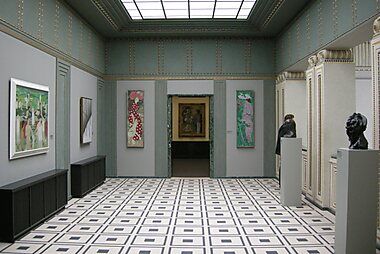
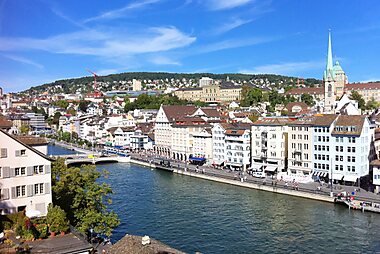
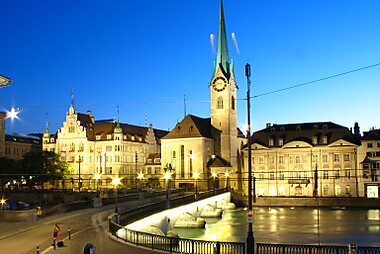
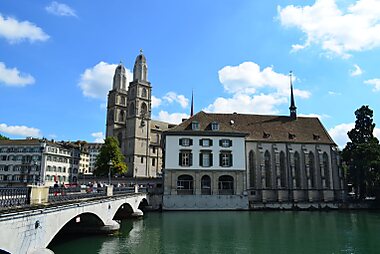


Zurich's Old Town straddles the Limmat river, and most of the essential sights sit within a short walk of each other.
Fraumünster Church rises on the west bank of the river, its five stained-glass windows designed by Marc Chagall in his later years. Across the water, the twin Romanesque towers of Grossmünster Church mark the church where the priest Huldrych Zwingli launched the Swiss Reformation in 1519. Between and around them, Old Town Zurich is a tangle of medieval lanes, guild houses and small squares, best explored on foot with no fixed route.
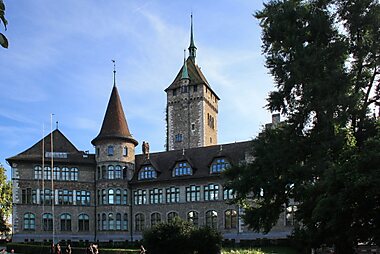
Kunsthaus holds the largest art collection in Switzerland, spanning medieval altarpieces to Monet, Munch and Picasso. For a wider view of Swiss history, Landesmuseum occupies a turreted, castle-like building next to the main station and covers the country from prehistory to the 20th century.
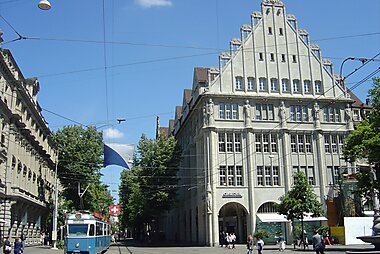
Bahnhofstrasse runs from the station down to the lake and is one of the world's most expensive shopping streets, lined with banks, department stores and flagship boutiques. For a break from the city, ride the train up Uetliberg, Zurich's local mountain, for a view over the rooftops, the lake and the Alps on a clear day.
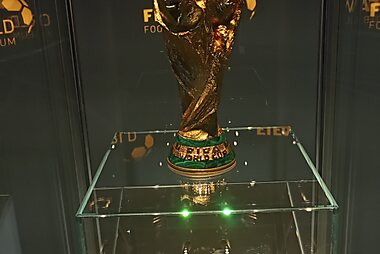
Football fans should not skip FIFA Museum, which traces the sport's history from its earliest recorded matches to the modern World Cup, in the city that hosts FIFA's headquarters.
Listas destacadas


Audioguías – Zúrich
Explora a pie con una visita autoguiada con audio que describe cada punto conforme llegas a él.


Escucha las visitas en audio de Zúrich
1 ruta a pie en Audioguías de Tripomatic


Qué experimentar
- Swim in the river: on hot days, locals cool off by swimming down the Limmat from the Flussbad Oberer Letten bathhouse, letting the current carry them into the city centre — a summer ritual unique to Zurich.
- Take a lake cruise: boats leave from Bürkliplatz for short loops around Lake Zurich or longer trips toward Rapperswil, with views back over the Old Town skyline.
- Browse the Christmas markets: from late November, wooden stalls fill the Hauptbahnhof concourse and the Old Town squares with mulled wine, ornaments and local crafts.
- Watch the Sechseläuten bonfire: if visiting in mid-April, join the crowds along the lakeshore to watch the Böögg burn — locals read how fast its head explodes as a half-serious forecast for the coming summer.
Tours y actividades
Zúrich — Mapa

 Abrir el mapa interactivo
 Excursiones de un día
Zurich sits at the centre of an excellent rail network, and several worthwhile trips are possible in a single day.
- Winterthur — about 25 minutes by train. A former industrial town with a lively historic centre and several excellent art and photography museums housed in converted factories.
- Rapperswil-Jona — about 40 minutes by train, or a scenic boat ride down Lake Zurich in summer. A small lakeside town with a medieval castle, rose gardens and a long wooden footbridge across the lake.
- Schaffhausen — about 45 minutes by train. Combines a well-preserved medieval old town with the nearby Rhine Falls, the largest waterfall in Europe by water volume.
- Lucerne — about 50 minutes by train. A classic Swiss lake city, with a covered wooden bridge, a compact old town and lake steamers heading toward Mount Pilatus and Rigi.
Cómo llegar
- By air: Zurich Airport (ZRH) is the main gateway, about 10 km north of the city centre. Trains run directly from the airport to Zürich Hauptbahnhof in around 10 minutes; a taxi takes about 20 minutes depending on traffic.
- By train: Zürich Hauptbahnhof is Switzerland's busiest railway station, with frequent domestic connections to every major Swiss city and international trains to Germany, France, Austria and Italy.
- By bus: long-distance coaches mostly arrive at the bus terminal beside the main station, though almost all travelers arrive by train or air given how central the rail network is.
Cómo desplazarse
- Public transit: trams, buses, trains and boats run on a dense, reliable network covering the whole city on a single zone-based ticket. Buy a ticket from the machine at the stop, or the SBB or ZVV app, before boarding — Swiss transit works on proof-of-payment rather than gates, and inspectors do check. ZVV journey planner
- Taxi / ride-hailing: regular taxis and ride-hailing apps both operate, though public transit is faster and cheaper for almost every trip in the city.
- On foot / cycling: the Old Town and lake shore are compact and entirely walkable, and the free Züri rollt bike-share scheme makes it easy to cover longer distances by bike.
Conducción
- Is a car worth it?: No — the city centre is dense, parking is expensive, and public transit covers the region far better than driving. Rent a car only for exploring rural parts of the canton or trips beyond easy train reach.
- Parking: use one of the Park + Ride facilities on the edge of the city and continue by train or tram; central car parks charge upward of CHF 3–4 per hour.
- Restrictions: a blue-zone permit system covers most residential streets in the centre; visitors need to use paid car parks or Park + Ride instead.
Gastronomía
Zurich's café culture blends 19th-century confectioneries with a growing wave of specialty coffee roasters. The dish to try is Zürcher Geschnetzeltes — sliced veal in a creamy white-wine and mushroom sauce, usually served with rösti.
For something distinctive, stop at Confiserie Sprüngli on Paradeplatz, famous for its Luxemburgerli macarons and chocolate truffles. For a wider spread of places to eat and drink, head to the Niederdorf lanes in the Old Town, or the Langstrasse and Kreis 4 area west of the station, known for its mix of ethnic restaurants, bars and independent cafés.
Seguridad y salud
Zurich is one of the safest major cities in Europe for visitors, and violent crime is rare. Watch for pickpockets on crowded trams and around the main station, and don't leave bags or phones unattended at outdoor cafés. A distinctly Zurich detail: the city has more than 1,200 public fountains, and nearly all of them run drinkable water — refill a bottle anywhere without hunting for a shop.
Historia
Zurich began as a Roman customs post on the Limmat and grew into a free imperial city in the Middle Ages under the patronage of the Fraumünster abbey, whose abbesses effectively ruled the town for centuries.
In 1519, the priest Huldrych Zwingli began preaching reform from the pulpit of Grossmünster Church, launching the Swiss Reformation and turning Zurich into one of Protestant Europe's most influential cities. Centuries later, in 1916, a group of exiled artists founded the Dada movement a few steps away at Cabaret Voltaire, rejecting the logic and nationalism they blamed for the First World War.
By the 20th century, Zurich had become one of the world's leading banking and finance centres, a status still visible along Bahnhofstrasse, where the vaults of the country's biggest banks sit beneath the shopping crowds.
Datos del país
Quick practical facts for Switzerland at a glance:
- Moneda
- franco suizo CHF CHF · Pago con tarjeta · Ampliamente aceptado
- Teléfonos de emergencia
- 112
- Electricidad
- 230 V · 50 HzTipo C / Tipo J
- Idiomas
- alemán, francés, italiano, romanche
- Agua del grifo
- Potable
- Sentido de la circulación
- Derecha
- Prefijo telefónico
- +41


Zúrich – Planifica tus días
Convierte los lugares de esta guía en un itinerario real, con rutas inteligentes, estimaciones de tiempo y todo lo que necesitas para un viaje perfecto.




