


Bolzano
Bolzano (Bozen in German) is the capital of South Tyrol, a mainly German-speaking province in the far north of Italy. Italian and German are both official, so street signs, menus and announcements come in two languages. The old town has Tyrolean arcades, Gothic churches and painted houses, while the cafés, food and pace of life feel Italian. Vineyards climb the steep slopes right to the edge of the city, and the jagged peaks of the Dolomites rise to the east.
The city's best-known sight is Ötzi, the 5,300-year-old Iceman found in an Alpine glacier. Bolzano suits a two- or three-night city break, a base for day trips into the Dolomites and the wine villages, or a December visit for the Christmas market.

Bolzano – Tu prépares un voyage ?
Crée ton itinéraire jour par jour dans l'application Tripomatic.


Quand partir
Spring and autumn are the best seasons, with mild days and clear mountain views. September and October are harvest time in the vineyards around the city. Bolzano sits in a deep basin, and July and August are hot. On hot days, take a cable car up to the cooler plateaus. Winters are cold at night but often dry and sunny.
The biggest annual event is the Christmas market, from late November until early January. Wooden stalls fill Piazza Walther and the nearby streets with local crafts, mulled wine and Tyrolean snacks, with concerts in the squares and churches. Book a hotel early for December weekends.
Meilleure période pour visiter: octobre
Sites incontournables
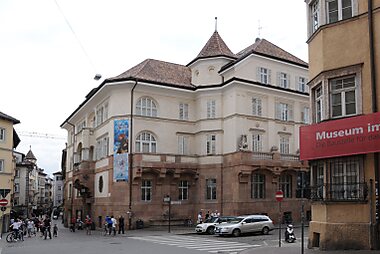
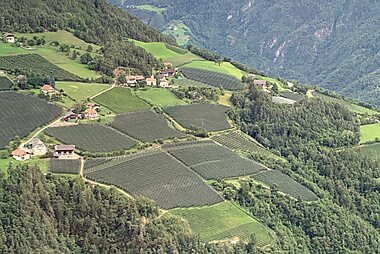
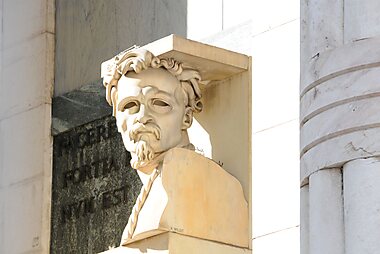
South Tyrol Museum of Archaeology is the home of Ötzi, the Iceman found in the Ötztal Alps in 1991. You see his mummified body through a small window, along with his clothes, bow and copper axe. Reserve an entry time online, up to 6 days ahead, especially in summer and at Christmas.
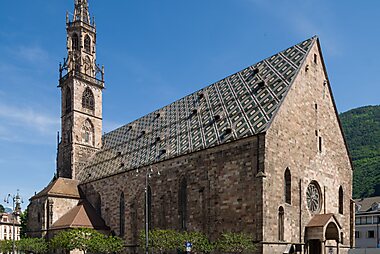
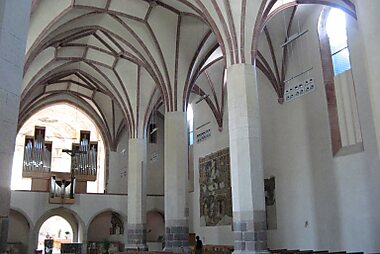
Duomo di Bolzano - Bozner Dom is the city's Gothic cathedral, with a roof of colourful patterned tiles and a tall, lace-like bell tower. Inside, look for the carved stone pulpit and the remains of medieval frescoes.
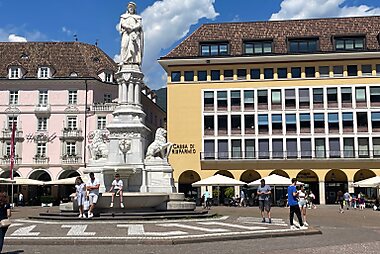
Waltherbrunnen stands in the middle of Piazza Walther, the main square and the centre of city life. The marble statue honours the medieval poet Walther von der Vogelweide.
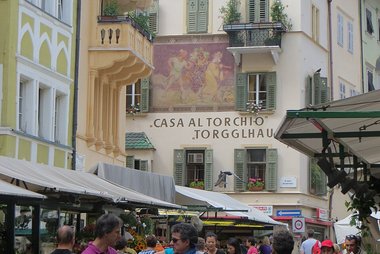
Piazza delle Erbe - Obstplatz is the old fruit and vegetable market, with stalls open every day except Sunday. From here, Via dei Portici (Laubengasse) runs east under long stone arcades lined with shops. It has been the main shopping street for over 800 years.
Chiesa dei Domenicani - Dominikanerkirche looks plain from outside, but its side chapel of St John keeps 14th-century frescoes in the style of Giotto. The quiet cloister next door has more wall paintings.
Castel Roncolo - Schloss Runkelstein sits on a rock above the Talfer river, a 30-minute walk or bike ride from the centre. Its rooms are covered with frescoes from around 1400 that show knights, hunts, tournaments and medieval legends.
Monumento alla Vittoria - Siegesdenkmal is a marble arch that the Fascist regime completed in 1928 to mark Italy's victory in World War I. A free exhibition in the crypt explains the monument and the city's difficult 20th century in a clear and honest way.
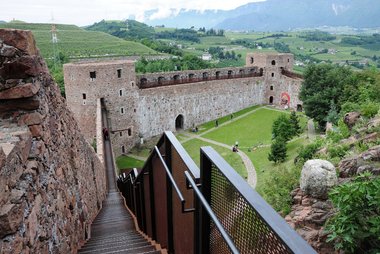
Sigmundskron Castle is a large medieval fortress on a rock at the south-west edge of the city. It houses the main site of the Messner Mountain Museum, created by the climber Reinhold Messner, with views of the Dolomites from its towers. The museum opens from spring to autumn only.
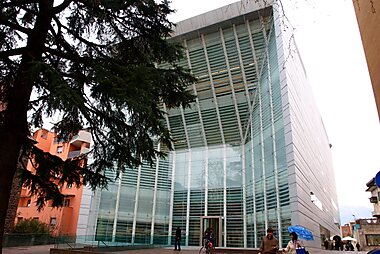
Museion is the museum of modern and contemporary art, in a glass cube by the Talfer river. In the evening, its façade often shows video art.
Listes recommandées


Expériences à vivre
Some of the best moments in Bolzano happen on the slopes just above the city.
- Ride the Ritten cable car: The 12-minute ride from Funivia del Renon - Rittner Seilbahn climbs almost 1,000 m, with the city and vineyards dropping away below. At the top, change to the small historic tram that runs across the plateau. The cable car closes for maintenance for a few weeks most years, usually in November, with a replacement bus.
- Take the Kohlern cable car: The line from Funivia del Colle - Kohlern Seilbahn first opened in 1908 and was one of the first passenger cable cars in the world. Ride up to the forests of Kohlern for quiet walks and views over the city.
- Walk the Oswald promenade: This path starts near the old town and climbs gently along the hillside above Bolzano. It ends among the vineyards at St. Magdalena - Santa Maddalena, a small Gothic church with medieval frescoes. Go in the late afternoon for the best light.
- Cycle along the Talfer river: Follow the riverside path north past the meadows to Castel Roncolo - Schloss Runkelstein.
Visites et activités
Bolzano — Carte

 Ouvrir la carte interactive
Excursions à la journée
Bolzano is surrounded by easy day trips, from mountain plateaus and wine villages to the high Dolomites.
- Ritten (Renon) — about 30 minutes by cable car and a historic narrow-gauge tram. A sunny plateau with farms, forest walks and the earth pyramids, tall clay pillars topped with stones. The views reach across to the Dolomites.
- Kaltern (Caldaro) and the Wine Road — about 30–40 minutes by bus or car. Wine villages, cellar visits and a warm lake that is popular for swimming in summer.
- Lake Carezza (Karersee) — about 40 minutes by car, longer by bus. A small green lake in the forest, below the pale walls of the Latemar peaks.
- Merano — about 40 minutes by train. A former spa town with riverside promenades, palm trees and large botanical gardens at Trauttmansdorff Castle.
- Brixen — about 30–40 minutes by train. A compact bishop's town with a baroque cathedral, a cloister with medieval frescoes and its own arcaded streets.
- Trento — about 35–50 minutes by train. The Italian-speaking neighbour, with a cathedral square lined with painted Renaissance houses and Buonconsiglio Castle.
- Gherdëina - Grödnertal - Val Gardena — about 1 hour by bus to Ortisei. A classic Dolomites valley with cable cars up to Seceda and the Alpe di Siusi meadows, and a long tradition of woodcarving.
Où s'aventurer
Dolomites has its own guide, covering the whole mountain range and its passes.
Along the valleys of South Tyrol, Merano lies to the north-west and Brixen, Chiusa and Vipiteno lie north towards the Brenner Pass. To the south, Trento and Riva del Garda on Lake Garda are in Trentino.
For the mountains, Gherdëina - Grödnertal - Val Gardena includes Ortisei, Santa Cristina Valgardena and Selva di Val Gardena, below the Sella Group. Further east are Corvara, Canazei near Marmolada, and Braies and Dobbiaco in the Puster Valley.
S'y rendre
- By air: Bolzano Airport (BZO) is a few kilometres south of the centre, about 15 minutes by taxi. SkyAlps flies from here to a number of European and Italian cities, often only a few times a week. Most travellers fly into Verona (VRN), about 1 hour 40 minutes by car, or Innsbruck, Munich, Venice or Milan, and continue by train.
- By train: Bolzano station is a 5-minute walk from Piazza Walther, on the main Brenner line between Italy and Germany. Fast trains reach Verona in about 1 hour 30 minutes and continue to Bologna and Rome. EuroCity trains run north to Innsbruck in about 2 hours and Munich in about 4 hours. Regional trains link Bolzano with Merano, Brixen and Trento. Trenitalia
- By bus: Regional buses to the valleys and the Dolomites leave from the bus station next to the train station. FlixBus also connects Bolzano with cities in Italy, Austria and Germany. südtirolmobil
- By car: The A22 Brenner motorway passes the city, with exits at Bolzano Nord and Bolzano Sud.
Se déplacer
- On foot: The old town is compact and mostly car-free. Most sights are within 15 minutes' walk of Piazza Walther.
- City buses: SASA runs the city buses. On most urban buses you can pay by tapping a Visa or Mastercard card or a phone on the validator. Tap again before you get off. The fare is calculated from your two taps, and if you forget to tap out, you pay to the end of the line. Tickets are also sold at machines and shops. südtirolmobil
- Guest cards: Many hotels give guests a free pass for their stay. In Bolzano, partner hotels give the Bolzano Bozen Card. It covers buses, regional trains, the Ritten railway and most public cable cars, including the Ritten and Kohlern lines. Validate it each time you board, and ask your hotel when you book. Bolzano Bozen Card
- Cable cars: Three public cable cars leave from the edge of the city: to Ritten, to Kohlern and to Jenesien. They are part of the regional transport network.
- Cycling: The valley floor is flat, and cycle paths follow the Talfer, Eisack and Adige rivers. Cycling is a practical way to get around and to reach the castles outside the centre.
Conduite
- Is a car worth it?: Not for the city itself, which is easy on foot and by bus. A car helps for the high Dolomite passes and remote valleys, although buses and cable cars reach most popular areas.
- Parking: The old town is a pedestrian zone. Use the underground car parks around the centre, such as the one under Piazza Walther, or ask your hotel about parking, which is often limited and paid.
- Winter rules: From mid-November to mid-April, winter tyres or snow chains on board are required on the A22 motorway and on many mountain roads.
- Traffic: The A22 and the roads into the Dolomites get very busy on summer and winter weekends. Some high passes have seasonal restrictions on private cars, so check before you go.
Gastronomie
Food in Bolzano mixes Tyrolean and Italian cooking. Look for speck (smoked ham), canederli (bread dumplings, or Knödel in German), Schlutzkrapfen (spinach-filled pasta), and apple strudel. The city has its own wines: Lagrein, a dark red from the Gries district, and St. Magdalener, a light red from the hills above town. In autumn, many farm inns serve new wine, chestnuts and hearty food for Törggelen, a local harvest tradition.
For traditional Tyrolean inns, go to the streets around Piazza delle Erbe - Obstplatz and Via dei Portici. The market stalls on the square sell fruit, cheese and speck for a picnic. For a wine-tasting afternoon, the wine estates of the Gries district and the St. Magdalena hill are close to the centre.
Sécurité et santé
Bolzano is a very safe city. The main risk is pickpockets in crowded places, especially at the Christmas market and on busy trains. Keep bags closed and wallets out of back pockets.
In summer, the city gets very hot, so carry water and plan outdoor walks for the morning or evening. If you hike in the mountains, start early. Afternoon thunderstorms are common in summer, and weather changes quickly at altitude. Wear proper shoes even on short trails, and check that cable cars are running before you leave.
Histoire
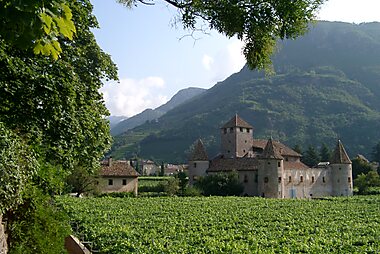
Bolzano grew up in the late 12th century as a market town on the trade route over the Brenner Pass, between Italy and the German lands. Merchants sold their goods under the arcades of Via dei Portici, and the city's trade fairs drew traders from across Europe. Museo Mercantile - Merkantilmuseum still shows the rooms where a trade court settled disputes from the 17th century. Nobles built castles on the hills around the town, including Schloss Maretsch - Castel Mareccio among the vineyards and Castel Roncolo - Schloss Runkelstein.
For centuries, Bolzano was part of the County of Tyrol, ruled by the Habsburgs from 1363. After World War I, South Tyrol became part of Italy. The Fascist regime then tried to make the region Italian. It banned German in schools, brought in workers from other regions and built a new Italian district west of the Talfer river, with Monumento alla Vittoria - Siegesdenkmal at its entrance.
After World War II, a long struggle for autonomy ended with special rights for the German- and Ladin-speaking communities. Today, South Tyrol governs most of its own affairs, and bilingual life is normal. The city itself has an Italian-speaking majority, while German dominates in the surrounding valleys.
Infos pays
Quick practical facts for Italy at a glance:
- Devise
- euro EUR € · Paiements par carte · Largement acceptées
- Numéros d'urgence
- 112
- Électricité
- 230 V · 50 HzType C / Type F / Type L
- Langues
- italien
- Eau du robinet
- Potable
- Sens de conduite
- À droite
- Indicatif téléphonique
- +39


Bolzano – Planifie tes journées
Transforme les lieux de ce guide en un véritable itinéraire, avec des itinéraires intelligents, des estimations de temps et tout ce dont tu as besoin pour un voyage parfait.


Destinations associées
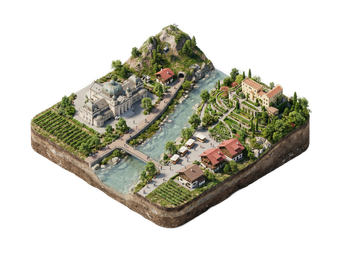


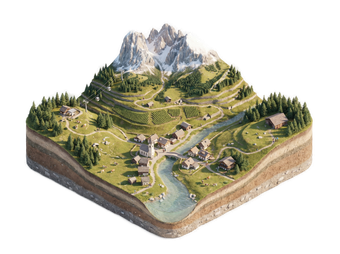





Data: © OpenStreetMap contributors, Wikidata, Wikipedia, Tripomatic, Official websites, geoBoundaries (CC BY 4.0). Tours by GetYourGuide. We earn commission from bookings. Travel guide generated with AI.
Planifie ton voyage avec Tripomatic
- Planification avec l'IAObtiens une journée prête à l'emploi en un geste, laisse l'IA répartir ta liste de souhaits sur ton voyage ou planifie tout en discutant.
- Alertes de voyageAvis officiels, météo extrême, grèves et risques naturels pour les lieux de chaque jour de ton voyage.
- Jours fériés et événementsConsulte les jours fériés, festivals et fermetures durant ton voyage, ainsi que leur impact sur tes projets.
- Estimation des coûtsDétails des coûts de voyage générés par l'IA pour savoir quel budget prévoir avant de partir.
- Visites et billetsRéserve des visites, des billets coupe-file et des activités directement dans ton planning.