


Parc national des Cinque Terre
Cinque Terre means "Five Lands". It is a short stretch of steep Ligurian coast with five old fishing villages: Monterosso al Mare, Vernazza, Corniglia, Manarola and Riomaggiore. Colourful houses stand on the rocks above the sea. Behind them, centuries of dry-stone terraces climb the hills, planted with vines and olives. The whole area is a national park and a UNESCO World Heritage Site.
This is a place for walking, swimming and slow evenings by a harbour. A coastal train links all five villages in a few minutes, and footpaths connect them along the cliffs. The villages are small and get very crowded at midday in summer. Staying overnight lets you see them in the quiet early morning and evening. Plan for steep steps everywhere, and keep the car at home.

Parc national des Cinque Terre – Tu prépares un voyage ?
Crée ton itinéraire jour par jour dans l'application Tripomatic.


Quand partir
Late spring and early autumn are the best time for hiking: warm, with fewer people than in summer. July and August are hot and humid, the sea is warm, and the trains and trails are at their most crowded. October and November are the wettest months, and heavy rain can close trails. Winter is mild and quiet, but many restaurants and hotels close for the season.
The event to plan around is the lighting of the Manarola nativity scene on 8 December. Hundreds of lit figures cover the hill above the village, and they stay lit through the Christmas season.
Meilleure période pour visiter: mai, juin, juillet, septembre
Sites incontournables
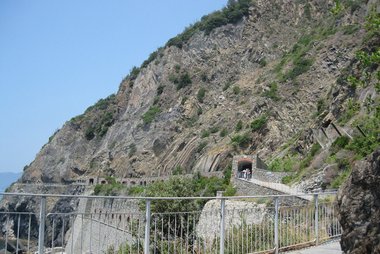
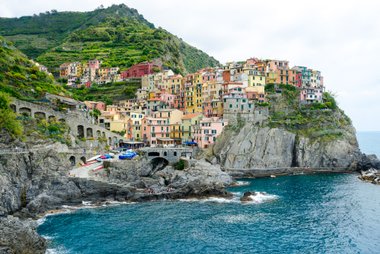
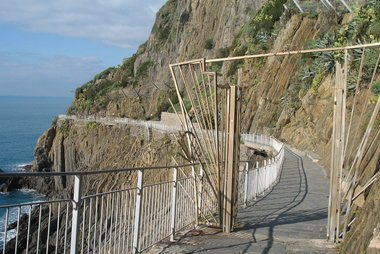
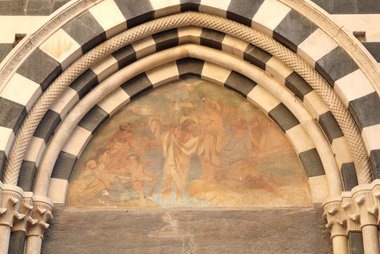
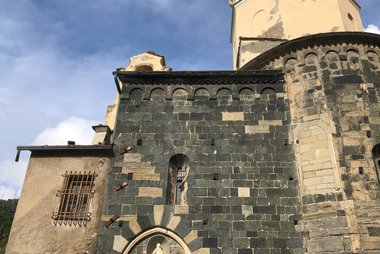
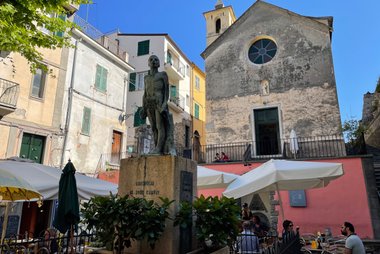
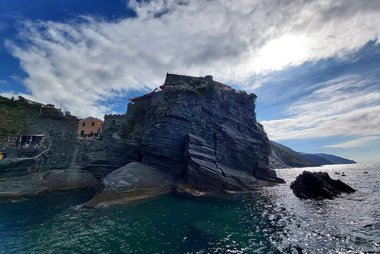
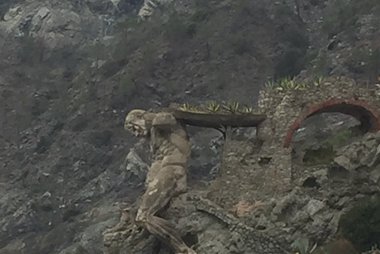
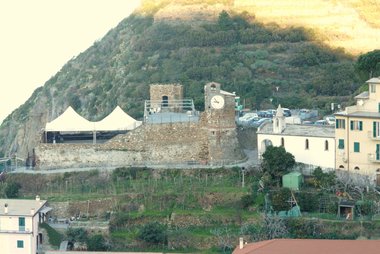
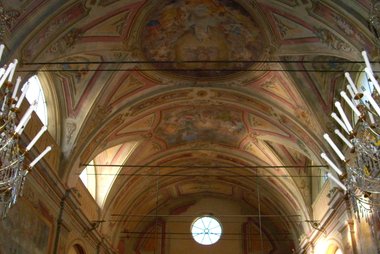
The villages themselves are the main sight. Each takes an hour or two to explore, and the trains between them are quick.
- Via dell'Amore is the famous seaside path from Riomaggiore to Manarola. It reopened after a long closure and now needs a timed booking.
- Sentiero Azzurro is the old coastal path that links all five villages. The stretches from Corniglia to Vernazza and from Vernazza to Monterosso give the best views.
- Manarola Viewpoint on the headland west of the harbour gives the classic view of Manarola's coloured houses stacked above the sea. Come at sunset.
- Castello Doria is a medieval lookout tower above Vernazza, built against pirate raids. From the top you see the harbour and the coast in both directions.
- Chiesa di Santa Margherita di Antiochia stands right on Vernazza's harbour, with its octagonal bell tower facing the sea.
- At the end of Corniglia's main street, Terrazza di Santa Maria sits about 90 m above the water and looks along the whole coast.
- Castello di Riomaggiore is a restored medieval fort with two round towers. It looks down over the rooftops of Riomaggiore.
- Chiesa di San Giovanni Battista is Monterosso's parish church, built between 1282 and 1307 in the old town.
Listes recommandées


Cinque Terre Coastal Views
Breathtaking viewpoints and charming little harbours offering iconic vistas of the Cinque Terre coastline.
9 lieux
Expériences à vivre
The best moments here are outdoors and often depend on the time of day or the season.
- Hike between villages: walk at least one section of the coastal path. Leave early in the morning, before the heat and the crowds. Corniglia to Vernazza is the classic choice.
- Watch the sunset at Manarola: walk out to Manarola Viewpoint as the light turns the houses gold. Arrive early in summer to get a spot.
- See the coast from a boat: take the ferry between the villages for a view of the cliffs and terraces you cannot get from land.
- Swim off the rocks: Manarola and Riomaggiore have no real beaches, so locals and visitors swim from the harbour rocks. Monterosso has the sandy beaches, including Spiaggia di Fegina next to the station.
- Climb to a hill sanctuary: each village has an old sanctuary high above it. The walk to Santuario di Nostra Signora di Soviore above Monterosso or Montenero above Riomaggiore leads through vineyards and woods.
Visites et activités
Parc national des Cinque Terre — Carte

Excursions à la journée
The train line and the ferries make it easy to visit nearby coast towns for a day. Times are one way.
- Levanto: about 5 minutes by train from Monterosso. A relaxed beach town with a wide sandy beach, and a cheaper place to stay.
- Porto Venere: about 1 hour by ferry in season, or by bus from La Spezia. A colourful harbour town with a church on the rocks at the tip of the peninsula, also a UNESCO site.
- Lerici: about 1 hour, by train to La Spezia and then by bus, or by ferry in season. A castle town on the Gulf of Poets with a long seafront.
- Santa Margherita Ligure and Portofino: about 1 hour by train to Santa Margherita, then a short bus or boat ride to Portofino. Elegant resort towns with famous harbours.
- Camogli: about 1 hour by train. A fishing town with tall painted houses along a pebble beach.
- Genoa: about 1.5 hours by train. A large port city with a huge medieval old town and grand palaces.
- Pisa: about 1.5 hours by train via La Spezia. Home of the Leaning Tower.
Où s'aventurer
The villages with their own pages:
- Monterosso al Mare is the largest village, with the best beaches and the most hotels.
- Corniglia sits on a cliff top, high above the sea.
- Vernazza has a small natural harbour and a castle tower.
- Riomaggiore is the southern gateway, closest to La Spezia.
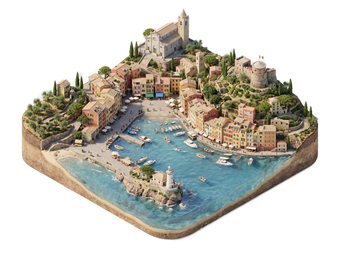
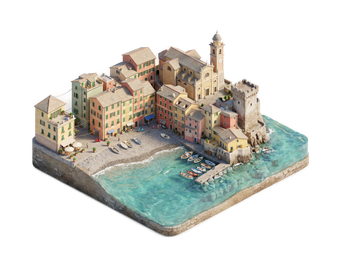
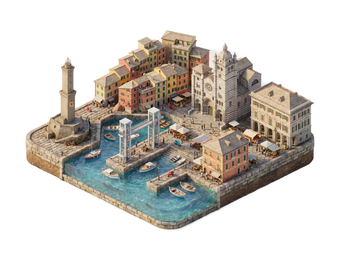
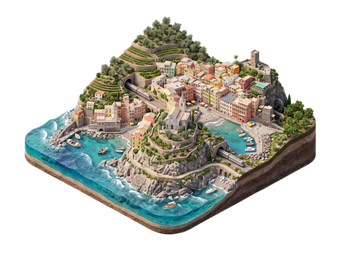
Along the same coast, Portofino, Santa Margherita Ligure and Camogli lie to the north, on the way to Genoa. For the wider region, see Liguria.
S'y rendre
- By air: the nearest large airports are Pisa International Airport and Genoa Airport. From Pisa, take the Pisa Mover shuttle to Pisa Centrale, then a train to La Spezia; the trip takes about 1.5–2 hours. From Genoa, take the airport bus into the city, then a train south; the train takes about 1.5 hours to Monterosso.
- By train: almost everyone arrives by train. La Spezia Centrale is the main hub, with direct trains from Rome, Milan and Genoa, and connections from Florence via Pisa. Levanto is the northern gateway. Local trains from both stop at all five villages. Trenitalia
- By ferry: in the warmer months, boats sail from La Spezia, Porto Venere, Lerici and Levanto to the villages. They stop at every village except Corniglia, which has no landing.
Se déplacer
- Train: the regional train between La Spezia and Levanto stops at all five villages. Hops between villages take 2–4 minutes, and in season the Cinque Terre Express brings service to about every 20 minutes. Single fares are flat and change with the date. Buy at the station, in the Trenitalia app or online, and validate a paper ticket before boarding. Trenitalia
- Cinque Terre Card: the park sells a Trekking Card (trails, park buses and services) and a Train Card (the same plus unlimited trains between La Spezia and Levanto). Buy it online or at park offices in the stations. It is checked on the paid sections of the coastal path. Cinque Terre Card
- Via dell'Amore: access is one-way, from Riomaggiore to Manarola. You need a Cinque Terre Card and a booking for a 30-minute time slot.
- Ferry: boats are slower and pricier than the train, but the views of the villages from the sea are excellent. Service stops in bad weather.
- Park buses: small minibuses climb from the villages to hill hamlets and sanctuaries. In Corniglia, a minibus runs from the station up to the village.
- On foot: inside the villages you walk everywhere, often on steep steps. Corniglia sits high above its station, up the Lardarina stairway of more than 380 steps.
- Cycling: not practical.
Conduite
- Is a car worth it?: no. The roads to the villages are narrow and winding, and the village centres are closed to visitors' cars. The train is faster and easier.
- Parking: each village has only small, expensive car parks at its edge, and they fill early in summer. Monterosso has the largest one, near Fegina. A better plan is to park in La Spezia or Levanto and take the train.
- Restrictions: the village centres are pedestrian only. Some hotels can give you a permit to unload; ask before you arrive.
Gastronomie
This is the home of Ligurian cooking. Look for basil pesto, often served with trofie pasta, and focaccia from the bakeries. Monterosso is famous for its anchovies, served fresh, fried, marinated in lemon or salted. Fried seafood sold in paper cones is the classic snack to eat on the harbour wall. The local white wine comes from the steep terraces around the villages. The rare sweet Sciacchetrà is made from grapes dried after the harvest and is worth trying with dessert.
Good places to eat cluster around the harbour squares of Vernazza and Riomaggiore and in the old-town lanes of Monterosso. Book dinner ahead in summer, as the villages have few tables and many visitors. Many restaurants close for part of the winter.
Sécurité et santé
The villages are very safe. Pickpockets do work on crowded trains and platforms in summer, so keep valuables close.
The main risks come from the terrain. The coastal path is narrow, rocky and steep in places, and landslides close sections often. Flip-flops and smooth-soled shoes are banned on the trails, and fines apply. Wear proper shoes, carry water and avoid hiking in the midday summer heat. Check the trail status before you leave: the Manarola to Corniglia section of the coastal path is closed after landslides, and the detour climbs through the hill village of Volastra. Stay off the trails and away from riverbeds during heavy-rain alerts. Tap water is safe to drink. Cinque Terre National Park
Histoire
Monterosso and Vernazza are the oldest villages; Vernazza is first recorded as a fortified town in 1080. The area later came under the Republic of Genoa. Pirate raids were a constant danger, so the villages built lookout towers and forts. Castello Doria in Vernazza and Castello di Riomaggiore both date from this period. Churches such as Chiesa di San Giovanni Battista in Monterosso and Chiesa di Santa Margherita di Antiochia in Vernazza show the wealth of the medieval villages.
For centuries, people lived from fishing and from the terraces they built by hand on the steep slopes. The villages stayed isolated until the railway arrived in the 19th century. Tourism grew fast in the late 20th century. The area became a UNESCO World Heritage Site in 1997 and a national park in 1999.
The landscape is fragile. On 25 October 2011, a flash flood buried Vernazza and Monterosso under mud and killed nine people in the area. In 2012, a rockslide closed Via dell'Amore. It reopened in 2025 after a long closure and major engineering work.
Infos pays
Quick practical facts for Italy at a glance:
- Devise
- euro EUR € · Paiements par carte · Largement acceptées
- Numéros d'urgence
- 112
- Électricité
- 230 V · 50 HzType C / Type F / Type L
- Langues
- italien
- Eau du robinet
- Potable
- Sens de conduite
- À droite
- Indicatif téléphonique
- +39


Parc national des Cinque Terre – Planifie tes journées
Transforme les lieux de ce guide en un véritable itinéraire, avec des itinéraires intelligents, des estimations de temps et tout ce dont tu as besoin pour un voyage parfait.


Destinations associées
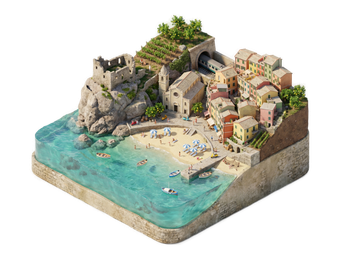
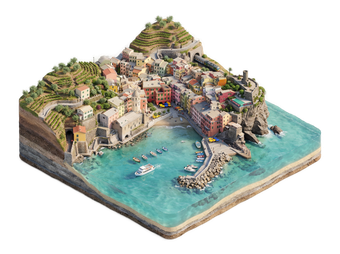

Data: © OpenStreetMap contributors, Wikidata, Wikipedia, Tripomatic, Official websites. Tours by GetYourGuide. We earn commission from bookings. Travel guide generated with AI.
Planifie ton voyage avec Tripomatic
- Planification avec l'IALaisse l'IA créer ton itinéraire, répondre à tes questions de voyage et classer tes documents de réservation dans ton voyage.
- Alertes de voyageAvis officiels, météo extrême, grèves et risques naturels pour les lieux de chaque jour de ton voyage.
- Jours fériés et événementsConsulte les jours fériés, festivals et fermetures durant ton voyage, ainsi que leur impact sur tes projets.
- Estimation des coûtsDétails des coûts de voyage générés par l'IA pour savoir quel budget prévoir avant de partir.
- Visites et billetsRéserve des visites, des billets coupe-file et des activités directement dans ton planning.