


Lille
Lille is the main city of French Flanders, close to the Belgian border. It has a Flemish look, with red-brick gabled houses, and a lively feel from its large student population. More than a million people live in the wider metropolitan area.
It suits a city break of two or three nights. Museums, markets, cafés and good-value dining make it easy and affordable. Trains from Paris, London and Brussels take about an hour or a little more, so it also works as a base for northern France and Belgium.

Lille – Tu prépares un voyage ?
Crée ton itinéraire jour par jour dans l'application Tripomatic.


Quand partir
Late spring to early autumn is the best time, with mild to warm days. Rain can fall at any time of year, so bring a light jacket. Winters are cold and grey, but the Christmas market in December is a good reason to come.
The biggest event is the Braderie de Lille, on the first weekend of September. It is a huge street flea market, and it draws millions of visitors. Book your hotel well ahead, because rooms fill up fast.
Meilleure période pour visiter: juin, juillet, août, septembre
Sites incontournables
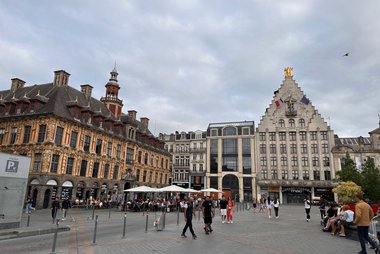
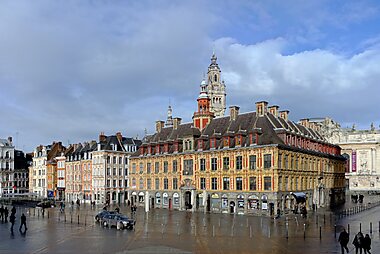
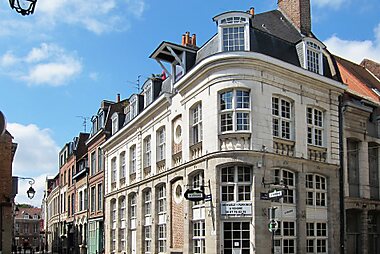
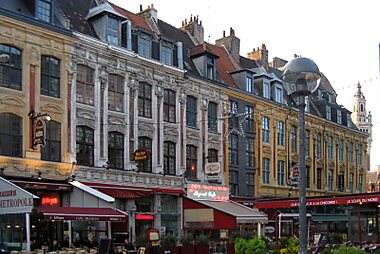
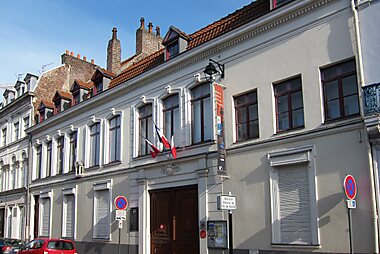
- Place du Général de Gaulle is the main square and the heart of the city. Cafés line it, and the big column in the middle recalls the Austrian siege of 1792.
- La Vieille Bourse is a 17th-century merchant exchange with a richly carved Flemish façade. You can walk into the inner courtyard for free.
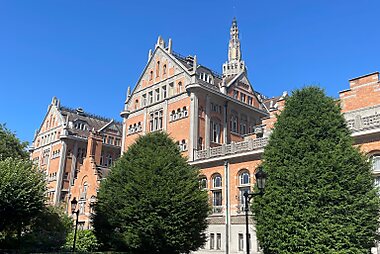
- Beffroi is the tower of the town hall, 104 m high and a UNESCO World Heritage Site. It was finished in 1932, and you can go up for views over the city.
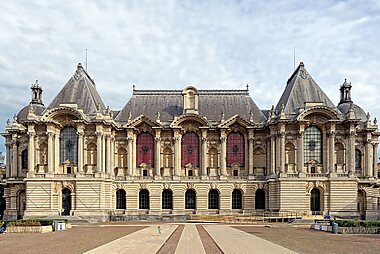
- Palais des Beaux-Arts is one of the largest art museums in France. It holds old masters, 19th-century French painting and sculpture.
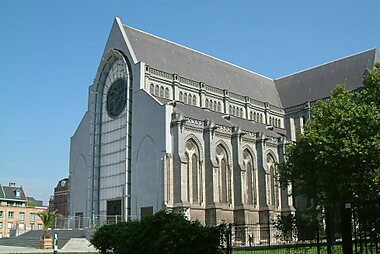
- Cathédrale Notre-Dame de la Treille is a neo-Gothic cathedral with an unusual modern façade added in 1999.
- Vieux Lille is the old town. It has cobbled streets, Flemish-style houses, independent shops and many places to eat.
- Parc de la Citadelle is a large green park around the star-shaped fortress that Vauban built after 1667. It is good for a walk or a picnic.
- Maison natale de Charles de Gaulle is the birthplace of Charles de Gaulle. It is a small museum about his family and childhood.
Listes recommandées


Expériences à vivre
- Eat moules-frites at the Braderie: On the first weekend of September, the whole centre becomes a flea market. The local tradition is a big plate of mussels and fries. Restaurants pile the empty shells outside to show how many they sold.
- Christmas market and Ferris wheel: In December, a market with wooden chalets fills the main square, and a big Ferris wheel turns above it.
- Sunday morning at the Wazemmes market: This is a big, lively street market with food, spices, fruit and clothes. Sunday is the busiest day.
Visites et activités
Lille — Carte

 Ouvrir la carte interactive
Excursions à la journée
Lille sits in a very good spot for day trips. Trains are frequent and the Belgian border is close.
- Roubaix: about 25 min by metro or tram. A former textile town with the La Piscine art museum, set in an Art Deco swimming pool.
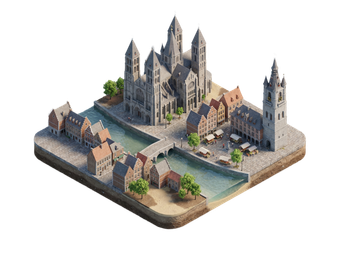
- Tournai: about 30 min by train. A calm Belgian city with a UNESCO-listed Romanesque cathedral. See Tournai.
- Arras: about 45 min by train. A pretty town with two large Flemish-style squares and a UNESCO-listed belfry.
- Lens: about 40 min by train. Home of the Louvre-Lens museum, a branch of the Louvre. The Villeneuve-d'Ascq suburb, east of Lille, has the LaM modern art museum.
- Brussels: about 35 to 40 min by high-speed train from Lille Europe. See Brussels.
- Bruges and Ghent: about 1.5 to 2 hours by train, usually with a change. Both are worth a long day, or a night. See Bruges and Ghent.
Où s'aventurer
More places to visit in northern France:
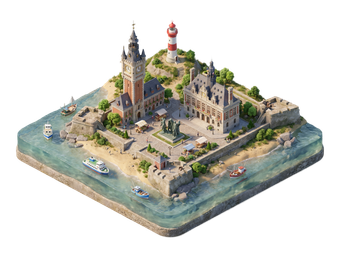
- Calais is the main Channel port, with beaches and a ferry link to England.
- Boulogne-sur-Mer is a fishing port on the coast with a walled old town and a large aquarium.
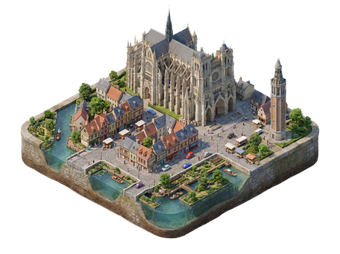
- Amiens is known for its huge Gothic cathedral and its canal quarter.
For a trip further afield, Paris is about an hour away by fast train. See Paris.
S'y rendre
- By train: Lille is a major rail hub, and most visitors arrive this way. Two stations are close together in the centre: Lille-Flandres for regional trains and Paris, and Lille-Europe for Eurostar and high-speed trains. Paris takes about 1 hour, London about 1 hour 20 min, and Brussels about 35 to 40 min. Paris Charles de Gaulle airport also has a direct high-speed train, in about an hour. Book on SNCF Connect.
- By air: The local airport is Lille-Lesquin (LIL), about 11 km south-east of the centre. It has a limited choice of routes. A shuttle bus links it to the city. Many visitors fly to Paris Charles de Gaulle or Brussels and continue by high-speed train.
- By bus: Long-distance coaches link Lille with Paris, Brussels and other cities. They are often cheaper than the train but slower.
Se déplacer
- Public transit: The metro has two automatic lines. Two tram lines and many bus routes cover the wider area. Buy tickets at the machines at metro and tram stops, or on the transport operator's app. Validate your ticket before you board.
- Cycling: The city has a public bike-share system called V'Lille. The centre is flat.
- On foot: The centre is compact. The two stations, the main square and the old town are all within about 10 to 15 min on foot.
Conduite
- Is a car worth it?: No, not for a city stay. Public transport and walking cover the centre, and trains reach the main day-trip towns. A car helps only for villages and war memorials in the countryside.
- Parking: Street parking is paid in the centre. Underground car parks are easier but cost more. Cheaper park-and-ride car parks are at the ends of some metro and tram lines.
- Restrictions: The main square and parts of the old town are limited to pedestrians or have very restricted traffic.
Gastronomie
Lille cooking is Flemish and hearty. Look for carbonnade flamande (beef stewed in beer), moules-frites, and welsh (toast with ham, cheese and beer sauce, served with fries). Potjevleesch is a cold meat terrine, and strong maroilles cheese is a local favourite. Vanilla waffles and merveilleux meringue cakes are the sweet specialties.
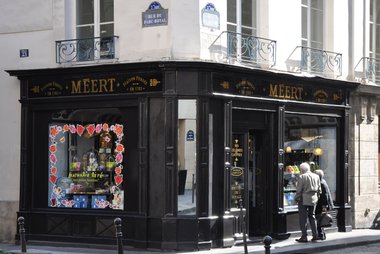
Traditional taverns called estaminets serve these dishes. The streets of Vieux Lille, such as rue de la Monnaie and rue de Gand, have many of them. For a cheaper lunch, look around the Wazemmes market. The sweet shop Maison Méert has been open since the 18th century, and it is known for its handmade vanilla waffles.
Sécurité et santé
Lille is generally safe for visitors. The main risk is petty theft.
- Pickpockets work around Lille-Flandres station, in crowded trams and metro cars, and at big events such as the Braderie. Keep bags closed and phones out of back pockets.
- Emergency number: 112.
Histoire
Lille was part of the Counts of Flanders' lands, and later of the Dukes of Burgundy. The remains of their 15th-century palace stand beside Place Rihour. In the 17th century the city was under Spanish rule. Louis XIV took it in 1667, and it became French in 1668. He ordered Vauban to build the fortress in Parc de la Citadelle, and the Flemish Baroque style of La Vieille Bourse comes from this period.
In 1792, Austrian forces besieged the city for several days but failed to take it. The 19th century brought textile mills and fast growth. In World War I, German troops occupied Lille from October 1914 until October 1918. Charles de Gaulle was born in 1890 in the house now called Maison natale de Charles de Gaulle.
The modern city dates from the 1990s. The Channel Tunnel and the Eurostar arrived in 1994, and the new Euralille district grew around Gare Lille Europe. Lille was a European Capital of Culture in 2004. The town hall belfry, Beffroi, was finished in 1932.
Infos pays
Quick practical facts for France at a glance:
- Devise
- euro EUR € · Paiements par carte · Largement acceptées
- Numéros d'urgence
- 112
- Électricité
- 230 V · 50 HzType C / Type E
- Langues
- français
- Eau du robinet
- Potable
- Sens de conduite
- À droite
- Indicatif téléphonique
- +33


Lille – Planifie tes journées
Transforme les lieux de ce guide en un véritable itinéraire, avec des itinéraires intelligents, des estimations de temps et tout ce dont tu as besoin pour un voyage parfait.


Destinations associées



Data: © OpenStreetMap contributors, Wikidata, Wikipedia, Tripomatic, Official websites. Tours by GetYourGuide. We earn commission from bookings. Travel guide generated with AI.
Planifie ton voyage avec Tripomatic
- Planification avec l'IAObtiens une journée prête à l'emploi en un geste, laisse l'IA répartir ta liste de souhaits sur ton voyage ou planifie tout en discutant.
- Alertes de voyageAvis officiels, météo extrême, grèves et risques naturels pour les lieux de chaque jour de ton voyage.
- Jours fériés et événementsConsulte les jours fériés, festivals et fermetures durant ton voyage, ainsi que leur impact sur tes projets.
- Estimation des coûtsDétails des coûts de voyage générés par l'IA pour savoir quel budget prévoir avant de partir.
- Visites et billetsRéserve des visites, des billets coupe-file et des activités directement dans ton planning.