



Nerja
Nerja is a whitewashed coastal town on the eastern end of the Costa del Sol, about 55 km east of Málaga, between the sea and the Sierras de Almijara. It is known for the Balcón de Europa, a clifftop promenade, a huge cave with prehistoric paintings, and small beaches in coves below the cliffs.
It is quieter and more traditional than many Costa del Sol resorts. It is a good base for a few days, with the white villages of Frigiliana and Maro, and hiking in the mountains, close by.

Nerja – Tu prépares un voyage ?
Crée ton itinéraire jour par jour dans l'application Tripomatic.


Quand partir
The weather is mild for most of the year. Spring and autumn are the best seasons for walking and sightseeing. Summer is hot and crowded, and August is the busiest month. Winters are mild, and the town stays open.
The Festival of the Cave of Nerja in July is a music and dance event held in the cave.
Meilleure période pour visiter: avril, mai, juin, juillet, septembre, octobre, novembre
Sites incontournables
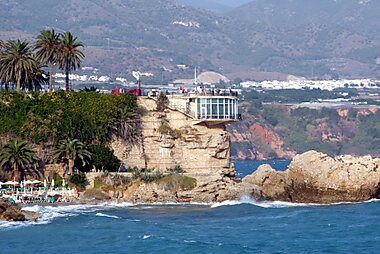
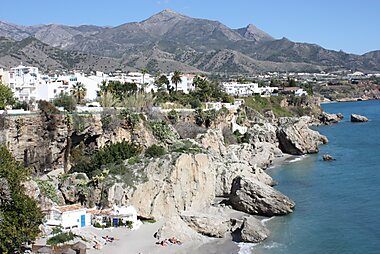
- Balcon de Europa is a promenade on a headland above the sea, with palm trees, a statue of King Alfonso XII and views along the coast.
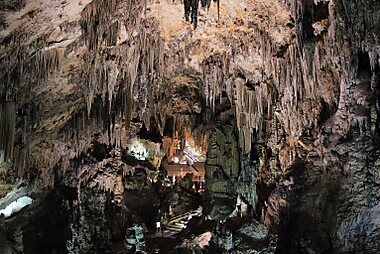
- Cueva de Nerja is a large cave system, about 4 km east of town, with enormous halls, stalactites and prehistoric paintings.
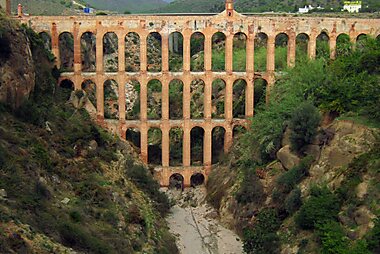
- Acueducto del Águila is a 19th-century brick aqueduct with several tiers of arches, near the village of Maro.
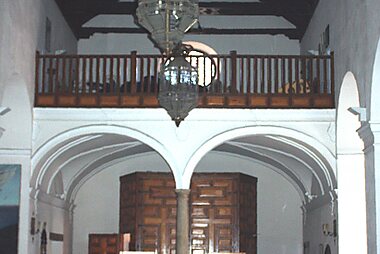
- Iglesia El Salvador is the town's main church, near the Balcón de Europa.
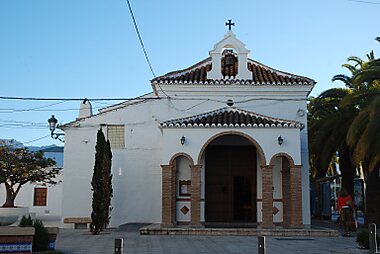
- Ermita de Ntra. Sra. de las Angustias is a small chapel with a view in the old town.
- The Museo de Nerja tells the story of the area, from the cave finds to the present day.
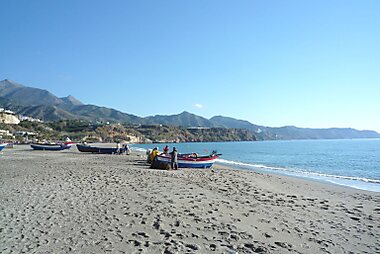
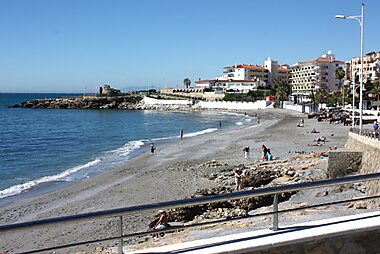
- Playa Burriana is the main town beach with chiringuitos (beach bars), and Playa Calahonda and Playa La Torrecilla are small beaches near the Balcón de Europa.
- The Río Chillar walk follows a river through a narrow gorge.
Listes recommandées


Points de vue panoramiques et sommets
Le paysage de Nerja est défini par la rencontre spectaculaire des montagnes de la Sierra de Almijara et de la mer Méditerranée. Cette collection présente des monuments architecturaux historiques comme l'aqueduc de l'Aigle du XIXe siècle et les tours de guet côtières du XVIe siècle, aux côtés de sommets calcaires escarpés. De la promenade centrale construite sur les ruines d'une forteresse au sommet de Navachica culminant à 1 831 mètres, ces sites offrent des points de vue spécifiques sur les falaises de Maro-Cerro Gordo et le littoral de l'Axarquía.
14 lieuxExpériences à vivre
- Walk on the Balcón de Europa at sunset.
- Visit the Cave of Nerja and its large halls.
- Have a paella at a beach bar at Burriana.
- Walk along the cliffs of Maro and Cerro Gordo to reach quiet coves.
- Spend a day in Frigiliana.
Visites et activités
Nerja — Carte

Excursions à la journée
- Frigiliana (about 6 km): a pretty white village in the hills, with narrow lanes and Moorish heritage.
- Málaga (about 55 km): the main city of the Costa del Sol.
- Granada (about 115 km): the Alhambra and old city.
- Antequera (about 100 km): dolmens and churches.
- Sierra Nevada and the Alpujarras: Capileira and Bubión are mountain villages.
Où s'aventurer
S'y rendre
- By air: Málaga airport is about 55 km away. A direct bus runs to Nerja, or you can take a transfer or rental car.
- By bus: Buses run from Málaga's bus station in about an hour to an hour and a quarter, and from Granada in about 2 hours.
- By car: The A-7 motorway runs along the coast.
Se déplacer
- On foot: The center and the Balcón de Europa are walkable, with some steep streets. The cave is a short bus or taxi ride out.
- Bus: Local buses run to the cave, Maro and Frigiliana.
- Taxi: Available in the center.
Conduite
- Is a car worth it?: Useful for Frigiliana, the cave and the cliffs, though buses also reach them.
- Parking: Paid car parks are in the center and fill up in summer.
- Roads: The A-7 is busy at weekends in summer, and the old coast road is narrow and winding.
Gastronomie
Nerja serves Andalusian food with a coastal focus. Try ajoblanco (a cold almond and garlic soup), fried fish, espetos (grilled sardines on skewers) and paella at the beach bars. Frigiliana is known for miel de caña (sugar-cane honey).
The mountains produce sweet Moscatel wines.
Sécurité et santé
Nerja is a safe town. In summer, the sun is strong, so use sun protection and drink water. The cliff paths can be steep, and some beaches have currents, so check the swimming flags. Inside the cave, the floor is damp and the path has steps.
Histoire
The area has been inhabited since prehistoric times, and the Cave of Nerja was used by humans for tens of thousands of years. The Moors ruled the coast for centuries, and the town was captured by the Catholic Monarchs in 1487.
In 1885 an earthquake damaged the town, and King Alfonso XII visited and gave the Balcón de Europa its name. The cave was rediscovered in 1959 by local boys. Tourism developed from the 1960s.
Infos pays
Quick practical facts for Spain at a glance:
- Devise
- euro EUR € · Paiements par carte · Largement acceptées
- Numéros d'urgence
- 112
- Électricité
- 230 V · 50 HzType C / Type F
- Langues
- espagnol
- Eau du robinet
- Potable
- Sens de conduite
- À droite
- Indicatif téléphonique
- +34


Nerja – Planifie tes journées
Transforme les lieux de ce guide en un véritable itinéraire, avec des itinéraires intelligents, des estimations de temps et tout ce dont tu as besoin pour un voyage parfait.


Destinations associées


Data: © OpenStreetMap contributors, Wikidata, Wikipedia, Tripomatic, Official websites, geoBoundaries (CC BY 4.0). Tours by GetYourGuide. We earn commission from bookings. Travel guide generated with AI.