


São Miguel
São Miguel is the largest and most populous island of the Azores. It is a green volcanic island in the middle of the Atlantic, with crater lakes, steaming hot springs, tea fields and steep coastal villages.
The island suits a trip of several days with a rental car. You can swim in warm thermal pools, hike around crater lakes, eat a stew cooked by volcanic heat and go whale watching. Ponta Delgada is the main town and the arrival point, but most of the island's attractions lie in the countryside and in smaller towns.

São Miguel – Tu prépares un voyage ?
Crée ton itinéraire jour par jour dans l'application Tripomatic.


Quand partir
Summer is the warmest and driest season, and the best time for swimming, hiking and boat trips. Spring is good for whale watching, because blue whales pass the island from March to May. Sperm whales and dolphins live in the waters around the island all year. Winters are mild but wet and windy.
The weather can change fast on any day, and clouds often cover the crater lakes. Plan viewpoint visits with some flexibility.
The biggest event is the Festas do Senhor Santo Cristo dos Milagres in Ponta Delgada. It is held on the fifth Sunday after Easter, usually in May. On that Sunday afternoon a procession carries the image of Christ through the streets of the city.
Meilleure période pour visiter: juin, juillet, août
Sites incontournables

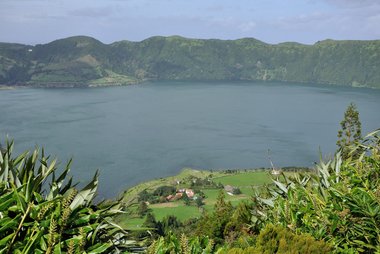
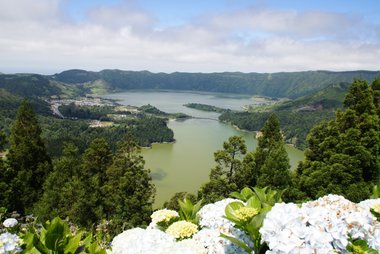



- Lagoons of Sete Cidades fill a huge crater in the west. One lake looks blue and the other green, and together they are the most famous view on the island.
- Vista do Rei is the classic viewpoint over the twin lakes. Go early, because clouds often hide the view later in the day.
- Lagoa do Fogo is a large crater lake in a nature reserve in the centre of the island. Walk down to the shore or enjoy the view from the rim.
- Caldeira Velha is a natural monument with warm, iron-rich thermal pools near Lagoa do Fogo, on the north side of the island.
- Terra Nostra Garden in Furnas is a large botanical garden with a thermal pool. The water is warm and rich in iron.
- Poça da Dona Beija is a set of hot spring pools in Furnas, a good place to bathe.
- Gorreana Tea Factory on the north coast was founded in 1883 and is one of the island's two working tea plantations. You can see the factory and the tea fields.
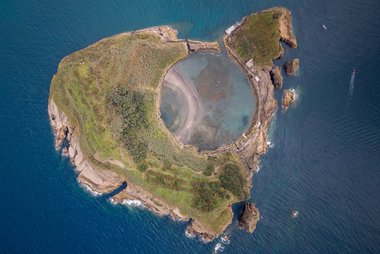
- Ilhéu de Vila Franca is a small crater islet just off Vila Franca do Campo, with a sheltered lagoon. Access is limited, so check the current rules and book before you go.
Listes recommandées

São Miguel Island's Absolute Essentials
São Miguel, the largest island in the Azores, is defined by its intense volcanic activity and diverse microclimates. This selection highlights the island's major geological landmarks, including the Lagoa do Fogo stratovolcano and the Sete Cidades massif. Key sites include the iron-rich thermal pools of Caldeira Velha, the natural ocean hot springs at Ponta da Ferraria, and Europe's oldest tea plantation at Gorreana. The list also covers significant historic infrastructure like the 19th-century Muro das Nove Janelas aqueduct and the island's first lighthouse.
14 lieux
Scenic Viewpoints and Peaks
São Miguel’s volcanic landscape is defined by dramatic calderas, coastal cliffs, and lush peaks. This selection spans the island’s diverse geography, from the high-altitude vistas of Pico da Vara and Lagoa do Fogo to the manicured gardens of Nordeste. These locations offer views of the Sete Cidades twin lakes, the northern tea plantations, and the island’s narrowest central point, where both the north and south coasts are visible simultaneously. Many spots are accessible by road, while others require hiking through protected nature reserves.
15 lieux
Majestic Waterfalls
São Miguel’s volcanic landscape features a diverse range of waterfalls, from the iron-rich thermal cascades of Caldeira Velha to the 40-meter drop of Salto da Farinha. Many of these sites, such as those within the Ribeira dos Caldeirões Natural Park, are integrated with historic watermills and lush Macaronesian flora. The island’s unique geology also creates distinctive features like the vibrant turquoise basin of Poço Azul and the warm-water falls near Ribeira Quente.
10 lieux

Beautiful Beaches and Coasts
São Miguel’s coastline is defined by dramatic volcanic landscapes, featuring a mix of expansive dark sand beaches and secluded rocky coves. The north coast, particularly near Ribeira Grande, offers long stretches like Areal de Santa Barbara, known for hosting international surfing competitions. In contrast, the southern shores provide sheltered spots like Praia Água d’Alto. Unique geological features include the hydrothermal vents at Praia do Fogo that warm the seawater and the historic water mills lining the trail to Praia da Viola.
10 lieux

Regional Cuisine Highlights
This selection highlights the diverse culinary landscape of São Miguel, from the volcanic-cooked stews of Furnas to fresh Atlantic seafood. Sample the traditional Cozido das Furnas, slow-cooked in geothermal soil, or enjoy grass-fed Azorean beef burgers and artisanal ice cream. The list includes wood-fired pizzerias in Ponta Delgada and Mosteiros, alongside family-run taverns specializing in regional wines and local catches like grilled limpets.
10 lieuxExpériences à vivre
- Whale and dolphin watching: Boats leave from Ponta Delgada. Sperm whales live here all year, and spring brings the best variety.
- Thermal bathing: Bathe in the warm waters at Caldeira Velha, Poça da Dona Beija or Terra Nostra Garden. At Ponta da Ferraria on the west coast, hot spring water meets the sea.
- Lunch cooked by the volcano: In Furnas, pots of stew are buried in the hot ground by the lake and cook for hours. Order it at a restaurant in Furnas.
- Crater walks: Marked trails lead through the crater areas, and an official trail climbs to Lagoa do Fogo. Start early for the clearest views.
- Pineapple plantation visit: Plantations near Ponta Delgada show how the island's pineapples are grown.
- Procession of Santo Cristo: In spring, the Festas do Senhor Santo Cristo dos Milagres fill the streets of Ponta Delgada with a large religious procession.
Visites et activités
São Miguel — Carte

Où s'aventurer
- Ponta Delgada: Ponta Delgada is the capital, the airport town and the base for most boat trips.
- North coast: Ribeira Grande is a large town on the north coast, near Caldeira Velha and the road to Lagoa do Fogo.
- West: Sete Cidades is the village beside the twin lakes.
- Other islands: Santa Maria is the nearest island, a short flight away. Islands to the west include Terceira, Pico and Faial. See the guide to the Azores for the whole archipelago.
S'y rendre
- By air: João Paulo II Airport (PDL) is about 2 km from the centre of Ponta Delgada. It has flights from Lisbon and Porto, and from some other European and North American cities. It is also the hub for flights to the other Azores islands.
- Time zone: The Azores are one hour behind mainland Portugal.
- To other islands: Flights are the practical way to reach the other islands from São Miguel.
- By sea: Cruise ships call at Ponta Delgada. Most visitors arrive by air.
- Transfers: Taxis wait at the airport. Rental car desks are at the airport too, and it is wise to book early for summer.
Plan your trip with the Visit Azores tourism site.
Se déplacer
- Rental car: The best way to see the island. Sights are spread across the countryside, and the main attractions are an easy drive from Ponta Delgada.
- Buses: AzoresBus runs public buses on the island. Outside the city, buses are not frequent, so they suit a few planned trips better than a full sightseeing programme. Check fares, ticket points and timetables on the AzoresBus site.
- Taxis and tours: Taxis wait at the airport and in town. Tour operators in Ponta Delgada run day tours to Sete Cidades and Furnas if you prefer not to drive.
- Summer shuttle: In recent summers, a shuttle bus has served Lagoa do Fogo and car access has been limited. Check the rules before you go.
- On foot: Villages are easy to explore on foot, but sights are far apart. Cycling is hard on hills and narrow roads.
Conduite
- Is a car worth it?: Yes. A car gives you freedom to reach the lakes, hot springs and east coast, and it saves time compared with buses.
- Roads: Many roads are narrow and steep, with sharp bends. Cattle can be on rural roads. Drive slowly in cloud and rain.
- Parking: Viewpoint car parks are small and fill up in summer. Arrive early, and keep valuables out of sight when you park at viewpoints and trailheads.
- Booking: Reserve a rental car well ahead for July and August.
Gastronomie
The island's signature dish is cozido das Furnas. Meat and vegetables are buried in the hot volcanic ground at Furnas and cook slowly for many hours. The result is moist and slightly sulphurous. Furnas is the place to try it.
Other local foods include grilled limpets (lapas), fried fish with molho vilão, local cheeses and Vila Franca queijadas. Azores pineapple has protected origin status. Tea from the island's plantations is a good gift, and the north coast is the place to taste it.
Sécurité et santé
São Miguel is a safe island for visitors. The most common problem is theft from parked cars at viewpoints and trailheads, so lock the car and take valuables with you.
The sea can be rough, with strong currents. Many beaches are rocky. Swim where lifeguards are present and follow the flags. Stay on marked paths near steam vents and hot springs, because the ground can be very hot. Mountain weather changes quickly, so bring a rain jacket when you go hiking.
Histoire
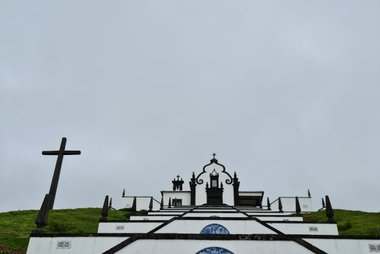
The first settlers arrived in the 15th century, and Vila Franca do Campo became the island's first capital. An earthquake and landslides destroyed much of the town in 1522. Ponta Delgada became the capital in 1546 and is still the main city. The small chapel Lady of Peace Chapel in Vila Franca do Campo is a quiet place to see the older side of the island.
The volcanoes shaped life here. An eruption in the Furnas valley in 1630 killed about 200 people.
Farming drove the economy for centuries. Oranges were exported to Britain, and in the 19th century tea, pineapple and tobacco became important. Tea and pineapple are still grown today, and tourism now plays a large role.
Infos pays
Quick practical facts for Portugal at a glance:
- Devise
- euro EUR € · Paiements par carte · Largement acceptées
- Numéros d'urgence
- 112
- Électricité
- 230 V · 50 HzType C / Type F
- Langues
- portugais
- Eau du robinet
- Potable
- Sens de conduite
- À droite
- Indicatif téléphonique
- +351


São Miguel – Planifie tes journées
Transforme les lieux de ce guide en un véritable itinéraire, avec des itinéraires intelligents, des estimations de temps et tout ce dont tu as besoin pour un voyage parfait.


Destinations associées



Data: © OpenStreetMap contributors, Wikidata, Wikipedia, Tripomatic, Official websites. Tours by GetYourGuide. We earn commission from bookings. Travel guide generated with AI.
Planifie ton voyage avec Tripomatic
- Planification avec l'IAObtiens une journée prête à l'emploi en un geste, laisse l'IA répartir ta liste de souhaits sur ton voyage ou planifie tout en discutant.
- Alertes de voyageAvis officiels, météo extrême, grèves et risques naturels pour les lieux de chaque jour de ton voyage.
- Jours fériés et événementsConsulte les jours fériés, festivals et fermetures durant ton voyage, ainsi que leur impact sur tes projets.
- Estimation des coûtsDétails des coûts de voyage générés par l'IA pour savoir quel budget prévoir avant de partir.
- Visites et billetsRéserve des visites, des billets coupe-file et des activités directement dans ton planning.