


Dijon
Dijon is the capital of Burgundy. For centuries it was the seat of the powerful Dukes of Burgundy, and their palaces, churches and town houses still shape the old centre. The historic centre is part of the UNESCO World Heritage site "Climats, terroirs of Burgundy", which also covers the nearby vineyards.
The old town is compact and easy to walk. Dijon is also a food city, known for mustard, gingerbread and Burgundy wine. It suits a long weekend, and it is a good base for the wine villages of the Côte d'Or. Gustave Eiffel was born here. About 160,000 people live in the city.

Dijon – Utazást tervezel?
Állítsd össze a napi útvonalad a Tripomatic alkalmazásban.


Mikor érdemes utazni
Late spring to early autumn is the best time. Days are warm, terraces are open and the vineyards nearby are green. Summer can be hot, with some afternoon storms. Winter is cold and grey, with frost and short days, but the city is quiet and the restaurants are warm.
The main event is the Dijon International and Gastronomic Fair. It runs from late October to mid-November and fills the exhibition park with food, wine and regional products. Hotels are busier then, so book early.
A legjobb időszak a látogatásra: június, július, augusztus, szeptember
Főbb látnivalók
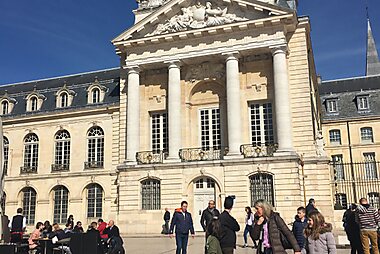



- Palais des ducs de Bourgogne was the home of the dukes and is now the city hall and a museum. Most of the present building dates from the 17th and 18th centuries.
- Place de la Libération is the half-circle square in front of the palace. It was built in the 17th century and is the best place to see the palace front.
- Musée des Beaux Arts is in the ducal palace. It has art from many periods and the tombs of the dukes Philip the Bold and John the Fearless in the Guards' Room.
- Tour Philippe Le Bon is 46 m high and dates from the 15th century. A climb of about 316 steps gives a view over the roofs of the old town and the vineyards.
- Église Notre-Dame is a 13th-century Gothic church with a front covered in gargoyles. A small carved owl on its side wall is a symbol of Dijon.
- Cathédrale Saint-Bénigne is a Gothic cathedral with a Romanesque crypt that is more than 1,000 years old.
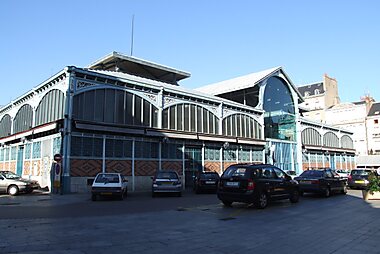
- Halles Centrales is the covered market, built in the 19th century. It is busiest on Saturday morning and sells cheese, meat, wine and fresh food.
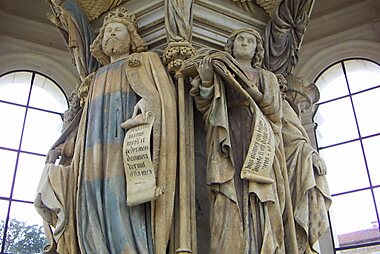
- Puits de Moïse is a large sculpture by Claus Sluter from around 1400. It stands at the former Chartreuse de Champmol, about 2 km west of the old town.
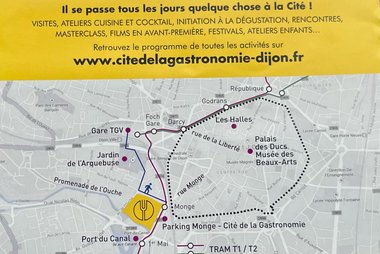
- Cité internationale de la gastronomie et du vin is a gastronomy and wine centre in the former general hospital. It opened in 2022 and has exhibitions on French food and wine.
Kiemelt listák

Dijon Essentials
Dijon, the historic seat of the Dukes of Burgundy, is defined by its well-preserved medieval and Renaissance architecture. This collection highlights the city's core landmarks, including the grand Palace of the Dukes and the symmetrical Place de la Libération. Key sites include the Gothic Church of Notre-Dame with its famous owl sculpture, the panoramic Tower of Philippe le Bon, and the iconic glazed-tile roofs of the Hôtel de Vogüé. From the 19th-century Les Halles market to the triumphal Porte Guillaume, these locations showcase the city's heritage as a regional power.
15 hely


Élmények
- Owl's Trail: Follow the owl markers on the pavement through the old town. The standard route has 22 stops, and longer loops lead to other districts and to the Well of Moses. Booklets are sold at the tourist office, which is on rue des Forges. See Dijon tourist office.
- Touch the owl: On the side wall of Église Notre-Dame, people stroke the small stone owl with the left hand and make a wish. The church clock also strikes the hours with mechanical figures.
- A day at the lake: Kir Lake is an artificial lake west of the city. You can walk around it, swim from the beach in summer, or hire a boat.
- Cycle or walk the canal: The towpath of the Burgundy Canal starts near the harbour at Port du Canal and leads out of the city into green countryside.
Túrák és tevékenységek
Dijon — Térkép

 Interaktív térkép megnyitása
Egynapos kirándulások
The best day trips from Dijon go south along the Côte d'Or wine road.
- Gevrey-Chambertin: about 15 min by train or car. A famous wine village with a medieval castle, at the start of the Côte de Nuits.
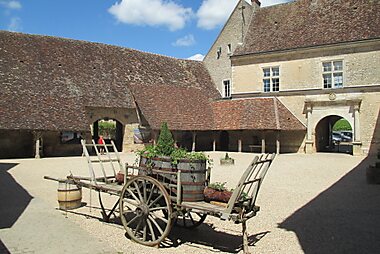
- Clos de Vougeot: about 25 min by car. Château de Clos-Vougeot is a Cistercian wine estate with a Renaissance manor, inside a walled vineyard.
- Nuits-Saint-Georges: about 20 to 30 min by train. A small wine town that is good for a tasting stop.
- Beaune: about 25 min by train. Beaune is the wine capital of Burgundy, with a medieval centre and the famous Hospices.
- Semur-en-Auxois: about 1 hour by car. A medieval town on a rock above a river, with towers and ramparts.
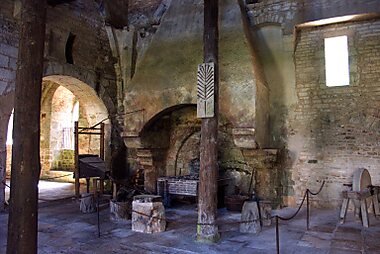
- Fontenay Abbey: about 1 hour by car. Cistercian Abbey of Fontenay is a well-preserved Cistercian abbey on the UNESCO list.
- Lyon: about 2 hours by train. See Lyon.
Cycle routes also link Dijon with Nuits-Saint-Georges and Beaune along the vineyards.
Mit érdemes felfedezni
More places to visit around Dijon:
Odajutás
- By train: Most visitors arrive at Dijon-Ville station, which is a short walk or tram ride from the centre. TGV trains from Paris-Gare de Lyon take about 1 hour 40 min. Lyon, Strasbourg and Lausanne are each about 2 hours away. Book on SNCF Connect.
- By air: There is no practical commercial airport in Dijon. Most visitors fly to Paris, Lyon or Geneva and continue by train or car.
- By car: Paris is about 3 hours away by the A6 and A38 motorways. Other motorways link Dijon to Lyon, Geneva, Besançon, Strasbourg and Nancy.
Közlekedés
- On foot: The old town is small and mostly pedestrian. The station, the palace, the market and the cathedral are all within about 15 min of each other.
- Tram and bus: Two tram lines, T1 and T2, and a bus network run across the city. Tap a contactless bank card or a compatible phone on the validator at every boarding. One trip costs 1.40 € and is valid for one hour. From the third trip in a day, the total is capped. Each card pays for one person only. See Divia for maps and passes.
- Cycling: The city is flat, and a canal path runs through it. It is a pleasant way to reach the lake and the vineyards.
Vezetés
- Is a car worth it?: Not for the city. The centre is compact and the tram is easy. A car is useful for small wine villages and for sights in the countryside.
- Parking: Underground car parks serve the old town, for example near Place Darcy. Some tram stops also have park-and-ride car parks.
- Restrictions: Much of the historic centre is for pedestrians. Follow the signs to the car parks.
Ételek és italok
Dijon is the home of Dijon mustard. Buy it fresh at the Maille shop on rue de la Liberté. Other local foods are gingerbread (pain d'épices), snails, beef in red wine, eggs poached in red wine sauce (œufs en meurette) and strong Époisses cheese. The local drink is the kir, white wine with blackcurrant liqueur, named after a former mayor of the city. Many smaller restaurants close on Sunday or Monday, so check opening days.
For a meal, go to the streets around Halles Centrales and Place François Rude, where restaurants and wine bars are close together. The market sells good picnic food. For a look into Burgundy food culture, see Cité internationale de la gastronomie et du vin.
Biztonság és egészség
Dijon is a safe city for visitors. The main risk is petty theft.
- Watch your bags in busy places, such as the station, the market and on trams.
- Keep valuables out of sight when you leave a car parked.
- Late at night, the area around the station is quieter and less pleasant than the old town.
- Tap water is safe to drink.
Történelem
Dijon began as a Roman settlement called Divio. It became a great court city under the Valois dukes of Burgundy, from the 14th century. Philip the Bold founded the Chartreuse de Champmol in 1383. Chapelle de la Chartreuse de Champmol is one of its remaining parts. Claus Sluter made the famous Puits de Moïse for the site. The dukes were among the richest rulers in Europe, and their court was a centre of art.
The duchy ended in 1477, when Charles the Bold died in battle, and Burgundy became part of France. Dijon stayed an important city. Nobles and lawyers of the regional parliament built town houses in the old town, such as the Hôtel de Vogüé, which has a courtyard with a coloured tile roof. In 1513 the city resisted a siege by Swiss and imperial troops. People credited the church of Notre-Dame for the result.
The neoclassical arch of Porte Guillaume was built in the 1780s on the site of an old city gate. The city was liberated from German occupation on 11 September 1944. UNESCO listed the historic centre in 2015.
Országinformációk
Quick practical facts for France at a glance:
- Pénznem
- euró EUR € · Bankkártyás fizetés · Széles körben elfogadott
- Segélyhívó számok
- 112
- Elektromos hálózat
- 230 V · 50 HzC típus / E típus
- Nyelvek
- francia
- Csapvíz
- Biztonságosan iható
- Közlekedés iránya
- Jobb oldali
- Nemzetközi előhívó
- +33


Dijon – Tervezd meg a napjaidat
Alakítsd át az útikönyvben szereplő helyeket valódi útitervvé okos útvonaltervezéssel, időbecslésekkel és mindennel, ami a tökéletes utazáshoz kell.


Kapcsolódó úti célok

Data: © OpenStreetMap contributors, Wikidata, Wikipedia, Tripomatic, Official websites. Tours by GetYourGuide. We earn commission from bookings. Travel guide generated with AI.
Tervezd meg utazásodat a Tripomatic segítségével
- Mesterséges intelligenciával támogatott tervezésKészíts egy kész napot egyetlen koppintással, bízd a kívánságlistád elosztását az utazásodban az AI-ra, vagy tervezz meg mindent csevegve.
- Utazási figyelmeztetésekHivatalos figyelmeztetések, zord időjárás, sztrájkok és természeti veszélyek az utazásod egyes napjain szereplő helyekre vonatkozóan.
- Munkaszüneti napok és eseményekNézd meg az utazásod napjaira eső ünnepeket, fesztiválokat és zárvatartásokat, és hogy mit jelentenek a terveid szempontjából.
- KöltségbecslésAI-alapú költségbontás, hogy már indulás előtt pontosan tudd, mekkora költségvetéssel számolj.
- Túrák és jegyekFoglalj vezetett túrákat, soron kívüli jegyeket és élményeket közvetlenül az útitervedben.