


La Romana
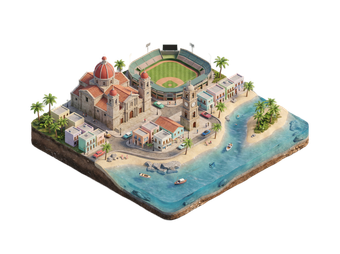
La Romana is a working sugar town and port on the southeast coast of the Dominican Republic. About 150,000 people live here, and the huge Central Romana sugar mill still shapes the town. Next to it lies Casa de Campo, a very large resort with famous golf courses, a marina and the stone village of Altos de Chavón.
Most visitors use La Romana as a base rather than a destination in itself. It suits travellers who want golf, calm beaches and easy boat trips to the islands of Isla Catalina and Saona Island. The town centre is plain and busy, but it gives a real view of Dominican daily life. Plan three to five days to combine the resort, the river and one or two island trips.

La Romana – Utazást tervezel?
Állítsd össze a napi útvonalad a Tripomatic alkalmazásban.


Mikor érdemes utazni
The best months are December to March, when it is warm, sunny and fairly dry. April and November are a little wetter. From May to October it is hotter and more humid, with frequent showers, and September and October are the wettest months. The hurricane season runs from June to November. The sea is warm enough for swimming all year.
The biggest local event is the winter baseball season, from mid-October to January.
Főbb látnivalók
The main sights are on the Casa de Campo side of the Chavón River, east of the town centre. One sight lies on the road west towards Santo Domingo.
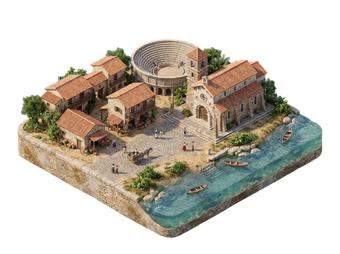
- Altos de Chavón is a copy of a 16th-century Mediterranean village, built of local stone from 1976 and opened in the early 1980s. It stands high on a cliff above the river, with cobbled lanes, craft shops, galleries and restaurants. Visitors who are not staying at Casa de Campo pay an entrance fee.
- St Stanislaus Church stands on the village's main square and is a popular wedding church. It is named after the patron saint of Poland and holds relics of the saint, a gift from Pope John Paul II.
- The Regional Museum of Archaeology in the village shows objects made by the Taíno, the island's first people.
- The open-air amphitheatre next to the village has 5,000 seats. Frank Sinatra sang at its opening concert in 1982, and it still hosts concerts.
- Río Chavón flows through a green gorge below the village to the sea.
- Marina Casa de Campo is a harbour village in Mediterranean style at the mouth of the river, with yachts, shops, cafés and restaurants.
- Cave of Wonders is a limestone cave about 10 km west of town, 25 m underground. Its walls carry almost 500 Taíno paintings and carvings. Ramps, good lighting and a lift make it one of the easiest caves in the country to visit.
Kiemelt listák

Élmények
Some of the best things to do here are activities rather than sights:
- A boat trip up the river: speedboat, kayak and canoe trips go up the Río Chavón through the jungle gorge below Altos de Chavón.
- Snorkelling and diving: Isla Catalina and Bayahibe have good reefs for snorkelling. Divers near Bayahibe can also visit shipwrecks such as the St. George.
- Golf by the sea: Teeth of the Dog, designed by Pete and Alice Dye and opened in 1971, runs along the rocky coast. It is one of the most famous golf courses in the Caribbean.
- Cigar rolling: Tabacalera de Garcia is one of the country's largest cigar factories. Its guided tours show how cigars are rolled by hand.
- Winter baseball: from mid-October to January, watch the Toros del Este play at Estadio Francisco Micheli.
Túrák és tevékenységek
La Romana — Térkép

Egynapos kirándulások
The best day trips go east along the coast to the islands and beaches of the national park.
- Isla Catalina (a short boat ride) lies about 2.4 km off the coast. Boat and catamaran tours from La Romana stop there for snorkelling over the reef and time on the beach.
- Bayahibe (≈20 min by car) is an old fishing village about 16 km east, with calm water and a relaxed seafront. Nearby Dominicus beach is the main resort beach of the area.
- Saona Island (full day by boat from Bayahibe) has long white beaches and palm trees. Most tours stop at a shallow sandbar, a "natural pool" with starfish, on the way back.
- Cotubanamá National Park (≈30 min by car, then on foot) protects dry forest, caves and coast. Short trails start near Bayahibe, and Saona Island is part of the park.
- Higüey (≈1 h by car) is home to the Basilica of Our Lady of La Altagracia, the country's most important pilgrimage church.
- Santo Domingo (≈1.5–2 h by car or bus) has the oldest colonial quarter in the Americas, the Ciudad Colonial.
Mit érdemes felfedezni
Nearby destinations:
- Around La Romana: Altos de Chavón, Bayahibe and Isla Catalina.
- East coast and islands: Saona Island, Cotubanamá National Park and Higüey.
- West towards the capital: San Pedro de Macorís, Boca Chica and Santo Domingo.
Odajutás
- By air: La Romana International Airport (LRM) is about 10 km east of the town, close to Casa de Campo. It has a few scheduled flights, mainly from the United States, and many private jets. Most visitors fly into Punta Cana (PUJ), about 1 hour away by car, or Santo Domingo Las Américas (SDQ), about 1.5 hours away. Book a transfer, or take a taxi and agree the fare first.
- By sea: many cruise ships call at the cruise terminal on the east bank of the La Romana River (Río Dulce), close to the town centre and Casa de Campo. Some ships also stop at Isla Catalina.
- By bus: express coaches link La Romana with Santo Domingo, and the trip takes about 1.5–2 hours.
- By train: there are no passenger trains.
Közlekedés
- Taxis: taxis have no meters, so agree the price before you get in. Your hotel can call a reliable driver.
- Local buses: shared minibuses (guaguas) and shared cars (carros públicos) run on fixed routes. They are very cheap, but crowded and without timetables.
- Inside Casa de Campo: the resort is very large, so ask your hotel how to get around it.
- On foot: the town centre around the main square is walkable by day. The sights are spread out, so you need a car, a taxi or a tour to reach them. Avoid motorbike taxis (motoconchos).
Vezetés
- Is a car worth it? Not for a resort stay, where transfers and tours cover most needs. A rental car is useful if you want to explore the coast, the cave and Higüey on your own.
- Roads: the Autovía del Este and Autovía del Coral are fast, modern highways. Local driving is fast and unpredictable, and motorbikes pass on both sides. Avoid driving at night.
- Tolls: the highways have toll booths. Keep Dominican pesos in cash ready.
- Parking: Altos de Chavón, the marina and the cave have their own car parks. In the town centre, use a guarded car park and leave nothing visible in the car.
Ételek és italok
Food here is everyday Dominican home cooking: rice and beans with stewed meat at lunch, fried fish and plantains near the sea, and sancocho, a rich meat stew, at weekends. Fresh fish and lobster are the local treat along the coast.
For an evening out, most visitors eat in the restaurants of Altos de Chavón, which have terraces over the river, or around the harbour of Marina Casa de Campo. For cheaper local food, try the small cafeterias and street stands around the main square in the town centre.
Biztonság és egészség
La Romana is generally calm for visitors, and Casa de Campo and the resort areas are well guarded. The town itself has ordinary street crime, so take normal care.
- Theft: thieves on motorbikes sometimes grab phones and bags. Keep your phone out of sight near the road, and do not walk alone through quiet streets at night.
- Cards: card cloning happens. Keep your card in sight when you pay, and use ATMs inside banks or shopping centres.
- Boat trips: safety standards vary. Choose an established operator, and check that life jackets are on board.
- Sea and sun: many beaches have no lifeguards. The sun is very strong all year, so use sun cream and drink plenty of water.
Történelem
Long before the Spanish arrived, the Taíno people lived along this coast. Their paintings still cover the walls of Cave of Wonders. At the end of the 17th century, the pirate Captain William Kidd left his captured ship, the Quedagh Merchant, off Catalina Island. Its remains were found in shallow water in 2007.
The modern town grew around sugar. The Central Romana mill opened in 1917, and the company came to own most of the town. In the 1960s the American firm Gulf+Western bought the mill, and in the mid-1970s it opened the Casa de Campo resort.
The company chairman, Charles Bluhdorn, started Altos de Chavón in 1976. Stone from a road cutting was used to build a "16th-century" village, designed by the Italian Roberto Copa. In 1984 the sugar company and the resort passed to new owners, and sugar is still important to the town.
Országinformációk
Quick practical facts for the Dominican Republic at a glance:
- Pénznem
- dominikai peso DOP · Bankkártyás fizetés · Gyakran elfogadott
- Segélyhívó számok
- 911
- Elektromos hálózat
- 110 V · 60 HzA típus / B típus
- Nyelvek
- spanyol
- Csapvíz
- Nem iható
- Közlekedés iránya
- Jobb oldali
- Nemzetközi előhívó
- +1809

La Romana – Tervezd meg a napjaidat
Alakítsd át az útikönyvben szereplő helyeket valódi útitervvé okos útvonaltervezéssel, időbecslésekkel és mindennel, ami a tökéletes utazáshoz kell.


Kapcsolódó úti célok




Data: © OpenStreetMap contributors, Wikidata, Wikipedia, Tripomatic, Official websites, geoBoundaries (CC BY 4.0). Tours by GetYourGuide. We earn commission from bookings. Travel guide generated with AI.