



Germania
Germany sits at the center of Europe, from the North Sea coast down to the Bavarian Alps. Its character shifts by region: historic river towns, forested hills, and centuries of contested history shaped by 16 separate states. Cities like Berlin, Munich, and Hamburg each feel distinct rather than provincial, with their own dialects, food, and pace of life.
Germany suits travelers who like a mix of culture, history, and structure — reliable trains, walkable old towns, and a deep museum and classical music tradition. First-time visitors usually split a trip between one or two major cities and a scenic region such as Bavaria or the Rhine valley.


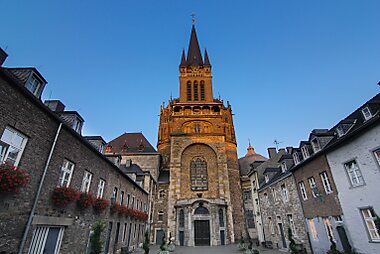
Germania – Stai pianificando un viaggio?
Costruisci il tuo itinerario giorno per giorno nell'app Tripomatic.


Denaro e pagamenti
Germany runs more on cash than many neighboring countries. Card and contactless payments are common in cities, but many bakeries, small restaurants, market stalls, and some transport ticket machines still expect cash. Carry small notes and coins for these. ATMs are widespread — withdraw from bank-branded machines to avoid high fees charged by independent operators.
Elenchi in evidenza


Theme Parks, Water Parks & Zoos
This selection across Germany features diverse family attractions, from the historical Rostock Zoo, established in 1899 and housing over 4,500 animals, to adrenaline-focused amusement parks like Holiday Park in Haßloch. The collection includes specialized wildlife sanctuaries like the Westküstenpark & Robbarium, known for its seal habitat, and the expansive Animal Nature Park in the Bavarian Forest. Visitors can also find varied aquatic facilities, ranging from the seaside thermal baths of Ostseetherme to scenic alpine swimming spots like Liegewiese Geroldsee.
12 luoghiTour e attività
Germania — Mappa

Mance
5-10%
arrotondamento
arrotondamento
1-2 EUR/giorno
5-10%
Round up the bill or add 5-10% when paying, and tell the server the total you want to pay rather than leaving cash on the table. Tipping is not expected at bars for a single drink, though rounding up is common. Taxi drivers and hotel staff appreciate a small rounded-up tip, but it stays optional.
Elettricità
Germany uses Type C and F plugs at 230 V / 50 Hz — standard European sockets; most phone and laptop chargers work without an adapter.
Lingua
Germany's official language is German. English is widely spoken in cities, tourist areas, and among younger Germans, but less so in rural regions and among older generations. Learning a few basic phrases is appreciated.
Connettività
Buying a prepaid SIM or eSIM in Germany requires ID verification by law — show your passport in store, or complete an online video-ID check when activating remotely. This applies to every provider.
Coverage is strong in cities and along major routes, but weaker in some rural and forested areas. International phones generally work without issue on German networks.
Sicurezza ed emergenze
Germany is a safe country for tourists. The most common problems are pickpocketing on crowded transport, at Christmas markets, and around major train stations — keep bags zipped and in sight. Political demonstrations occasionally close streets in big cities; check local news if traveling during one.
Salute
Tap water is safe to drink throughout the country. Pharmacies (Apotheken, marked with a red "A") are common and staffed by trained pharmacists who can advise on minor ailments. Most keep standard weekday retail hours, with a rotating on-call pharmacy open nights and Sundays in each area. No special vaccinations are required for entry.
Visti e ingresso
Germany is part of the Schengen Area. Citizens of the EU, UK, US, Canada, Australia, and many other countries can enter visa-free for stays of up to 90 days within any 180-day period, for tourism or business. Travelers from countries without a visa-free agreement need a Schengen visa, applied for in advance through a German consulate or visa center.
Visa and entry requirements change frequently. Verify current requirements with the official immigration authority or your country's embassy before travel.
Norme di comportamento
Germans value punctuality — arrive on time for reservations, tours, and appointments. Greetings are a firm handshake with direct eye contact; first names are used only once invited. Jaywalking is frowned upon, even when no cars are near, especially around children.
Quiet hours (Ruhezeiten), typically Sunday and late evenings, are taken seriously in residential areas — avoid loud noise, including vacuuming or drilling. Dress modestly when visiting churches and other religious sites.
Festività e orari di apertura
Public holidays vary by state, and some are observed only in Catholic-majority regions such as Bavaria. On national holidays, most shops close, though restaurants and tourist attractions usually stay open.
Most shops close on Sundays, including supermarkets — plan grocery shopping for Saturday. Many smaller shops also close for a lunch break or shut by early evening on weekdays.
Come muoversi
- By train: Germany's rail network is dense and reliable, run mainly by Deutsche Bahn. Book long-distance ICE trains ahead for the best fares; regional day tickets often cover multiple travelers on regional trains. Book via Deutsche Bahn.
- By air: domestic flights rarely save time over rail between major cities once airport transfers are counted. They are only worth it for long north-south routes, such as Hamburg to Munich.
- By bus: long-distance coaches connect smaller towns not well served by rail, usually cheaper but slower than trains.
Within cities, Berlin, Munich, and Hamburg each run extensive U-Bahn, S-Bahn, or tram networks, with a single ticket type valid across buses, trams, and trains within a zone.
Guidare
- Key rules: many motorway sections carry no general speed limit — watch for signed limits near cities, construction, and weather warnings. Winter tires are legally required whenever roads are icy or snowy, with no fixed calendar dates. At unmarked intersections, traffic from the right has priority unless signs say otherwise.
- Tolls and vignettes: no vignette is needed for cars; only heavy trucks pay a distance-based toll.
- Congestion and LEZs: many city centers have Low Emission Zones (Umweltzone) — a car needs a green Umweltplakette sticker to enter. Rental cars usually already carry one, but confirm with the rental company.
- Parking: street parking in city centers is usually metered, paid by meter or app. Blue-lined zones require a parking disc (Parkscheibe) showing your arrival time.
- Fuel: stations are self-service; pay by card at the pump or inside. Petrol is labeled Super, Super E10, or Super Plus; diesel is labeled Diesel.
- Electric vehicles: charging stations are common along motorways and in cities, with major networks including Ionity, EnBW, and Aral pulse. Most require an app or RFID card — download the relevant app before the trip.
Cibo e bevande
Germans typically eat a simple breakfast of bread rolls, cold cuts, cheese, and jam, often with coffee. Lunch was traditionally the main meal of the day, though many workers now eat something light at midday and save the bigger meal for dinner around 6-8pm. Sunday lunch with family, often a roast, remains a tradition in many households.
Regional dishes vary widely: Bavaria is known for Schnitzel and Weisswurst, the Rhineland for Sauerbraten, and the north for fish dishes shaped by the Baltic and North Sea. Bread culture runs deep — bakeries are part of daily life for most Germans, and the country registers thousands of distinct bread varieties. Beer culture varies by region too, from Bavarian Helles and Weissbier to Cologne's light Kölsch, each traditionally served in its own glass. Restaurants range from simple Gaststätten serving traditional fare to international options in bigger cities; canteens (Kantinen) are common for workday lunches.
Cosa esplorare
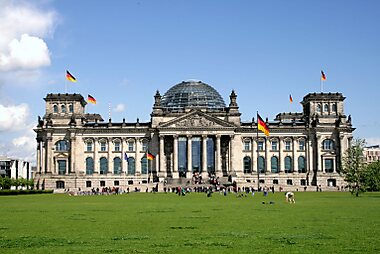
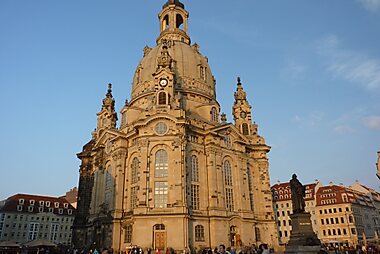
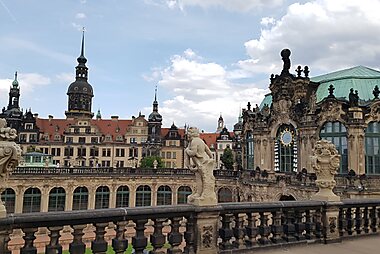
Germany's cities each have a distinct character. Berlin is the capital, a city shaped by 20th-century history, with major museums and a famous nightlife scene. Munich pairs Bavarian tradition with a wealthy, orderly feel, and serves as the gateway to the Alps. Hamburg is a maritime trading city built around its harbor and canals. Cologne is known for its cathedral and relaxed Rhineland character, while Frankfurt is Germany's financial center, with a skyline unlike anywhere else in the country. Dresden was rebuilt after wartime destruction into one of the country's finest baroque cityscapes.
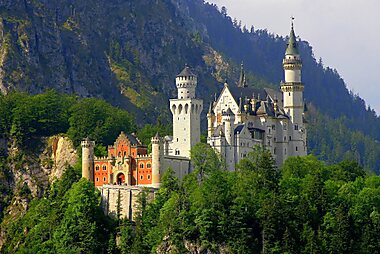
For scenery and countryside, Bavaria covers the Alps, lakes, and fairy-tale castles in the south, while the Rhine valley further west is known for vineyards and hilltop castles above the river.
Germania – Pianifica il tuo viaggio
Scegli i luoghi che vuoi vedere e Tripomatic li trasforma in un itinerario giorno per giorno, con percorsi intelligenti, stime dei tempi e tutto ciò che occorre per un viaggio perfetto.




