Tripomatic

Germany

Country ·🇩🇪 Germany

Germany sits at the center of Europe, from the North Sea coast down to the Bavarian Alps. Its character shifts by region: historic river towns, forested hills, and centuries of contested history shaped by 16 separate states. Cities like Berlin, Munich, and Hamburg each feel distinct rather than provincial, with their own dialects, food, and pace of life.

Germany suits travelers who like a mix of culture, history, and structure — reliable trains, walkable old towns, and a deep museum and classical music tradition. First-time visitors usually split a trip between one or two major cities and a scenic region such as Bavaria or the Rhine valley.

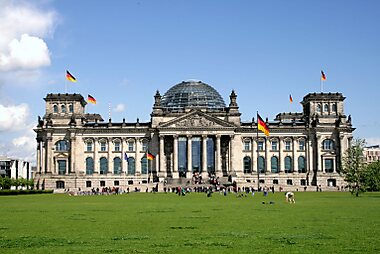
Germany

Planning a Trip to Germany?

Build your day-by-day itinerary in the Tripomatic app.

Money & payments

EUR · €
Commonly accepted
1 EUR ≈ 1.157 USD 1 USD ≈ 0.864 EUR

Germany runs more on cash than many neighboring countries. Card and contactless payments are common in cities, but many bakeries, small restaurants, market stalls, and some transport ticket machines still expect cash. Carry small notes and coins for these. ATMs are widespread — withdraw from bank-branded machines to avoid high fees charged by independent operators.

Hotel (double room, per night)mid-range hotel, room for two per night
90 – 180 €$104.16 – $208.33
Dinner (mid-range restaurant)mid-range restaurant, one person, no drinks
15 – 30 €$17.36 – $34.72
Inexpensive mealinexpensive restaurant or street food, one person
8 – 14 €$9.26 – $16.20
Local beer0.5L draught
4 – 6 €$4.63 – $6.94
Coffeeespresso or cappuccino in a café
3 – 4.5 €$3.47 – $5.21
Water0.5L, shop
1.5 – 2.5 €$1.74 – $2.89
Transit ticketsingle, city
3 – 3.5 €$3.47 – $4.05
Taxi (per km)per km
2 – 2.5 €$2.31 – $2.89

Explore Germany

Deutschland's Absolute Essentials

Deutschland's Absolute Essentials

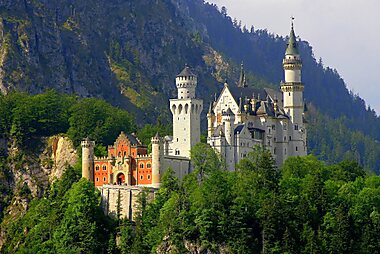
This collection spans Germany’s diverse heritage, from the Gothic spires of Cologne Cathedral and the neo-romanesque Neuschwanstein Castle to the medieval half-timbered houses of Rothenburg’s Plönlein. Berlin’s history is central, featuring the neoclassical Brandenburg Gate, the Reichstag’s glass dome, and Cold War sites like the East Side Gallery and DDR Museum. The list also includes the poignant Dachau Memorial and the historic bridges and squares of Heidelberg, offering a comprehensive look at the country’s architectural and political evolution.

14 places
Editor's Choice: Berlin Highlights

Editor's Choice: Berlin Highlights

This selection spans Berlin’s complex history and Germany’s diverse cultural landscape. Berlin highlights include the Bebelplatz memorial, the interactive DDR Museum exploring East German life, and Teufelsberg, an artificial hill built from wartime debris. The city also hosts a botanical garden with 20,000 plant species. Beyond the capital, Cologne offers modern art at Museum Ludwig and medieval collections at the Wallraf-Richartz Museum. Southern landmarks include the historic Kehlsteinhaus summit, the iconic half-timbered Plönlein in Rothenburg, and the Marienbrücke overlooking Neuschwanstein Castle.

10 places
Germany's Hidden Gems

Germany's Hidden Gems

Explore Germany’s architectural and historical curiosities, from the Rakotzbrücke’s optical illusion in Gablenz to the massive Valentin submarine pens in Bremen. This collection features unique sites like Passau’s mosaic-covered Glasscherbenvilla and Heidelberg’s historic student prison. Discover 11th-century Romanesque architecture at Cologne's St. Maria im Kapitol, the world’s largest wine barrel in Bad Dürkheim, and specialized museums dedicated to fragrance and legal history. These locations highlight diverse regional heritage, ranging from Nuremberg’s Medieval Crime Museum to the modern design of Hamburg’s Elbphilharmonie.

18 places
German Architectural Wonders

German Architectural Wonders

This collection showcases Germany’s diverse architectural evolution, spanning from the 10th-century Romanesque churches of Cologne to the high-tech glass structures of Berlin’s Sony Center. It features iconic Gothic landmarks like the Cologne Cathedral and the brick-built St. Nicholas Church, alongside Neoclassical masterpieces by Karl Friedrich Schinkel on Berlin’s Museum Island. Modern innovation is represented by the organic design of the Berlin Philharmonic and the deconstructivist Elbe Philharmonic Hall in Hamburg. The list also includes Neo-Romanesque fairy-tale designs and UNESCO-listed landscapes.

17 places
Castles and Fortifications

Castles and Fortifications

This collection spans centuries of German defensive and residential architecture, from the medieval ruins of Rheinfels and the high-altitude Burg Lauenstein to the 19th-century Romanticism of Neuschwanstein. It includes significant historical sites like the Cold War-era Berlin Wall and Cecilienhof, the location of the Potsdam Conference. The list features diverse structures including Renaissance palaces like Schloss Hartenfels, moated manor houses, and strategic fortifications such as Marienberg Fortress.

20 places
Historic Churches and Places of Worship

Historic Churches and Places of Worship

This collection spans over a millennium of architectural evolution across Germany, from the 10th-century Romanesque foundations of Cologne’s St. Andrew’s to the 19th-century Moorish Revival style of Berlin’s New Synagogue. It features UNESCO-listed Gothic masterpieces like Cologne Cathedral alongside Baroque monuments and former monastic sites. These landmarks illustrate diverse religious traditions, including Roman Catholic, Lutheran, and Jewish heritage, with many now serving dual roles as active places of worship, historical museums, and acoustic concert halls.

14 places
Museums and Art Galleries

Museums and Art Galleries

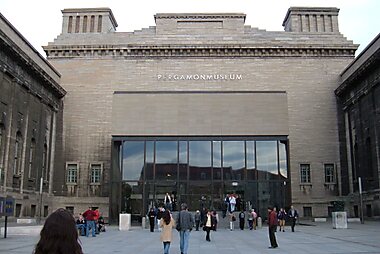
This collection spans Germany’s complex history and artistic evolution. It features Berlin’s Museum Island, home to the Neoclassical Altes Museum and the Egyptian collections of the Neues Museum. Beyond the capital, the list includes Cologne’s Museum Ludwig, housing extensive modern art and Picasso works, and the Medieval Crime and Justice Museum in Rothenburg. Significant historical sites are also included, such as the DDR Museum’s interactive exhibits on East German life and the Dachau Concentration Camp Memorial Site.

18 places
Parks and Viewpoints

Parks and Viewpoints

This collection showcases Germany's diverse landscapes and architectural vantage points. In Berlin, the Reichstag’s glass dome and the man-made Teufelsberg offer panoramic city views, while the Tiergarten and Potsdam’s New Garden provide historic green spaces. Southern highlights include the Marienbrücke for its perspective of Neuschwanstein Castle and the Andechs Monastery in Bavaria. From the 240-meter Rhine Tower in Düsseldorf to the coastal observation towers of Cape Arkona, these locations span the country's history from medieval fortifications to modern telecommunications.

14 places
Regional Cuisine and Restaurants

Regional Cuisine and Restaurants

Germany’s culinary heritage is showcased through historic landmarks like the Kehlsteinhaus and the medieval tavern Zur Höll. This collection features traditional brewing traditions at Cologne’s Früh am Dom and the Benedictine Andechs Monastery, alongside Leipzig’s Bayerischer Bahnhof, the country's oldest preserved railway station. From fresh Baltic seafood in Usedom to regional Brandenburg flavors in the Spreewald and international Vietnamese or Italian fare, the list highlights the diverse gastronomic landscape across various German federal states.

18 places
Theme Parks, Water Parks & Zoos

Theme Parks, Water Parks & Zoos

This selection across Germany features diverse family attractions, from the historical Rostock Zoo, established in 1899 and housing over 4,500 animals, to adrenaline-focused amusement parks like Holiday Park in Haßloch. The collection includes specialized wildlife sanctuaries like the Westküstenpark & Robbarium, known for its seal habitat, and the expansive Animal Nature Park in the Bavarian Forest. Visitors can also find varied aquatic facilities, ranging from the seaside thermal baths of Ostseetherme to scenic alpine swimming spots like Liegewiese Geroldsee.

12 places

Tours & Activities

Map of Germany

Tipping

RestaurantExpected

5-10%

BarOptional

round up

TaxiOptional

round up

HotelOptional

1-2 EUR/day

Tour guideOptional

5-10%

Round up the bill or add 5-10% when paying, and tell the server the total you want to pay rather than leaving cash on the table. Tipping is not expected at bars for a single drink, though rounding up is common. Taxi drivers and hotel staff appreciate a small rounded-up tip, but it stays optional.

Electricity

Germany uses Type C and F plugs at 230 V / 50 Hz — standard European sockets; most phone and laptop chargers work without an adapter.

Type C
Type F
230 V · 50 Hz

Language

Germany's official language is German. English is widely spoken in cities, tourist areas, and among younger Germans, but less so in rural regions and among older generations. Learning a few basic phrases is appreciated.

HelloGuten Tag
Thank youDanke
PleaseBitte
Excuse meEntschuldigung
YesJa
NoNein
How much?Wie viel kostet das?
CheersProst!
HelpHilfe!
GoodbyeAuf Wiedersehen
Do you speak English?Sprechen Sie Englisch?
SorryEs tut mir leid
Where is…?Wo ist...?
I don't understandIch verstehe nicht
The menu, pleaseDie Speisekarte, bitte
The bill, pleaseDie Rechnung, bitte

Staying connected

Buying a prepaid SIM or eSIM in Germany requires ID verification by law — show your passport in store, or complete an online video-ID check when activating remotely. This applies to every provider.

Coverage is strong in cities and along major routes, but weaker in some rural and forested areas. International phones generally work without issue on German networks.

Safety & emergencies

Germany is a safe country for tourists. The most common problems are pickpocketing on crowded transport, at Christmas markets, and around major train stations — keep bags zipped and in sight. Political demonstrations occasionally close streets in big cities; check local news if traveling during one.

General emergency112
Police110
Ambulance112
Fire brigade112

Health

Tap water is safe to drink throughout the country. Pharmacies (Apotheken, marked with a red "A") are common and staffed by trained pharmacists who can advise on minor ailments. Most keep standard weekday retail hours, with a rotating on-call pharmacy open nights and Sundays in each area. No special vaccinations are required for entry.

Visas & entry

Germany is part of the Schengen Area. Citizens of the EU, UK, US, Canada, Australia, and many other countries can enter visa-free for stays of up to 90 days within any 180-day period, for tourism or business. Travelers from countries without a visa-free agreement need a Schengen visa, applied for in advance through a German consulate or visa center.

Visa and entry requirements change frequently. Verify current requirements with the official immigration authority or your country's embassy before travel.

Etiquette

Germans value punctuality — arrive on time for reservations, tours, and appointments. Greetings are a firm handshake with direct eye contact; first names are used only once invited. Jaywalking is frowned upon, even when no cars are near, especially around children.

Quiet hours (Ruhezeiten), typically Sunday and late evenings, are taken seriously in residential areas — avoid loud noise, including vacuuming or drilling. Dress modestly when visiting churches and other religious sites.

Holidays & opening hours

Public holidays vary by state, and some are observed only in Catholic-majority regions such as Bavaria. On national holidays, most shops close, though restaurants and tourist attractions usually stay open.

Jan 1New Year's Day
movable — Mar/AprGood Friday
movable — Mar/AprEaster Monday
May 1Labour Day
movable — May/Jun (39 days after Easter, always Thursday)Ascension Day
movable — May/Jun (50 days after Easter)Whit Monday
Oct 3German Unity Day
Dec 25Christmas Day
Dec 26St. Stephen's Day
Epiphany (Jan 6), Corpus Christi, Assumption (Aug 15), Reformation Day (Oct 31), and All Saints' Day (Nov 1) apply in some federal states onlyRegional holidays

Most shops close on Sundays, including supermarkets — plan grocery shopping for Saturday. Many smaller shops also close for a lunch break or shut by early evening on weekdays.

Getting around

  • By train: Germany's rail network is dense and reliable, run mainly by Deutsche Bahn. Book long-distance ICE trains ahead for the best fares; regional day tickets often cover multiple travelers on regional trains. Book via Deutsche Bahn.
  • By air: domestic flights rarely save time over rail between major cities once airport transfers are counted. They are only worth it for long north-south routes, such as Hamburg to Munich.
  • By bus: long-distance coaches connect smaller towns not well served by rail, usually cheaper but slower than trains.

Within cities, Berlin, Munich, and Hamburg each run extensive U-Bahn, S-Bahn, or tram networks, with a single ticket type valid across buses, trams, and trains within a zone.

Driving

  • Key rules: many motorway sections carry no general speed limit — watch for signed limits near cities, construction, and weather warnings. Winter tires are legally required whenever roads are icy or snowy, with no fixed calendar dates. At unmarked intersections, traffic from the right has priority unless signs say otherwise.
  • Tolls and vignettes: no vignette is needed for cars; only heavy trucks pay a distance-based toll.
  • Congestion and LEZs: many city centers have Low Emission Zones (Umweltzone) — a car needs a green Umweltplakette sticker to enter. Rental cars usually already carry one, but confirm with the rental company.
  • Parking: street parking in city centers is usually metered, paid by meter or app. Blue-lined zones require a parking disc (Parkscheibe) showing your arrival time.
  • Fuel: stations are self-service; pay by card at the pump or inside. Petrol is labeled Super, Super E10, or Super Plus; diesel is labeled Diesel.
  • Electric vehicles: charging stations are common along motorways and in cities, with major networks including Ionity, EnBW, and Aral pulse. Most require an app or RFID card — download the relevant app before the trip.
Drive on the right
Urban50 km/h
Rural100 km/h
Motorway130 km/h
No motorway vignette needed
No vignette needed for cars. Many Autobahn sections have no general speed limit; 130 km/h is the recommended speed (Richtgeschwindigkeit). Heavy goods vehicles pay a distance-based toll via the Toll Collect system.
Petrol: Super, Super E10, Super PlusDiesel: Diesel

Food & drink

Germans typically eat a simple breakfast of bread rolls, cold cuts, cheese, and jam, often with coffee. Lunch was traditionally the main meal of the day, though many workers now eat something light at midday and save the bigger meal for dinner around 6-8pm. Sunday lunch with family, often a roast, remains a tradition in many households.

Regional dishes vary widely: Bavaria is known for Schnitzel and Weisswurst, the Rhineland for Sauerbraten, and the north for fish dishes shaped by the Baltic and North Sea. Bread culture runs deep — bakeries are part of daily life for most Germans, and the country registers thousands of distinct bread varieties. Beer culture varies by region too, from Bavarian Helles and Weissbier to Cologne's light Kölsch, each traditionally served in its own glass. Restaurants range from simple Gaststätten serving traditional fare to international options in bigger cities; canteens (Kantinen) are common for workday lunches.

Lunch
Doner Kebab  Döner KebabA sandwich of roasted meat, salad, and sauce in flatbread, invented by Turkish immigrants in Berlin and now a national staple.
Dinner
SchnitzelA thin, breaded and fried cutlet, usually pork, served with potatoes or fries and a lemon wedge.
SauerbratenA pot roast marinated for days in vinegar and spices before slow cooking, served with red cabbage and dumplings.
Snacks & street food
BratwurstA grilled or fried pork sausage, often served in a bread roll with mustard, sold at stands nationwide.
CurrywurstSliced sausage topped with curry-spiced ketchup, a Berlin invention now popular across the country.
Pretzel  BrezelA large, chewy salted bread pretzel, especially common in Bavaria, often eaten with butter or cheese.
Sweets & desserts
Black Forest Cake  Schwarzwälder KirschtorteA layered chocolate sponge cake with cherries, cherry liqueur, and whipped cream.
Drinks
Beer  BierGermany brews hundreds of regional styles, from Bavarian Weissbier to Cologne's Kölsch, each tied to its home city.
Gluhwein  GlühweinMulled, spiced red wine served hot, a staple of winter and Christmas markets.
ApfelschorleApple juice mixed with sparkling water, the everyday non-alcoholic drink of choice.

Where to explore

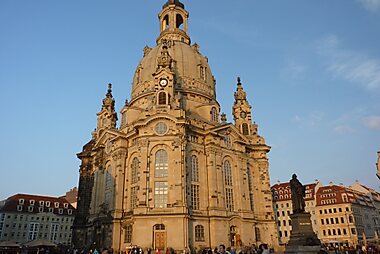
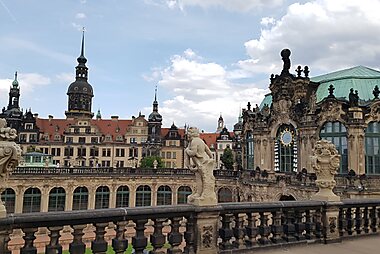
Germany's cities each have a distinct character. Berlin is the capital, a city shaped by 20th-century history, with major museums and a famous nightlife scene. Munich pairs Bavarian tradition with a wealthy, orderly feel, and serves as the gateway to the Alps. Hamburg is a maritime trading city built around its harbor and canals. Cologne is known for its cathedral and relaxed Rhineland character, while Frankfurt is Germany's financial center, with a skyline unlike anywhere else in the country. Dresden was rebuilt after wartime destruction into one of the country's finest baroque cityscapes.

For scenery and countryside, Bavaria covers the Alps, lakes, and fairy-tale castles in the south, while the Rhine valley further west is known for vineyards and hilltop castles above the river.

Berlin
Drive
Munich
Drive
Hamburg

Plan Your Trip to Germany

Pick the places you want to see and Tripomatic turns them into a day-by-day route, with smart routing, time estimates, and everything you need for a perfect trip.


3M+ downloads · 4.6 stars · 15 years of trip planning
QR code
Scan to download the app

Related destinations