


Hannover
Hanover is the capital of Lower Saxony. It is a green, calm city with a small historic core and large parks. Most of the old centre was destroyed in World War II, so the city mixes rebuilt old buildings with modern ones.
It suits a trip of two or three days. The main draws are the Baroque gardens of Herrenhäuser Gärten, the city lake Maschsee, the city forest and good art museums. It is also a base for day trips to old towns nearby. Hanover is a big trade-fair city, so business visitors fill many hotels in some weeks.
The philosopher Gottfried Wilhelm Leibniz lived and worked here for decades. The city is also known as the home of the Leibniz biscuit.

Hannover – Stai pianificando un viaggio?
Costruisci il tuo itinerario giorno per giorno nell'app Tripomatic.


Quando andare
Late spring to early autumn is the best time. Days are mild and warm, and the gardens and lake are at their best. Winter is cold and grey, but the Christmas markets in the old town are a good reason to come.
The biggest annual event is the Schützenfest, a marksmen's festival and funfair. It runs for about ten days from late June to early July and draws around two million visitors. Book a hotel early for these dates and for the big trade fairs, such as Hannover Messe in spring.
Official events calendar: Hannover tourism board
Periodo migliore per la visita: giugno, agosto, settembre
Attrazioni principali
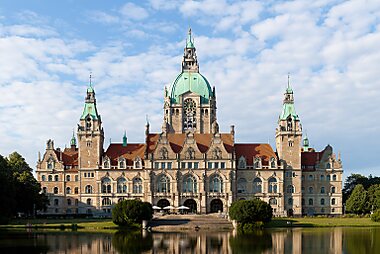
- Neues Rathaus is the large city hall from 1913. A curved lift rises inside the dome to a viewing gallery. In the entrance hall, four city models show Hanover in 1689, 1939, 1945 and today.
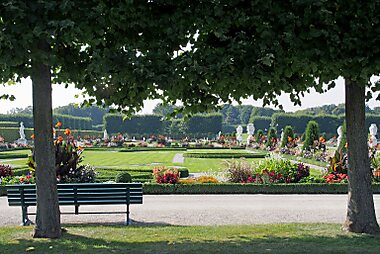
- Herrenhäuser Gärten are the main attraction of the city. The Great Garden is a formal Baroque garden with a very tall fountain. The Berggarten is a botanical garden next to it, and the grotto by Niki de Saint Phalle is full of colourful mosaics.
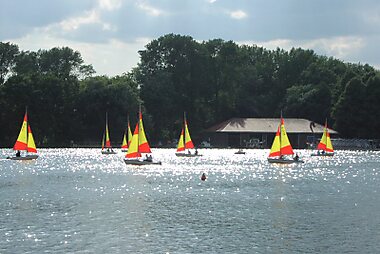
- Maschsee is an artificial lake from the 1930s. A path of about 6 km goes around it. You can walk, rent a boat or swim at the beach in summer.
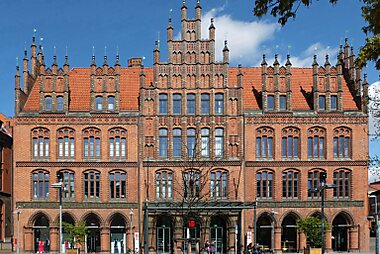
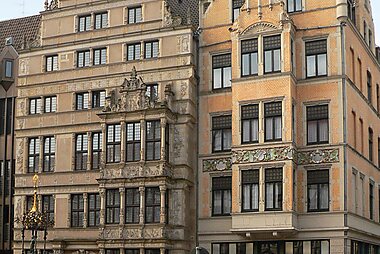
- Altes Rathaus is a Gothic brick town hall from the Middle Ages. It stands in the rebuilt old town, next to the main church.
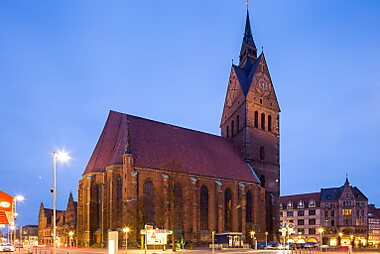
- Marktkirche is the main church of the old town. It is a Gothic brick church that was rebuilt after the war.
- Sprengel Museum stands on the shore of the Maschsee. It holds a major collection of 20th-century art, with works by Picasso, Klee and Kurt Schwitters.
- Niedersächsisches Landesmuseum combines art, natural history and archaeology in one building. The art gallery has works by Rembrandt, Rubens and Dürer, and Caspar David Friedrich's Times of Day cycle.
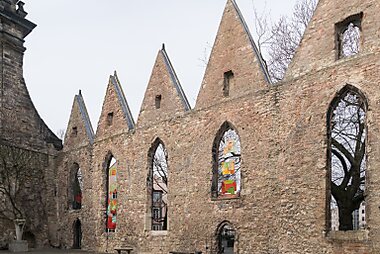
- Aegidienkirche is a church ruin from the war. It is kept as a memorial and stands in the middle of the city.
Elenchi in evidenza


Cosa provare
These experiences are special to Hanover.
- Follow the Red Thread. A red line on the pavement is 4.2 km long and links 36 sights in the centre. It is a self-guided tour of the old town.
- Come for the Maschseefest. The lake festival lasts almost three weeks in summer, with food, music and boats.
- Walk or cycle in the Eilenriede. It is a 640-hectare city forest with about 80 km of paths.
- Visit a Christmas market in the old town in December. The stalls stand around the old town hall and the main church.
Tour e attività
Hannover — Mappa

 Apri la mappa interattiva
Gite in giornata
Several old towns are close by. Most are easy to reach by train.
- Brunswick: about 30 to 60 minutes by train. The old castle square has the Brunswick Lion, a bronze statue from the 12th century. The city has a cathedral and museums.
- Hildesheim: about 30 to 40 minutes by train. The cathedral and St. Michael's Church are UNESCO World Heritage sites. The market square is rebuilt in the old style.
- Celle: about 40 to 50 minutes by train. The old town has hundreds of half-timbered houses. The ducal palace is also worth a visit.
- Hamelin: about 1 hour by S-Bahn line S5. This is the town of the Pied Piper legend. The old town has many half-timbered houses in the Weser Renaissance style.
- Goslar: about 1.5 hours by regional train. The old town and the old Rammelsberg mine are UNESCO World Heritage sites. It is the gateway to the Harz mountains.
Cosa esplorare
These destinations in Lower Saxony are farther away. Most need a car or an early start.
- Soltau is in the Lüneburg Heath, to the north.
- Luneburg is a well-preserved old salt town to the north-east.
- Osterode am Harz and Sankt Andreasberg are in the Harz mountains, to the south-east. They suit hiking in summer and winter sports.
- Cuxhaven is on the North Sea coast, far to the north.
- Eastern Friesland is a coastal region in the north-west, close to the Dutch border.
Come arrivare
- By air: Hannover Airport (HAJ) is about 11 km north of the centre. S-Bahn line S5 runs to the main station every 30 minutes and takes about 17 minutes.
- By train: Hanover is a major ICE hub. Hamburg is about 1 hour away and Berlin about 2 hours. Frankfurt is about 3 hours away and Munich about 4.5 hours. Book on Deutsche Bahn. During big trade fairs, many long-distance trains also stop at Hannover Messe/Laatzen station.
- By bus: Long-distance coaches stop at the central bus station next to the main station.
Come muoversi
- Public transit: Üstra runs the Stadtbahn (light rail, partly underground) and the buses. The S-Bahn is part of the same fare system. Buy tickets in the Üstra app or at ticket machines. See Üstra for fares and the route planner.
- On foot and by bike: The old town, Neues Rathaus and the main station are all within walking distance. The city is flat. Cycling is easy to Maschsee, the Eilenriede forest and Herrenhäuser Gärten.
Guidare
- Is a car worth it?: No for a city stay. The centre is compact and transit is good. A car helps only for the Harz and the heath.
Cibo e bevande
Look for local dishes such as Calenberger Pfannenschmaus, a traditional meat dish. Try a Lüttje Lage, a local ritual of drinking beer and schnapps together from two small glasses.
For a casual meal, go to Markthalle, the market hall in the old town. For restaurants and bars, try the streets of the old town, the Linden district and the Lister Meile shopping street.
Sicurezza e salute
Hanover is a safe city for visitors.
- Watch your bag in crowds, such as at the main station, at the Christmas markets and at the Schützenfest.
- Take a taxi late at night if you stay near the main station and feel unsure.
Storia
Hanover grew as a trading town on the river Leine. From 1714 to 1837, the rulers of Hanover were also kings of Great Britain.
The court had its summer residence at Herrenhausen. The Baroque gardens of Herrenhäuser Gärten still survive from that time. The court also supported Gottfried Wilhelm Leibniz, who lived in the city until his death in 1716. The front of Leibnizhaus, his home, was destroyed in 1943. It was rebuilt in the 1980s at a new site.
In World War II, more than 90 percent of the city centre was destroyed. Aegidienkirche was left as a ruin and is now a memorial. Neues Rathaus was damaged but still stands.
Informazioni sul paese
Quick practical facts for Germany at a glance:
- Valuta
- euro EUR € · Pagamenti con carta · Comunemente accettata
- Numeri di emergenza
- 112 Ambulanza · Vigili del fuoco
- Elettricità
- 230 V · 50 HzTipo C / Tipo F
- Lingue
- tedesco
- Acqua del rubinetto
- Potabile
- Senso di marcia
- A destra
- Prefisso telefonico
- +49


Hannover – Pianifica le tue giornate
Trasforma i luoghi di questa guida in un vero itinerario, con percorsi intelligenti, stime dei tempi e tutto il necessario per un viaggio perfetto.


Destinazioni correlate


Data: © OpenStreetMap contributors, Wikidata, Wikipedia, Tripomatic, Official websites. Tours by GetYourGuide. We earn commission from bookings. Travel guide generated with AI.
Pianifica il tuo viaggio con Tripomatic
- Pianificazione con IAOttieni una giornata pronta in un tocco, lascia che l'IA distribuisca la tua lista dei desideri lungo il viaggio o pianifica tutto chattando.
- Avvisi di viaggioAvvisi ufficiali, maltempo, scioperi e calamità naturali per i luoghi di ogni giorno del tuo viaggio.
- Giorni festivi ed eventiScopri giorni festivi, festival e chiusure nei giorni del tuo viaggio e cosa comportano per i tuoi programmi.
- Stima dei costiDettaglio dei costi di viaggio calcolato dall'IA per sapere quanto mettere a budget prima di partire.
- Tour e bigliettiPrenota tour, biglietti prioritari e attività direttamente all'interno del tuo piano.