


Città del Messico
Mexico City is the capital of Mexico and one of the oldest continuously inhabited capitals in the Americas. It sits on the site of Tenochtitlan, the former Aztec capital, over 2,200 meters above sea level. Aztec ruins, colonial buildings, and modern skyscrapers all sit within a few blocks of each other.
The city rewards travelers who want museums, food, and history in one trip, and who don't mind a slower pace at altitude. Painters Frida Kahlo and Diego Rivera both lived and worked here, and their murals and former homes are now among the city's biggest draws.

Città del Messico – Stai pianificando un viaggio?
Costruisci il tuo itinerario giorno per giorno nell'app Tripomatic.


Quando andare
The dry season from November to April brings sunny days and cool nights. The rainy season runs from June to September, with short afternoon downpours rather than all-day rain.
Plan around Día de Muertos (Day of the Dead), held around November 1-2, when the city fills with marigold altars, sugar skulls, and a large parade down Paseo de la Reforma.
Periodo migliore per la visita: gennaio, febbraio, marzo, aprile, novembre, dicembre
Attrazioni principali

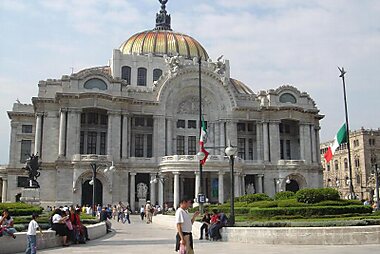
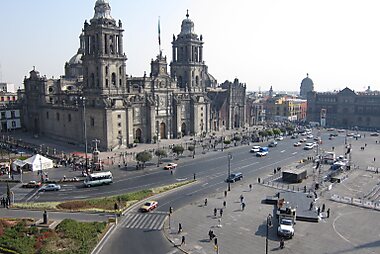
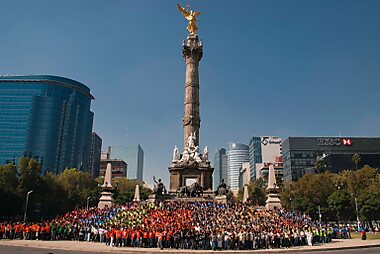
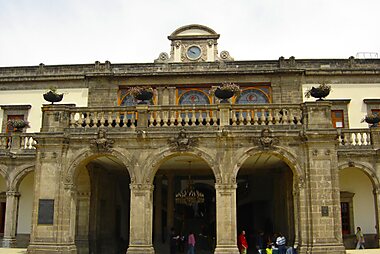
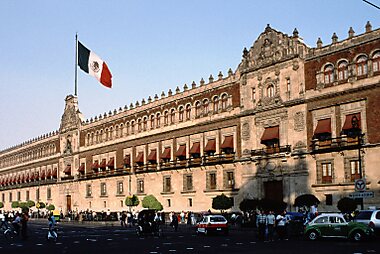
Constitution Square is the historic heart of the city and one of the largest public squares in the world. A giant flag flies at its center, and the square hosts everything from military ceremonies to Day of the Dead installations.
On its north side, Sagrario Metropolitano / Metropolitan Cathedral is the largest cathedral in the Americas, built over two centuries on top of a former Aztec temple site.
National Palace houses the offices of the Mexican president and a series of murals by Diego Rivera that trace the country's history from the Aztec era to the 20th century.
Next to the square, Templo Mayor is the excavated ruins of the main Aztec temple, uncovered by accident in 1978 and now an open-air museum.
A short walk away, Palacio de Bellas Artes is a concert hall and museum known for its Art Nouveau exterior, Art Deco interior, and more Rivera murals.
In Chapultepec Park, Chapultepec Castle is the only royal castle in the Americas and gives wide views over the city from its hilltop.
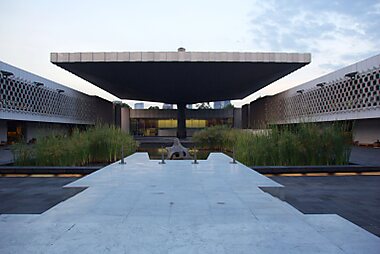
Inside the same park, Museo Nacional de Antropología holds the country's finest collection of Aztec, Maya, and other pre-Hispanic artifacts, including the famous Aztec Sun Stone.
In the Coyoacán neighborhood, Frida Kahlo Museum is the childhood home of painter Frida Kahlo, kept much as she left it, with her art, clothes, and personal objects on display.
Elenchi in evidenza


Architectural Highlights
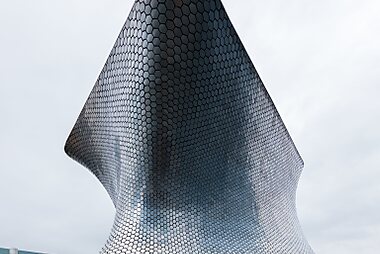
Mexico City's skyline spans centuries of design, from the white marble and Art Nouveau interiors of the Palacio de Bellas Artes to the futuristic, anvil-shaped Soumaya Museum. This collection highlights the volcanic stone architecture of Diego Rivera’s Anahuacalli Museum and the hanging bookshelves of the industrial-style José Vasconcelos Library. Commemorative structures like the Art Deco Monument to the Revolution and the Neo-Mayan Mexico City Temple further showcase the city's blend of historical tribute and bold, modern engineering.
11 luoghi


Cosa provare
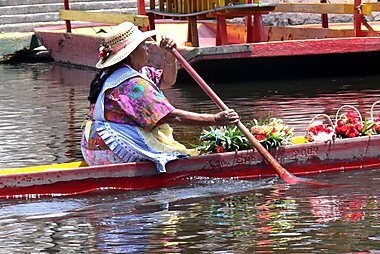
- Take a trajinera boat ride through the canals of Jardines Flotantes de Xochimilco, floating gardens that are one of the last traces of the lake the Aztecs built the city on.
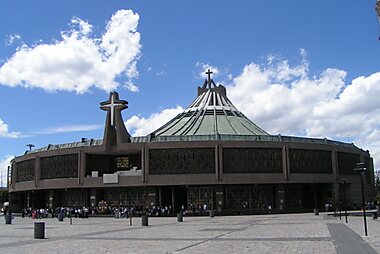
- Join the crowds at Basilica of Our Lady of Guadalupe around December 12, when millions of pilgrims arrive for the country's biggest religious feast.
- Watch the flag-lowering ceremony at sunset in Constitution Square, when soldiers fold the giant flag in a formal drill.
- Catch a lucha libre wrestling match, Mexico's masked, acrobatic take on professional wrestling, at one of the city's dedicated arenas.
Tour e attività
Città del Messico — Mappa

 Apri la mappa interattiva
Gite in giornata
Several worthwhile destinations sit within a few hours of the city.
- Pre-Hispanic City of Teotihuacan — about 1 hour by bus or car. Home to the Pyramid of the Sun and Pyramid of the Moon, the ruins of one of the largest cities of the ancient Americas.
- Tepotzotlán — about 1 hour by bus or car. A colonial town built around a Baroque former Jesuit monastery, now a museum of religious art.
- Cuernavaca — about 1.5 hours by bus or car. A hillside city known for its mild climate, gardens, and Hernán Cortés's former palace.
- Puebla — about 2 hours by bus or car. A UNESCO-listed colonial city known for its tiled buildings, Talavera pottery, and mole poblano.
Come arrivare
- By air: Mexico City International Airport (AICM) is the main gateway, about 8 km east of the historic center. The metro (Line 5, changing to Line 1) and the Metrobús both reach downtown in around 30-40 minutes; a licensed airport taxi from the official booth takes about 20-30 minutes depending on traffic. Felipe Ángeles International Airport (NLU), north of the city, handles some domestic and low-cost flights but is farther from the center.
- By bus: four long-distance terminals (North, South, East, and West) connect Mexico City to nearly every major city in the country.
- By train: Mexico has almost no long-distance passenger rail; most travelers arrive by air or bus.
Come muoversi
- Metro: the subway is the fastest way to cross the city and one of the cheapest in the world. Buy a rechargeable card at any station and tap in; a single ride costs only a few pesos regardless of distance. Avoid the rush hours around 7-9am and 6-8pm, when trains get very crowded.
- Metrobús: dedicated-lane buses cover routes the metro doesn't reach, including along Paseo de la Reforma. Uses the same rechargeable card as the metro.
- Taxi and ride-hailing: ride-hailing apps are widely used and generally a safer choice than hailing a taxi on the street.
- On foot: the historic center and Chapultepec Park are walkable, but the city as a whole is too large to cross on foot. Sidewalks can be uneven, and the altitude makes uphill walking more tiring than usual.
Guidare
- Is a car worth it? No. Traffic is heavy most of the day, and the metro, Metrobús, and ride-hailing apps cover the city better than a rental car. A car becomes useful mainly for day trips outside the city.
- Restrictions: the Hoy No Circula program bans many cars from driving on certain weekdays based on license plate number and emissions sticker; foreign rental cars are usually exempt, but check with the rental company.
- Parking: paid parking garages are common in the historic center and Polanco; street parking is limited and not always safe for an unattended car.
Cibo e bevande
Mexico City's food ranges from street tacos to some of the world's most acclaimed restaurants. Street stalls sell tacos al pastor, carved from a spinning spit of marinated pork, alongside quesadillas, tortas, and tamales. Look for stands with a long line of locals rather than the ones closest to tourist sights.
For something more formal, Café de Tacuba has served traditional Mexican dishes in a grand early-20th-century dining room since 1912. The Roma and Condesa neighborhoods cluster many of the city's best restaurants and cafés, from casual spots to fine dining.
Sicurezza e salute
Mexico City is generally safe for tourists who take common-sense precautions, though petty crime like pickpocketing and phone snatching happens in crowded places such as the metro, markets, and busy sights. Use only licensed pink-and-white taxis or ride-hailing apps rather than hailing a cab on the street, and keep phones and bags close in crowds.
Tap water is not safe to drink; stick to bottled or purified water, including for brushing teeth. The altitude, over 2,200 meters, can cause shortness of breath or headaches for the first day or two — take it easy and stay hydrated after arrival.
Storia
The city stands on the site of Tenochtitlan, the Aztec capital founded around 1325 on an island in Lake Texcoco. At its height it was one of the largest cities in the world, centered on the temple whose ruins are now Templo Mayor.
Spanish conquistador Hernán Cortés captured the city in 1521 and had it rebuilt as the seat of colonial New Spain, largely on top of the Aztec ruins and the filled-in lake. Independence came in 1821, and the city has been the country's capital ever since.
The 20th century left its own mark: painters Diego Rivera and Frida Kahlo turned the city into a center of modern Mexican art. Rivera's murals inside National Palace and Kahlo's former home at Frida Kahlo Museum are now among the city's most visited sights.
Informazioni sul paese
Quick practical facts for Mexico at a glance:
- Valuta
- peso messicano MXN $ · Pagamenti con carta · Ampiamente accettata
- Numeri di emergenza
- 911 Polizia · Ambulanza · Vigili del fuoco
- Elettricità
- 127 V · 60 HzTipo A / Tipo B
- Lingue
- spagnolo
- Acqua del rubinetto
- Non potabile
- Senso di marcia
- A destra
- Prefisso telefonico
- +52


Città del Messico – Pianifica le tue giornate
Trasforma i luoghi di questa guida in un vero itinerario, con percorsi intelligenti, stime dei tempi e tutto il necessario per un viaggio perfetto.




