Tripomatic

Mexico City

City ·🇲🇽 Mexico

Mexico City is the capital of Mexico and one of the oldest continuously inhabited capitals in the Americas. It sits on the site of Tenochtitlan, the former Aztec capital, over 2,200 meters above sea level. Aztec ruins, colonial buildings, and modern skyscrapers all sit within a few blocks of each other.

The city rewards travelers who want museums, food, and history in one trip, and who don't mind a slower pace at altitude. Painters Frida Kahlo and Diego Rivera both lived and worked here, and their murals and former homes are now among the city's biggest draws.

Mexico City

Planning a Trip to Mexico City?

Build your day-by-day itinerary in the Tripomatic app.

When to visit

The dry season from November to April brings sunny days and cool nights. The rainy season runs from June to September, with short afternoon downpours rather than all-day rain.

Plan around Día de Muertos (Day of the Dead), held around November 1-2, when the city fills with marigold altars, sugar skulls, and a large parade down Paseo de la Reforma.

Best time to visit Mexico City: January, February, March, October, November, December

Select a month

Typical weather in January

Great
  • 21° (feels like 20°) · extremes 3°–24°
  • 6° at night
  • 5 rainy days
  • 19 sunny days
  • Dry air
  • Calm winds

Typical weather in February

Great
  • 22° · extremes 4°–25°
  • 7° at night
  • 6 rainy days
  • 17 sunny days
  • Dry air
  • Calm winds

Typical weather in March

Great
  • 25° (feels like 24°) · extremes 6°–28°
  • 9° at night
  • 8 rainy days
  • 21 sunny days
  • Dry air
  • Calm winds

Typical weather in April

Good
  • 25° (feels like 26°) · extremes 7°–29°
  • 10° at night
  • 14 rainy days
  • 16 sunny days
  • Dry air
  • Calm winds

Typical weather in May

Good
  • 25° (feels like 26°) · extremes 9°–29°
  • 11° at night
  • 15 rainy days
  • 12 sunny days
  • Dry air
  • Calm winds

Typical weather in June

Good
  • 23° (feels like 25°) · extremes 10°–28°
  • 13° at night
  • 16 rainy days
  • 6 sunny days
  • Dry air
  • Calm winds

Typical weather in July

Fair
  • 22° (feels like 24°) · extremes 10°–25°
  • 12° at night
  • 21 rainy days
  • 3 sunny days
  • Dry air
  • Calm winds

Typical weather in August

Good
  • 22° (feels like 24°) · extremes 10°–25°
  • 12° at night
  • 20 rainy days
  • 2 sunny days
  • Dry air
  • Calm winds

Typical weather in September

Fair
  • 21° (feels like 22°) · extremes 10°–24°
  • 12° at night
  • 21 rainy days
  • 1 sunny day
  • Comfortable humidity
  • Calm winds

Typical weather in October

Great
  • 21° (feels like 22°) · extremes 6°–24°
  • 10° at night
  • 12 rainy days
  • 8 sunny days
  • Dry air
  • Calm winds

Typical weather in November

Great
  • 20° (feels like 21°) · extremes 5°–24°
  • 8° at night
  • 8 rainy days
  • 12 sunny days
  • Dry air
  • Calm winds

Typical weather in December

Great
  • 20° · extremes 3°–23°
  • 7° at night
  • 4 rainy days
  • 16 sunny days
  • Dry air
  • Calm winds

Climate data: Open-Meteo Climate API (EC_Earth3P_HR) · 1991–2020

Top sights

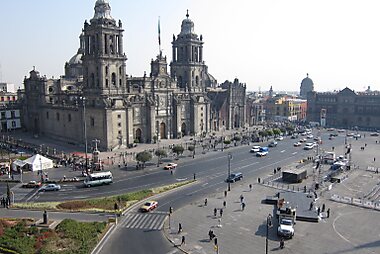
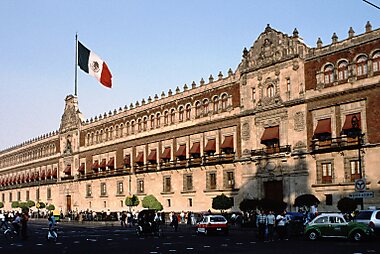
Constitution Square is the historic heart of the city and one of the largest public squares in the world. A giant flag flies at its center, and the square hosts everything from military ceremonies to Day of the Dead installations.

On its north side, Sagrario Metropolitano / Metropolitan Cathedral is the largest cathedral in the Americas, built over two centuries on top of a former Aztec temple site.

National Palace houses the offices of the Mexican president and a series of murals by Diego Rivera that trace the country's history from the Aztec era to the 20th century.

Next to the square, Templo Mayor is the excavated ruins of the main Aztec temple, uncovered by accident in 1978 and now an open-air museum.

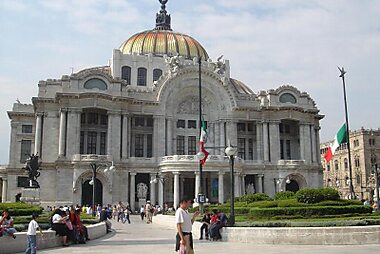
A short walk away, Palacio de Bellas Artes is a concert hall and museum known for its Art Nouveau exterior, Art Deco interior, and more Rivera murals.

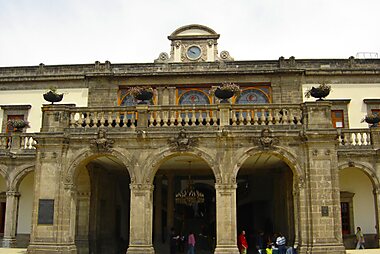
In Chapultepec Park, Chapultepec Castle is the only royal castle in the Americas and gives wide views over the city from its hilltop.

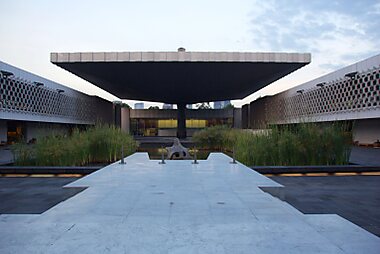
Inside the same park, Museo Nacional de Antropología holds the country's finest collection of Aztec, Maya, and other pre-Hispanic artifacts, including the famous Aztec Sun Stone.

In the Coyoacán neighborhood, Frida Kahlo Museum is the childhood home of painter Frida Kahlo, kept much as she left it, with her art, clothes, and personal objects on display.

Explore Mexico City

Mexico City Essentials

Mexico City Essentials

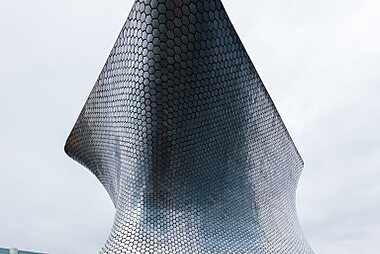
Mexico City’s landmarks span centuries of architectural and cultural evolution. The National Museum of Anthropology houses the world's largest collection of ancient Mexican art, while the Palacio de Bellas Artes showcases iconic murals within its Art Nouveau and Deco frame. From the Aztec-era canals of Xochimilco and the hilltop Chapultepec Castle to the futuristic Soumaya Museum and the 1950s Latin-American Tower, these sites represent the city's transformation. The collection also features the modernist Biblioteca Vasconcelos, the historic Coyoacán borough, and the legendary Estadio Azteca stadium.

15 places
Editor's Choice

Editor's Choice

Mexico City’s diverse landscape features the ancient Aztec canals of Xochimilco and the historic Chapultepec Castle, which overlooks the city from a volcanic hill. Architectural innovation is showcased at the Soumaya Museum, known for its silver-tiled facade, and the Vasconcelos Library, where hanging steel bookshelves create a futuristic atmosphere. Cultural heritage is preserved through the folk art of the Museum of Popular Art, the design-focused MODO, and the Dolores Olmedo Museum, which houses significant Mexican art within a colonial-era estate.

7 places
Hidden Gems of Mexico City

Hidden Gems of Mexico City

Escape the typical tourist circuits to explore Mexico City’s diverse architectural and cultural landscape. This selection includes Diego Rivera’s massive tiled fountain in Chapultepec Park, the experimental modernist architecture of the Calakmul building in Santa Fe, and the recycled-art interiors of Minichelista. From the traditional small-batch mezcal offerings at La Botica to the multi-level greenery of Cafebrería El Péndulo and the historical archives of the Federal Police Museum, these locations highlight the city's blend of artistic legacy and bohemian subcultures.

6 places
Architectural Highlights

Architectural Highlights

Mexico City's skyline spans centuries of design, from the white marble and Art Nouveau interiors of the Palacio de Bellas Artes to the futuristic, anvil-shaped Soumaya Museum. This collection highlights the volcanic stone architecture of Diego Rivera’s Anahuacalli Museum and the hanging bookshelves of the industrial-style José Vasconcelos Library. Commemorative structures like the Art Deco Monument to the Revolution and the Neo-Mayan Mexico City Temple further showcase the city's blend of historical tribute and bold, modern engineering.

11 places
Iconic Theatres and Venues

Iconic Theatres and Venues

Mexico City’s performing arts scene spans from the Art Nouveau Palacio de Bellas Artes to the brutalist National Auditorium. This selection highlights the UNAM Cultural Center’s specialized venues, including the acoustically renowned Sala Nezahualcóyotl and the experimental Foro Sor Juana Inés de la Cruz. Other notable sites include the Polyforum Siqueiros, home to the world’s largest mural, and the specialized contemporary circus space at Cirko de Mente. These venues represent the city's architectural diversity and its status as a global hub for music, dance, and theater.

10 places
Mexico's Natural Wonders

Mexico's Natural Wonders

Explore the diverse geological and hydrological landscape of the Valley of Mexico. This selection features the ancient canal systems of Xochimilco and the Tláhuac wetlands, the last remnants of the region's pre-Hispanic lakes. It also documents the volcanic history of the southern highlands, including the massive Ajusco lava dome and Xitle, the volcano responsible for the Pedregal lava fields. From the extinct craters of the Sierra de Santa Catarina to volcanic caves, these sites represent the city's unique natural heritage.

19 places
Vibrant Local Markets

Vibrant Local Markets

Mexico City's markets serve as vital centers for commerce and culture, ranging from the Porfirian-era brick architecture of Mercado de la Paz to the specialized botanical stalls in Xochimilco. This collection includes Mercado de Medellín, known for its diverse South American ingredients, and the Ciudadela, which focuses on regional Mexican handicrafts. These historic trading hubs located across the capital's distinct neighborhoods feature everything from traditional tostadas in Coyoacán to extensive pottery and textile collections.

7 places
Mexico City Culinary Delights

Mexico City Culinary Delights

Mexico City's culinary landscape ranges from the high-concept tasting menus of Pujol and Quintonil to established local chains and traditional taquerías. This selection features Michelin-recognized fine dining focusing on indigenous ingredients alongside specialized taco spots like El Pescadito and regional favorites such as Tacorama Campestre. It also includes accessible Mexican dining staples like Toks and Vips, which serve traditional breakfasts and classic regional dishes across the capital.

14 places
Top Museums in Mexico City

Top Museums in Mexico City

Mexico City’s cultural landscape spans from the world-renowned National Museum of Anthropology, housing Mesoamerican artifacts like the Aztec Sun Stone, to the Art Deco Palace of Fine Arts with its iconic murals. Highlights include Chapultepec Castle’s hilltop history, the modernist architecture of the Soumaya Museum featuring Rodin sculptures, and the UNESCO-listed Luis Barragán House. This collection also features specialized institutions like the Diego Rivera Anahuacalli Museum, constructed from volcanic rock, and premier contemporary art spaces such as the Jumex and Tamayo museums.

17 places
Parks & Recreation

Parks & Recreation

Mexico City’s green spaces span from the 16th-century Alameda Central, the oldest public park in the Americas, to the modern, sustainable design of Parque La Mexicana in Santa Fe. The selection includes the Chapultepec Zoo, home to giant pandas, and the expansive Bosque de Tlalpan, an oak-forested ecological reserve. Family-oriented attractions range from the high-speed roller coasters of Six Flags Mexico to the immersive educational environment of KidZania. These locations provide diverse environments for recreation, nature conservation, and outdoor fitness.

13 places
Historic Churches and Temples

Historic Churches and Temples

This collection highlights the diverse architectural and religious history of Mexico City, spanning from 16th-century colonial foundations to mid-century modernism. The list features the historic center’s Iglesia de Jesús Nazareno, which houses the remains of Hernán Cortés, alongside the Baroque artistry of Coyoacán’s colonial chapels. It also includes striking contemporary structures like the Mexico City Mexico Temple and the modernist Parroquia de San Agustin in Polanco.

7 places
Premier Shopping Destinations

Premier Shopping Destinations

Mexico City's retail landscape ranges from the high-end boutiques of Avenida Presidente Masaryk in Polanco to the traditional artisan stalls of San Ángel’s El Bazaar Sábado. Modern commercial hubs like Centro Santa Fe, one of Latin America's largest malls, and Perisur offer extensive international brands. The city is also home to flagship Palacio de Hierro locations, including the architecturally significant "Palacio de los Palacios" in Polanco, showcasing luxury fashion, gourmet dining, and Mexican design.

6 places
Iconic Landmarks & Monuments

Iconic Landmarks & Monuments

This selection of Mexico City’s landmarks spans centuries of history, from the 1592 Alameda Central to modernist UNESCO World Heritage sites like Luis Barragán’s House and the UNAM Central Campus. It features revolutionary memorials like the Monumento a la Revolución and the Altar a la Patria, alongside striking artistic installations including Diego Rivera’s Fuente de Tláloc and Alexander Calder’s "Sol Rojo" sculpture. These sites showcase the city’s architectural evolution and its deep-rooted cultural identity through public monuments and urban parks.

10 places

What to experience

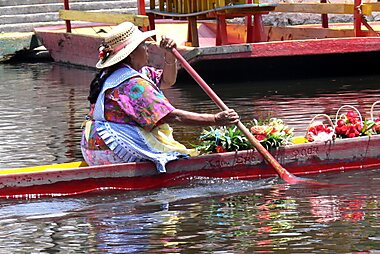
  • Take a trajinera boat ride through the canals of Jardines Flotantes de Xochimilco, floating gardens that are one of the last traces of the lake the Aztecs built the city on.
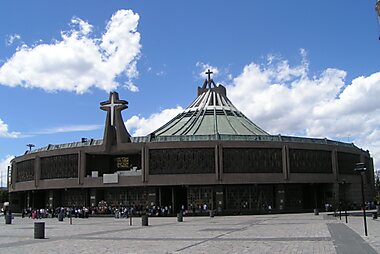
  • Join the crowds at Basilica of Our Lady of Guadalupe around December 12, when millions of pilgrims arrive for the country's biggest religious feast.
  • Watch the flag-lowering ceremony at sunset in Constitution Square, when soldiers fold the giant flag in a formal drill.
  • Catch a lucha libre wrestling match, Mexico's masked, acrobatic take on professional wrestling, at one of the city's dedicated arenas.

Tours & Activities

Map of Mexico City

Day trips

Several worthwhile destinations sit within a few hours of the city.

  • Pre-Hispanic City of Teotihuacan — about 1 hour by bus or car. Home to the Pyramid of the Sun and Pyramid of the Moon, the ruins of one of the largest cities of the ancient Americas.
  • Tepotzotlán — about 1 hour by bus or car. A colonial town built around a Baroque former Jesuit monastery, now a museum of religious art.
  • Cuernavaca — about 1.5 hours by bus or car. A hillside city known for its mild climate, gardens, and Hernán Cortés's former palace.
  • Puebla — about 2 hours by bus or car. A UNESCO-listed colonial city known for its tiled buildings, Talavera pottery, and mole poblano.

Getting there

  • By air: Mexico City International Airport (AICM) is the main gateway, about 8 km east of the historic center. The metro (Line 5, changing to Line 1) and the Metrobús both reach downtown in around 30-40 minutes; a licensed airport taxi from the official booth takes about 20-30 minutes depending on traffic. Felipe Ángeles International Airport (NLU), north of the city, handles some domestic and low-cost flights but is farther from the center.
  • By bus: four long-distance terminals (North, South, East, and West) connect Mexico City to nearly every major city in the country.
  • By train: Mexico has almost no long-distance passenger rail; most travelers arrive by air or bus.

Getting around

  • Metro: the subway is the fastest way to cross the city and one of the cheapest in the world. Buy a rechargeable card at any station and tap in; a single ride costs only a few pesos regardless of distance. Avoid the rush hours around 7-9am and 6-8pm, when trains get very crowded.
  • Metrobús: dedicated-lane buses cover routes the metro doesn't reach, including along Paseo de la Reforma. Uses the same rechargeable card as the metro.
  • Taxi and ride-hailing: ride-hailing apps are widely used and generally a safer choice than hailing a taxi on the street.
  • On foot: the historic center and Chapultepec Park are walkable, but the city as a whole is too large to cross on foot. Sidewalks can be uneven, and the altitude makes uphill walking more tiring than usual.

Driving

  • Is a car worth it? No. Traffic is heavy most of the day, and the metro, Metrobús, and ride-hailing apps cover the city better than a rental car. A car becomes useful mainly for day trips outside the city.
  • Restrictions: the Hoy No Circula program bans many cars from driving on certain weekdays based on license plate number and emissions sticker; foreign rental cars are usually exempt, but check with the rental company.
  • Parking: paid parking garages are common in the historic center and Polanco; street parking is limited and not always safe for an unattended car.

Food & drink

Mexico City's food ranges from street tacos to some of the world's most acclaimed restaurants. Street stalls sell tacos al pastor, carved from a spinning spit of marinated pork, alongside quesadillas, tortas, and tamales. Look for stands with a long line of locals rather than the ones closest to tourist sights.

For something more formal, Café de Tacuba has served traditional Mexican dishes in a grand early-20th-century dining room since 1912. The Roma and Condesa neighborhoods cluster many of the city's best restaurants and cafés, from casual spots to fine dining.

Lunch
Cochinita PibilSlow-roasted, citrus- and achiote-marinated pork, a Yucatán specialty traditionally cooked in an underground pit.
Dinner
MoleA complex sauce, often built from chiles, spices, and sometimes chocolate; mole poblano and Oaxaca's several moles are the best known versions.
Chiles en NogadaA Puebla dish of stuffed poblano chiles topped with a walnut cream sauce and pomegranate seeds, in the colors of the Mexican flag.
PozoleA hominy stew with pork or chicken, topped with shredded cabbage, radish, and chile, traditionally eaten on special occasions.
Snacks & street food
TacosCorn or flour tortillas filled with meat, fish, or vegetables, with endless regional and stall-to-stall variation.
TamalesCorn dough filled with meat, cheese, or vegetables, wrapped in a corn husk or banana leaf and steamed.
Elote/Esquites  Elote / EsquitesGrilled or boiled corn on the cob (elote) or served off the cob in a cup (esquites), topped with mayonnaise, cheese, chile, and lime.
Drinks
MezcalA smoky agave spirit from Oaxaca and several other states, distinct from tequila, traditionally sipped neat.
TequilaAn agave spirit from the region around the town of Tequila in Jalisco, Mexico's best-known export spirit.
HorchataA sweet, cinnamon-spiced rice-based drink, popular as a non-alcoholic accompaniment to spicy food.

Safety & health

Mexico City is generally safe for tourists who take common-sense precautions, though petty crime like pickpocketing and phone snatching happens in crowded places such as the metro, markets, and busy sights. Use only licensed pink-and-white taxis or ride-hailing apps rather than hailing a cab on the street, and keep phones and bags close in crowds.

Tap water is not safe to drink; stick to bottled or purified water, including for brushing teeth. The altitude, over 2,200 meters, can cause shortness of breath or headaches for the first day or two — take it easy and stay hydrated after arrival.

History

The city stands on the site of Tenochtitlan, the Aztec capital founded around 1325 on an island in Lake Texcoco. At its height it was one of the largest cities in the world, centered on the temple whose ruins are now Templo Mayor.

Spanish conquistador Hernán Cortés captured the city in 1521 and had it rebuilt as the seat of colonial New Spain, largely on top of the Aztec ruins and the filled-in lake. Independence came in 1821, and the city has been the country's capital ever since.

The 20th century left its own mark: painters Diego Rivera and Frida Kahlo turned the city into a center of modern Mexican art. Rivera's murals inside National Palace and Kahlo's former home at Frida Kahlo Museum are now among the city's most visited sights.

Country facts

Quick practical facts for Mexico at a glance:

Currency
Mexican Peso MXN $ · Card payments · Widely accepted
Emergency numbers
911 Police · Ambulance · Fire brigade
Electricity
Type A / Type B
127 V · 60 Hz
Languages
Spanish
Tap water
Not safe to drink
Driving side
Right
Calling code
+52
Learn more about Mexico
Palace of Fine Arts
Drive
National Museum of Anthropology
Drive
Floating Gardens of Xochimilco

Plan Your Days in Mexico City

Turn the places from this guide into a real itinerary, with smart routing, time estimates, and everything you need for a perfect trip.


3M+ downloads · 4.6 stars · 15 years of trip planning
QR code
Scan to download the app

Related destinations