


Toledo
Toledo is a compact hill town above a bend of the Tagus river. The whole old town is a UNESCO World Heritage site. It is known as the "city of three cultures", because Christians, Jews and Muslims lived here side by side for centuries. You see this in the churches, synagogues and mosques that stand close together.
It suits a day trip from Madrid or a quiet night or two inside the walls. Most visitors come for history, art and architecture. The painter El Greco lived and worked here, and several of his works are still in the city.

Toledo – Stai pianificando un viaggio?
Costruisci il tuo itinerario giorno per giorno nell'app Tripomatic.


Quando andare
Spring and autumn are the best seasons. Days are mild and good for walking the steep streets. Summer is very hot with little shade, so start early and rest in the afternoon. Winter is cold, and mornings can be frosty.
A major event of the year is the Corpus Christi procession. It takes place in late spring or early summer and has been a Festival of International Tourist Interest since 1980. The procession carries a large monstrance from the cathedral through the old town. Book rooms well ahead if you plan to visit then.
Periodo migliore per la visita: aprile, maggio, settembre, ottobre
Attrazioni principali



- Toledo Cathedral is a Gothic cathedral begun in the 1220s and finished in 1493. The sacristy holds paintings by El Greco, and the Baroque Transparente altarpiece lets in natural light.
- Above the old town, Alcázar of Toledo is a fortress with four corner towers. It holds the army museum, Army Museum, and was badly damaged in the siege of 1936.
- Church of Santo Tomé is a small church that keeps El Greco's large painting The Burial of the Count of Orgaz. It is the one work to see if you only have time for one.
- El Greco Museum is a house museum that shows how the painter's home may have looked. Combine it with the church above.
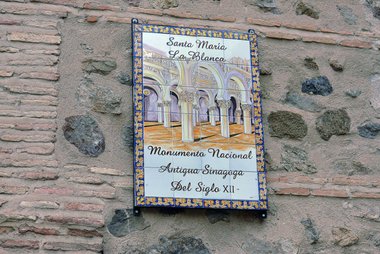
- Old Synagogue Santa Maria la Blanca was built as a synagogue around 1200, with white walls and rows of horseshoe arches. It became a church in the early 15th century.
- Museo Sefardí is inside the 14th-century Synagogue of El Tránsito. The prayer hall has fine carved stucco and a wooden ceiling.
- Monasterio de San Juan de los Reyes was founded by the Catholic Monarchs, and building started in 1477. Chains once worn by Christian prisoners hang on the outside of the building.
- Mezquita del Cristo de la Luz was completed in the year 999. It later became a chapel.
Elenchi in evidenza


Religious Sites in Toledo
Toledo’s religious architecture preserves the legacy of the "City of the Three Cultures." This collection features the 13th-century Primatial Cathedral, the Isabelline Gothic Monastery of San Juan de los Reyes, and the Mudéjar-style Synagogue of El Tránsito. Notable sites include the Mosque-Church of El Salvador, which retains its 9th-century Islamic foundations, and the Church of San Román, housing the Museum of Visigothic Culture. These landmarks illustrate the historical intersection of Christian, Jewish, and Islamic traditions within the city's medieval walls.
13 luoghi
Cosa provare
- See the whole old town on its hill from the viewpoint Mirador Del Valle, across the river.
- Cross the old bridges Puente de Alcántara and Puente de San Martín in the evening. Sunset from the bridges is a local favourite.
- Time your visit for the Corpus Christi procession, a festival that has drawn visitors for decades.
Tour e attività
Toledo — Mappa

 Apri la mappa interattiva
Gite in giornata
Toledo is a good base for a few nearby trips. Madrid is the easiest.
- Madrid: about 30 minutes by high-speed train from Atocha station. Spain's capital has major art museums and a lively centre.
- Consuegra: about 60 km south-east of Toledo, best reached by car. A ridge above the town has a row of windmills and a castle, in the landscape of La Mancha.
Cosa esplorare
Other cities in Castile-La Mancha:
- Cuenca is a town in the east of the region.
- Guadalajara is a city north-east of Madrid.
Come arrivare
- By air: Most visitors fly into Madrid airport and continue by train or bus.
- By train: High-speed trains run from Madrid Atocha station in about 30 minutes. Toledo station lies outside the old town, so continue by local bus, taxi or on foot.
- By bus: Buses also run from Madrid.
- Official tourist information: Spain tourism: Toledo
Come muoversi
- On foot: The old town is small, and walking is the best way to see it. Streets are narrow, steep and cobbled, so wear good shoes.
- Escalators: Public escalators help you climb up to the old town from the lower parts of the city, including a route towards Plaza de Zocodover.
- City buses: Local buses connect the stations and car parks with the old town and Plaza de Zocodover.
- Tourist bus and train: Sightseeing buses and a tourist train run through the city.
Guidare
- Is a car worth it?: Not for a city visit. A car helps only for trips into the surrounding countryside.
- Parking: Leave the car in a car park outside the old town centre and continue on foot or by public transport.
- Restrictions: Access to the old town streets is restricted. Follow local signs rather than driving into the centre.
Cibo e bevande
Toledo is known for sweets and slow-cooked dishes. Marzipan is the local speciality and has protected status. It is a sweet made from almonds and sugar. Savoury dishes include carcamusas, a pork stew with peas and tomato often served as a tapa, and partridge stew.
For eating, the best choice is an area, not one restaurant. Try the bars and cafes around Plaza de Zocodover and the lanes near Plaza Magdalena. The covered market, Mercado de Abastos, is a good place to see local produce.
Sicurezza e salute
Toledo is generally safe for visitors. Crowded places can attract pickpockets, so keep bags closed in busy streets and on public transport.
- In summer the heat is the main risk. Carry water, wear a hat and avoid long walks in the afternoon.
- The steep, uneven streets are hard for wheelchairs and small children in pushchairs.
- Emergency number: 112.
Storia
Toledo has been an important city since Roman times. It became the capital of the Visigothic kingdom in the 6th century. In 711 or 712 Muslim armies took the city. Their mosque, Mezquita del Cristo de la Luz, was completed in 999 and still stands.
King Alfonso VI of León took Toledo on 25 May 1085. Afterwards Christians, Jews and Muslims lived in the city together for a long time. The two synagogues, Old Synagogue Santa Maria la Blanca and Museo Sefardí, show the Jewish quarter's wealth.
Emperor Charles V used Toledo as a royal residence from 1525, and the court moved to Madrid in 1561. The city has been the seat of government of Castile-La Mancha since the 1980s. The Alcázar was held by Nationalist forces against Republican attack in the Spanish Civil War of 1936. It was rebuilt in the years after the war.
Informazioni sul paese
Quick practical facts for Spain at a glance:
- Valuta
- euro EUR € · Pagamenti con carta · Ampiamente accettata
- Numeri di emergenza
- 112
- Elettricità
- 230 V · 50 HzTipo C / Tipo F
- Lingue
- spagnolo
- Acqua del rubinetto
- Potabile
- Senso di marcia
- A destra
- Prefisso telefonico
- +34


Toledo – Pianifica le tue giornate
Trasforma i luoghi di questa guida in un vero itinerario, con percorsi intelligenti, stime dei tempi e tutto il necessario per un viaggio perfetto.


Destinazioni correlate

Data: © OpenStreetMap contributors, Wikidata, Wikipedia, Tripomatic, Official websites. Tours by GetYourGuide. We earn commission from bookings. Travel guide generated with AI.