


Amalfi
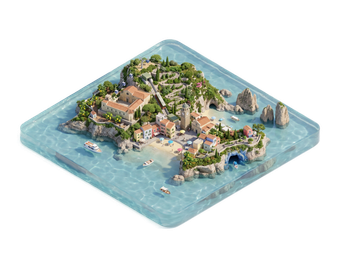
Amalfi is a small town squeezed into a steep ravine on the Amalfi Coast, south of Naples. White houses climb the cliffs above a short beach and a busy harbour. In the Middle Ages it was the capital of a rich sea republic that traded across the Mediterranean, and its great cathedral still dominates the main square.
Amalfi is the transport hub of the coast. Buses and ferries leave from the waterfront for Positano, Ravello and Capri, so it works well as a base for a few nights. Expect crowds by day in summer and a much quieter town in the evening, when the day visitors leave. The coast is a UNESCO World Heritage Site.

Amalfi – Reis plannen?
Stel je dagelijkse reisroute samen in de Tripomatic-app.


Beste reistijd
May, June, September and early October are the best months: warm days, a warm sea and fewer crowds than in high summer. July and August are hot, busy and expensive. From November to March many hotels and restaurants close, most ferries stop and rain is frequent, but the town is calm and prices are low.
The biggest local event is the feast of St Andrew on 27 June, with a procession, fireworks over the bay and the statue of the saint carried at a run up the cathedral steps. A smaller feast follows on 30 November.
Beste reistijd: mei, juni, juli, augustus, september, oktober
Topbezienswaardigheden
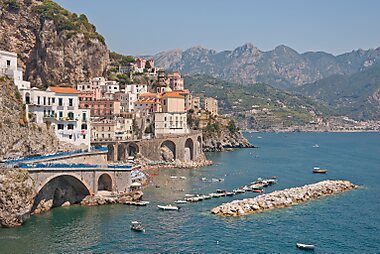


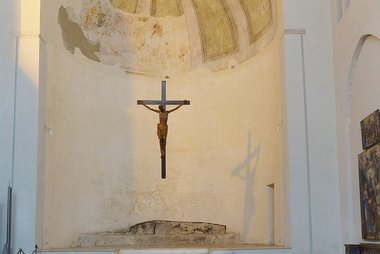
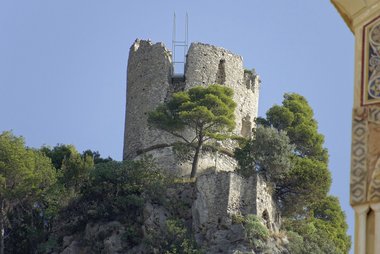
The old town is small, and most sights are within a 10-minute walk of the main square, Piazza Duomo.
- Amalfi Cathedral rises above Piazza Duomo at the top of a wide flight of 62 steps. Its striped facade dates from the 19th century, but the bronze doors were cast in Constantinople before 1066. The visit includes the old Basilica of the Crucifix, now the Diocesan Museum, and the crypt with the relics of St Andrew.
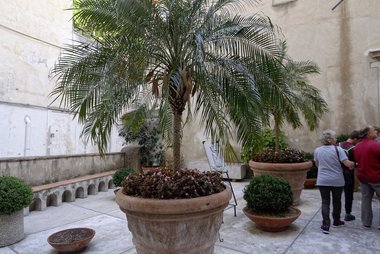
- Chiostro del Paradiso is the cathedral's 13th-century cloister, with slim paired columns, pointed Arab-Norman arches and ancient sarcophagi. It is the entrance to the cathedral museum and crypt, on one ticket.
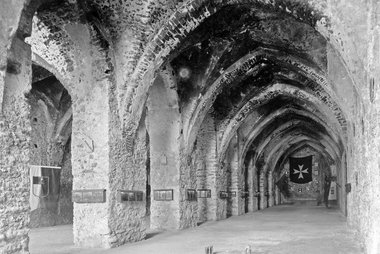
- Arsenale di Amalfi is the stone-vaulted shipyard where the medieval republic built its galleys. Inside, a museum covers Amalfi's seafaring past, with early compasses and a copy of the town's medieval code of sea law.
- Museo della Carta sits in an old paper mill a short walk up the valley. Guides show how Amalfi's handmade paper was made, and the old machinery still works.
- Amalfi Civic Museum is a small free museum in the town hall. It tells the story of the republic and shows the designs for the mosaic on the cathedral facade.
- Torre dello Ziro is a round medieval tower on the ridge above the town. You see it from the waterfront, and you can reach it on a steep path for wide views over Amalfi and Atrani.
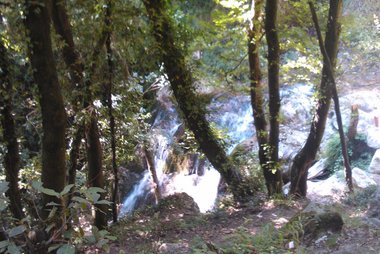
- Valle delle Ferriere is a shaded valley above the town, with a stream, small waterfalls, rare ferns and the ruins of medieval ironworks. The walk from town and back takes about 3–4 hours, with some steep steps.
Aanbevolen lijsten


Wat te beleven
These are the local traditions and activities worth planning around.
- The feast of St Andrew (27 June and 30 November): after a procession through town, bearers carry the heavy statue of the patron saint up the 62 cathedral steps at a run, to cheers from the crowd. The June feast ends with fireworks over the bay.
- A boat along the coast: take a ferry or a small boat from the harbour to see the towns from the water. It is the best view of the cliffs and avoids the road traffic. Many boats stop at coves and grottoes that you cannot reach by land.
- Walking the old stairways: centuries-old stepped paths link Amalfi with Pontone, Scala and Ravello. Walk up through lemon terraces and down by bus, or the other way round.
- The Regatta of the Maritime Republics: Amalfi, Genoa, Pisa and Venice take turns to host this rowing race between crews in historic costume. It comes to Amalfi once every four years, in late spring or early summer.
Tours en activiteiten
Amalfi — Kaart

 Interactieve kaart openen
Dagtochten
Buses and, from spring to autumn, ferries make Amalfi the easiest base on the coast. Start early in summer, as roads and buses fill up by late morning.
Close by
- Atrani (10 minutes on foot): a tiny village next door, with a quiet square and a small beach. Walk through the pedestrian tunnel or along the road.
- Ravello (about 25 minutes by bus): a hilltop town with villas and famous gardens high above the sea. Villa Rufolo and Villa Cimbrone have some of the best views on the coast.
- Scala (about 20–30 minutes by bus): a quiet hill village facing Ravello, and a start point for walks down into the valleys above Amalfi.
- Grotta dello Smeraldo (about 15 minutes by boat or bus): a sea cave in Conca dei Marini where light makes the water glow green. Boats leave from Amalfi harbour in season.
Along the coast
- Positano (about 20–25 minutes by ferry, or 50 minutes by bus): the most photographed village on the coast, with pastel houses stacked above a large beach.
- Path of the Gods (bus to Bomerano in Agerola, under an hour): the coast's most famous hike, a cliff path of about 8 km to Nocelle above Positano, about 3 hours one way.
- Capri (about 50 minutes by ferry, April to October): the island of the Faraglioni rocks, Anacapri and the chairlift to Monte Solaro.
Further afield
- Pompeii (about 2 hours by bus and train via Salerno or Sorrento): the Roman city buried by Vesuvius in 79 AD. Allow a full day.
- Paestum (about 2 hours via Salerno): three well-preserved Greek temples on a plain south of Salerno.
Plaatsen om te ontdekken
Amalfi shares its steep valley with two hill villages that are easy to combine with a stay in town.
Bereikbaarheid
Amalfi has no railway. Most visitors arrive by train or plane to Naples or Salerno and continue by bus, ferry or private transfer.
- By air: Naples International Airport is the main gateway, about 1.5–2 hours away by car. Without a car, take a bus or taxi to Naples Central station, then a train to Salerno and a ferry or bus to Amalfi. Salerno Costa d'Amalfi Airport is closer and has seasonal flights; a bus links it with Salerno station, where you change for the bus or ferry.
- By train: take a high-speed or regional train to Salerno, then a ferry or bus. Salerno is about 40 minutes from Naples and about 2 hours from Rome. From Naples you can also take the Circumvesuviana train to Sorrento, then the coast bus, which takes about 1.5 hours from Sorrento to Amalfi. Trenitalia
- By ferry: from April to October, ferries link Amalfi with Salerno (about 30 minutes), Positano, Capri and Sorrento. In winter there are few or no ferries from Amalfi, and sailings stop in rough seas.
- By bus: SITA SUD buses run along the coast road from Salerno (about 1 hour 15 minutes) and Sorrento (about 1.5 hours). Traffic in summer can add a lot of time.
Vervoer ter plaatse
- On foot: the centre is small and pedestrian, but it climbs steeply. Many streets are stairs and narrow covered passages. Walking is the only way to explore it.
- Buses: SITA SUD buses leave from Piazza Flavio Gioia on the waterfront, for Ravello, Positano, Sorrento and Salerno. Buy tickets before you board, at tobacconists, bars and newsstands, or in the UnicoCampania app, and validate them on the bus. A 24-hour coast ticket is good value if you ride several times. In summer, buses are often full; arrive early and expect to queue. SITA SUD
- Ferries: from spring to autumn, boats are the most relaxing way to reach Positano, Capri and Salerno. They leave from the pier next to the bus terminal. Buy tickets at the kiosks on the pier or online.
- Taxi: taxis wait near the harbour and are expensive. Agree the fare before you start.
Autorijden
- Is a car worth it?: no. The coast road is narrow and winding, very busy in summer, and parking is scarce and expensive. Buses and ferries reach everything a first-time visitor needs.
- Parking: the centre is closed to cars. The large Luna Rossa garage is cut into the cliff between Amalfi and Atrani, and there is paid parking at the port. Expect about €3–5 per hour in season, and more for longer stays.
- Restrictions: on peak days in spring, summer and some autumn weekends and holidays, only cars with odd or even plate numbers may use the coast road (SS163) between Positano and Vietri sul Mare, on alternate days during daytime hours. Hotel guests with a booking on the coast are exempt on their arrival and departure days. The dates are set each year, so check them before you drive.
Eten en drinken
Amalfi's cooking is built on fish and lemons. The local lemon, the large, sweet sfusato amalfitano, grows on terraces above the town. It flavours limoncello, served cold after dinner, and the delizia al limone, a small sponge cake filled with lemon cream. Try scialatielli, a short fresh pasta, with seafood, and the fresh fish of the day. Colatura di alici, an anchovy sauce from nearby Cetara, is often served with spaghetti.
The best area to eat is the narrow main street, Via Lorenzo d'Amalfi, and the lanes around Piazza Duomo, where old pastry shops and cafés serve lemon cakes and sfogliatelle. For a quieter dinner, walk to the restaurants in Atrani or take the bus up to Ravello. A cover charge (coperto) per person is normal on the bill.
Veiligheid en gezondheid
Amalfi is very safe. Petty theft is rare, but keep an eye on bags in crowded buses and on the busy waterfront.
- The coast road: much of the road has no pavement. Avoid walking along it, especially between towns; use the tunnel to Atrani and the stairways instead.
- Hiking: paths are mostly stone steps, steep and slippery after rain. Wear proper shoes, carry water and start early in summer to avoid the midday heat.
- Sea and sun: summer sun is strong. Ferries and boat trips are cancelled in rough seas, so keep some flexibility if you need to catch a flight or train.
Geschiedenis
Amalfi became independent in the 9th century and grew into one of Italy's first maritime republics, ruled by its own dukes. Its merchants traded with Constantinople, North Africa and the Middle East, and brought home luxury goods and new ideas. Amalfi merchants founded a hospital in Jerusalem in the 11th century, the origin of the Knights Hospitaller.
The town's seafaring power left a lasting mark. Its customs of sea trade were written down in the Tabula de Amalpha, an early code of maritime law; a copy is shown in Arsenale di Amalfi. Amalfi is also traditionally linked to the early use of the magnetic compass in Europe.
The decline came quickly. The Normans took the town in 1073, and Pisa sacked it in the 1130s. In 1343 a violent storm destroyed much of the harbour and the lower town. The relics of St Andrew, brought from Constantinople in 1206, made Amalfi Cathedral a pilgrimage church, and the papermaking you can still see at Museo della Carta kept the valley busy for centuries. In the 19th century Amalfi became a stop for travellers on the Grand Tour, and the cathedral facade was rebuilt after it collapsed in 1861.
Feiten over het land
Quick practical facts for Italy at a glance:
- Valuta
- Euro EUR € · Betalen met kaart · Algemeen geaccepteerd
- Noodnummers
- 112
- Elektriciteit
- 230 V · 50 HzType C / Type F / Type L
- Talen
- Italiaans
- Kraanwater
- Veilig om te drinken
- Rijrichting
- Rechts
- Landnummer
- +39


Amalfi – Plan je dagen
Zet de plaatsen uit deze gids om in een echte reisroute, met slimme routes, tijdsinschattingen en alles wat je nodig hebt voor een perfecte reis.


Gerelateerde bestemmingen


Data: © OpenStreetMap contributors, Wikidata, Wikipedia, Tripomatic, Official websites, geoBoundaries (CC BY 4.0). Tours by GetYourGuide. We earn commission from bookings. Travel guide generated with AI.