


Cienfuegos
Cienfuegos is a calm, elegant city on a wide bay on Cuba's south coast. French settlers founded it in 1819, and they laid out straight streets around a central square. Its 19th-century centre has wide avenues, columned buildings and pastel colours. UNESCO listed the historic centre as a World Heritage Site in 2005. Cubans call the city "the Pearl of the South".
Cienfuegos suits two or three relaxed days. It is quieter and easier to walk than Havana, with a bayside promenade, early 20th-century palaces and short trips to a fort, a beach and a botanical garden. Many travellers stop here between Havana and Trinidad. The famous singer Benny Moré was born nearby.

Cienfuegos – Reis plannen?
Stel je dagelijkse reisroute samen in de Tripomatic-app.


Beste reistijd
The dry season from December to April is the best time to visit, with warm, sunny days and little rain. From May to October it is hot and very humid, with frequent afternoon storms. The breeze from the bay helps in the evenings all year.
The hurricane season runs from June to November, with the highest risk from August to October. Storms can cut power and transport for days, so buy travel insurance if you visit then.
Beste reistijd: januari, februari, maart, december
Topbezienswaardigheden


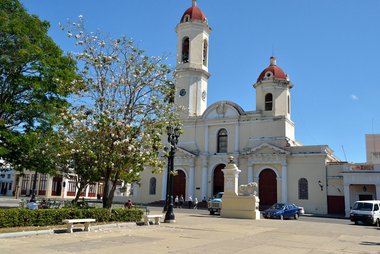
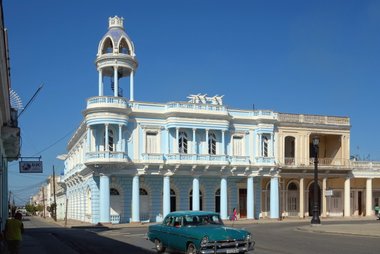
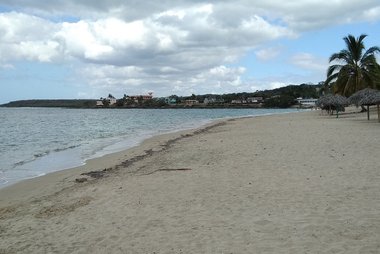
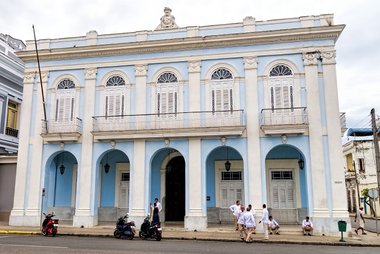
Parque José Martí is the heart of the city and of the UNESCO-listed centre. A statue of José Martí stands under tall trees, and the Arco de Triunfo, the only triumphal arch in Cuba, marks the west side. The square's grand buildings are all around it.
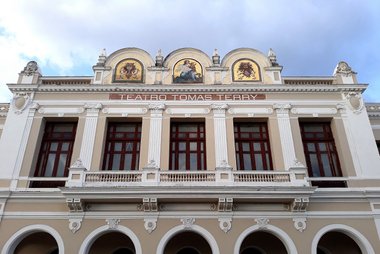
Teatro Tomás Terry is a horseshoe-shaped opera house on the north side of the park, opened in 1890. It still hosts concerts, ballet and plays, and you can also take a short tour of the hall.
Catedral de la Purísima Concepción faces the park from the east. Its first building was completed in 1833, and it became a cathedral in 1903.
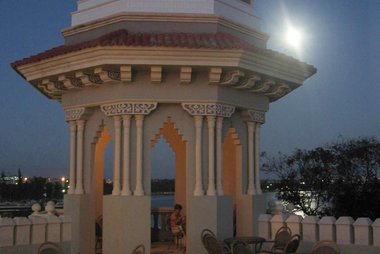
Palacio Ferrer is an ornate mansion built between 1917 and 1920 on the corner of the park. It is now a cultural centre, and its rooftop tower gives the best view over the square and the bay.
Museo Provincial fills a former club building on the south side of the park. It covers the history of the city and its wealthy families.
Palacio de Valle is a Moorish-style palace finished in 1917 at Punta Gorda, the narrow point at the end of the bayside promenade. It has three very different towers, and its rooftop bar is a popular place for a sunset drink.
Castillo de Jagua is a Spanish fort from the 1740s at the narrow entrance to the bay, built to keep pirates out. It has a small museum and wide views over the water.
Jardín Botánico de Cienfuegos, 14 km east of the city, was founded in 1901 by an American sugar planter with help from Harvard University. It holds more than 2,000 tropical plant species, including many palms.
Wat te beleven
These are the things that make a stay in Cienfuegos special.
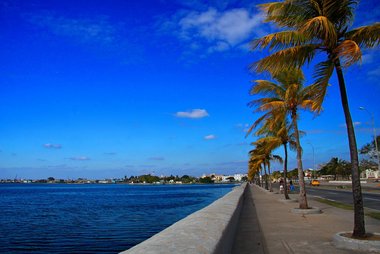
- Walk the bay at sunset: join locals on the Malecón in the evening, when people come out to walk, fish and talk.
- Climb the rooftop tower: the narrow stairs of Palacio Ferrer lead to a small lookout over the red roofs and the park.
- See a show at the theatre: an evening of music or ballet at Teatro Tomás Terry lets you see the historic hall in use.
- Listen to live music: the city loves Benny Moré, and son and bolero bands play in bars and cultural centres around the park most evenings.
- Take a boat on the bay: when fuel allows, boat trips leave from the marina at Punta Gorda for a cruise across the bay to the castle. Ask at the marina.
Tours en activiteiten
Cienfuegos — Kaart

Dagtochten
The closest day trips are a beach and a lagoon south of the city. Further away are waterfalls in the mountains and two famous cities.
- Playa Rancho Luna — about 30 minutes by car, 18 km south. A small beach with calm water and a coral reef offshore, popular for diving.
- Laguna Guanaroca — about 30 minutes by car, close to Rancho Luna. A coastal lagoon reserve where boat trips take you to see flamingos and other water birds.
- El Nicho — about 1.5 hours by car on a poor mountain road. A chain of waterfalls and natural pools in the Escambray mountains, with forest trails and places to swim.
- Trinidad — about 1.5 hours by car along the coast. A colonial town of cobbled streets and a UNESCO World Heritage Site. The hills of Topes de Collantes sit above it.
- Santa Clara — about 1.5 hours by car. A university city known for the memorial to Che Guevara.
Plaatsen om te ontdekken
Cienfuegos sits in the middle of Cuba's classic route between Havana and the colonial towns further east.
- Trinidad and the mountains of Topes de Collantes are the natural next stop to the east.
- Santa Clara lies inland to the north-east.
- To the west, Zapata Swamp National Park and the Bay of Pigs offer wildlife, diving and recent history on the way back to Havana.
- More destinations are in the guide to Cuba.
Bereikbaarheid
- By air: Cuba's international airports are without aviation fuel, and only Terminal 3 of José Martí Airport in Havana is operating. Havana is about 250 km away, or 3 to 4 hours by road. The Cienfuegos and Santa Clara airports have no regular service.
- Flight changes: Cuba's airports are short of aviation fuel, and many airlines, including all Canadian carriers, Air France and Iberia, have suspended flights. Check your flight and arrival airport shortly before you travel.
- By bus: Víazul long-distance buses link Cienfuegos with Havana, Trinidad and Varadero. Havana takes about 5 hours, Trinidad about 1.5 hours. Services are often reduced by fuel shortages, so book ahead and confirm on the day.
- By shared or private taxi: shared taxis called colectivos run between the main tourist towns and are often faster than the bus. Agree the price before you leave and pay in cash.
- Entry: most visitors need a tourist card and must fill in the online D'Viajeros form before arrival. Verify the current rules before travel.
Vervoer ter plaatse
- On foot: the historic centre is flat, compact and laid out on a grid. Walking is the best way to see it.
- Along the bay: the Paseo del Prado and the Malecón lead about 3 km south to Punta Gorda. It is a pleasant walk in the evening, or a short ride by taxi.
- Bici-taxis and horse carts: pedal rickshaws and horse-drawn carts are common for short trips. Agree the fare first and pay in cash.
- Taxis: state and private taxis wait near the park and the main hotels. Meters are rarely used, so agree the price before you get in.
- To the castle: a small passenger boat crosses the bay from the city to Castillo de Jagua, but service is irregular. Ask locally, or take a taxi to the Pasacaballo side of the bay entrance.
Autorijden
- Is a car worth it?: not for the city itself, which is best on foot. A car or a hired driver helps for the beach, the waterfalls and onward travel, but rental cars are expensive and often in short supply.
- Fuel: petrol and diesel shortages are severe in 2026. Filling stations may have long queues or no fuel at all, so plan every trip carefully.
- Night driving: avoid it. Roads are dark, and you may meet carts, cyclists and animals without lights.
Eten en drinken
Most visitors eat in private restaurants, called paladares, or in their casa particular, the private guesthouse where they stay. Breakfast and dinner at a casa are often the best meals of the trip. Fish, shrimp and lobster from the bay are the local favourites, usually with rice, black beans and fried plantain.
Good restaurants cluster in two areas: the streets around the main park, and the seafront at Punta Gorda. For a special evening, Palacio de Valle serves dinner in its ornate rooms. Supplies across Cuba are limited, so menus are short and can change from day to day. Pay in cash and leave a tip, as wages are very low.
Veiligheid en gezondheid
The UK government currently advises against all but essential travel to Cuba. Check your own government's latest travel advice before you book.
Cienfuegos is one of the calmer cities in Cuba, and violent crime against tourists is rare. Petty theft and bag-snatching have increased with the economic crisis, so keep phones and bags close. Some people pose as guides or taxi drivers to overcharge visitors. Change money only at official CADECA exchange offices, as street exchange is illegal and often a scam.
Cuba faces serious fuel and power shortages in 2026. The national power grid has collapsed several times, and long blackouts happen across the country. They can affect transport, water supply, street lighting and medical care.
- Cash: international Visa and Mastercard cards no longer work in Cuba, and you cannot use them at cash machines. Bring enough US dollars or euros in cash for your whole stay, plus a reserve for emergencies.
- Water: drink bottled water, and keep a supply in case of shortages.
- Power: bring a torch and a power bank for blackouts.
- Mosquitoes: dengue and chikungunya are present in Cuba. Use repellent, especially at dusk.
Geschiedenis
The Spanish built Castillo de Jagua in the 1740s to protect the bay from pirates, long before the city existed. In 1819, settlers of French origin from Bordeaux and Louisiana founded the town, led by Louis de Clouet. They planned it on a strict grid of straight streets, which you can still see around Parque José Martí.
In the 19th century, sugar and the port made Cienfuegos rich. Wealthy families paid for Teatro Tomás Terry, which opened in 1890, and for the columned buildings around the park. In the early 20th century, rich merchants built the palaces you see today, such as Palacio Ferrer and Palacio de Valle.
On 5 September 1957, navy officers and local rebels rose against the dictator Fulgencio Batista. The government bombed the city to end the uprising. A mausoleum for those killed stands in the Tomás Acea cemetery, east of the centre. In 2005, UNESCO listed the historic centre for its well-preserved 19th-century town planning.
Feiten over het land
Quick practical facts for Cuba at a glance:
- Valuta
- Cubaanse peso CUP · Betalen met kaart · Contant geld heeft de voorkeur
- Elektriciteit
- 110 V · 60 HzType A / Type B
- Talen
- Spaans
- Kraanwater
- Niet veilig om te drinken
- Rijrichting
- Rechts
- Landnummer
- +53


Cienfuegos – Voeg toe aan je reis
Maak een gedetailleerde reisroute met slimme routes, tijdsinschattingen en alles wat je nodig hebt voor een perfecte reis.


Gerelateerde bestemmingen



Data: © OpenStreetMap contributors, Wikidata, Wikipedia, Tripomatic, Official websites, geoBoundaries (CC BY 4.0). Tours by GetYourGuide. We earn commission from bookings. Travel guide generated with AI.