



Gdańsk
Gdańsk is a Baltic port city with a red-brick old town, a long trading history, and a shoreline that turns into a beach resort a short tram ride away. For centuries it was one of the richest cities of the Hanseatic League, and the wealth shows in the tall, ornate merchant houses lining the main street.
The city is also where two defining moments of 20th-century history took place: the first shots of World War II were fired here in 1939, and the Solidarity trade union movement that helped end communism in Eastern Europe began at the local shipyard in 1980. A few days is enough to see the rebuilt old town, walk the waterfront, and get a sense of both stories. Gdańsk pairs naturally with the neighboring seaside towns of Sopot and Gdynia, together known as the Tricity.

Gdańsk – Reis plannen?
Stel je dagelijkse reisroute samen in de Tripomatic-app.


Beste reistijd
Spring and early autumn are mild and good for walking the old town without crowds. Summer brings the warmest, sunniest weather and the busiest beaches, while winter is cold and grey but has a Christmas market on the main street.
Plan around St. Dominic's Fair (Jarmark Świętego Dominika), a huge open-air trading fair and street festival that fills the old town for three weeks from late July into August. It has run almost every year since the 13th century and turns the whole center into stalls, concerts, and street food.
Beste reistijd: juni, augustus
Topbezienswaardigheden
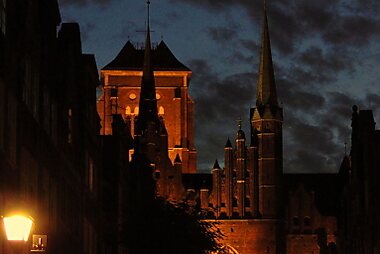
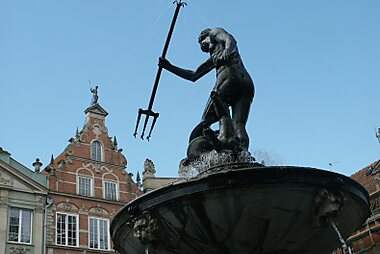
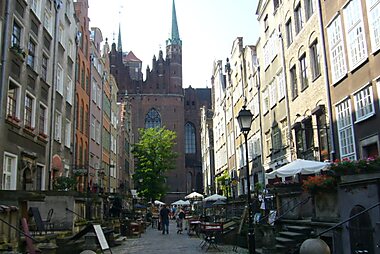
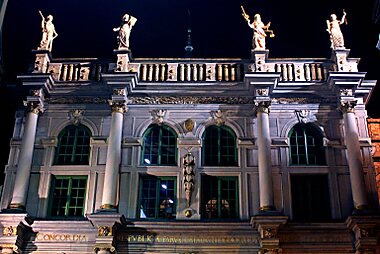
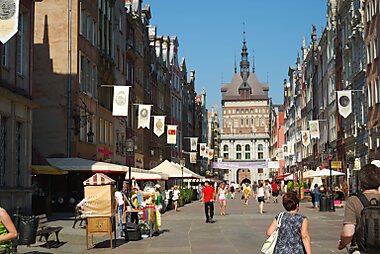
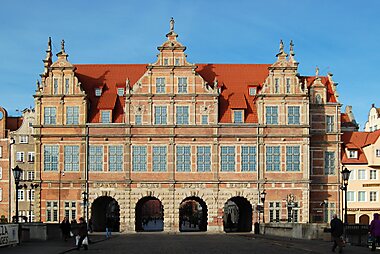
Long Lane is the old town's grand main street, lined with tall, narrow merchant houses topped with decorative gables. It runs from the Golden Gate to the Green Gate, and it is the single best place to see how rich Gdańsk's Hanseatic-era trade made the city.
Halfway along it, Neptune Fountain marks Long Market, the ceremonial heart of the old town and a popular meeting point.
St Mary's Church is one of the largest brick churches in the world. Climb its tower for a rooftop view over the old town's red roofs.
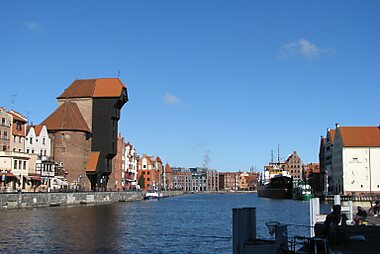
Down by the waterfront, The Crane is a striking wooden port crane built in the 15th century, once used to step ship masts and load heavy cargo. It now houses part of the National Maritime Museum.
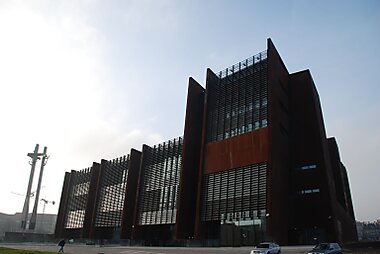
Solidarity Museum (European Solidarity Centre) is a major museum built around the birthplace of the Solidarity trade union movement, telling the story of how it helped bring down communism across Eastern Europe. Give it at least two hours.
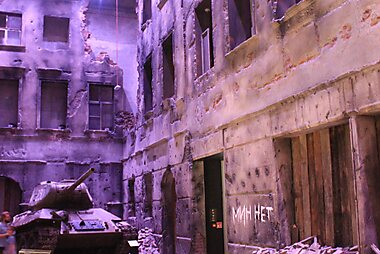
Museum of the Second World War is one of Europe's largest history museums, with an immersive underground exhibition covering the war from every angle, not just Poland's.
For a quieter stop, Artus Court is a restored merchants' guild hall on Long Market, once the social center of the city's trading elite.
Aanbevolen lijsten

Wat te beleven
A few things here are worth doing, not just seeing.
- Take a boat trip on the Motława River — small tourist boats and a replica galleon leave from the waterfront near The Crane for short cruises to Westerplatte, a relaxed way to see the port and shipyards from the water.
- Browse the amber stalls on Mariacka Street — Gdańsk has been a center of the Baltic amber trade for centuries, and this street is lined with small workshops and jewelers selling it.
- Join the crowds at St. Dominic's Fair — if visiting in late July or August, the open-air fair fills the old town with stalls, street food, and concerts for three weeks straight.
- Watch the sunset from the beach at Brzeźno — a short tram ride from the center, this stretch of sand and its pier are where locals go to unwind after work in summer.
Tours en activiteiten
Gdańsk — Kaart

 Interactieve kaart openen
 Dagtochten
Several worthwhile trips are within easy reach of Gdańsk, from a Gothic castle to lakes and dunes.
- Malbork Castle — ≈40 min by train. The largest brick castle in the world and a UNESCO World Heritage Site, built by the Teutonic Knights. Easily the top flagship day trip from Gdańsk.
- Kashubia — ≈1 hour by car. A hilly region of lakes and villages just west of the city, good for a slower-paced day of walking or cycling between small towns.
- Hel Peninsula — ≈2 hours by train, or a summer ferry from the waterfront. A narrow, forested sand spit with beach towns and a seal sanctuary at its tip in the town of Hel.
- Słowiński National Park — ≈1.5 hours by car, or ≈2.5 hours by train, to the gateway town of Łeba. Home to Europe's largest shifting sand dunes, some over 30 meters tall; a longer trip best combined with a night in Łeba.
Plaatsen om te ontdekken
Gdańsk is the largest of three neighboring cities on the Bay of Gdańsk known together as the Tricity, all linked by a fast commuter rail line.
- Sopot — a genteel seaside resort with Europe's longest wooden pier and a lively nightlife strip, about 20 minutes north by train.
- Gdynia — a younger port city known for its modernist interwar architecture and naval museum ships, a further 15 minutes north.
Further out, Kashubia is a region of lakes and rolling hills west of the city, and Slowinski National Park protects Europe's largest moving sand dunes along the coast.
Bereikbaarheid
- By air: Gdańsk Lech Wałęsa Airport (GDN) is the main gateway, about 12 km from the old town. A regional train runs roughly every 30 minutes to Gdańsk Wrzeszcz station, where you change to a city train for the 10-minute final leg to Gdańsk Główny (Main Station); the whole trip takes about 35–45 minutes. A taxi to the center takes about 20 minutes.
- By train: Gdańsk Główny is the main station, in the old town. Fast intercity trains connect to Warsaw (about 2.5–3 hours) and other major Polish cities, plus overnight services to several destinations. Book on the national carrier's site: PKP Intercity.
- By bus: Long-distance coaches arrive at the bus terminal next to Gdańsk Główny station, with connections across Poland and to other European cities.
Vervoer ter plaatse
- Public transit: Trams and buses cover the city well, and the SKM commuter train links Gdańsk with Sopot and Gdynia every few minutes. Tap a contactless bank card or phone directly on the reader when boarding — no need to buy a ticket in advance. Timetables and route planning: ZTM Gdańsk.
- Taxi / ride-hailing: Uber, Bolt, and FreeNow all operate in the city and are usually cheaper than hailing a street taxi.
- On foot / cycling: The old town and waterfront are compact and easy to explore on foot. A citywide bike-share system and flat terrain make cycling a good option too, especially along the riverside paths.
Autorijden
- Is a car worth it?: Not for the city itself — the old town is compact and walkable, and parking is limited. A car becomes useful only if exploring Kashubia or the coast beyond the Tricity at your own pace.
- Parking: Paid zones cover most of the center; pay by app (SkyCash and several others) or at a nearby machine. Several guarded car parks and a park-and-ride near the SKM line are cheaper alternatives to street parking.
- Restrictions: A small pedestrian zone covers the core of Long Market and Long Lane; deliveries and residents only.
Eten en drinken
As a port city, Gdańsk's food leans heavily on fish: smoked mackerel, herring, and fresh Baltic catch show up on menus across the old town. Look out for goldwasser, a local herbal vodka liqueur flecked with real gold leaf, invented in the city centuries ago and still sold as a souvenir.
For a quick, cheap meal, head to Hala Targowa, a covered market hall with food stalls selling everything from pierogi to fresh produce. The streets around Long Market are dense with restaurants and cafés for a sit-down meal.
Veiligheid en gezondheid
Gdańsk is a safe city for travelers by any measure. Violent crime against tourists is rare; the main risks are ordinary pickpocketing in crowded spots like Long Market and around the main train station, and overpriced drinks at a handful of tourist-trap bars in the old town.
Geschiedenis
For most of its history, Gdańsk grew rich as a trading port. It joined the Hanseatic League in the 14th century and became one of its wealthiest members, shipping grain and timber from Poland out across the Baltic. That wealth built the merchant houses still standing along Long Lane and the great crane at The Crane, the largest surviving medieval port crane in Europe.
The city's fortunes turned violently in the 20th century. At dawn on September 1, 1939, a German battleship opened fire on the small Polish garrison at Park Westerplatte, the first battle of World War II. The garrison held out for a week against overwhelming odds before surrendering. Much of the historic center, rebuilt brick by brick after the war using old paintings and photographs as a guide, is a monument to that reconstruction as much as to its medieval origins.
Four decades later, Gdańsk shaped history again. In August 1980, shipyard workers led by electrician Lech Wałęsa went on strike, and the government's agreement to their demands led to the founding of Solidarity, the first independent trade union in the Soviet bloc. The movement grew into a mass campaign that helped bring down communist rule across Eastern Europe within a decade. Solidarity Museum (European Solidarity Centre), built around the shipyard's historic gate, tells that story in full.
Feiten over het land
Quick practical facts for Poland at a glance:
- Valuta
- Poolse zloty PLN zł · Betalen met kaart · Algemeen geaccepteerd
- Noodnummers
- 112
- Elektriciteit
- 230 V · 50 HzType C / Type E
- Talen
- Pools
- Kraanwater
- Veilig om te drinken
- Rijrichting
- Rechts
- Landnummer
- +48


Gdańsk – Plan je dagen
Zet de plaatsen uit deze gids om in een echte reisroute, met slimme routes, tijdsinschattingen en alles wat je nodig hebt voor een perfecte reis.




