



Košice
Slovakia's second-largest city sits in the east of the country, far enough from Bratislava that it has always felt like its own capital. Its compact historic centre is built around a single long square, The Singing Fountain and the Gothic Saint Elisabeth Cathedral at its heart — a mix of Hungarian, German, and Slovak history that shows in the architecture on every side street.
In 2013, Košice shared the title of European Capital of Culture with Marseille, and that year left the city with converted industrial spaces now used as galleries and performance venues, plus a young, student-heavy population. It suits a traveler who wants cafés, theatre, and a walkable core, without the crowds of Bratislava or Prague.

Košice – Reis plannen?
Stel je dagelijkse reisroute samen in de Tripomatic-app.


Beste reistijd
Spring and autumn are mild and comfortable, the best time to walk the old town without summer heat or winter cold. Summers are warm with occasional storms, and winters are cold enough for snow, with a Christmas market filling the main square in December.
Time a visit around the first Sunday of October if you can: the Košice Peace Marathon, first run in 1924, is one of the oldest marathons still running anywhere in the world and turns the whole centre into a day-long street festival, even for people who never planned to run.
Beste reistijd: mei, juni, augustus, september
Topbezienswaardigheden
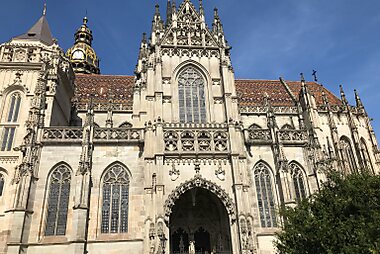


Saint Elisabeth Cathedral anchors the whole city: it's Slovakia's largest church and the easternmost Gothic cathedral of its kind in Europe, with a dark, richly carved interior worth the climb up the tower.
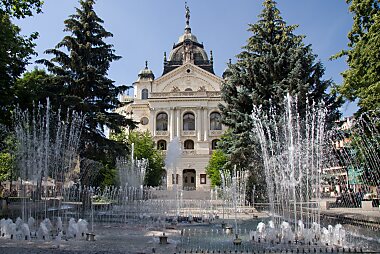
Just outside its doors, The Singing Fountain puts on a free light-and-music show most evenings, timed choreography of water jets that draws a crowd of locals as much as visitors.
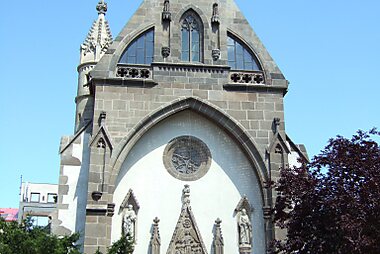
Next to the cathedral, St Michael's Chapel is a small Gothic gem that's easy to miss but worth a look for its carved stone doorway.
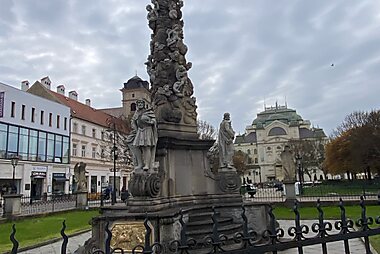
A short walk south, Plague Column (Immaculata) is a Baroque monument raised in thanks after the plague epidemic of 1710 — a reminder of how much the city has survived.
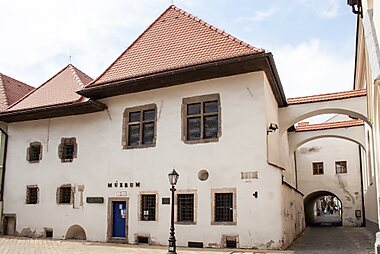
Mikluš's Prison is a genuinely unusual stop: a historic jail turned museum, with cramped cells and instruments of punishment that tell a grim but memorable story of Košice's past.
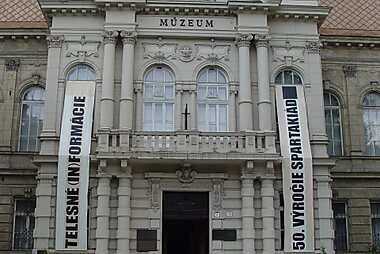
For a broader view of the region's history, art, and natural history, East Slovak Museum occupies several buildings around the centre and is the city's main museum.
Climb St. Urban Tower, the surviving bell tower next to the cathedral, for one of the better rooftop views over the old town.
End an evening at State Theatre Košice, a grand neo-Baroque building from the late 19th century that still hosts opera, ballet, and drama — even if you don't see a show, the building itself is worth a look from outside.
Aanbevolen lijsten


Editor's Choice
Košice’s historic center is defined by the 14th-century Gothic architecture of Saint Elisabeth Cathedral and the neighboring St Michael's Chapel, which sits atop a former ossuary. The central park features the 1986 Singing Fountain, a pioneer in synchronized water and light displays. Cultural exploration continues at the East Slovak Art Gallery, the nation's first regional gallery, and the Slovak Technical Museum. The list is completed by Mikluš's Prison, a 15th-century residential complex that served as a city jail for centuries and now houses historical exhibits.
6 plaatsen
Museums & Art Galleries
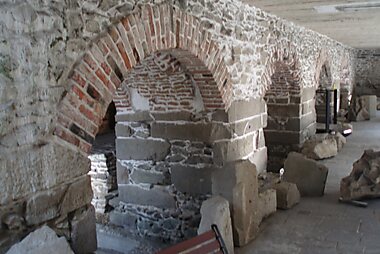
Košice’s cultural landscape includes specialized institutions ranging from technical history to medieval archaeology. The East Slovak Gallery, established in 1951, showcases regional art, while the Slovak Technical Museum documents industrial heritage. Historical insights are found in the 15th-century Mikluš's Prison and the underground archaeological complexes of the Lower Gate, which reveal the city’s 13th-century fortification systems and defensive architecture discovered during modern excavations.
5 plaatsen


Wat te beleven
- Catch the Singing Fountain's evening show. Most evenings after dark, The Singing Fountain runs a timed sequence of jets set to music and coloured light — a low-key local ritual that fills the benches around it.
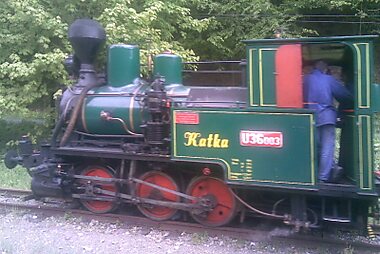
- Ride the narrow-gauge Children's Railway. Košice Children's Historic Railway is a small working train that carries passengers through the wooded Čermeľ valley on the edge of the city, run largely by young volunteers — a favourite with families, but a genuinely pleasant ride for anyone.
- Browse the Christmas market. In December, wooden stalls fill the main square around the cathedral with mulled wine, roasted chestnuts, and local crafts.
Tours en activiteiten
Košice — Kaart

 Interactieve kaart openen
 Dagtochten
Eastern Slovakia's biggest draws are all within an easy day trip of the city, from wooded gorges to a UNESCO castle.
- Jasov Monastery and Cave — ≈35 min by car or bus. A working Premonstratensian monastery with a striking library, next to a show cave with rare bat colonies.
- Herľany Geyser — ≈45 min by car. A cold-water geyser that erupts roughly every 34–36 hours, one of only a handful of its kind in the world.
- Slovak Paradise National Park — ≈1 hour by car or train to Spišská Nová Ves. Wooden ladders and via ferrata-style trails climb through narrow gorges and past waterfalls; a full day is easy to fill.
- Spiš Castle — ≈1 hour by car, or by train to Spišské Podhradie plus a short uphill walk. One of the largest castle complexes in Central Europe and a UNESCO World Heritage Site, with sweeping views over the Spiš region.
- Levoča — ≈1.5 hours by car or train. A walled medieval town, also UNESCO-listed, known for its Gothic altar carved by Master Paul, the tallest wooden altar in the world.
- Tokaj wine region — ≈1.5 hours by car toward the southeast. The Slovak side of the historic Tokaj wine area around Malá Tŕňa and Viničky, known for its sweet dessert wines.
Bereikbaarheid
- By air: Košice International Airport (KSC) is about 6 km south of the centre, with seasonal and scheduled links to Vienna, Prague, Bratislava, Warsaw, London, Dublin, and a few other European cities. Bus 23 runs from the airport to the main train station in about 20 minutes; a taxi takes about 15.
- By train: Direct trains connect Košice to Bratislava in roughly 4.5–5.5 hours. There are also direct or one-change services toward Budapest and, on some routes, farther into Central Europe.
- By bus: Long-distance coaches link Košice to Bratislava, Prague, and several regional towns; useful as a cheaper but slower alternative to the train.
Vervoer ter plaatse
- Public transit: DPMK runs trams, trolleybuses, and buses across the city — Košice has had trams since 1891, among the oldest networks in the region. Buy a ticket from the onboard machine (most take bank cards) or through the DPMK mobile app before you board; there is no tap-in card reader at the door. DPMK Košice
- Taxi / ride-hailing: Bolt operates in Košice and is the easiest way to book a ride from a phone.
- On foot: the historic centre is small and entirely walkable — most top sights sit within a few minutes of the main square.
Autorijden
- Is a car worth it?: No for the city itself — the centre is walkable and a car is a burden to park. Yes if you plan to reach Slovak Paradise, Spiš Castle, or the smaller villages of eastern Slovakia, which have limited public transport.
- Parking: Metered street parking covers most of the centre; pay by app (EPARKING or a local operator) or at a pay machine. A few multi-storey car parks sit just outside the historic core.
- Restrictions: Part of the main square is pedestrianised and closed to general traffic.
Eten en drinken
Košice's food scene runs along and just off Hlavná, the main pedestrian square — a dense stretch of cafés, wine bars, and casual restaurants that fills up on warm evenings. Prices here are noticeably lower than in Bratislava or Prague for a similar meal.
Look beyond the main square too: the narrow passageways and courtyards behind Hlavná hide smaller, less touristy spots, and the Slovak Technical Museum area on the eastern edge of downtown has a growing cluster of specialty coffee shops and craft-beer bars.
Veiligheid en gezondheid
Košice is a safe city for tourists, with violent crime rare in the areas visitors spend time in. The most common issue is ordinary pickpocketing around the train station and on crowded trams — keep bags zipped and valuables out of back pockets.
Tap water is safe to drink throughout the city, in line with the rest of Slovakia.
Geschiedenis
Košice's confidence goes back a long way: in 1369, it became the first town in Europe granted its own coat of arms, a mark of the trading wealth it had built as a stop on routes linking Hungary to Poland and the Baltic. Construction of Saint Elisabeth Cathedral began soon after, in the 14th century, and it grew into the largest church in present-day Slovakia.
For centuries the city sat inside the Kingdom of Hungary, and that history is still visible: Ferenc Rákóczi II, leader of an early-18th-century Hungarian uprising against Habsburg rule, is buried inside the cathedral, his remains brought back from exile and reinterred there in 1906.
Beneath the main square, archaeological excavations uncovered the remains of the medieval town's fortifications, now displayed at Dolná brána (Lower Gate) — a rare chance to walk through the walls that once protected the city.
The 20th century brought Czechoslovak statehood, wartime occupation, and decades under communist rule, followed by rapid change after 1989. That history culminated in 2013, when Košice shared the title of European Capital of Culture with Marseille, a project that converted former industrial and military buildings across the city into galleries, studios, and performance spaces still in use today.
Feiten over het land
Quick practical facts for Slovakia at a glance:
- Valuta
- Euro EUR € · Betalen met kaart · Veelal geaccepteerd
- Noodnummers
- 112
- Elektriciteit
- 230 V · 50 HzType C / Type E
- Talen
- Slowaaks
- Kraanwater
- Veilig om te drinken
- Rijrichting
- Rechts
- Landnummer
- +421


Košice – Plan je dagen
Zet de plaatsen uit deze gids om in een echte reisroute, met slimme routes, tijdsinschattingen en alles wat je nodig hebt voor een perfecte reis.




